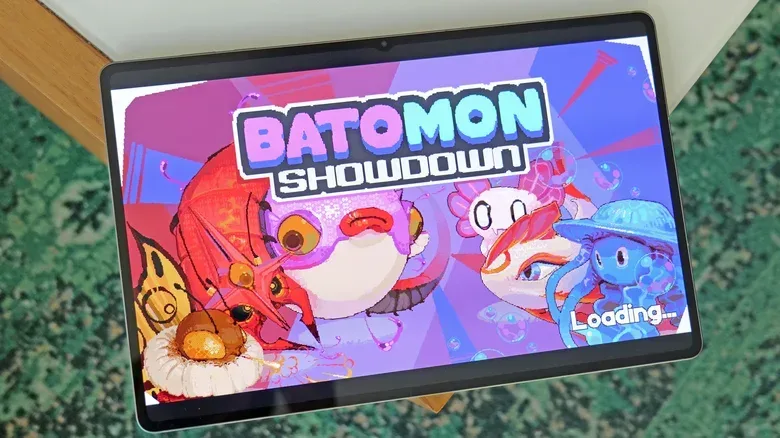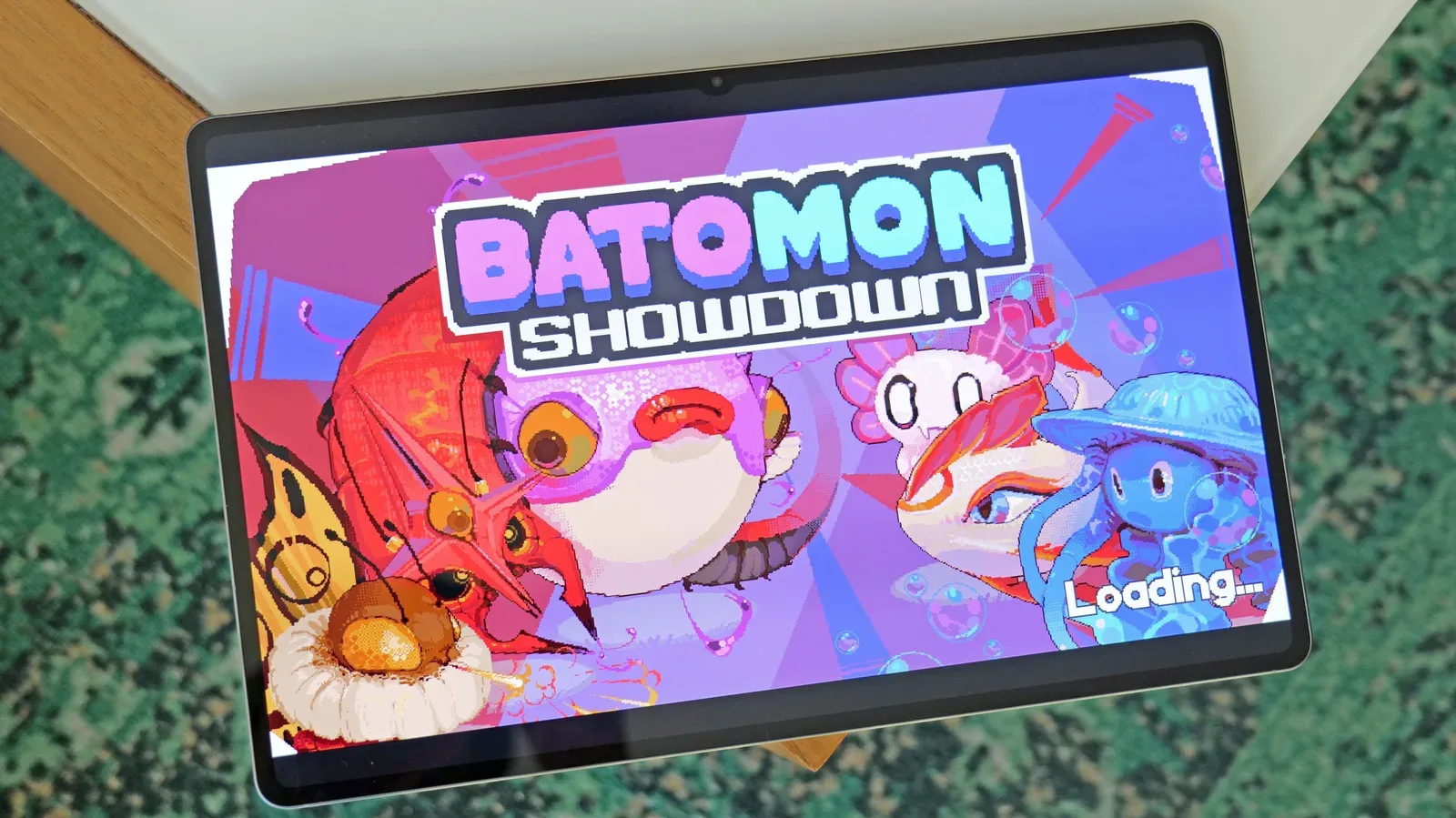
Batomon Showdown has entered the crowded auto-battler arena with a deliberately familiar pitch: build a squad of appealing monsters, spend a limited budget between fights, and let the resulting tactical machinery prove whether the plan was brilliant or a spectacularly expensive pile of cute creatures.
Developer Berrymint’s game is available on Android for $6 and on Steam for $15. Its basic structure will be recognizable to players of shop-and-battle strategy games such as Teamfight Tactics, Hearthstone Battlegrounds and Dota Auto Chess, but Batomon’s identity comes from its monster roster, type combinations, trainer passives and evolving creatures. The result is a game centered less on rapid mechanical execution and more on reading possibilities in a changing shop, then assembling a team whose abilities reinforce one another.
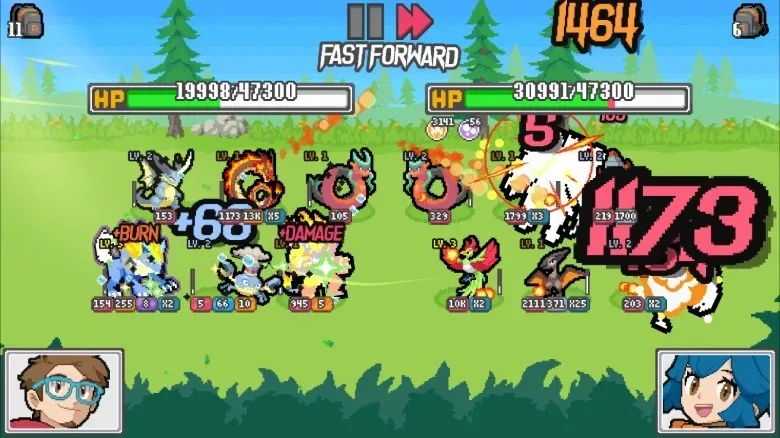
That distinction matters. An auto battler does not remove player agency; it relocates it. Instead of deciding every attack in real time, players make the consequential decisions before combat begins: what to buy, what to sell, where to position a unit, whether to pursue a difficult upgrade, and when to spend currency refreshing the available selection. Once a match starts, the team executes the instructions embedded in its composition.
A shop economy with monster-team logic
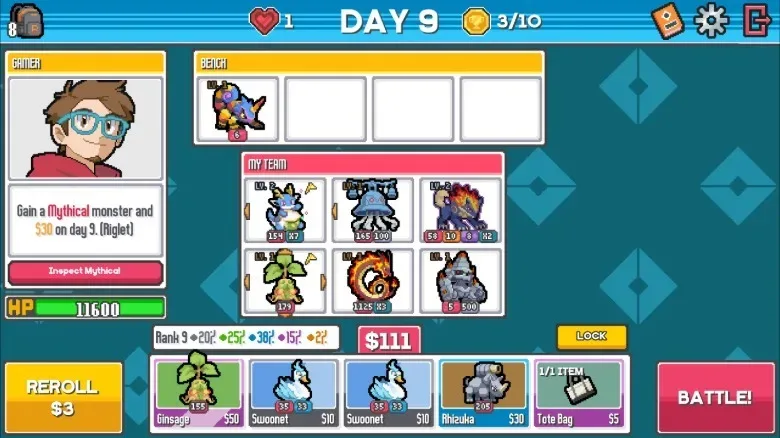
Each day in Batomon Showdown gives the player money to spend on monsters and items. The monsters span rarities, including common, uncommon and legendary, and they can belong to one or more types. Fire, toxic, flying and rock are among the stated examples. Building around shared types can unlock synergies that improve a squad’s offense or, in certain cases, its defenses.
This is the game’s primary strategic language. A player is not simply selecting the individually strongest available monster. They are weighing immediate strength against a longer-term payoff: a creature that may complete a type package, a duplicate that could advance an upgrade, or a unit whose ability improves dramatically when paired with a particular support effect.
Synergy is the useful shorthand for that relationship. In this context, it means that the value of one monster rises when it is teamed with others carrying compatible types or abilities. A rock creature that produces shields is useful in isolation. It becomes much more significant beside a monster that attacks whenever an ally creates a shield. Likewise, a low-cost ghost creature can be modest early and become a centerpiece after meeting the conditions for its evolution.
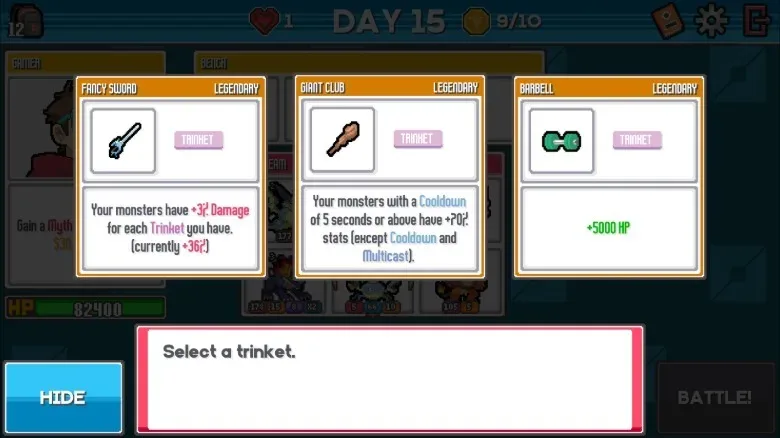
Players can also combine three copies of the same creature. That merger levels the monster up and provides a trinket, a power-up that further modifies the squad. This creates a familiar auto-battler tension: buying copies now can yield a potent upgrade later, but it also occupies resources that might be needed to stabilize a team before the next opponent arrives.
Items broaden those decisions. They can reduce cooldowns, generate money or award trinkets, among other effects. A cooldown is the wait before an ability can be used again, so reducing it can make a cast-dependent monster act more often over the course of a battle. The shop can be rerolled for a cost if its current offers do not serve the team’s direction. That refresh option makes money management central: conserving currency preserves flexibility, while spending it can be the only way to find the missing component that turns a merely functional team into a coherent one.
Related coverage includes Batomon Showdown Brings Monster Collecting Energy to Auto Battler Strategy.
Trainers add a layer before the first monster is bought
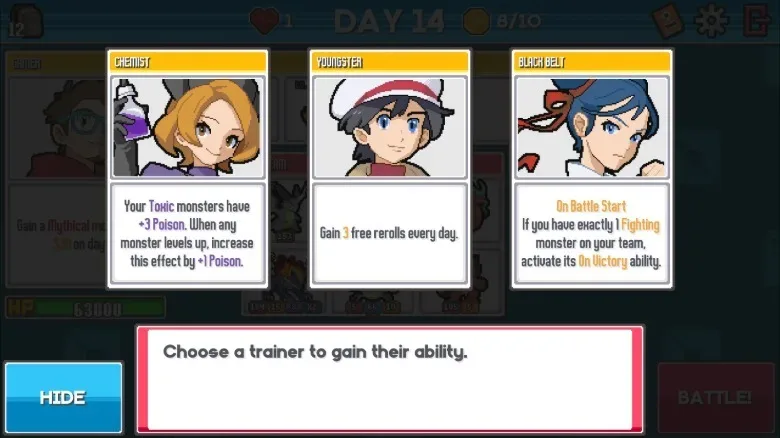
At the start of a run, players choose one of three trainers from a rotating roster. Each trainer grants a passive trait to the squad. A passive is an effect that does not require an active command during battle; it shapes the team’s performance in the background. The trainer choice therefore gives every run an opening constraint or opportunity before the first shop decision is made.
That setup is especially suited to roguelike-style replay. A roguelike run is a self-contained attempt in which the player makes do with the options that appear, rather than assembling one fixed collection over a single campaign. Batomon Showdown’s mix of trainers, shop rolls, items, merge opportunities and monster combinations means that the same broad type can lead to different practical decisions from run to run.
The game uses modern pixel art and cute monster sprites, but its systems are built to reward careful sequencing. A useful early creature may be bought because it fills the board. Another may be kept because it is close to a three-copy merge. Still another may be worth skipping despite impressive base numbers if it does not contribute to the squad’s direction. Those small decisions are where auto battlers earn their replayability, and Batomon appears to put plenty of emphasis on them.
Types are not just labels
Batomon’s types point toward distinct battle plans. Toxic monsters are oriented around poison damage, while water creatures often seek to heal through the opponent’s attacks. These broad themes make the roster easier to read while leaving room for individual creatures to break out as genuine win conditions.
A win condition is the piece of a team that, once adequately supported, can reliably provide the path to victory. It does not have to be the toughest monster or the one with the largest visible damage value. It can be a scaling attacker, a defensive engine that denies an opponent’s damage, or an ability loop that becomes overwhelming when the rest of the squad enables it.
Pipskull provides a clear example of scaling within the ghost archetype. It is a common, low-cost monster that begins with limited impact. Ghost creatures revolve around being knocked out, and Pipskull evolves after that happens enough times. Its evolution grants multicast, causing it to launch multiple attacks when it casts. Further knockouts then permanently add more multicast.
Multicast is an unusually important term here because it changes how damage should be evaluated. A monster that deals 25 to 50 damage per hit may look minor at a glance. At 30, 40 or 50 casts per activation, however, those individual hits become a barrage. Pipskull’s design asks the player to look beyond its early state, support the conditions that allow its ghost mechanics to function, and accept short-term fragility in exchange for a potentially enormous late payoff.
That is the kind of design that can make losses instructive rather than merely frustrating. If an evolving creature is defeated before it comes online, the player has a concrete question for the next run: was the issue positioning, insufficient protection, an overly greedy shop strategy, or simply a team that committed to a long-term payoff without enough immediate power?
The shield engine illustrates positional payoff
The rock package offers a different kind of escalation. Bonshell can gain damage and shielding every time it casts after receiving an early upgrade, and those gains last for the remainder of the battle. Shielding, in simple terms, is protective value that absorbs or prevents incoming damage. When repeated casting makes the shield and damage grow, survival time becomes an offensive resource as well as a defensive one.
Rhizuka turns that defensive plan into an attack engine. Its ability triggers an attack whenever another allied monster applies a shield. Pairing it with shield-producing rock monsters can create a comp in which the front line slows or absorbs incoming damage while Rhizuka attacks from the back. The implication is practical: the squad is not merely “tanky.” It is using defense to activate damage, which is a much stronger relationship than running unrelated durable units alongside an unrelated attacker.
Positioning is therefore more than presentation. Putting a unit in the back can help preserve it while allies establish the shield effects that trigger its attacks. In auto battlers, placement often determines whether a fragile payoff unit gets enough time to matter. Batomon’s Bonshell-and-Rhizuka interaction suggests that its most satisfying boards will be the ones where placement, type synergies and ability triggers all point in the same direction.
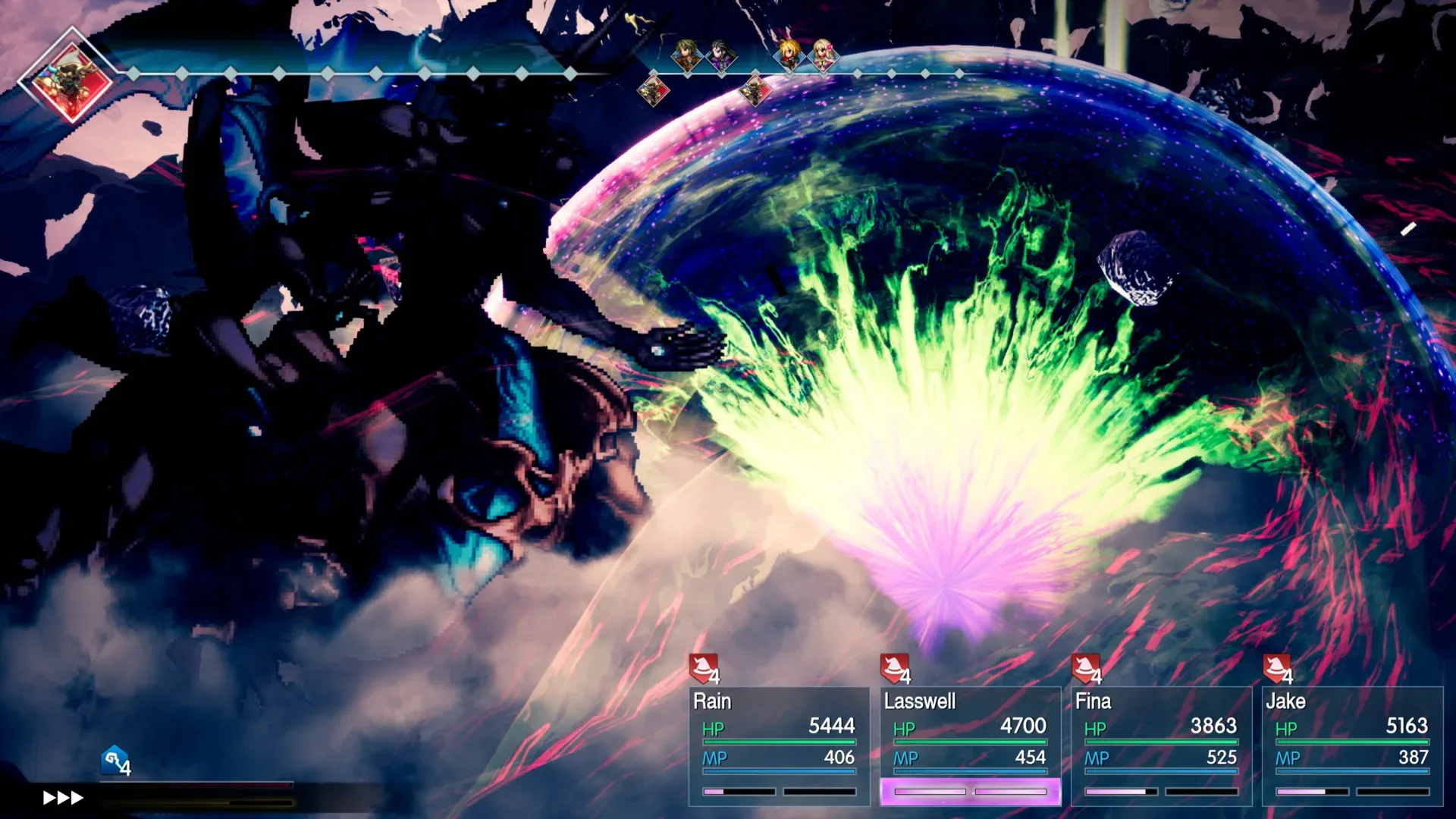
For another recent example of how games can build strategy around a recognizable fantasy framework, see Final Fantasy Resonance’s turn-based experiment. Batomon approaches strategy from a different angle: its pivotal choices occur in the shop and formation phase rather than through direct turn-by-turn commands.
Regions leave space for expansion and unexpected combinations
Monsters are also divided into regions. This is more than a roster-organizing label. Certain traits can allow creatures to visit from other regions, opening additional team-building combinations. It gives the game another way to create surprises without abandoning the logic of its existing types and factions.
The regional system also provides a natural framework for future additions. Berrymint has indicated that updates will be free, and regions give the developer room to extend the monster pool without making every addition feel disconnected from the game’s world or mechanics. More creatures do not automatically mean more strategy, of course; the meaningful measure will be whether future additions create distinct decisions rather than simply raising raw power.
Balance has already been an issue—and a response has arrived
Early on, monsters from the Jinto region were notably stronger than alternatives. Berrymint has already issued a balance patch intended to address that disparity. In a game driven by randomly offered monsters and developing compositions, balance matters well beyond the question of which creature has the highest numbers. If one region consistently offers the best route, it can suppress experimentation and make the shop’s apparent variety less meaningful.
A balance patch is a post-release update that changes mechanics or values to narrow an unhealthy gap between strategies. It cannot guarantee that every option is equally powerful in every circumstance—and perfect equality would likely make the game less interesting—but it can keep a single route from becoming the default answer to too many runs.
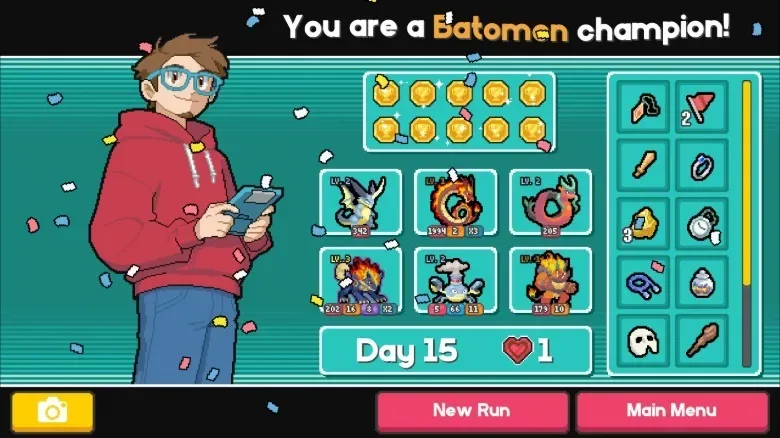
The more lingering question is run length. A full run ends after a player earns 10 badges, with a badge gained for each victory against another trainer. That structure gives a clear finish line, but it can also end a run just as a slow-scaling plan begins to demonstrate its potential. Pipskull’s accumulating multicast and the growing shield interactions around Bonshell make especially clear why some players may want additional rounds after the nominal victory.
An infinite mode, where difficulty continues rising past the standard endpoint, has not been confirmed. It would be a logical fit for a game with escalating engines, but it remains only a requested feature rather than something players should expect. For now, the 10-badge limit means Batomon asks players to balance ambition against tempo: build toward a powerful payoff, but do not wait so long that the run finishes or collapses before the machine is built.
That compact structure may ultimately be part of the appeal for players looking for a focused auto battler. Batomon Showdown does not need to reinvent every convention in the genre to make its case. Its combination of trainer passives, monster types, duplicate merges, region traits, trinkets and readable ability interactions gives the familiar shop-and-battle loop a lively monster-team identity. The important question is not whether every run reaches a perfectly optimized board; it is whether the next shop offers just enough evidence that it might.