Apple has packed a string of major hardware changes into the end of October, led by a redesigned MacBook Pro with an OLED touch display, new M6-based Mac models and a larger OLED iPad mini. The wave of product news arrives immediately after the launch of the iPhone Duo, Apple’s first foldable phone, where early owners have also reported screens breaking around the hinge.
The result is an unusually broad set of simultaneous changes: a new display direction for a flagship laptop, processor and wireless upgrades for more conventional Macs, a significant screen update for the smallest iPad, and a newly available top-end Mac Studio configuration. Some of the products announced earlier in the month were still not available at the time of this latest batch of announcements, making the distinction between announced, on sale and pre-order hardware especially important for potential buyers.
The headline change: an OLED MacBook Pro that can be touched
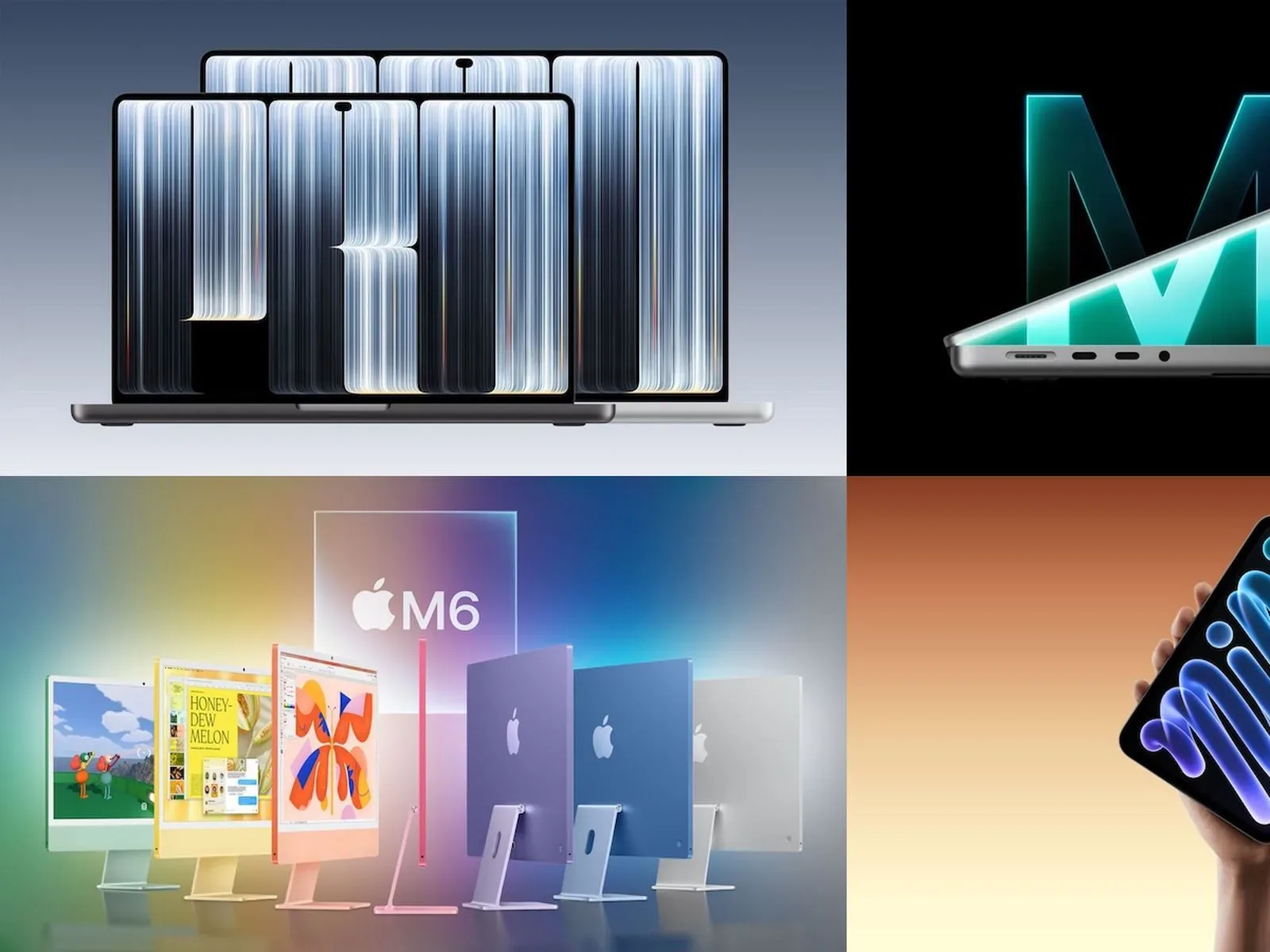
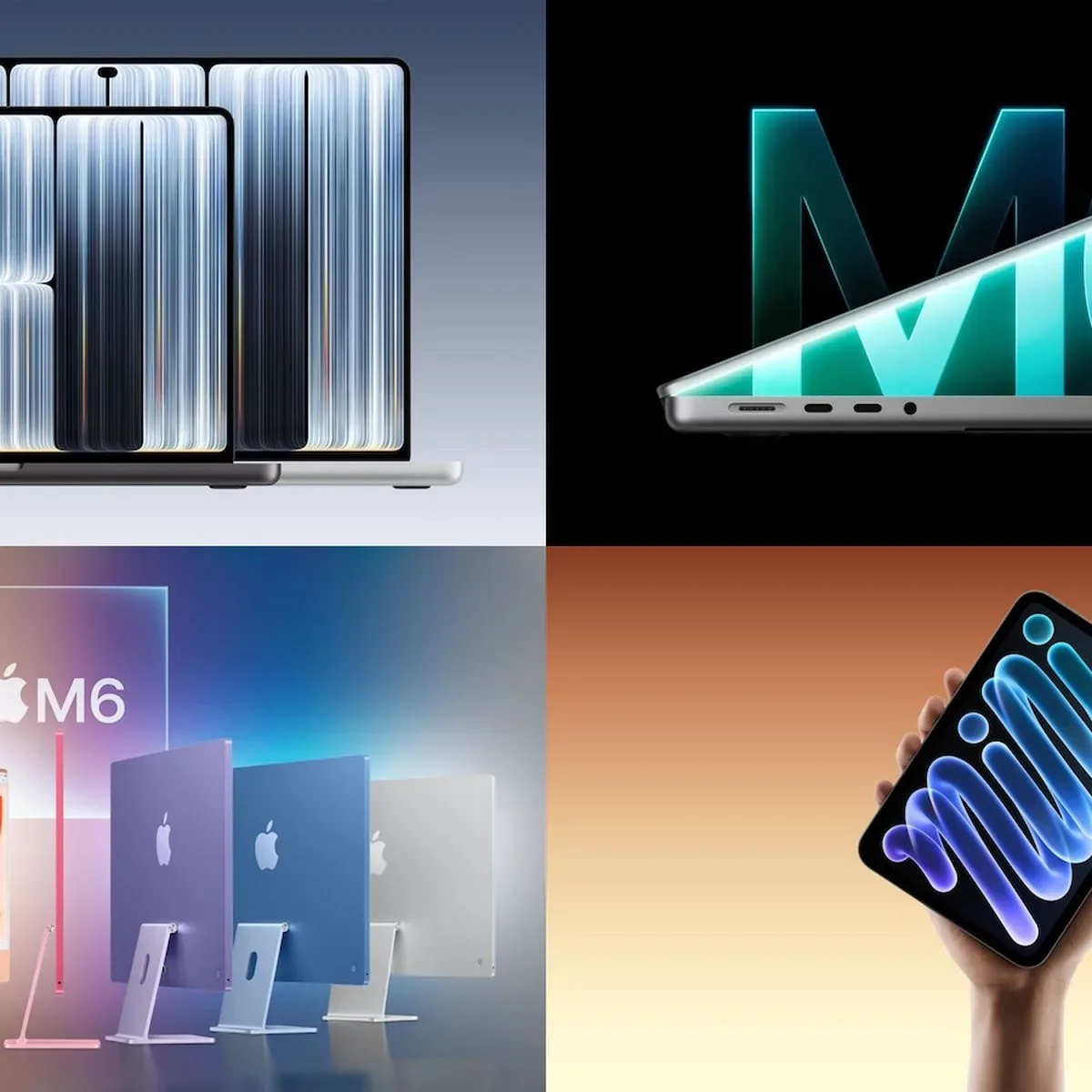
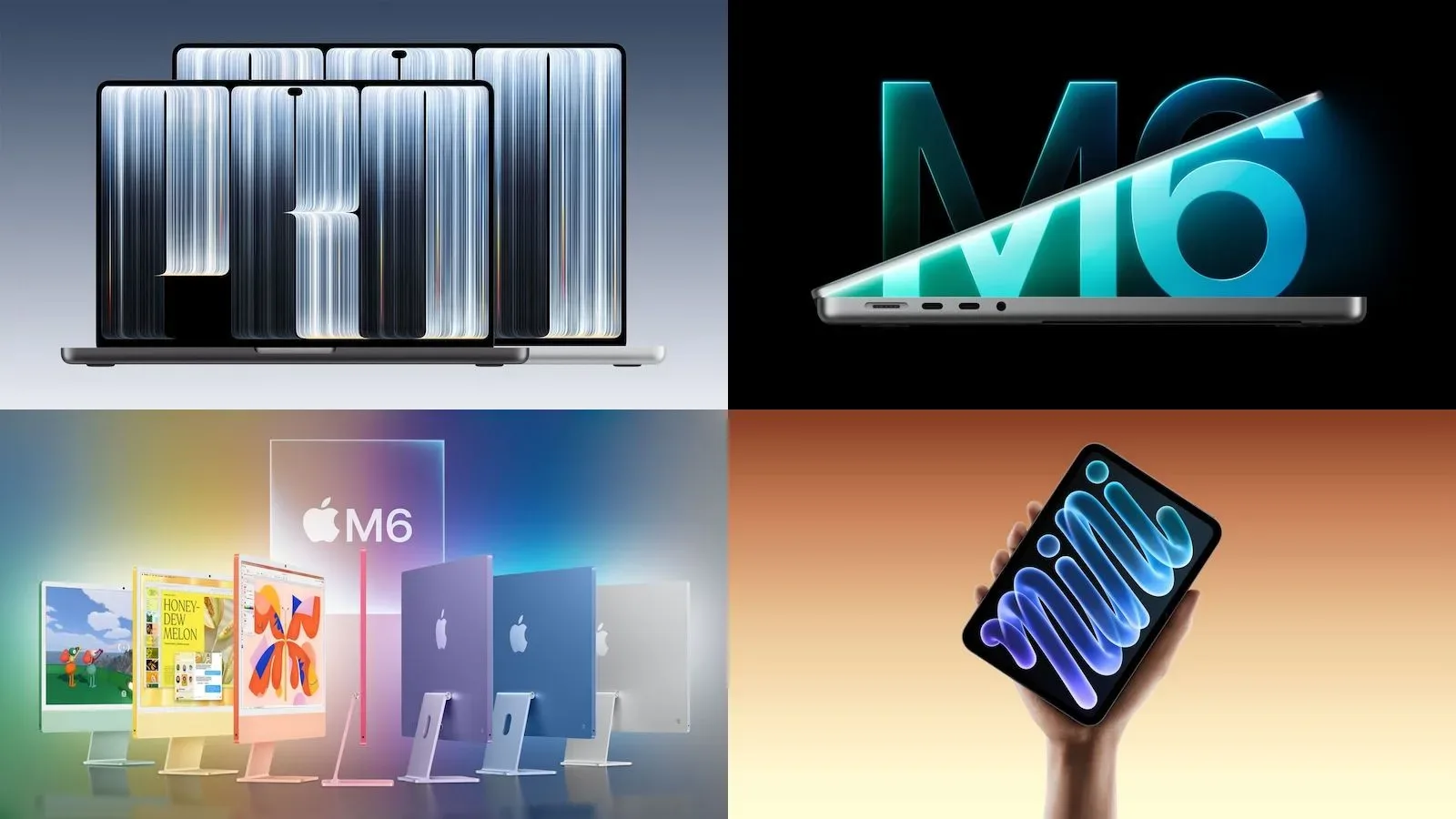
The standout introduction is the MacBook Pro with what Apple calls a PROLED XDR Display. Its defining change is an OLED touchscreen, bringing direct touch input to the MacBook Pro display. The machine also has lighter weights, a reinforced hinge designed to keep the screen stable when it is touched, a Dynamic Island rather than a display notch, and an illuminated Apple logo on its lid.
OLED, short for organic light-emitting diode, is a display technology in which pixels produce their own light. The supplied details establish that Apple is bringing OLED to this MacBook Pro, but do not provide specifications such as brightness, resolution, refresh rate, battery-life figures or size options. Those omissions matter: a display technology label alone does not describe every aspect of how a panel will perform in a particular product.
The touchscreen itself is the other clear shift. A laptop touch display can make certain interface actions more direct, but it also changes the physical demands on the hardware. Apple’s addition of a reinforced hinge is therefore a practical component of the design rather than a decorative specification. When a user presses a laptop panel, the hinge must resist unwanted movement. The announced reinforcement indicates that stability during touch interaction has been considered as part of the device’s construction.
The move from a notch to a Dynamic Island changes how the camera-area cutout is presented on screen. The provided information does not detail its software behavior on macOS, so it would be premature to infer which notifications, controls or applications will use it. Still, it is a visible design marker that separates this model from MacBook Pros using a conventional notch.
For people who follow portable gaming and creative hardware, the larger implication is that this is not framed merely as a routine internal refresh. Apple has combined a new panel technology, touch input, physical hinge work and revised display cutout treatment in one flagship-oriented product. That makes it a more consequential release than a chip-only update, even though exact configurations and availability details are not included here.
The 14-inch MacBook Pro takes the M6 route
At the lower end of the MacBook Pro family, Apple has announced a new 14-inch base model with an M6 chip. It is described as a speed-bumped update, but the information currently available does not quantify the performance gain or list CPU, GPU or memory configurations. Buyers should therefore treat “faster” as the announced high-level position rather than assume a particular uplift in games, video workloads or everyday use.
The new 14-inch model also includes Apple’s N1 wireless chip, adding support for Wi-Fi 7 and Bluetooth 6. Wi-Fi and Bluetooth are separate wireless standards: Wi-Fi concerns network connectivity, while Bluetooth is commonly used for nearby accessories such as controllers, keyboards, mice and headphones. Support for newer versions indicates updated connectivity capability, though actual benefits can depend on the network, router, accessory and software in use.
Apple has also increased the machine’s stated external-display capability. The 14-inch M6 MacBook Pro can drive two external 4K displays at up to 165Hz, up from 144Hz. Here, 4K refers to the display resolution class, while Hz is the refresh rate, or how many times per second a screen can update its image. A 165Hz ceiling is higher than 144Hz, but it is a capability limit rather than a guarantee that every game or workload will render at that rate.
That distinction is useful for anyone building a desk setup around high-refresh displays. The announcement says the hardware can support dual external 4K monitors at the stated maximum refresh rate; it does not establish performance in individual games, nor does it say what settings, cables, displays or applications are required. It is nevertheless a concrete generational improvement over the prior 144Hz figure.
The 24-inch iMac receives the same generation of core upgrades
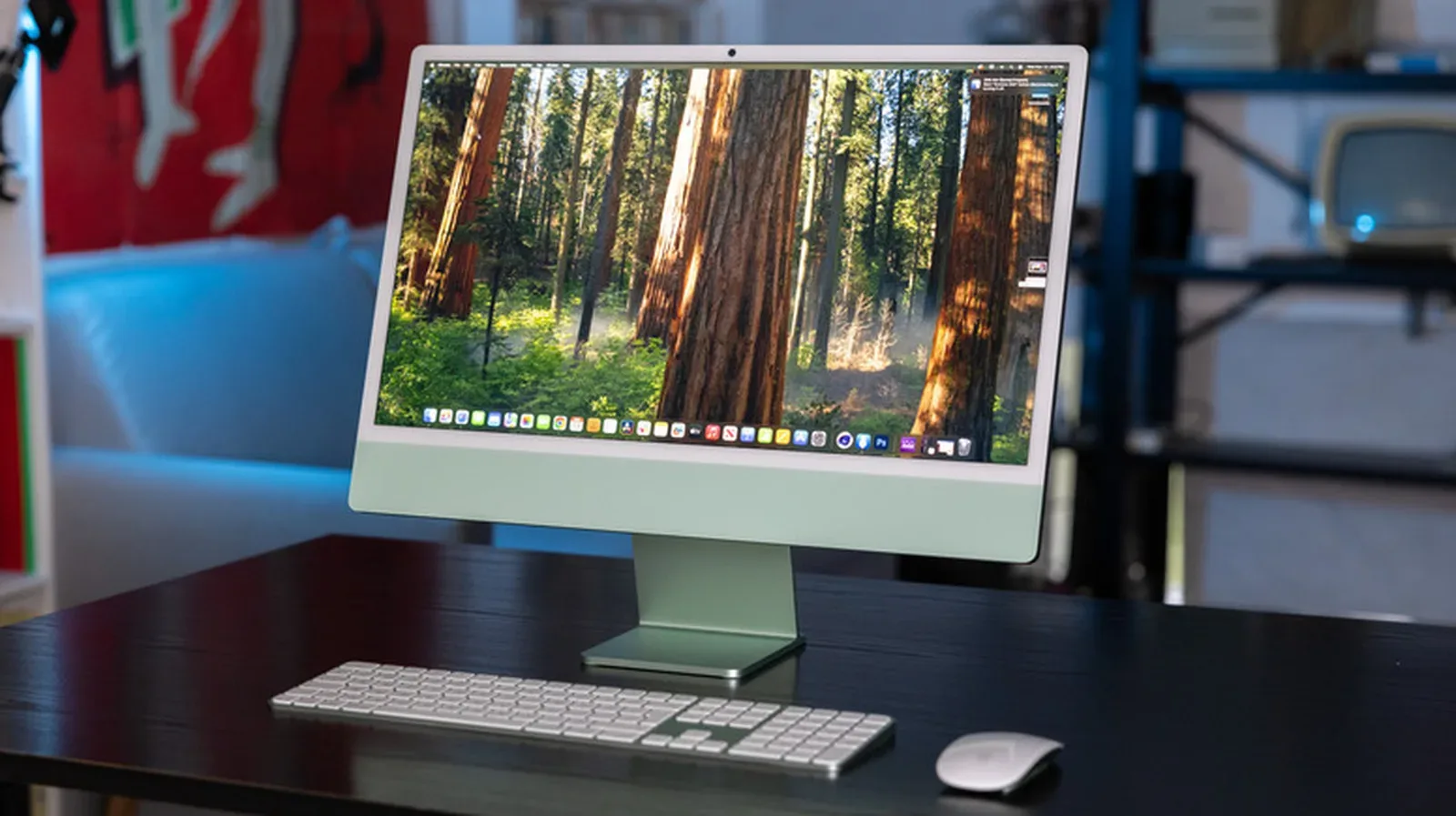
Apple’s 24-inch iMac is also moving from M4 to M6. The all-in-one desktop additionally gains the N1 chip with Wi-Fi 7 and Bluetooth 6 support, plus faster SSD speeds.
An all-in-one PC places the computer hardware and display in a single integrated unit. The format can simplify a desk, but it is inherently a different proposition from a laptop connected to monitors or a modular desktop. The M6 iMac’s appeal is therefore likely to center on an integrated workspace alongside its new silicon and wireless features. For a broader look at the trade-offs inherent to the form factor, see why all-in-one PCs trade upgrade freedom for a tidier desk.
Apple says the iMac’s SSD is faster, but no transfer-rate figure has been provided in the supplied details. An SSD, or solid-state drive, is the internal storage used for files, apps and system data. Faster storage can affect activities such as loading assets and moving files, but this announcement alone does not establish the size of the difference for a specific workflow.
The iMac announcement is comparatively straightforward next to the touch-enabled OLED MacBook Pro: it updates the processor generation, networking and storage speed in Apple’s 24-inch all-in-one category. There is no indication in the provided information of an OLED iMac screen or a touch-enabled iMac display.
iPad mini grows to 8.5 inches and adopts OLED
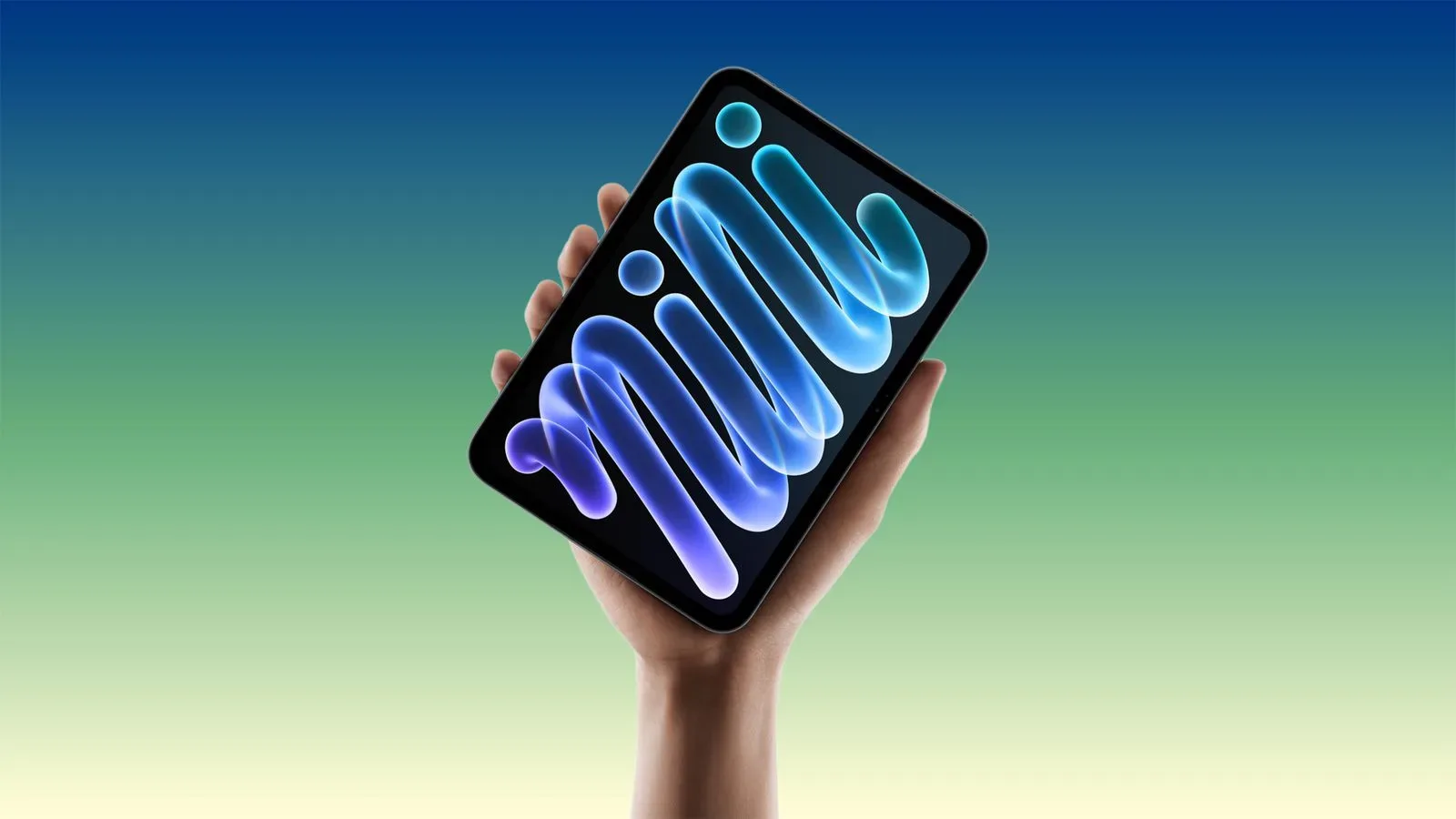
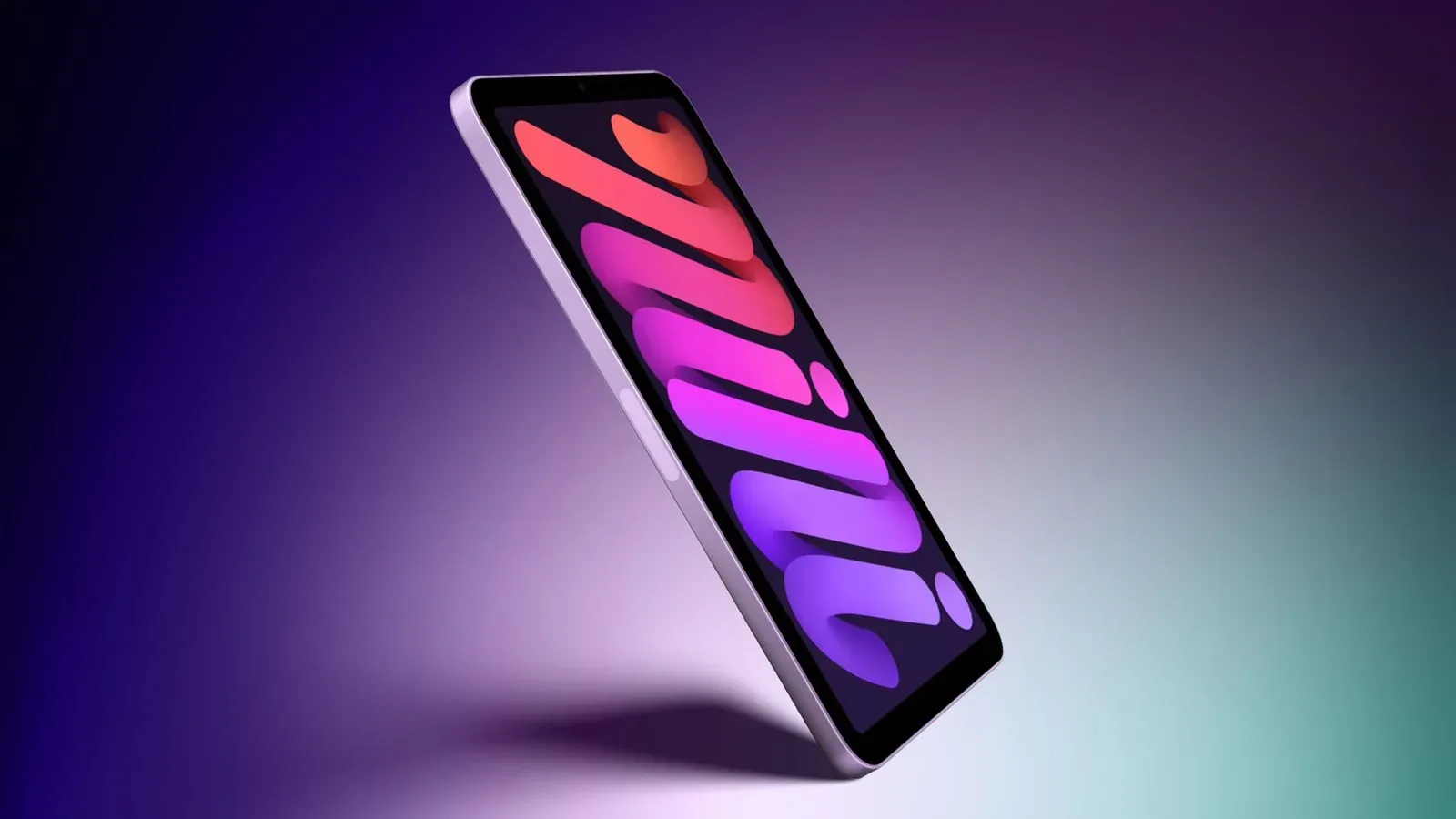
Apple has also redesigned the iPad mini with an 8.5-inch OLED display and an A20 Pro chip. The OLED move is a major display change for the compact tablet, while the screen is also larger than before. As with the MacBook Pro, the available details identify the panel technology but do not supply resolution, brightness, refresh-rate or battery-life specifications.
The A20 Pro is the named processor for the redesigned model. No performance measurements or configuration details were supplied, so comparisons with previous iPad mini hardware should remain limited to the confirmed hardware changes: a larger 8.5-inch OLED screen and the A20 Pro chip.
The iPad mini update lands alongside another practical item worth watching for buyers: the iPad mini 8’s battery is slightly smaller while Apple maintains the same battery-life estimates. That makes it sensible to separate a listed battery capacity change from the company’s claimed battery-life estimate; they are related concepts, but not interchangeable measurements.
A 512GB-memory Mac Studio arrives at a steep price
Apple has made a new high-end Mac Studio configuration available with an M5 Ultra chip and 512GB of memory. The price is $22,299. Apple had previously said this option would become available in late October after introducing the M5 Max and M5 Ultra Mac Studio models in August.
This is an extreme configuration by any consumer-hardware standard, and its price places it in a specialized part of the market. The supplied information does not specify intended workloads, storage capacity, graphics configuration or how the system performs, so there is no basis to declare which users need it. What is certain is that the option combines 512GB of memory with an M5 Ultra and carries a five-figure price.
It is also important not to confuse the 512GB figure with SSD storage. In this configuration, it refers to memory, often called RAM, which is working space used while programs and tasks are running. SSD capacity is persistent storage for files. Both are commonly measured in gigabytes, but they serve different jobs.
Early iPhone Duo reports require caution
The iPhone Duo launched last Friday, shortly before Apple’s Mac and iPad announcements. Early adopters have reported screen breakage along the foldable phone’s hinge area. The reports are notable because the hinge is central to any folding device’s design, but the available information does not establish the number of cases, the cause of the damage, the conditions involved or how widespread the issue may be.
That uncertainty should remain front and center. Individual reports can flag a potential concern without proving a systemic hardware defect. There is also no supplied information about Apple’s response, repair policy, investigation or any change to the product. For prospective iPhone Duo buyers, the prudent reading is neither to dismiss the reports nor to treat them as conclusive evidence of a universal problem.
Apple’s late-October product run is therefore split between ambitious hardware change and an unresolved question around its newest foldable. The OLED touchscreen MacBook Pro is the clearest design departure, while the M6 MacBook Pro and iMac bring newer chips and wireless standards, the iPad mini gets a larger OLED panel, and the Mac Studio pushes to a 512GB-memory configuration. The iPhone Duo reports, meanwhile, are a reminder that first-generation form factors can demand close attention after launch.