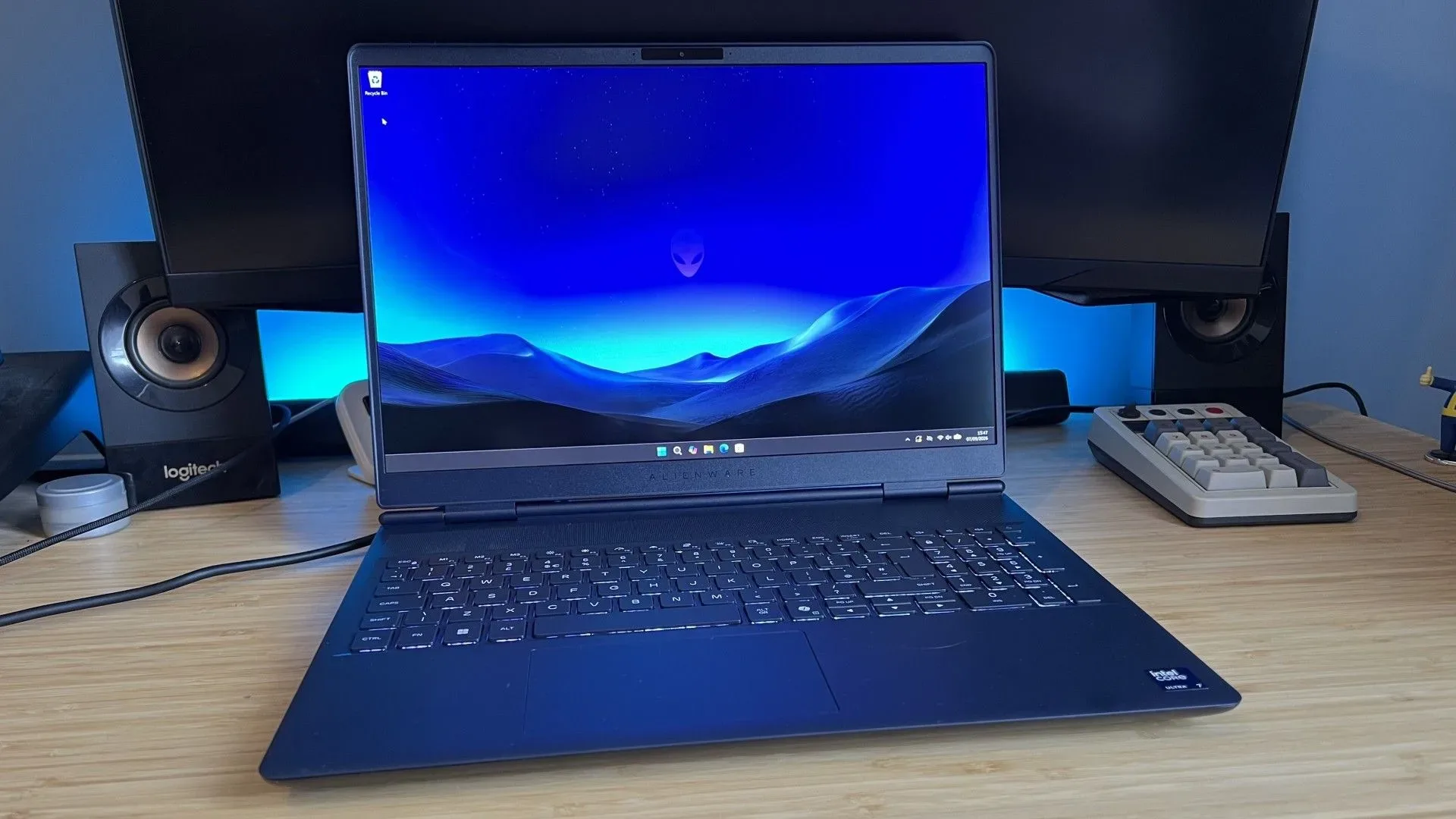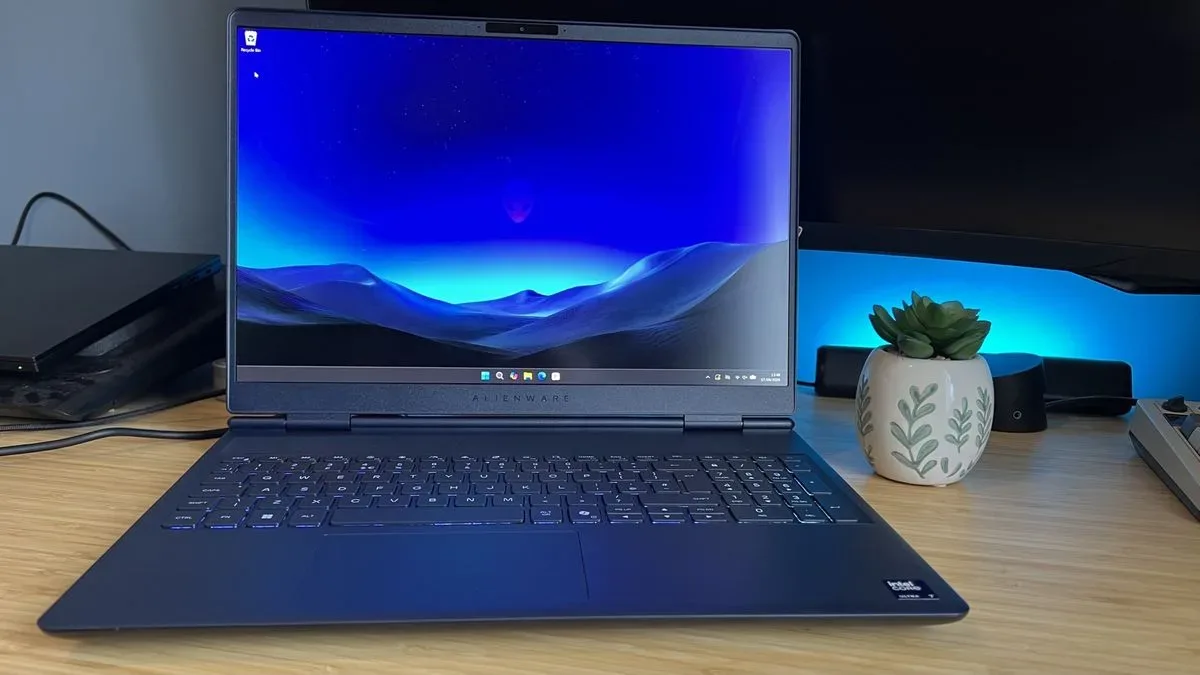
Alienware’s 2026 refresh of the 16X Aurora looks like a pointed attempt to repair two of the previous model’s biggest omissions: the lack of an OLED panel and a GPU ceiling that stopped at the RTX 5070. The revised 16-inch gaming laptop now offers a 240Hz WQXGA anti-glare OLED display, while the configuration list extends as far as an RTX 5070 Ti. That makes it a considerably more persuasive middle-ground machine for PC players who want current-generation features without stepping into the RTX 5080 and RTX 5090 price stratosphere.
There is, naturally, a catch, because gaming laptops have apparently decided that “mid-range” should now be accompanied by a small dramatic orchestral sting at checkout. The 16X Aurora starts at $1,529.99 in the US, with UK pricing beginning at £2,349. More elaborate configurations rise to $5,279.99 in the US and £6,549 in the UK. A reported test configuration equipped with an Intel Core Ultra 7 270HX Plus, an RTX 5070, 16GB of DDR5 memory and a 1TB Gen4 SSD carried a $2,679.99 / £2,499.99 price tag.
That is a substantial jump from the earlier 16X Aurora generation, where an RTX 5070 configuration was available below $1,600, and a 32GB RTX 5060 model was previously listed at $1,449.99. The wider laptop market has become more expensive, particularly amid continued pressure on RAM prices, so the increase is not unique to Alienware. Still, the newer Aurora lands a little above the approximate $2,500 average MSRP cited for RTX 5070 laptops in July, before discounts. The premium is not enormous in this corner of the market, but it is very much there, lurking in the bushes with a Dell logo.
A genuinely distinctive display upgrade
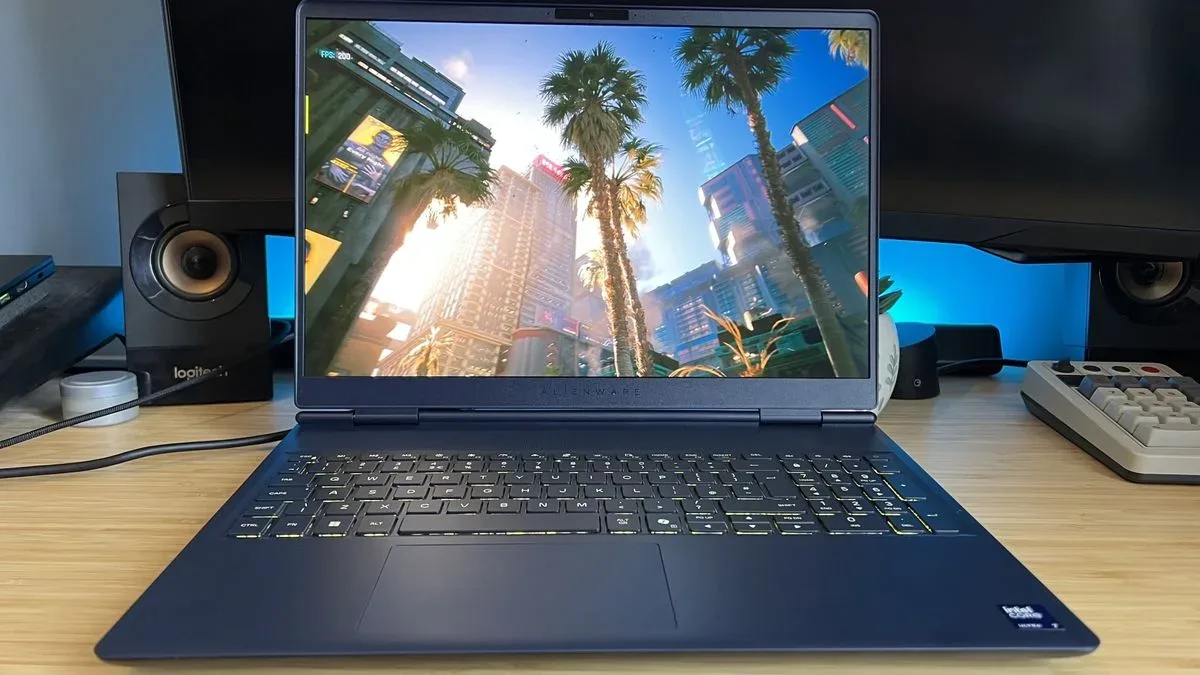
The headline feature is the 16-inch WQXGA anti-glare OLED panel, running at 240Hz. OLED technology is hardly unheard of in gaming laptops, but Alienware’s use of a matte, anti-glare surface is more unusual. Many competing OLED systems lean into glossy finishes, which can make blacks and colors look especially striking indoors but can also turn the screen into an unsolicited mirror whenever daylight enters the room.
The matte implementation is reported to retain OLED’s strong color, contrast and clarity while substantially reducing visible reflections. That could be the crucial difference for people who play or work in bright rooms, near windows, or anywhere that contains the mortal enemy of glossy displays: a lamp. Dark scenes should remain easier to parse under ambient light, while bright and neon-heavy games such as Cyberpunk 2077 still benefit from the deep contrast expected of OLED.
It is also the upgrade that most clearly changes the laptop’s day-to-day character. CPU generation labels can be useful for comparison charts, but the Intel Core Ultra “Plus” processors are not presented as a transformative change to ordinary gaming performance. A display, on the other hand, is present in every game, menu, film, work document and late-night attempt to convince yourself you will only play one more round. For an owner keeping a laptop for several years, that is a meaningful upgrade.
RTX 5070 Ti is now on the table
The refreshed 16X Aurora sits between Alienware’s less powerful 15-inch hybrid systems and entry-level 16 Aurora, on one side, and the more formidable 16- and 18-inch Area-51 models on the other. It is therefore not intended to be the company’s portable performance crown. Buyers who need the uncompromising 1600p muscle associated with RTX 5080 systems, or full 4K ambitions on RTX 5090 hardware, will need to look higher up the food chain.
For everyone else, the new GPU selection is sensibly broader. Available graphics options include the RTX 5060, RTX 5070 and RTX 5070 Ti. At the top end, the 5070 Ti configuration can offer 12GB of VRAM, giving the machine more breathing room for demanding games at higher resolutions than an 8GB configuration can provide. The reported RTX 5070 test model used the older 8GB version, an important distinction when comparing its figures to newer 12GB RTX 5070 laptops.
Related coverage includes Alienware 16X Aurora Review: A Matte OLED Upgrade With Room to Grow.
Performance results place the RTX 5070-equipped Aurora broadly alongside other machines using that GPU. It reportedly outpaced thinner designs including the Razer Blade 14 and Acer Predator Triton 14 AI in several scenarios, while generally tracking close to the similarly sized Asus ROG Strix G16. Synthetic results varied by test: it kept pace in 3DMark Steel Nomad, led that comparison group in Fire Strike, and trailed the Strix G16 in Time Spy.
In game workloads, the Aurora was reported to stay above 60fps in Cyberpunk 2077 at 1080p with RT: Ultra, despite using 16GB of memory. At more demanding resolutions, it follows the expected RTX 5070 pattern: heavy games can fall below 60fps, though less punishing settings and titles can still reach that mark. In Total War: Three Kingdoms at Ultra settings, the Aurora averaged 62fps while the 32GB Strix G16 comparison system reached 68fps. That is still smooth territory, but it illustrates where extra memory can help, especially in strategy games and similarly RAM-hungry workloads.
The 16GB compromise has an escape hatch
For 2026 buyers, 16GB of RAM may feel like an uncomfortable compromise rather than a relaxed default, especially on a laptop costing more than $2,600 in the reported configuration. The encouraging part is that the 16X Aurora has been designed to be upgraded rather than sealed away like an ancient tomb whose contents are a single non-replaceable memory module.
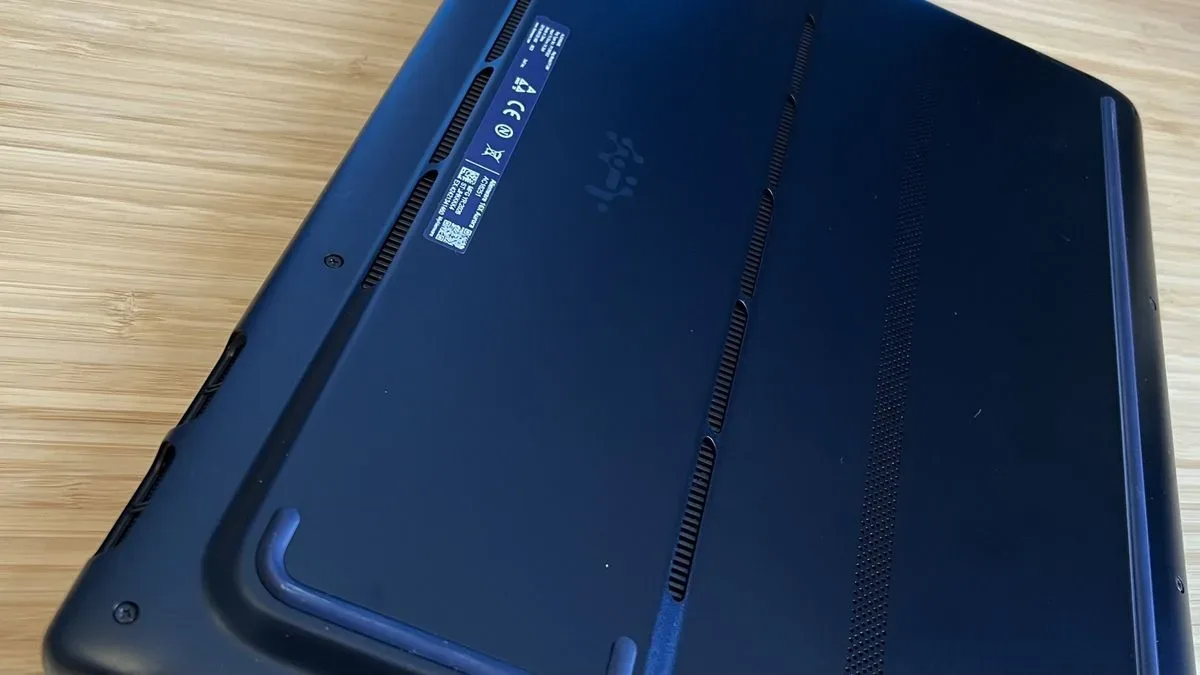
The lower cover is secured with Philips-head screws. Inside are two DDR5 memory slots, allowing support for up to 64GB across the pair. There are also two M.2 storage bays compatible with 2230 and 2280 drives. That provides a practical route to wait out high component pricing, buy an affordable configuration now, and add RAM or storage later if prices improve or workloads demand it.
Storage choices range from a 512GB NVMe M.2 Gen4 SSD, apparently limited to the US at the time covered, through 1TB Gen4 configurations, to 2TB Gen5 storage and a 4TB RAID 0 Gen5 option. The faster Gen5 option begins at 2TB. For users who rotate through giant modern game installs, that second M.2 slot may ultimately be more exciting than any marketing slogan. No one wants to delete a 150GB game just to make room for another 150GB game and a patch the size of a regional weather event.
Port selection and battery expectations
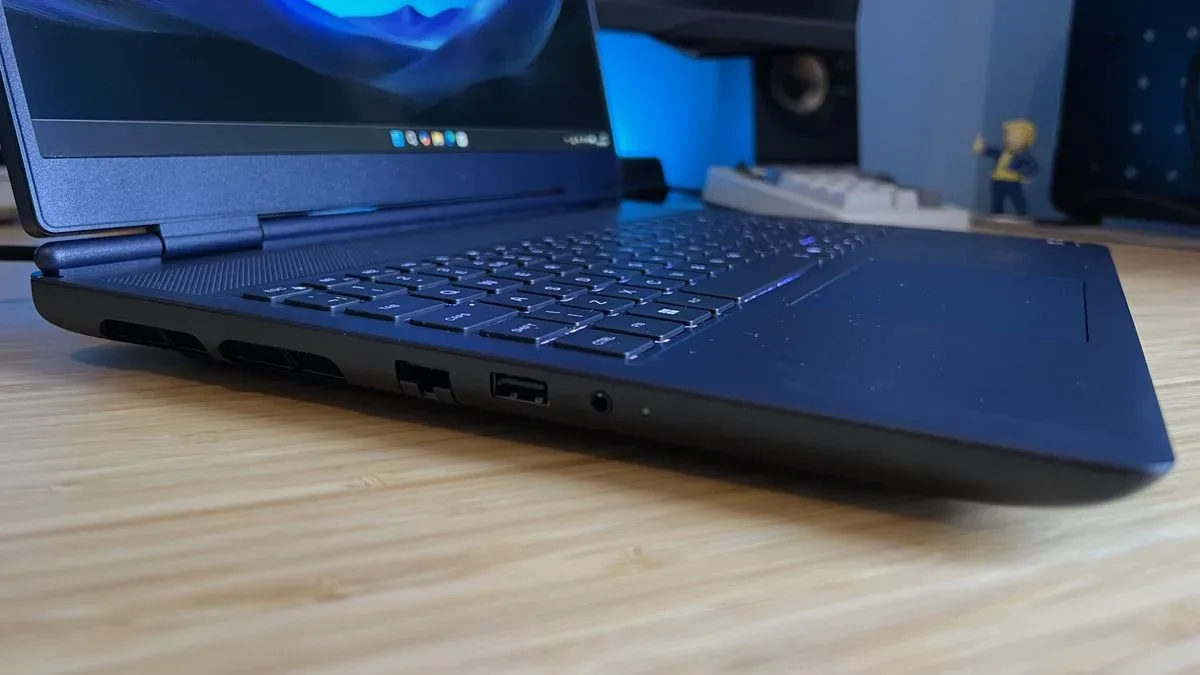
Connectivity is modern, with Wi-Fi 7 and Bluetooth 5.4. Physical ports include two USB 3.2 Gen 1 connections, one USB 3.2 Gen 2 Type-C port, Thunderbolt 4, HDMI 2.1, RJ45 Ethernet and a 3.5mm audio jack. That is a useful selection for a machine likely to live on a desk for at least part of its life, while still giving it the essentials for an external display, wired networking, peripherals and a headset without requiring an immediate dongle intervention.
Battery results described for the laptop are unusually respectable for this performance category. Productivity use reportedly lasted through a full eight-hour workday multiple times, while gaming battery life came in at about three and a half hours. As ever, battery estimates depend heavily on brightness, settings, applications and the simple fact that a dedicated GPU treats batteries as a light snack. But the figures suggest the 16X Aurora is not strictly a wall-powered desktop replacement, even if it is not an ultra-light work-and-play companion either.
It is portable in the legal sense
Alienware has kept the chassis relatively manageable compared with the Area-51 range, using rounded edges and soft-touch interior materials. Yet the word “manageable” deserves careful handling. The 16X Aurora measures 0.92 by 10.45 by 14.05 inches and weighs between 2.57kg and 2.61kg, depending on configuration.
That puts it above several 16-inch rivals: the MSI Cyborg at 2.1kg, Acer Nitro V16 AI at 2.43kg, Lenovo Legion 7 Gen 10 at 1.99kg and Acer Predator Helios Neo 16S AI at 2.3kg. Only the 2.8kg Asus ROG Zephyrus Duo, itself hauling around a second display, was cited as heavier among one recent comparison set. The Aurora should be perfectly plausible for occasional trips, room-to-room movement or a short commute. Carrying it daily alongside a charger, accessories and ordinary human belongings is a different proposition.
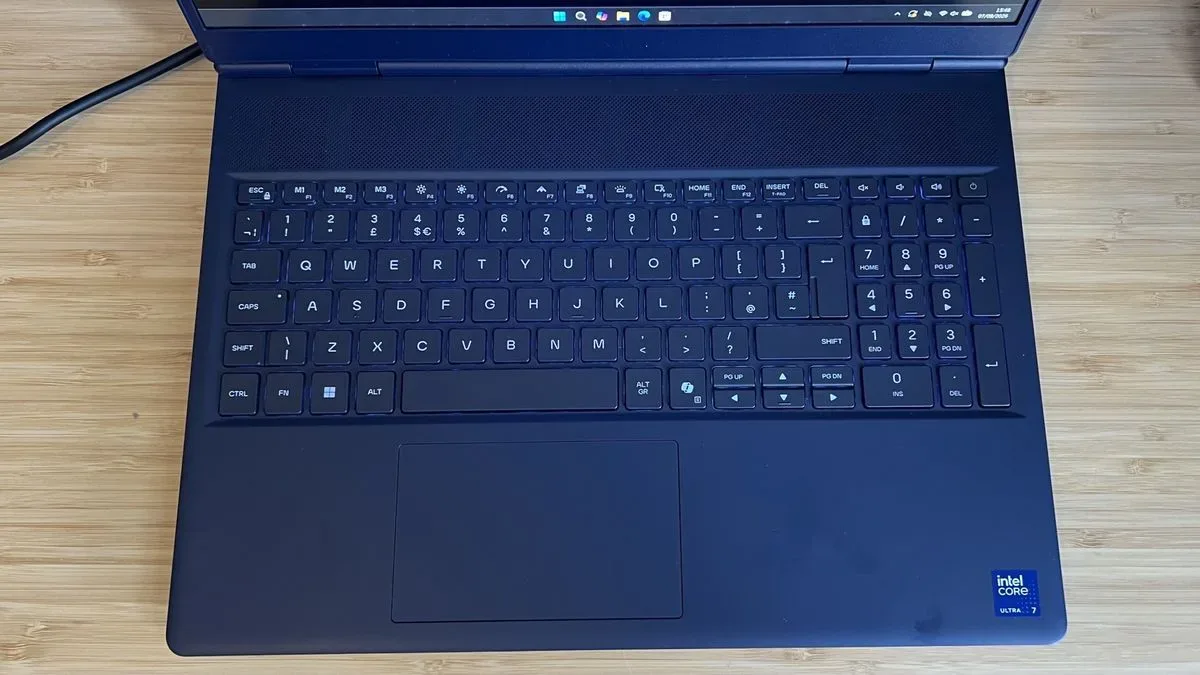
The keyboard is another area where expectations should be measured. It reportedly has sufficient travel and responsive resistance for repeated presses, without feeling mushy. However, its keys were characterized as slightly loose compared with some prior Alienware keyboards, and the trackpad was said to have more depth than ideal. None of that sounds fatal, but a laptop in this price range invites picky standards.
Who the Alienware 16X Aurora suits
The 2026 Alienware 16X Aurora has a clearer identity than its predecessor. It is a premium-leaning mid-range 16-inch laptop for players upgrading from RTX 30-series or RTX 40-series hardware, particularly those who value OLED image quality but dislike glossy screens. The 240Hz matte OLED may be its strongest argument, with the RTX 5070 Ti option and upgradeable internals making the long-term proposition more compelling.
It is less convincing for frequent travelers, shoppers who expect 32GB of RAM at this price, or anyone who needs flagship-level high-resolution performance. But if a laptop will mainly work from a desk, visit a sofa now and then, and eventually receive a DIY memory or SSD upgrade, the 16X Aurora’s compromises look more reasonable. For people considering a PC that can also revisit older favorites, our guide to GameCube versus PS2 emulation explores another reason a capable portable gaming system can be useful beyond the latest blockbuster releases.
Ultimately, Alienware has not made the 16X Aurora lighter or cheaper. It has made it much more complete. In a year where component pricing is pushing buyers toward hard choices, the ability to begin with 16GB and upgrade later, paired with an anti-glare OLED that may remain satisfying for years, gives this hefty machine a surprisingly sensible long-game strategy.