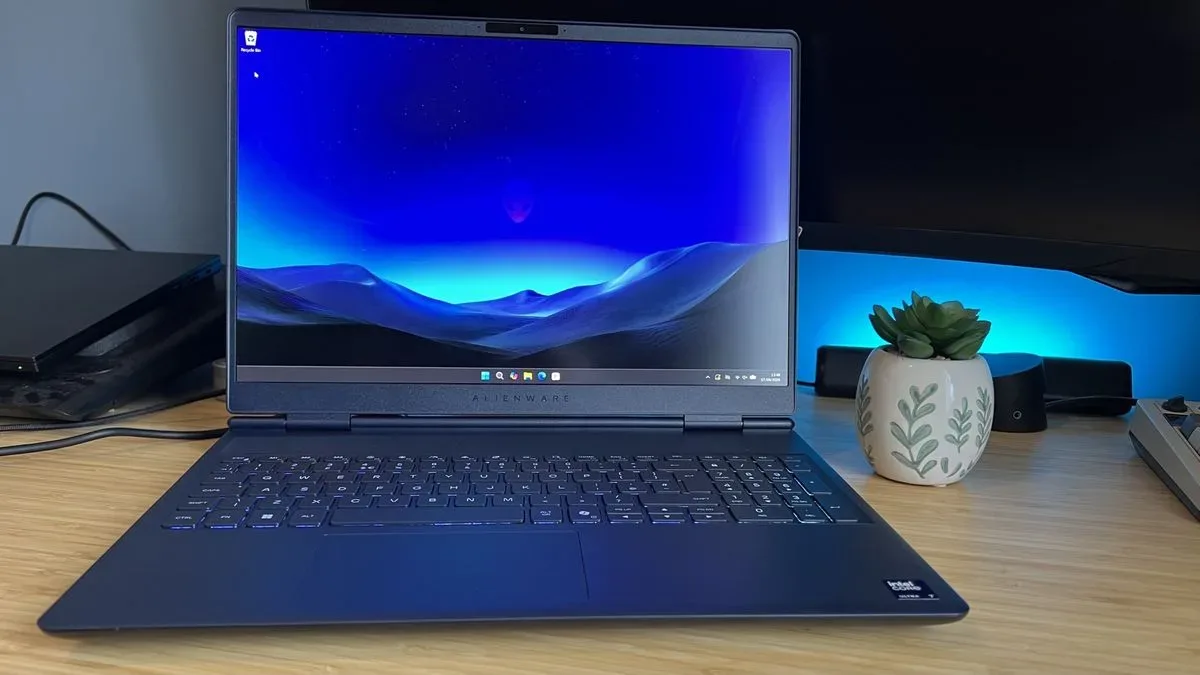

Dell’s Black Friday promotion has brought the Alienware 16 Aurora down to $1,399.99 from $2,249.99, a stated saving of $900. It is the sharpest reduction among the listed Aurora 16 configurations, putting a recognizable gaming-laptop nameplate at a much lower entry price than its original tag.
That headline discount needs a little context before anyone starts clearing desk space for a glowing alien head. The reduced model is positioned as a mid-range gaming laptop: it pairs an Intel Core processor with an Nvidia GeForce RTX 5050 and 16GB of memory. Those parts can make sense for people playing less demanding new releases, older favorites, indie games, or larger games with graphics settings kept modest. They are not, however, a promise of maximum-detail performance in every demanding current game.
There is also a specification discrepancy worth noticing in the promotional material. One description identifies the most heavily discounted system as an RTX 5050 model with 16GB of memory and 512GB of storage. The subsequently listed $1,399.99 configuration is described with a 1TB SSD. Shoppers should therefore treat the retailer’s live configuration page, rather than the broad deal headline, as the deciding record for storage capacity and every other component before buying.
What the $1,399.99 Alienware 16 Aurora includes
The core deal is the Alienware 16 Aurora with Nvidia’s GeForce RTX 5050, 16GB RAM and, in the listed offer, a 1TB SSD. Dell’s sale material describes the Aurora as having an Intel Core processor and a strong-looking display, though it does not provide enough detail here to make claims about the panel’s resolution, refresh rate, brightness, or color coverage.
In laptop shopping, the GPU, or graphics processing unit, is the component most closely tied to how a game renders its visuals. The RTX 5050 is described as the lowest-end entry in Nvidia’s recent graphics-card lineup. That does not make it unsuitable for gaming. It defines the sensible expectation: its best fit is not necessarily the latest GPU-heavy blockbuster at its highest presets, but games whose requirements match a more modest graphics tier.
RAM is a system’s working memory. It holds data that the operating system and active applications need quickly. The 16GB supplied here is presented as insufficient for the most advanced games, but it can still be adequate for many players and many games. A buyer chiefly interested in older PC releases, independent games, or big releases at lower graphics options may value the $900 saving more than the headroom offered by a pricier configuration.
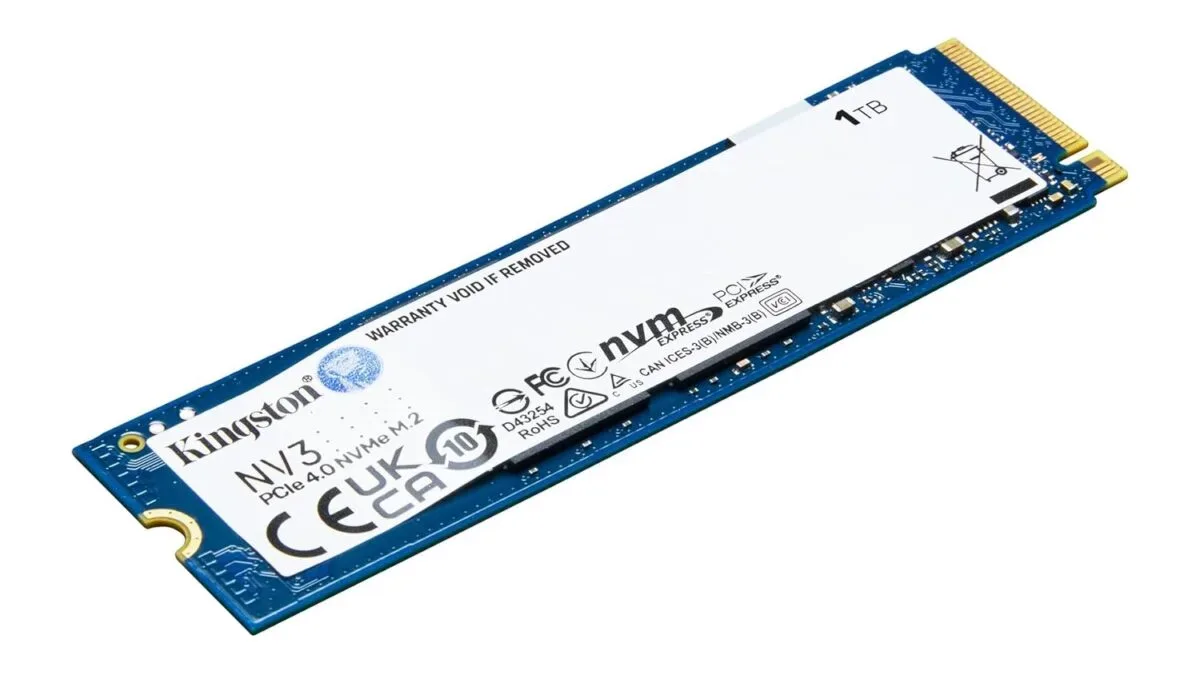
The SSD, meanwhile, is the internal storage used for installed games, applications, and files. The difference between 512GB and 1TB matters because games can occupy substantial space, but the supplied information does not establish which capacity is attached to every version of this promotion. Verify that line item carefully at checkout.
The other discounted Aurora 16 configurations
Dell is also discounting configurations with more capable graphics hardware and 32GB of memory. Their reductions are smaller, but the comparison is useful because the cheapest sticker price and the best fit are not automatically the same thing.
Related coverage includes Alienware 16 Aurora Falls to $1,399.99 With $900 Black Friday Discount.
- Alienware 16 Aurora, RTX 5050, 16GB RAM, 1TB SSD: $2,249.99 reduced to $1,399.99.
- Alienware 16 Aurora, RTX 5060, 32GB RAM, 1TB SSD: $2,699.99 reduced to $1,999.99.
- Alienware 16 Aurora, RTX 5070, 32GB RAM, 1TB SSD: $3,049.99 reduced to $2,749.99.
The RTX 5060 configuration costs $600 more than the $1,399.99 option, based on those listed sale prices, while bringing both a higher-tier GPU and twice the memory. The RTX 5070 model adds another $750 over the RTX 5060 offer. Neither comparison alone tells a reader which machine is “worth it,” because that rests on the games they plan to play and the budget they have set. It does show why the $900 figure should not be treated as the entire decision.
For someone who does not expect to run GPU-intensive games, the RTX 5050 version may be entirely sufficient. For someone seeking extra performance without stepping into the higher-priced Alienware 16X Aurora range, the RTX 5060 and 32GB option is the more natural configuration to examine. It has a substantially higher sale price, but it directly addresses the limitations identified for the entry model: graphics tier and available memory.
Why the 16X Aurora is a separate budget decision
Dell also has reductions on several Alienware 16X Aurora models, with discounts of up to $400. The 16X is the more advanced Aurora family member in the material provided, but it remains substantially more expensive even after those cuts: its deal prices are stated to begin at least $1,000 above the reduced Alienware 16.
That makes the choice less about whether an X is objectively better and more about whether its higher cost is useful for the games a buyer actually intends to play. More powerful hardware can make a visible difference during gaming, but an improvement is not automatically a requirement. Spending far more for capacity that goes unused is still spending far more, no matter how futuristic the chassis looks in product photos.
A practical way to frame the decision is to start with the software, not the sale percentage. Players focused on lower-demand games can reasonably put the discounted RTX 5050 system at the top of their list. Players who know they want additional graphical performance should compare the more capable standard 16 Aurora variants before assuming the 16X is necessary. The supplied pricing suggests that moving up within the regular Aurora 16 line may be a more economical route to extra power than crossing into the 16X family.
Extras are bonuses, not a substitute for matching the hardware
The Black Friday offer also includes several broader Dell-site incentives. Purchases are eligible for 30% off software tools including McAfee and Microsoft 365, plus a multi-buy discount on years of Alienware Elite Care support. Dell is also advertising 25 free Xbox games with a stated value of $500, although the individual games have not been named.
The unnamed-game point is important. A bundle can be a pleasant extra, particularly for someone who already expects to use Xbox titles, but it is difficult to assign a personal value to a library whose contents have not been disclosed. It should not be used to justify a laptop that misses the buyer’s performance or storage needs. Likewise, software discounts are only savings if the software is wanted in the first place, and support-plan discounts need to be considered in light of the terms and number of years selected.
For buyers wondering how much memory-market pressure might influence PC purchases, Joking Joystick has also examined what changing memory prices could mean for PC buyers. In this particular sale, the immediate takeaway is simpler: the 16GB/RTX 5050 Aurora 16 carries the largest stated dollar discount, while the 32GB RTX 5060 model is the more compelling comparison for shoppers who already know they need more headroom.
A short checkout checklist
- Confirm the exact storage listing. The promotion materials reference both 512GB and 1TB alongside the heavily reduced RTX 5050 model.
- Prioritize the GPU and RAM over the percentage off. The entry configuration is aimed at mid-range and lower-demand gaming rather than the most advanced games.
- Compare the RTX 5060 model before moving to a 16X Aurora. It offers stronger listed core specifications at a lower sale price than the more advanced product line.
- Read the terms on the extras. The 25-game Xbox bundle has a stated $500 value, but its games have not been identified.
- Keep the total budget in view. A reduced price remains a significant purchase, especially once optional software or support is considered.
The Alienware 16 Aurora’s $1,399.99 price is a sizable reduction on paper, and it could be a sensible entry for gamers whose needs align with an RTX 5050 and 16GB of RAM. The deal becomes less straightforward when a buyer expects high-end performance, needs more working memory, or is tempted by the unknown value of bonuses. In those cases, the more expensive Aurora 16 configurations are not merely upsells; they are different hardware propositions that deserve a direct comparison.