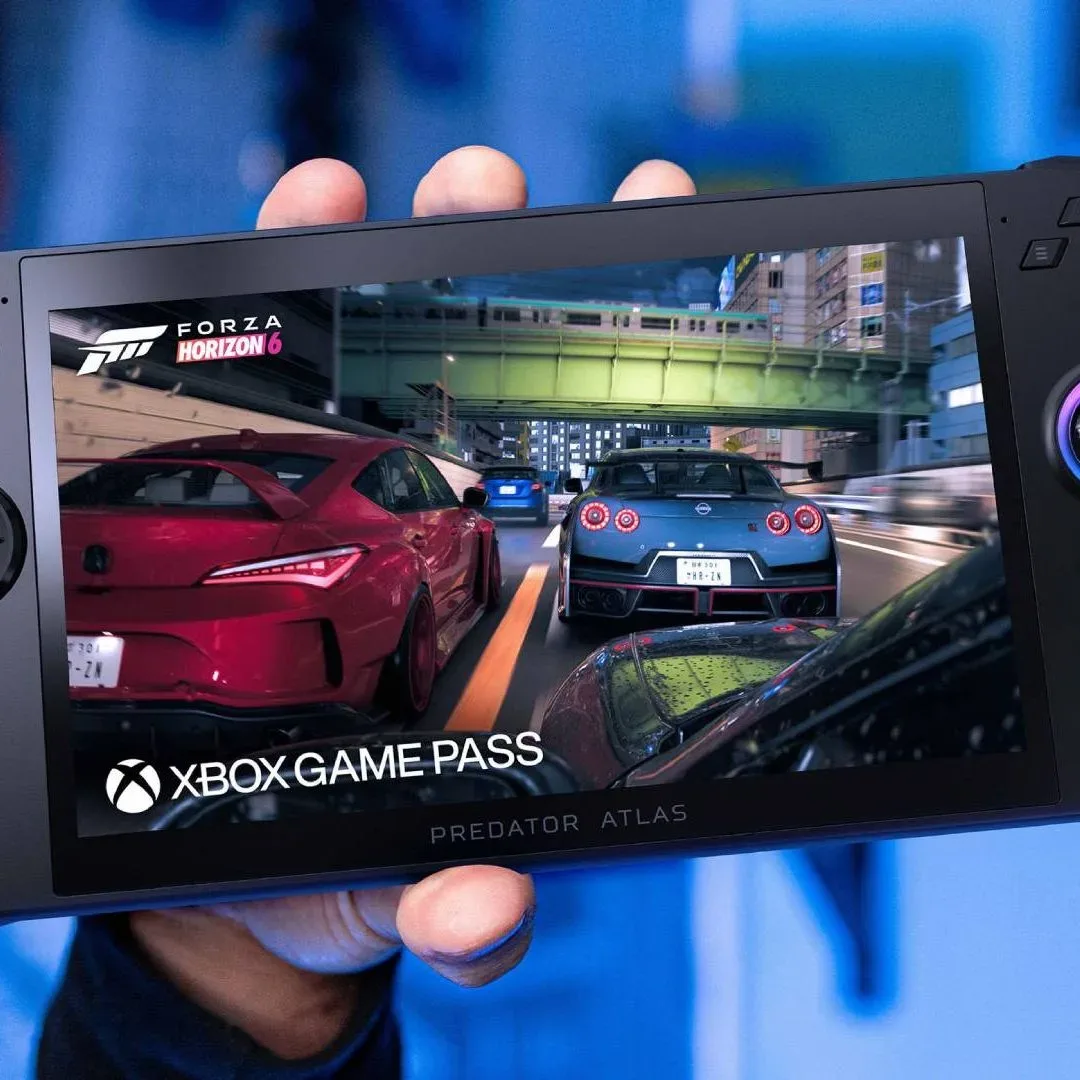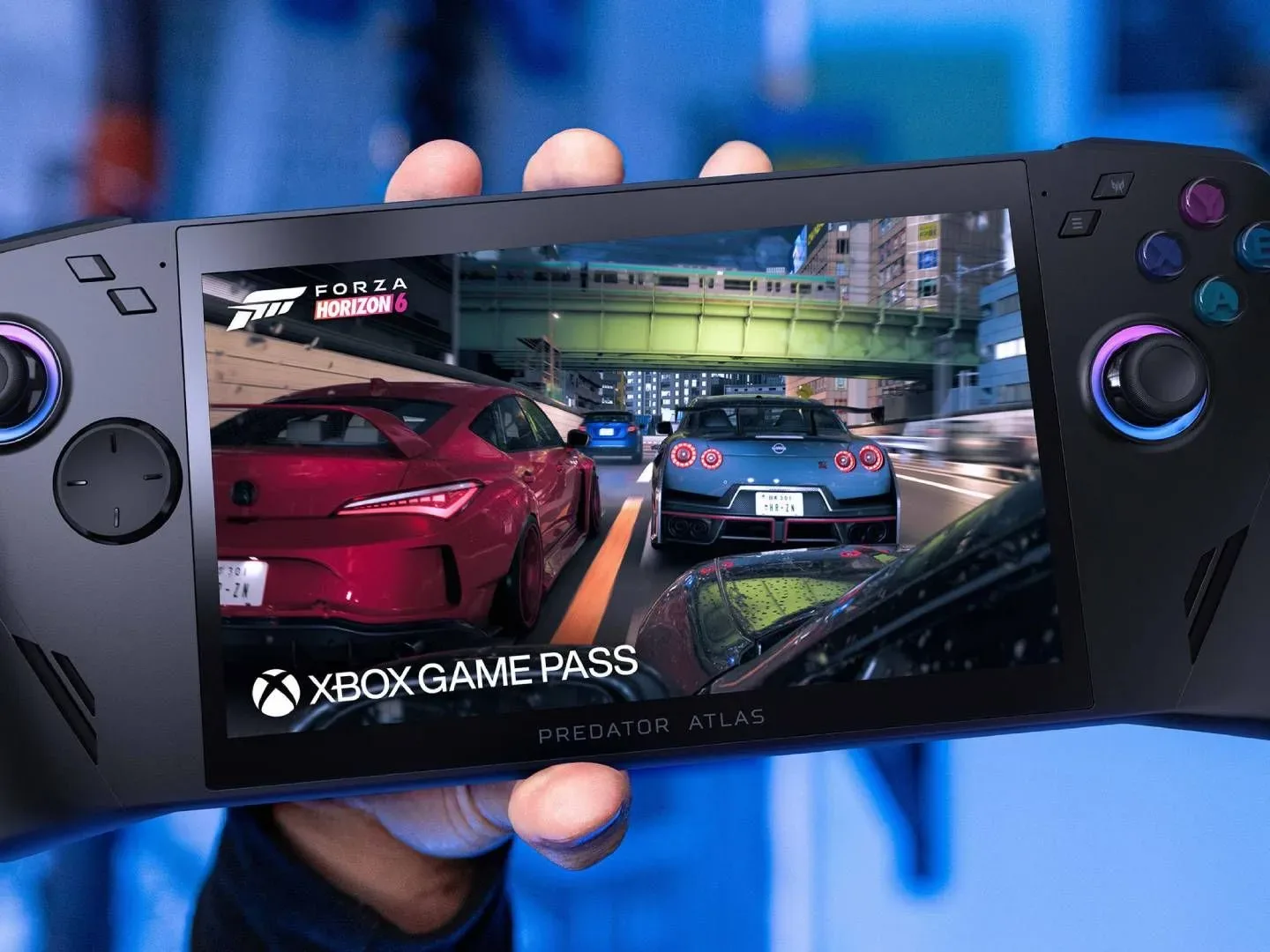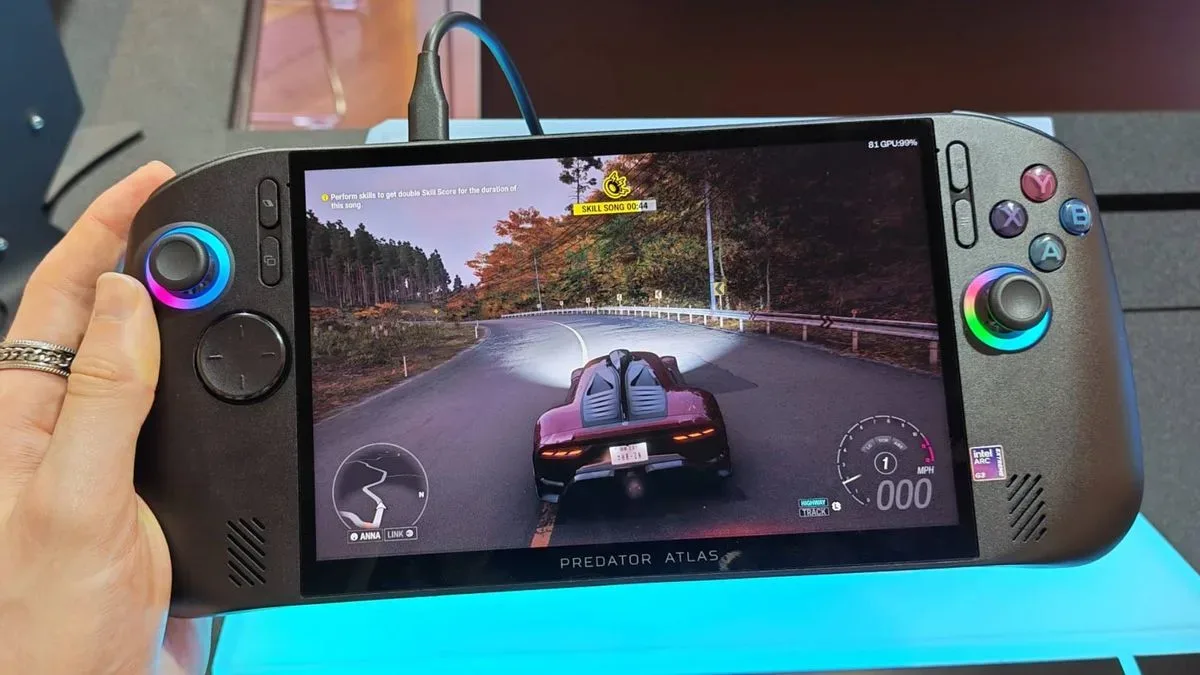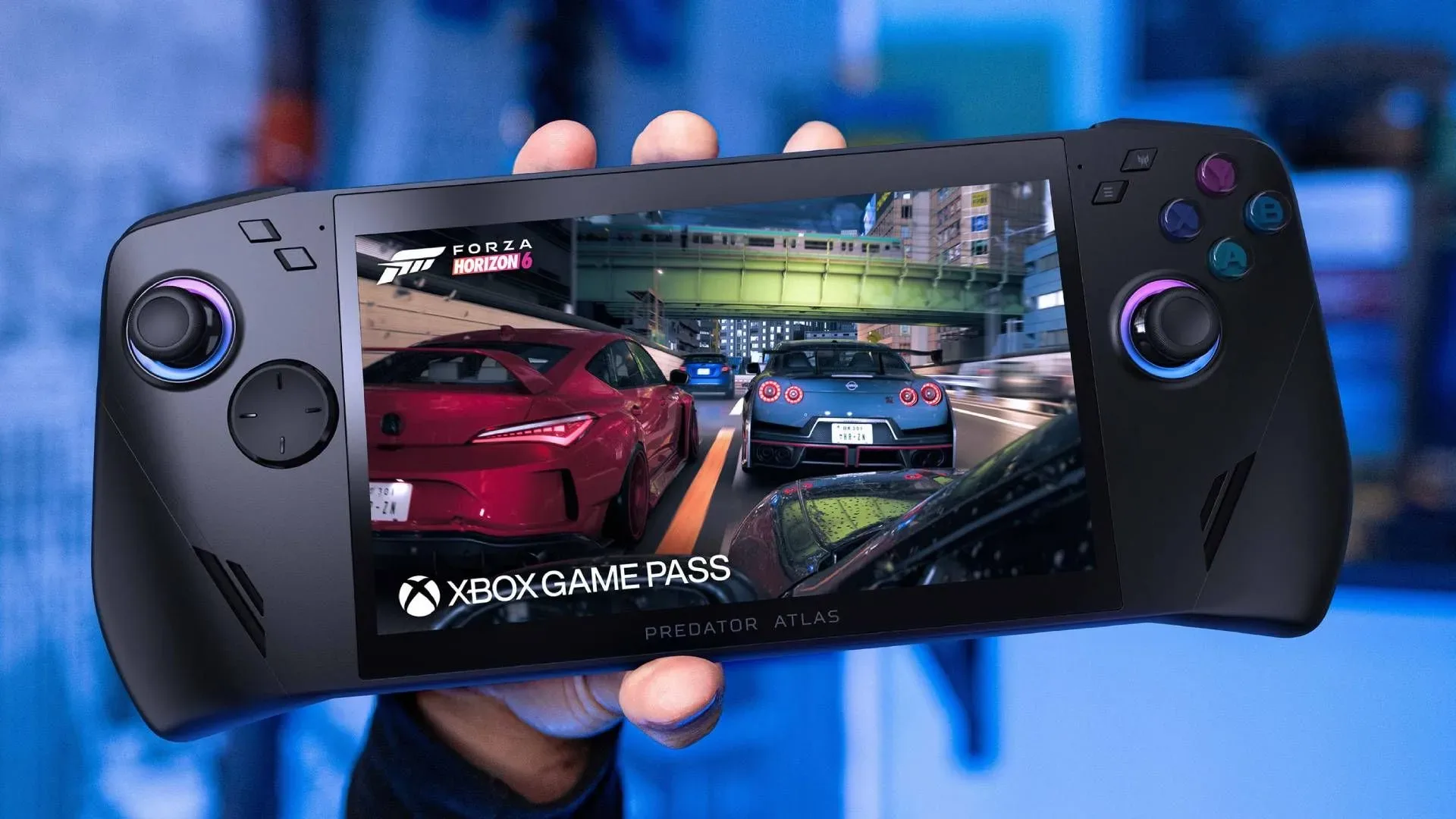
Acer’s premium handheld-PC push has a more concrete UK foothold: the Predator Atlas 8 is now available there for £1,299. The 8-inch portable pairs an Intel Arc G3 Extreme chipset with 24GB of RAM and 1TB of storage, then adds a collection of enthusiast-leaning controls and battery hardware that make its ambitions clear: this is not positioned as a low-cost entry point to PC gaming on the move.
For US buyers, the wait is expected to last until October. The anticipated US price is around $1,700, though that figure should be treated as an estimate rather than a confirmed retail price. Either way, the gap between the expected American price and several other high-end handheld options puts the Atlas 8 in a particularly demanding spot. It will need more than an impressive specification sheet to make its case.
What the £1,299 Atlas 8 includes
The UK configuration is a 24GB RAM and 1TB storage model. Its headline hardware is Intel’s Arc G3 Extreme chipset, while the physical package includes an 8-inch display, TMR thumbsticks, adjustable triggers and an 80Wh battery.
- Display size: 8 inches
- Chipset: Intel Arc G3 Extreme
- Memory: 24GB RAM
- Storage: 1TB
- Controls: TMR thumbsticks and adjustable triggers
- Battery: 80Wh
- UK price: £1,299
- Expected US timing: October
- Estimated US price: around $1,700
That is a well-stocked configuration on paper. RAM is the working memory a handheld uses while operating games and software; storage is the space reserved for installed games and files. The 1TB capacity matters practically because modern PC games can be large, while 24GB of RAM signals that Acer is aiming beyond the minimum viable specification. But capacity alone does not establish how the device will perform in games. Frame rates, image quality, operating modes, heat management and battery endurance all need real comparative testing before the Atlas 8’s value can be settled.
Likewise, the presence of TMR thumbsticks is a hardware feature worth noting, not a complete verdict on how the controls will feel over time. The same goes for adjustable triggers: they offer additional control customization, but their usefulness will depend on implementation and individual preferences. These are meaningful extras for players who care closely about handheld inputs, yet they do not automatically answer the larger price question.
Acer is trying again at broader handheld availability
The Atlas 8 is not Acer’s first handheld attempt. The company previously offered the 7-inch Nitro Blaze, but its retail presence was limited, with a soft rollout in the UK and Europe and little apparent US availability. The new model’s UK debut followed by an expected US retail window suggests a more deliberate attempt to establish a wider presence.
Availability matters in this category. A handheld can have compelling internals, but a product that is difficult to find, difficult to compare at retail or unsupported in a major market has a hard time becoming part of the broader buying conversation. The Atlas 8’s planned US arrival gives Acer an opportunity its earlier portable did not meaningfully receive.
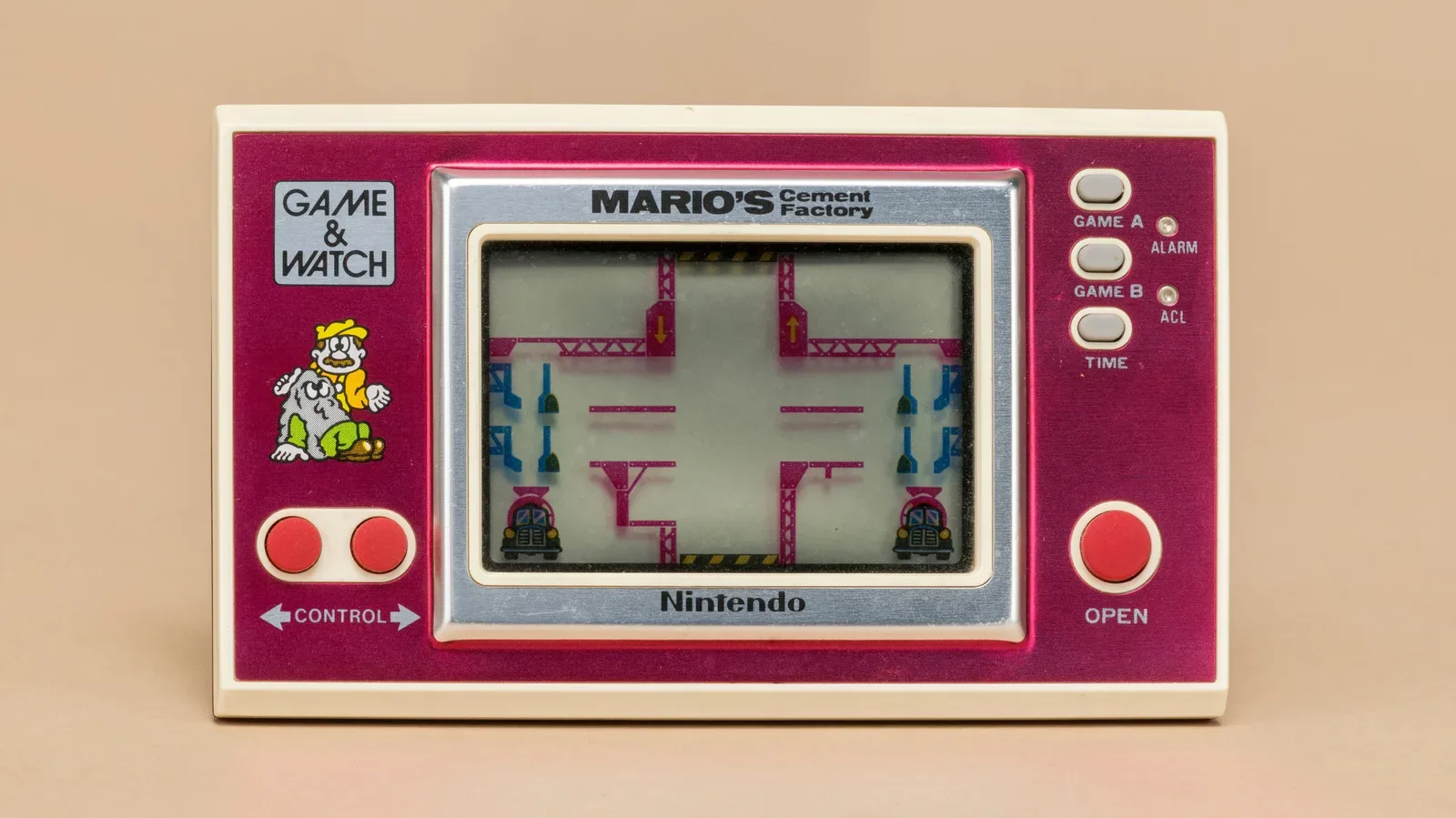
There is also a useful bit of handheld context in the wider history of the format. Long before PC-class portable hardware, Nintendo’s Game & Watch made a case for gaming devices built around a focused, portable purpose; our look at how Game & Watch helped shape Nintendo’s handheld future explores that earlier chapter. The Atlas 8 belongs to a vastly different, much more expensive segment, but it still faces the perennial portable challenge: giving players enough capability and convenience to justify what they carry and what they spend.
Related coverage includes Acer Predator Atlas 8 Launches in the UK With US Release Set for October.
The price comparison Acer cannot avoid
The central issue is not that the Predator Atlas 8 lacks premium features. It is that it enters an increasingly crowded premium tier while carrying an especially steep expected US price.
Asus is also expected to bring out the ROG Xbox Ally X20 in October. That device is described as adding a 7.4-inch OLED display and TMR thumbsticks to the existing ROG Xbox Ally X approach, with a listed $1,299 price. The existing ROG Xbox Ally X is available at $999.99. On the stated figures, the expected Atlas 8 price would be roughly $400 above the X20 and roughly $700 above the current Ally X price.
The comparison is not perfectly straightforward. The Atlas 8 has the larger screen by 0.6 inches compared with the X20, and it uses a different chip family. The X20, meanwhile, is built around AMD’s Ryzen Z2 Extreme rather than Intel’s Arc G3 Extreme and includes OLED display technology. OLED is a display type associated here with the X20’s screen distinction, while the supplied details do not establish a like-for-like performance result between the two machines.
That distinction is crucial. A chipset is the core silicon platform that handles a device’s processing and graphics work. It has a major influence on game performance, but the final experience also depends on software support, power settings and the rest of the system design. Without side-by-side benchmarks, there is no sound basis for declaring either the Intel Arc G3 Extreme or AMD Ryzen Z2 Extreme the winner in this specific matchup.
Why the display question may matter more than the size difference
For a buyer choosing strictly between these two expensive handhelds, a 0.6-inch screen-size difference may be less persuasive than a difference in display technology. The Atlas 8’s 8-inch panel is larger, but the competing X20’s 7.4-inch OLED screen gives it a distinct specification talking point at a lower listed US price.
That does not mean every player will value OLED more than additional screen area, nor does it mean the X20 is necessarily the better overall machine. A person who prioritizes the newest Intel platform, more physical display space, a particular battery specification or Acer’s control layout may reasonably prefer the Atlas 8. The point is narrower: at this end of the market, buyers are not merely selecting a screen size. They are weighing different premium propositions, and the cheaper competitor has an easily understood display advantage on its spec sheet.
What remains unknown before a buying decision
The UK listing establishes the Atlas 8’s price and configuration, but it does not resolve several questions that are more important than a long features list.
- Performance: There are no supplied benchmark comparisons between Arc G3 Extreme and Ryzen Z2 Extreme handhelds.
- Battery life: An 80Wh battery describes capacity, but not how long the system will last under different workloads.
- US price: October timing and the approximate $1,700 figure are not the same as a final confirmed MSRP and retail listing.
- Retail reach: The planned US release is encouraging after the Nitro Blaze’s limited availability, but its eventual retailer coverage remains to be seen.
- Value: Whether the Atlas 8’s controls, storage, memory and chipset meaningfully justify its premium depends on the performance and experience those components produce together.
Those unknowns should steer the practical response for prospective buyers. UK shoppers who already know they want Acer’s newest flagship can assess it at the stated £1,299 price, but buyers chiefly chasing the best value should be careful about treating specifications as a completed answer. US shoppers in particular have a reason to wait for the firm price, retail details and comparative performance data rather than anchor on an estimate.
Analysis: a flagship that has to prove its premium
The Predator Atlas 8 appears designed to make few obvious compromises in the components that are easiest to advertise: 24GB of RAM, 1TB of storage, specialty thumbsticks, configurable triggers and a large battery all read like flagship hardware. Yet that is precisely why its pricing will draw attention. Once a portable costs £1,299 in the UK and is expected to approach $1,700 in the US, it is competing not only on raw specifications but on the clarity of its benefit over other premium devices.
Acer’s strongest case may ultimately depend on what the Arc G3 Extreme does in actual games. If it delivers a meaningful performance advantage over the Ryzen Z2 Extreme in comparable conditions, that could change the conversation substantially. If the results are close, the cheaper rival’s OLED screen becomes a much harder feature to overlook. At present, neither outcome is established.
For now, the most reliable reading is simple. Acer has brought a serious, fully featured 8-inch handheld PC to UK retail and is preparing a US launch for October. It arrives with enough high-end hardware to earn attention, but at a price that leaves little room for uncertainty. The Atlas 8 does not need to be a budget alternative. It does, however, need to demonstrate why its particular combination of Intel silicon, controls, capacity and display size is worth paying for.