Nintendo’s Game & Watch did not begin as an attempt to build the biggest or most technically imposing machine in entertainment. Its central idea was smaller and more observant: a person on a train, passing time by pressing buttons on a calculator.
Gunpei Yokoi saw that moment in 1979 and drew a conclusion that now feels obvious only because handheld gaming became so pervasive afterward. People had idle moments away from the television and away from arcades. A game that fit those moments could be valuable, even if it used restrained hardware and offered a focused kind of play.
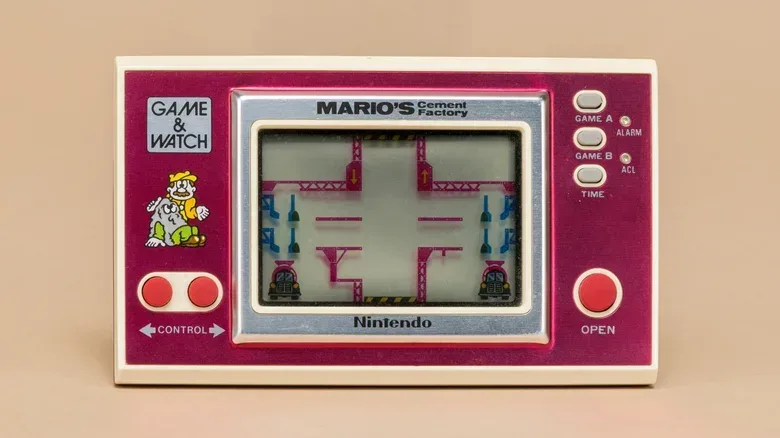
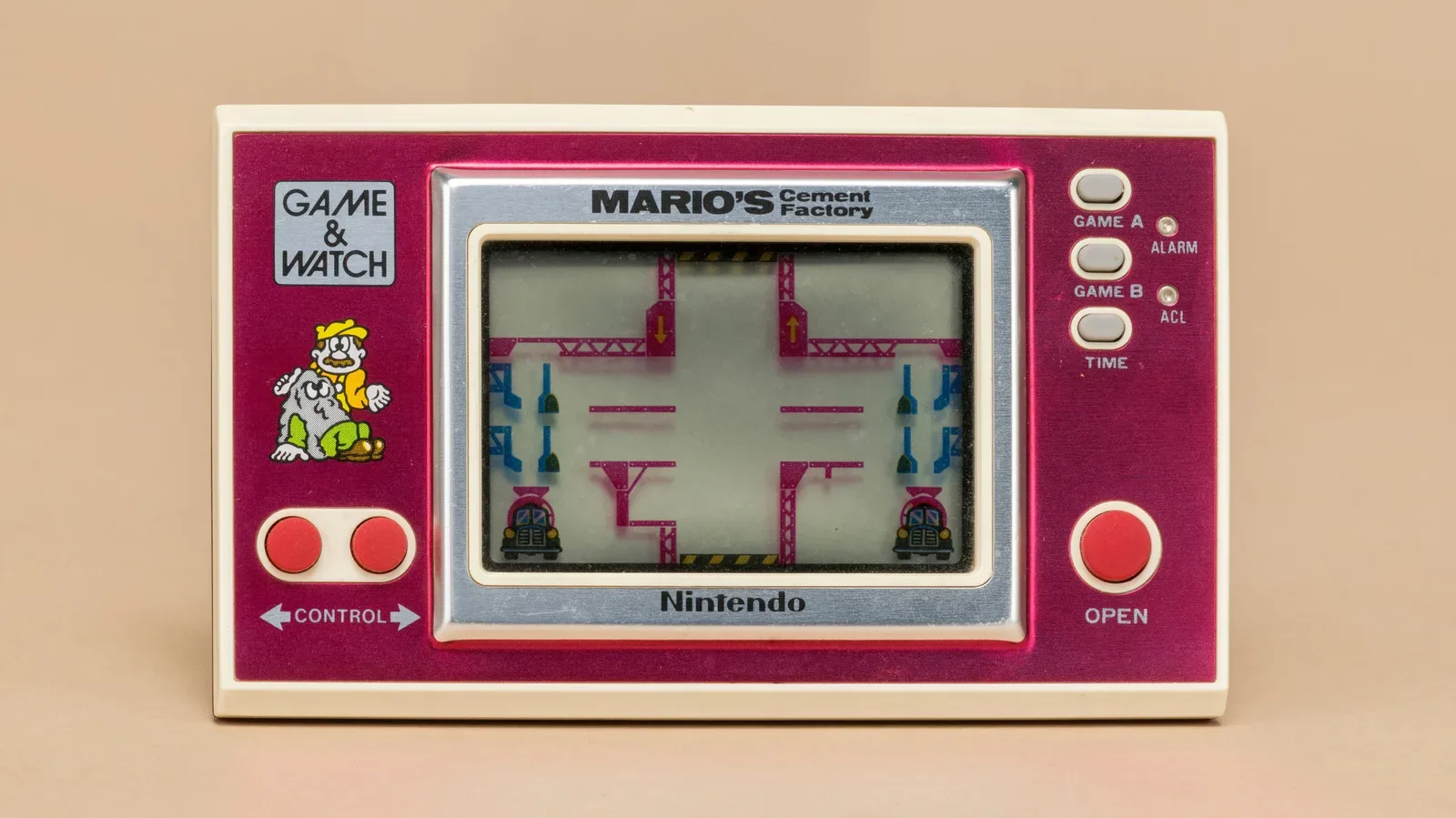
That insight led to Game & Watch, Nintendo’s line of LCD handheld games. The first unit, Ball, arrived in 1980. Over the life of the range, Nintendo released 59 Game & Watch titles through 1991 and sold more than 43 million units worldwide. The machines’ importance is not simply that they were early portable games. They helped establish a durable Nintendo approach: make clever use of dependable, familiar technology instead of treating raw technical novelty as the whole product.
It is an origin story with a suitably unglamorous catalyst. Boredom, a calculator and a train ride may not sound like the ingredients of a major games business, but together they identified an audience need that an arcade cabinet and a home console could not address.
Nintendo before the handheld breakthrough
Nintendo’s eventual association with videogames was far from guaranteed. Founded in Kyoto in 1889, it began as a hanafuda playing-card manufacturer. As the popularity of those cards declined, the company explored a wide variety of businesses, including taxis and instant noodles, before toy-making became a more meaningful direction.
Yokoi joined Nintendo in 1965, at a difficult point for the company. Its stock had reportedly dropped from 900 yen to 60 yen. One of his early successes was the Ultra Hand, a mechanical reach-extender toy created in 1966. It sold 1.4 million units worldwide. That result mattered beyond the toy itself: it showed that Nintendo could find an accessible, mass-market idea in an object that was simple to understand and fun to use.
By the end of the 1970s, the company was moving much more decisively into electronic games. It released the TV-Game 6 and TV-Game 15 home consoles in 1977, and opened a coin-operated-games division in 1979. Those were important moves, but both home systems and arcade cabinets tied play to particular places. Yokoi’s observation on the train suggested a different possibility: gaming designed around being elsewhere.
The point was not merely to shrink an arcade game. A portable game had to be economical, hardy and easy to pick up in short bursts. Its hardware also needed to conserve power. Those constraints helped make the Game & Watch a separate proposition rather than a tiny imitation of what players already had at home.
Related coverage includes Game & Watch: The Calculator-Inspired Handheld That Helped Define Nintendo.
Calculator technology became a game screen
When Yokoi presented the Game & Watch concept to Nintendo president Hiroshi Yamauchi, timing helped. Yamauchi was about to meet Sharp’s president, opening the way for a collaboration. Sharp was then the world’s largest calculator manufacturer, and calculators supplied the technological starting point for the new handhelds.
The connection is more significant than it may initially appear. Both contemporary calculators and Game & Watch units used LCDs, button-cell batteries and segmented displays. An LCD, or liquid-crystal display, creates its image by selectively making predefined parts of the screen visible. Unlike a screen that freely draws any shape wherever it chooses, a segmented display is built around elements planned in advance.
A calculator’s familiar digits are a clear example. Each numeral is assembled from seven segments; illuminate different combinations and the display can show 0 through 9. A chip’s segment capacity limits how many display elements it can operate. That is why the figure attached to Ball is revealing: its chip could display 72 segments.
Seventy-two segments is a constraint, not a cinematic canvas. But Game & Watch turned that limit into a design advantage. A game could use a compact set of fixed visual positions and build challenge out of timing, movement and player attention. The display did not need to generate an open world to communicate what mattered. It needed to make the next decision readable.
This is the practical meaning of reusing calculator-style technology for play. The display hardware was proven, battery-friendly and understood. The creative work lay in determining what kind of game could thrive within its boundaries. Rather than waiting for a more advanced screen, Nintendo built a product around what the screen could do well.
Prototype work before the final electronics
The design process itself was notably hands-on. Early Game & Watch prototypes used carefully cut acrylic plastic and tiny wheat bulbs arranged on a circuit board the size of the eventual device. That physical mock-up process gave the team a way to plan on-screen motion and the position of display elements before a final electronic implementation.
It also speaks to an often overlooked aspect of hardware design: a display layout is part of gameplay. On a fixed-segment screen, the location of a character, an object or a hazard is not casually adjustable after the fact. Every visual position has to carry a clear purpose. Planning those positions physically made sense because the team was effectively composing an interface, a playfield and a sequence of animated states at the same time.
The pace that followed was extraordinary. Nintendo soon released roughly one Game & Watch title per month. Across 59 games, the line evolved rather than staying locked to its earliest form. It first moved to a widescreen format and later adopted the clamshell, dual-screen arrangement that became one of the most recognizable shapes in Nintendo portable hardware.
“Lateral thinking with withered technology”
Yokoi expressed the underlying philosophy with the phrase “lateral thinking with withered technology.” “Withered” here does not mean useless. It means technology that is no longer cutting-edge: established, available and dependable enough that a designer can focus on an unusual application rather than a risky engineering race.
“Lateral thinking” is the complementary half. The objective is to look sideways at familiar parts and imagine a different job for them. Calculator components were not invented for videogames, yet they became the foundation for pocketable games. In this reading, Game & Watch was not a compromise born solely from limited components. It was a purposeful reinterpretation of the components already at hand.
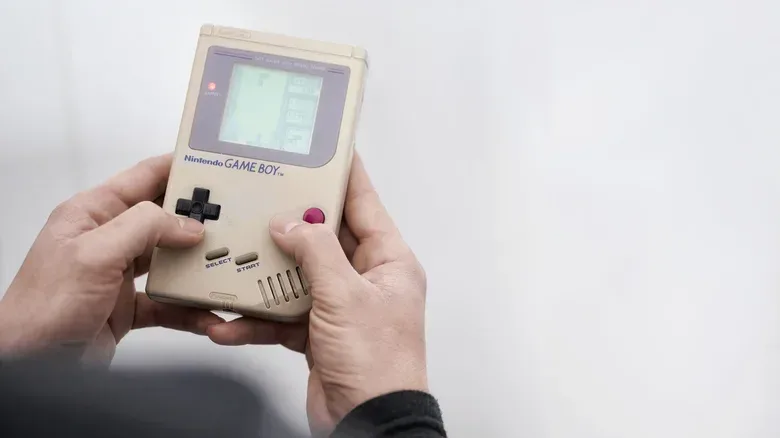
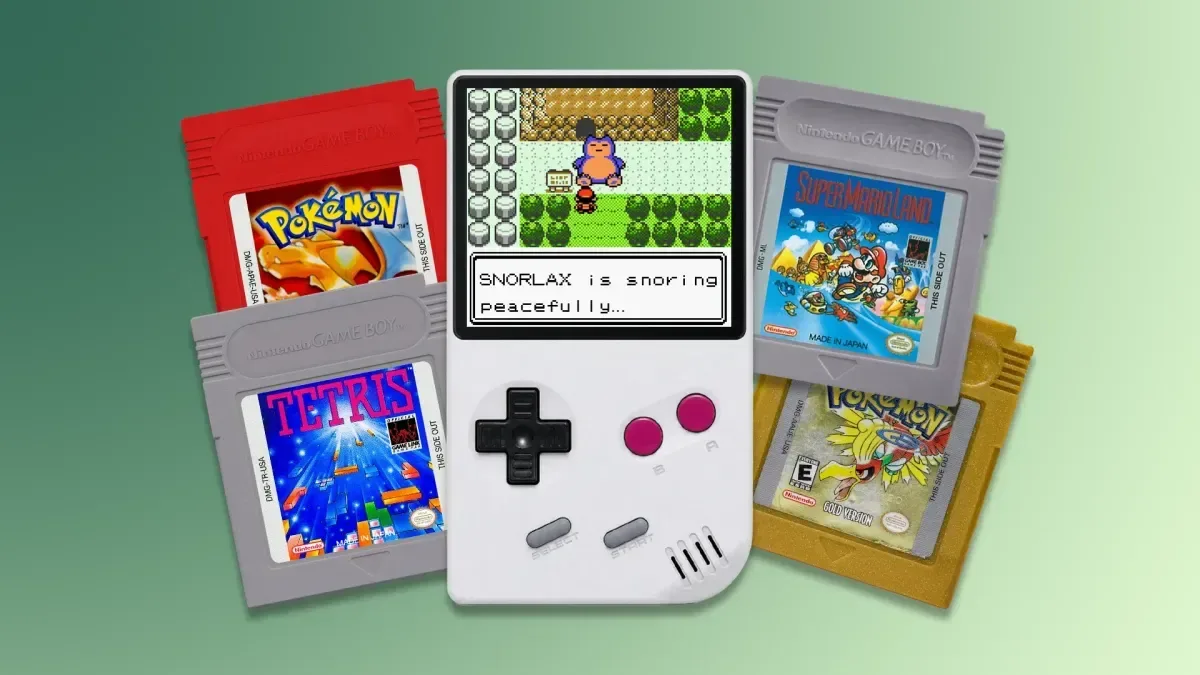
That philosophy continued into Yokoi’s work on the Game Boy. Rather than pursuing the most advanced hardware available, the Game Boy emphasized comparatively simple, affordable technology, portability and better battery life. Those trade-offs helped define its appeal. The lesson was not that processing power never matters; it was that the most powerful specification does not automatically solve the problem players actually have.
For a portable device, the relevant questions are broader: Can it travel easily? Can it run long enough to be useful away from an outlet? Is it approachable in cost and operation? Does the software suit the context in which people will use it? Game & Watch established a persuasive answer to those questions decades ago.
That design lineage remains useful context for present-day discussion of Nintendo hardware. When a Nintendo device is judged solely against a competitor’s technical peak, Game & Watch provides a reminder that the company’s historical strengths have often come from balancing technology with usage. Portability, price and an immediately understandable interaction can be features in their own right, not consolation prizes.
Readers weighing Nintendo’s modern portable priorities can see a related debate in coverage of visual complaints surrounding a Switch 2 patch: technical results absolutely affect the experience, while the broader value of hardware also depends on the circumstances in which it is used.
The controls and form factor that endured
Game & Watch’s legacy is visible in more than a sales total. Yokoi’s work helped introduce two ideas that remain central to handheld design: the directional pad and the protective clamshell portable.
A D-pad is a cross-shaped directional control that lets a player input up, down, left and right with a thumb. It is a simple answer to a practical question: how can a small machine offer reliable directional input without requiring a full joystick? In a handheld setting, that compactness is crucial. The control must be easy to find by touch, inexpensive to manufacture and suitable for use while holding the device.
The clamshell form, introduced later in the Game & Watch line, addresses a different portable problem. Screens are vulnerable when a device is tossed into a bag or pocket. A hinged body can close over the display, protecting it while also keeping the overall object compact. Nintendo later used the dual-screen clamshell concept in other handheld systems, making the Game & Watch design evolution more than a cosmetic footnote.
Former Nintendo producer and president Satoru Iwata captured the scale of that influence in an internal interview, arguing that handheld systems would likely have taken a different course without Game & Watch and specifically questioning whether the Game Boy and Nintendo DS would have reached the market in the same way. It is necessarily a counterfactual, but the argument is grounded in a visible chain of ideas: portable play, compact controls, protected screens and hardware designed around specific daily habits.
Why the humble original still matters
Game & Watch can be easy to reduce to nostalgia: small LCD games from before more elaborate handhelds changed expectations. That framing misses the hard problem Yokoi and the team solved. They did not simply make games smaller. They identified a new setting for games, then matched the technology, interaction and industrial design to that setting.
The result helped strengthen Nintendo after an uncertain period and gave the company an enormously successful portable product. Along with the earlier Ultra Hand, Yokoi’s work is credited with helping pull Nintendo out of financial difficulty on two occasions. The broader legacy, however, is a method of making things: observe ordinary behavior, work within real constraints and discover where familiar hardware can do something unexpectedly delightful.
Game & Watch is only periodically revisited through themed releases and references, yet its influence remains unusually easy to trace. A person playing on the move, a thumb resting on a D-pad, a device designed to survive the trip home: these are not accidental features of handheld gaming. They are part of a design language that began with a calculator being used to make a dull train ride a little less dull.