Overwatch’s newest China-exclusive cosmetic collection has reopened a familiar—but increasingly sharp—argument: how much regional exclusivity can a global live-service game sustain before players elsewhere stop seeing it as a special local promotion and start seeing it as a permanently unequal version of the same game?
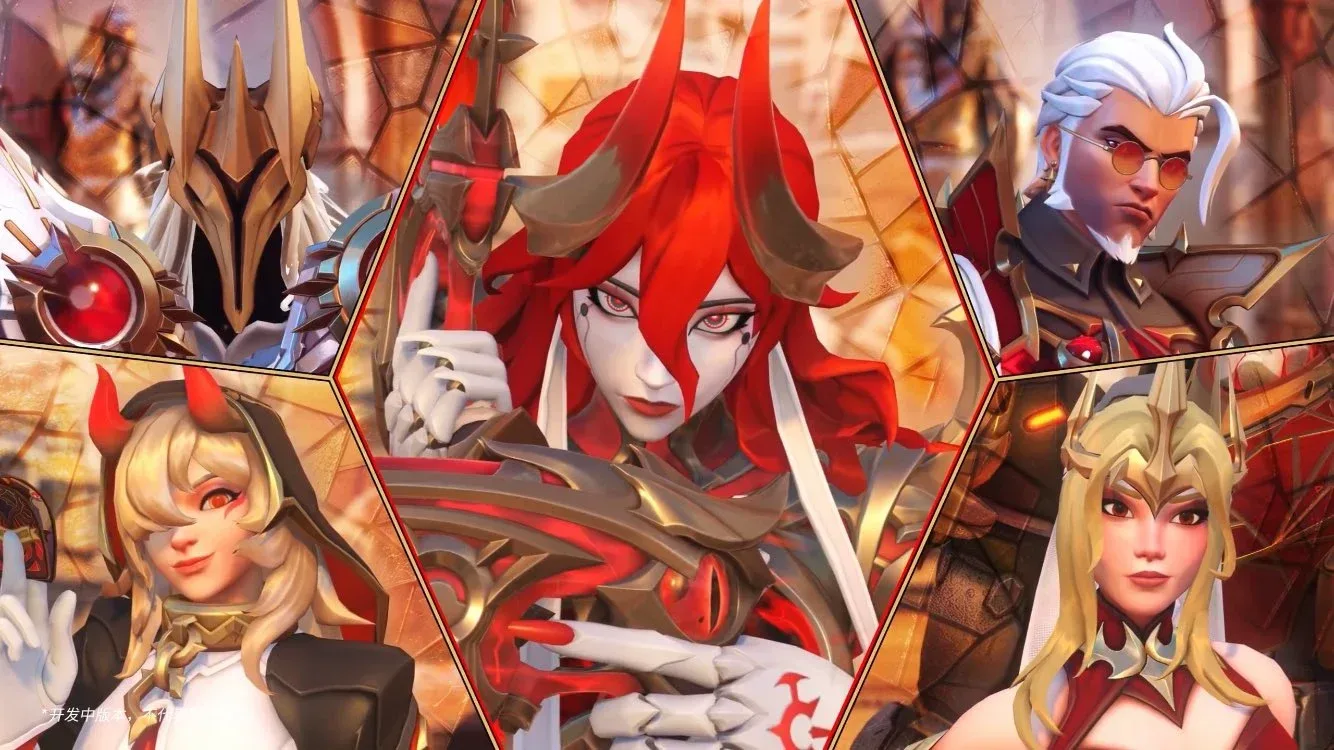
The Defiled Anthem range is currently limited to China and includes cosmetics for Shion, Kiriko, D.Mon, Reaper, and Emre. The immediate flashpoint is Shion’s skin, an Evolution-rarity design that changes appearance during a match. It also has kill-related effects and visual additions tied to abilities, including a fiery trail left by Shion’s motorcycle. The collection also includes exclusive highlight intros and emotes for other heroes, with no indication that those items will be made available in other regions.
That is enough to make the latest rollout feel bigger than a dispute over one outfit. Cosmetics do not alter competitive balance, but they are one of the major ways players express attachment to a character, commemorate seasons, and decide where to spend money. When the most elaborate new effects are attached to items inaccessible to much of the player base, the practical message received by those players is that their version of Overwatch has a lower ceiling for collectible customization.
Why Shion’s Evolution skin is attracting so much attention
“Evolution” refers to a cosmetic rarity whose appearance changes over the course of a match. That makes the item more conspicuous than a conventional skin, which normally swaps a hero’s model and costume but remains visually static once the game begins. The distinction matters because a changing cosmetic is experienced not only in menus or at match start, but repeatedly while play unfolds.
Shion is not the first hero to receive the treatment. An Evolution Widowmaker skin introduced the concept earlier this year, and Jetpack Cat received one in August that altered her fur and costume colors. Defiled Anthem extends that idea to Shion with a shapeshifting presentation, while its additional ability and elimination effects place it closer to the premium spectacle players associate with Mythic and Ultra cosmetics.
Those terms describe different approaches to premium presentation. Mythic skins are positioned as a high-end tier, while Ultra skins are another newer and expensive category. Evolution skins, at least as demonstrated here, emphasize transformation during gameplay. The important point is not that every premium rarity must work identically. It is that Defiled Anthem bundles several desirable qualities—an evolving appearance, effects tied to play, and a strong thematic identity—into an offering that is region-locked.
For players who do not main Shion, the reaction can still make sense. A hero shooter’s cosmetic catalogue is shared cultural material: people see skins on teammates and opponents, watch trailers, discuss them across social spaces, and imagine future designs for their own favorite heroes. A particularly ambitious regional skin can therefore affect perceptions of the game’s overall creative priorities even among people who would never equip it.
The complaint is about access, but also perceived effort
Community frustration is not solely that China has exclusive items. Players are also contrasting Defiled Anthem’s visual detail with cosmetics available more broadly. One fan argued that the separate ownership and publishing arrangements for cosmetics in China do not excuse what they see as weaker Blizzard-made items elsewhere, specifically criticizing a costly Ultra skin and a Mythic skin they felt lacked customization.
Related coverage includes Overwatch Players Push Back as Defiled Anthem Cosmetics Remain China-Exclusive.
That comparison is the heart of the dispute. If a region receives a different cosmetic promotion with a distinct theme, players may be disappointed but still view it as ordinary local-market marketing. The emotional temperature rises when the exclusive work is perceived as more inventive, more reactive, or more polished than the products offered to everyone else.
It is worth separating observation from inference here. The available information establishes that Defiled Anthem is exclusive to China and that Shion’s skin has match-changing visuals and gameplay-linked effects. It also establishes that players are unhappy with the disparity. It does not establish a full like-for-like comparison of production budget, staffing, development time, or design constraints between this collection and globally available cosmetics. Claims that one side simply cares more than the other are understandable expressions of dissatisfaction, not facts demonstrated by the cosmetics alone.
Still, perception has consequences in a service game. Players judge a cosmetic storefront from what they can actually see and buy, rather than from internal ownership boundaries. If one market repeatedly gets its own highly tailored content, the global audience will naturally judge the catalogue it receives against that visible alternative.
NetEase’s China publishing role explains the setup, not the frustration away
China-exclusive Overwatch events and crossovers are connected to Blizzard’s publishing arrangement with NetEase in the territory. The two companies had a brief separation in 2022 before the current agreement. Under that setup, NetEase publishes the game in China and has pursued market-specific activations.
Walter Kong, who leads development for Blizzard’s live games and mobile division, said in May that NetEase has responsibility for publishing in China and that its approach includes doing things specific to that market. He also said Blizzard’s goal is for players to feel cared for regardless of market, and that future events are evaluated with a view toward whether the overall balance is right.
“NetEase has the responsibility of publishing our game in China, and part of their approach is to do things that are specific to that market,” Kong said in May.
Kong’s comments clarify that regional activations are not an accidental loophole or an isolated one-off. They are part of how the China publishing relationship operates, and Blizzard has indicated they will continue. That offers useful certainty, even if it is not the answer players outside China want: the arrangement is a deliberate business and publishing strategy, not a temporary misunderstanding likely to disappear after one round of complaints.
It also means the discussion should avoid collapsing two separate questions into one. The first is whether NetEase can create China-specific campaigns under its publishing approach. Blizzard’s position indicates yes. The second is whether the wider Overwatch audience believes the overall distribution of compelling cosmetics feels fair. That is a player-trust question, and a contractual explanation does not automatically resolve it.
What “balance” would look like in practice
Balance does not necessarily require every event to be identical in every country. Local collaborations, holidays, marketing partnerships, and publishing strategies can produce content that makes more sense in one territory than another. But players asking for balance are likely asking for comparable opportunity, not literal uniformity.
In practical terms, comparable opportunity could mean globally available cosmetics receiving similarly ambitious visual work, even if their themes differ from China-only collections. It could mean a clear path for items to arrive in more regions later. Or it could mean communication that establishes which kinds of cosmetics are permanently territorial and which might eventually rotate outward. None of those outcomes has been promised for Defiled Anthem, and there is no basis to assume the skins or associated intros and emotes will be released worldwide.
That uncertainty compounds the disappointment. A conventional time-limited item can create fear of missing out, but a region-locked one can feel like a form of permanent exclusion. Players elsewhere cannot simply log in, earn currency, wait for a shop rotation, or choose whether a premium price is worthwhile. At present, the decision has been made for them.
The contrast is especially notable in an industry where cosmetic rewards are regularly used to connect player effort with visible expression. For example, another recent game has spotlighted unlockable bathing suit skins alongside gameplay progression. The model is different, but it underscores why availability matters: a cosmetic can be a reward, a purchase decision, or a marker of participation. It loses much of that relationship when much of a game’s audience cannot pursue it at all.
A difficult moment for a reboot built around renewed attention
The dispute arrives while Overwatch’s story-driven reboot continues. Season five begins October 6 and adds the new hero Doctrine. A new seasonal launch is usually an opportunity to build excitement around characters, systems, and style. Instead, Defiled Anthem is also supplying a parallel conversation about who gets the game’s most eye-catching cosmetic ideas.
That does not mean the China-focused collection cannot succeed in its intended market. A region-specific campaign can be effective precisely because it feels made for its audience. The challenge for Blizzard is that Overwatch is discussed across borders in real time. Any especially striking local design becomes globally visible within minutes, alongside every player’s immediate realization that visibility is not availability.
The Defiled Anthem backlash therefore is not just a request for a Shion skin. It is a test of whether Blizzard’s stated aim of making players feel cared for in every market can coexist with an ongoing arrangement that gives one market cosmetics others cannot obtain. The company has explained why the arrangement exists. What remains unresolved is whether its global offerings will consistently give other players something comparably exciting to chase.