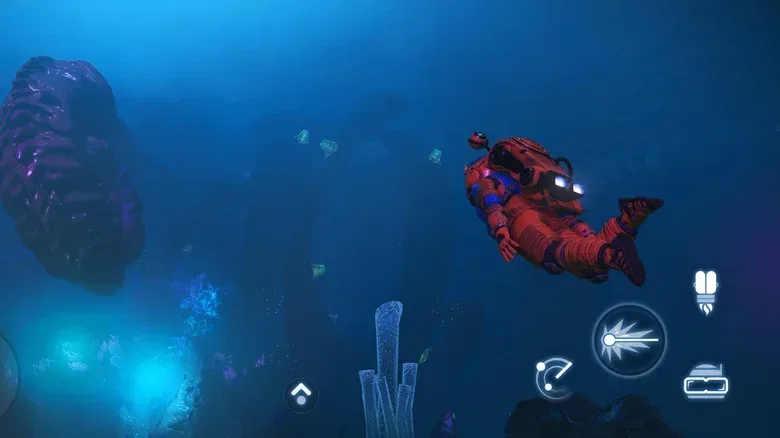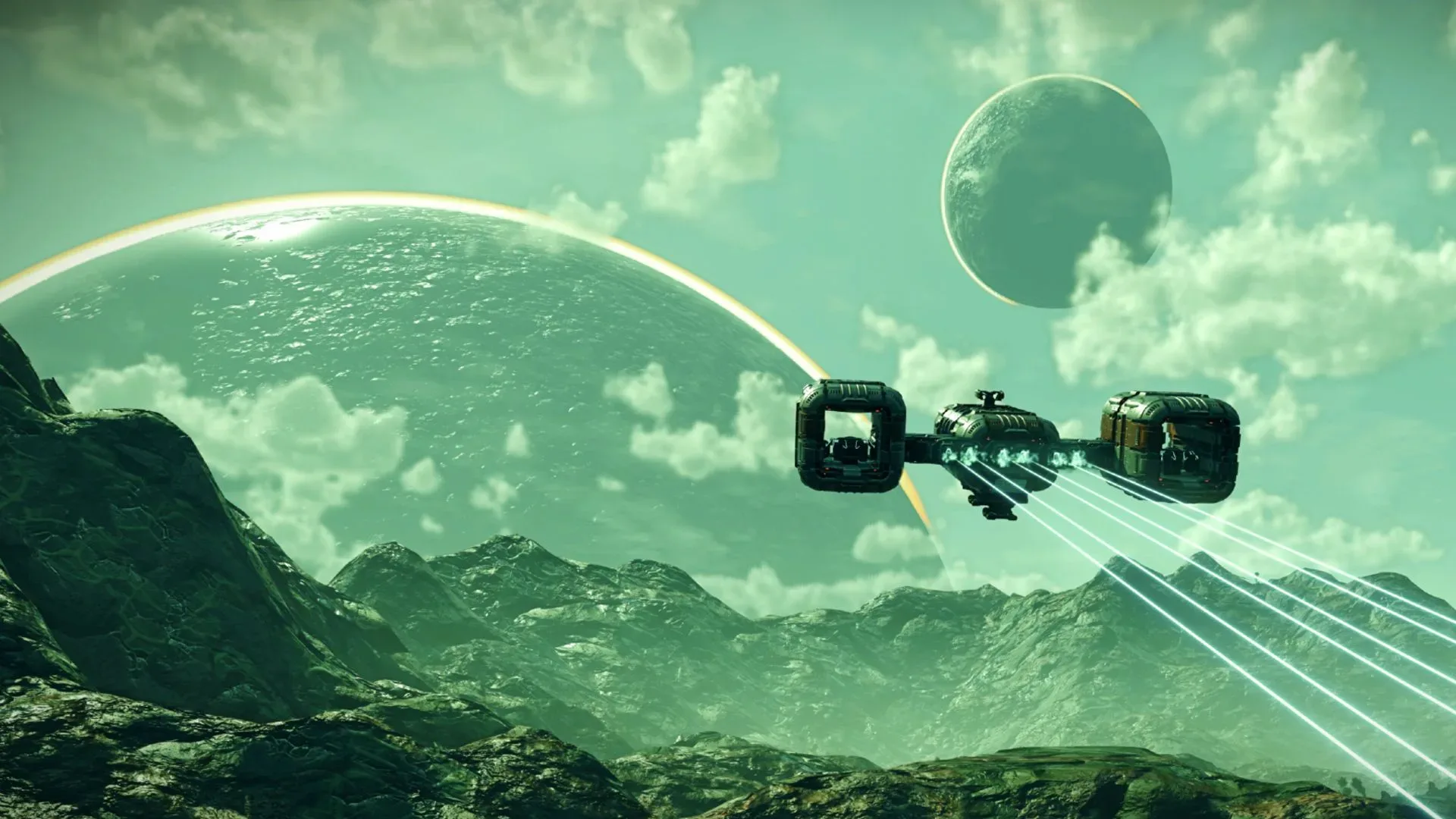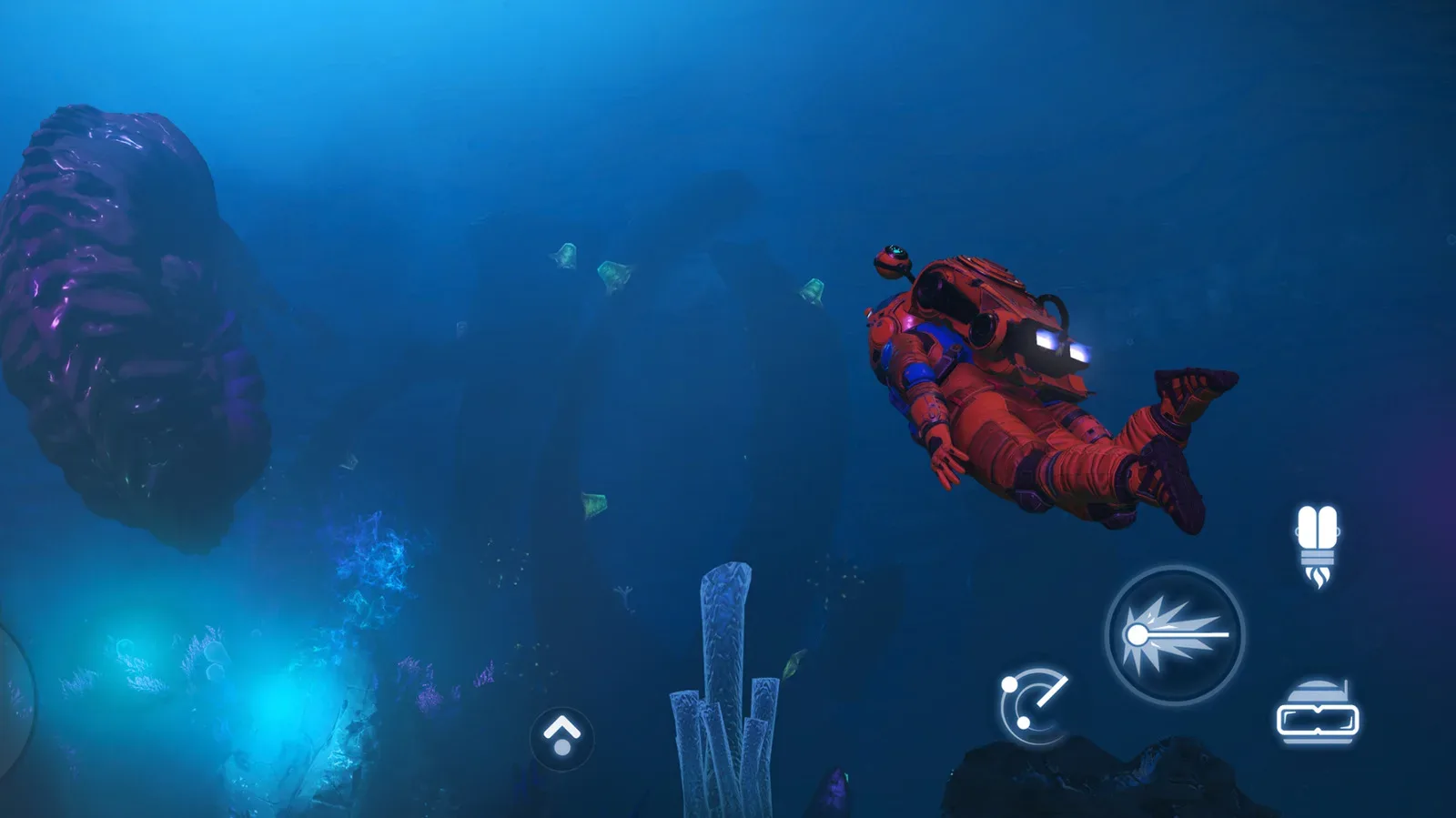
No Man’s Sky is set to arrive on iPhone and iPad on October 28, placing Hello Games’ long-running space exploration and survival game at the center of an App Store Indie Games Week showcase. The mobile release will be free to try, supports multiple input options, and is designed to run on hardware reaching back to the iPhone 11 and third-generation iPad Air.
That combination matters because this is not being positioned as a stripped-down side project with a small fraction of the game attached. Hello Games says the iPhone and iPad edition includes the updates No Man’s Sky has received over the last decade, while occupying less than 5GB of storage. It is an ambitious set of claims for a game built around traveling across a vast science-fiction universe, gathering resources, surviving hostile environments and steadily expanding a player’s possibilities.
There are limitations at launch. Multiplayer and settlements will not be available on iOS or iPadOS initially, mirroring the restrictions that applied when the game first reached Nintendo Switch. Studio co-founder Sean Murray said future support for iOS will be guided by player numbers and feedback, much as the Switch version eventually gained those features on Switch 2.
For the fuller breakdown of the date, free trial and storage target, see our No Man’s Sky iOS launch coverage.
A demanding game, compressed for smaller devices
No Man’s Sky coming to phones is notable less because mobile gaming lacks large worlds and more because of what this particular game asks its systems to do. The player moves among planetary surfaces, spaceflight, resource collection, survival mechanics and a continually updated universe. Bringing that experience to iPhone and iPad raises practical questions about performance, storage, controls and device compatibility rather than merely whether a recognizable game logo can appear in an app listing.
Hello Games previously brought No Man’s Sky to Mac in 2023. After that, a member of the development team suggested the game could run on an iPhone. The resulting release is being framed as a full-content version, not one limited to a small opening segment or a narrowly defined mobile mode.
The less-than-5GB installation size is especially striking in context. Storage remains one of the most immediate barriers when console- and PC-style games move to phones and tablets. A smaller footprint can make a game easier to keep installed alongside photos, apps and other games. It also means fewer players need to treat a download as a major storage-management exercise before they even reach the opening screen.
That figure should not be read as a promise that every aspect of the experience is identical to every other platform. The confirmed launch exclusions are clear: multiplayer and settlements are absent at first. Multiplayer here means playing with other people through the game’s online systems. Settlements are a separate gameplay feature associated with managing a community. Players primarily interested in either system should account for that before treating the iOS edition as a complete replacement for another version.
Still, the stated plan offers room for change rather than a declaration that those features will never come to Apple mobile devices. Murray pointed to the later evolution of the Switch release and said iOS support will be considered similarly in response to feedback and player participation. That is deliberately conditional language, not a schedule or a guarantee. The sensible expectation is simply that the launch version has defined boundaries, and that post-launch additions depend on how the platform performs.
Touch controls are rebuilt, but players have alternatives
A mobile port lives or dies on the question of how it feels to control. No Man’s Sky on iPhone and iPad has rebuilt touch controls, rather than relying on a direct, one-for-one approximation of console buttons. That is important because a touchscreen has no physical triggers, sticks or face buttons. A design that works with a controller can become difficult to read or awkward to operate if transferred to glass without reconsidering the interface.
Details of the precise touch layout have not been provided, so players should avoid assuming exactly how flight, menus, movement or tool use will be arranged. What is confirmed is that the controls have been reworked specifically for the format.
The port also supports controller input and TV casting. On iPad, it supports a mouse and keyboard as well. Those options create several ways to approach the same game:
- Touch input is the direct portable option, suited to playing without extra hardware.
- A controller gives players physical inputs, which may be preferable for piloting, rapid movement or longer sessions.
- TV casting allows the game to be displayed on a television while the Apple device remains the platform running it.
- Mouse and keyboard on iPad offers an additional control route for those who prefer more traditional PC-like input.
None of these methods inherently makes one version “better” for everyone. They do, however, reduce the usual all-or-nothing tradeoff of mobile ports. Someone who wants a quick touch session has a supported path; someone who expects a controller-oriented setup has one too; and iPad players have a further desktop-style alternative.
The compatibility floor also deserves attention. Hello Games says the game is playable on iPhone 11 and above, plus the third-generation iPad Air and above. Many technically demanding mobile releases target only the newest devices, leaving otherwise capable phones outside the door. Supporting older hardware broadens the possible audience and makes the release more practical for players who do not upgrade every year.
Compatibility is not the same thing as a promise of identical performance across every supported model, and no detailed device-by-device performance figures are specified. It does mean prospective players have a clear starting point for checking whether their device falls within the announced range.
What Indie Games Week adds beyond one major port
No Man’s Sky may be the headline-grabbing addition, but Indie Games Week is a wider App Store push built around several very different games. That variety is arguably the more useful part of a curated event: it places games with distinct genres, scales and control needs alongside one another instead of treating “indie” as a genre by itself.
Sifu is among the highlighted releases. Sloclap’s action game follows a revenge-driven protagonist who ages with each death. Its iOS version includes reworked touch controls and a revised camera system. Those adjustments are particularly relevant for a fast action game, where visibility and immediate control response affect how clearly players can read fights and react to threats.
Vampire Crawlers brings a more strategic, card-based interpretation of the Vampire Survivors formula. The phrasing is worth unpacking: a card-based game places cards at the center of decisions and abilities, while “strategic” signals a pace and structure different from purely reaction-led action. It may therefore appeal to players who want short-session accessibility without the same demand for constant precision inputs.
Dome Keeper is another featured title, described as a roguelite that combines mining and tower defense. A roguelite generally describes a game with repeatable runs and systems that can introduce variation or progression between attempts, while tower defense centers on holding back incoming threats through preparation and defensive tools. Combining that with mining suggests a tension between gathering what is needed and protecting what has already been built.
Three additional games are already available on iPhone and iPad: Yes, Your Grace 2: Snowfall, strategy game 9 Kings, and adventure game Little Kitty, Big City. The selection is not presented as a single launch package with one shared mechanical style. Instead, it moves from action to strategy, survival, management, adventure and more contained session-based play.
Why the mix of games matters for iPhone and iPad players
The practical value of the event is discoverability. App stores are enormous, and even well-regarded independent games can be difficult to encounter if players only browse charts or search for an already-known name. A focused editorial grouping gives people a reason to compare games they may not otherwise put in the same shortlist.
It also illustrates that a port is not a single technical category. No Man’s Sky emphasizes scale, device coverage, storage reduction and multiple input types. Sifu emphasizes adjustments to an action-game camera and touchscreen play. Vampire Crawlers and Dome Keeper show games whose strategic or systems-led structures can be at home in shorter mobile sessions. The common thread is not that every game must play the same way on a phone. It is that each needs an approach appropriate to its own demands.
Apple’s App Store leadership described the week as a celebration of teams taking creative risks, from solo developers to growing studios, and highlighted the range of artistry, design and storytelling represented by the launches. The platform is also surfacing additional independent-game recommendations and a separate guide for indie games on Mac.
For players, the most sensible way to approach the lineup is to begin with genre and preferred control style rather than assume that the biggest game is automatically the best fit. No Man’s Sky is the obvious choice for someone looking for a portable version of a wide-ranging exploration and survival game. Sifu is better matched to players ready for demanding, fast-paced combat. Vampire Crawlers may suit someone seeking card-driven strategy, while Dome Keeper offers an appealing split between resource gathering and defense. Little Kitty, Big City provides an adventure alternative within the same overall spotlight.
What to check before downloading or pre-ordering
No Man’s Sky can be pre-ordered now ahead of its October 28 arrival, and its free trial gives interested players a lower-risk way to judge the mobile experience for themselves. Before committing time to the iOS or iPadOS version, a few checks follow directly from the announced details:
- Confirm device eligibility. The announced minimum range begins at iPhone 11 and third-generation iPad Air.
- Decide how you intend to play. Touch controls are rebuilt for the port, but controller support, TV casting and iPad mouse-and-keyboard support may affect which device and setup feels most appealing.
- Keep launch limitations in mind. Multiplayer and settlements are unavailable initially. Do not pre-order expecting those features on day one.
- Use the trial purposefully. Try the control method you expect to use most, particularly if you are choosing between touch and a controller.
- Watch future updates without presuming them. The developer has indicated that feedback and player numbers will influence continued support, but no feature timetable has been announced.
Indie Games Week ultimately gives mobile players a notable blend of choices: a technically ambitious portable version of No Man’s Sky, tailored iOS adaptations of games with very different demands, and several titles already ready to download. The biggest takeaway is not simply that more games are coming to Apple devices. It is that the ports being highlighted acknowledge the details that determine whether a mobile adaptation is worth playing: hardware reach, storage, input flexibility and the willingness to reshape a game’s interface when the platform requires it.