
Speedruns are often presented as immaculate end products: a player breezes past obstacles that once consumed afternoons, executes movements with alarming precision, and reaches credits on a timer that barely seems compatible with the game’s opening screen. The far messier, more revealing part comes before that performance. It is the phase of mapping rules, testing failures, rejecting shortcuts and repeatedly asking whether a bizarre interaction can survive a live run.
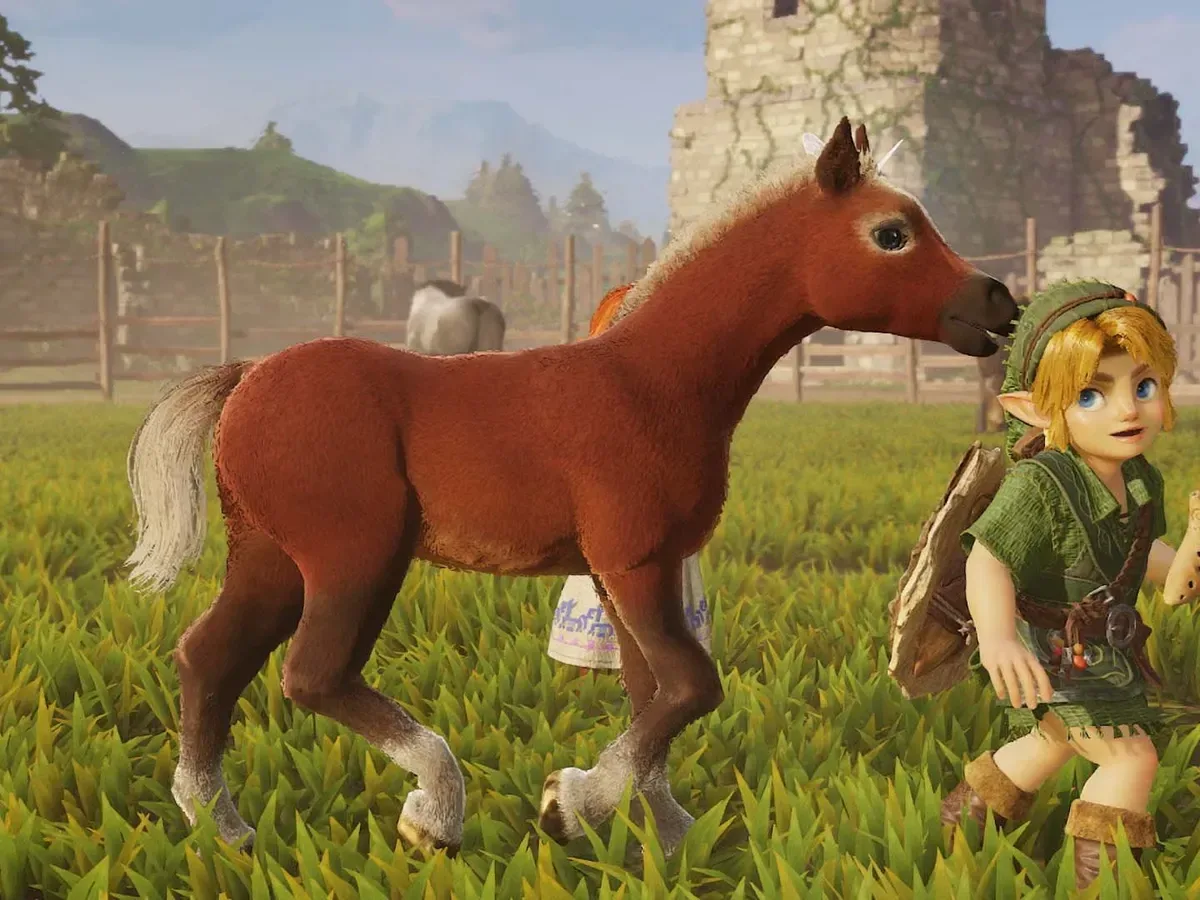
That process is especially visible in ZFG’s current work on The Legend of Zelda: Ocarina of Time Remake. Ahead of Awesome Games Done Quick 2027, the runner has spent hours investigating the new game’s shortcuts, vulnerabilities and movement options, including a long Twitch session using SloperinaGZ’s wireframe technology to inspect geometry. The result is less a polished run than a look at route discovery in progress—and that is precisely what makes it compelling.
AGDQ is scheduled for January 3 through January 10, 2027. Its program contains more than 130 games and supports Prevent Cancer Foundation, a charity that received $2.4 million from the 2026 event. ZFG’s Ocarina of Time Remake run is currently estimated at two hours and 20 minutes, placing it in a very different territory from the astonishingly short records associated with earlier versions. The original Nintendo 64 release has a best time of just under four minutes, while the 3DS remake has a cited best time of 26 minutes.
Those numbers are not a contradiction. They tell the story of three versions with distinct opportunities, and of a new speedrun category still finding out what is possible.
Why the 2:20 estimate matters more than it first appears
An event estimate is not automatically a prediction of the game’s ultimate fastest completion. It is a practical target for a scheduled performance. In this case, it also captures an important limitation: the remake’s most useful skips and the safest way to combine them are still being uncovered.
A mature speedrun route is a sequence of choices that balances speed with reliability. A trick might save substantial time in isolation yet be unsuitable for an event if it frequently crashes the game, requires narrow positioning, or causes a mistake that costs more time than it gains. That is why a game can have a theoretical route built around spectacular breaks and a live-event route built around a more conservative subset.
The contrast with the older versions is valuable context, not a reason to dismiss the new estimate. The N64 record under four minutes represents a long-developed body of knowledge for that specific release. The 3DS version’s 26-minute mark likewise reflects its own techniques. A remake changes the landscape: collision, item behavior, menus, loading, state changes and unintended interactions may differ. Familiarity with Hyrule’s major objectives does not instantly produce familiarity with every technical seam in a new build.
That makes ZFG’s practice a useful reminder that speedrunning is not simply playing a known game quickly. At its most technical, it is systems research conducted under the pressure of a clock. Runners form an idea, reproduce it, identify the conditions that make it work, and then decide whether it belongs in a route. Viewers suggesting possibilities can contribute to that exploratory atmosphere, but the runner still has to turn a promising curiosity into something repeatable.
Related coverage includes ZFG's Ocarina of Time Remake Practice Is Turning AGDQ Prep Into a Speedrunning Spectacle.
What wireframe viewing can reveal
The wireframe tool being used during practice is particularly useful because it makes level boundaries and barriers easier to inspect. In ordinary play, walls, gates, ledges and floors appear as finished environments. For a runner seeking a shortcut, their important quality is collision: the invisible system that determines where the character can stand, move, climb or be stopped.
Collision is the game’s underlying rule set for physical contact. It prevents Link from walking through a wall and determines whether a hookshot point, railing or climbable surface can be used. When a player talks about clipping through a wall, they mean forcing the character past a boundary that should block movement. Wireframe-style visualization helps reveal where those boundaries sit and where their shapes, joins or gaps might allow an unexpected route.
This is not merely a visual novelty. Knowing that a barrier is close to a target space can make a seemingly impossible skip worth testing. Conversely, it can show that an apparent opening is only decorative, or that a movement idea will lead into a void, a reset or a dead end. The tool does not solve a skip on its own. It supplies better information about the physical puzzle the runner is trying to break.
There is a broader appeal to seeing this work done live. A completed speedrun can make the route feel inevitable. The exploratory stream restores uncertainty. A technique may work once, then fail when a bomb lands a fraction differently or an item switch happens at the wrong moment. That is where the real labor lies: separating an accidental result from an actionable method.
The tricks taking shape
Several early techniques point to why the remake is such a lively target. Grappling-hook interactions have already produced notable exploits. There is also a gate-jumping method based on switching inventory items while incrementally gaining height. In speedrun language, an exploit is an unintended or unusual game behavior that lets the player bypass intended limits. A skip is the route-saving result: getting over a gate, beyond a wall or past a normally required objective.
The distinction matters. An item-switching interaction is a technique; the gate it clears is the practical shortcut. The usefulness of the first depends on what the second removes from the route. If it cuts out a lengthy quest step, it could be transformative. If it only avoids a small detour while introducing a major chance of failure, it may remain a curiosity.
Another developing line of investigation involves accessing adult Link sections while retaining child Link. That state can offer a consequential advantage: child equipment may transfer into the adult inventory. This is the kind of discovery that can change how a route is planned because it may affect not only where the runner can go, but what resources are available after arriving there.
Yet these findings are clearly not settled tools. Some of the current approaches are precarious enough to threaten a crash. One reported wall-clip setup uses two bombs beside climbable grates, a hookshot interaction and a pause-related way of avoiding damage before passing through the wall. It is a striking sequence, but it is also exactly the sort of method that demands extensive testing before it can be treated as event-ready.
A crash is more than an inconvenience in a timed run. It can end the attempt outright or force a restart, so its risk must be considered against the time a skip saves. Similarly, damage avoidance refers to manipulating the game so an expected hit does not affect the player as normal. If the pause state is an essential component of the setup, the timing and state of the game become part of the trick’s requirements. That can make a method powerful but fragile.
Discovery and performance are different disciplines
It is tempting to see every newly found glitch as a preview of AGDQ. In reality, discovery is only the first stage. The next questions are more demanding: Can the effect be recreated from a consistent starting position? Does it survive a full route rather than a controlled practice setup? Does it require a particular inventory state? What happens if it fails? Can the runner recognize a failed setup early enough to recover?
Those questions explain why the current two-hour-and-20-minute estimate should be read as a snapshot, not a ceiling. The schedule is approaching, but a route can still shift as tricks are validated, discarded or made more reliable. A faster path could emerge; an exciting clip could prove too unstable for the stage. Both outcomes are normal for a run whose technical vocabulary is still being written.
There is also a human element that polished records can hide. The practice footage shows a runner responding to suggestions, experimenting with possibilities and working through the game’s oddest behaviors in real time. It reframes speedrunning from a display of impossible-looking mastery into a collaborative problem-solving process. The performance at AGDQ may be the public milestone, but this stage is where the understanding is built.
Where Ocarina of Time fits in AGDQ’s packed week
The broader AGDQ lineup gives the run an unusual amount of context. The event’s mix spans modern releases, major series and older hardware. Scheduled examples include Nintendo 64 Pokémon Snap, the 2026 platformer Denshattack!, Tomb Raider: Underworld, Bayonetta 3, and Atari 2600 title E.T. the Extra-Terrestrial. The latter is estimated to last 25 minutes, while Bayonetta 3 is slated for 120 minutes.
Wednesday afternoon is set to feature Pokémon Violet, the 2026 Star Fox remake and Metal Gear Solid 4: Guns of the Patriots. On Thursday evening, the run of games begins just after 5 p.m. ET with Dustforce DX, continues with Halo: Reach and newly added Queen’s Domain, then reaches Ocarina of Time at roughly 9:18 p.m. ET.
That range is part of speedrunning’s charm. A game’s age, fame or original platform does not determine whether it will yield the more captivating run; the behavior of its software does. Modern reinterpretations can become fresh technical frontiers, while classic games remain subjects of deep refinement. Anyone interested in how old design is being re-examined from new angles can also see that impulse in projects such as this Super Mario Bros. Wonder Game Boy demake.
For ZFG’s remake attempt, the attraction is not solely whether two hours and 20 minutes is beaten. It is seeing what earns a place in the final route. Each gate jump, inventory interaction, bomb setup and wireframe observation represents a decision still being tested: is this the beginning of a dependable shortcut, or a glorious piece of speedrunning chaos best left in practice? By January, AGDQ will provide one answer. Until then, the route-building process is the show.