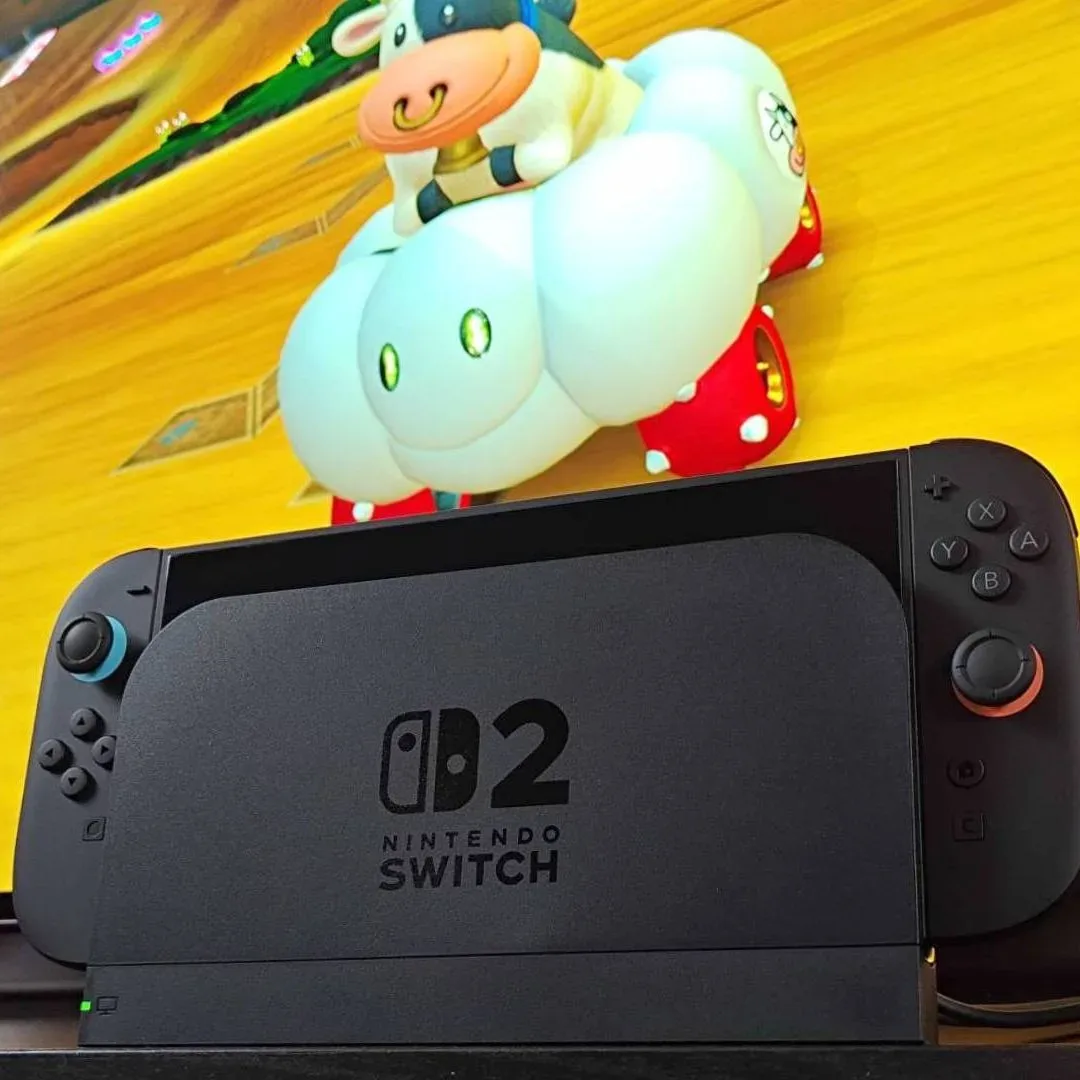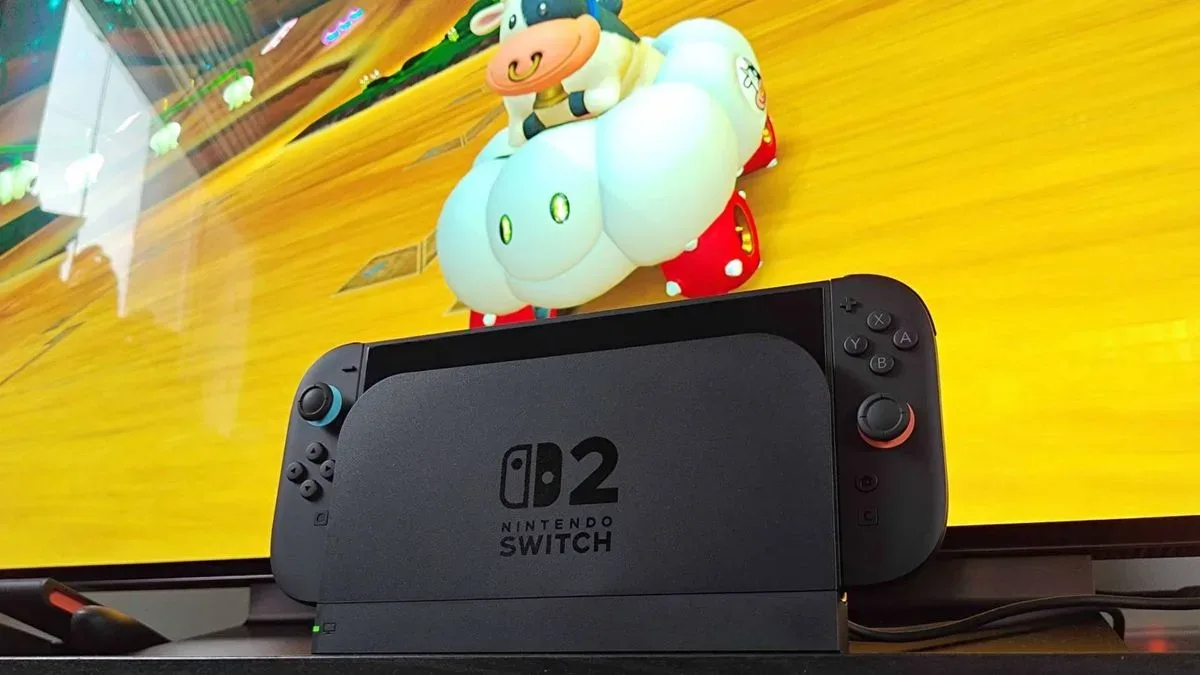
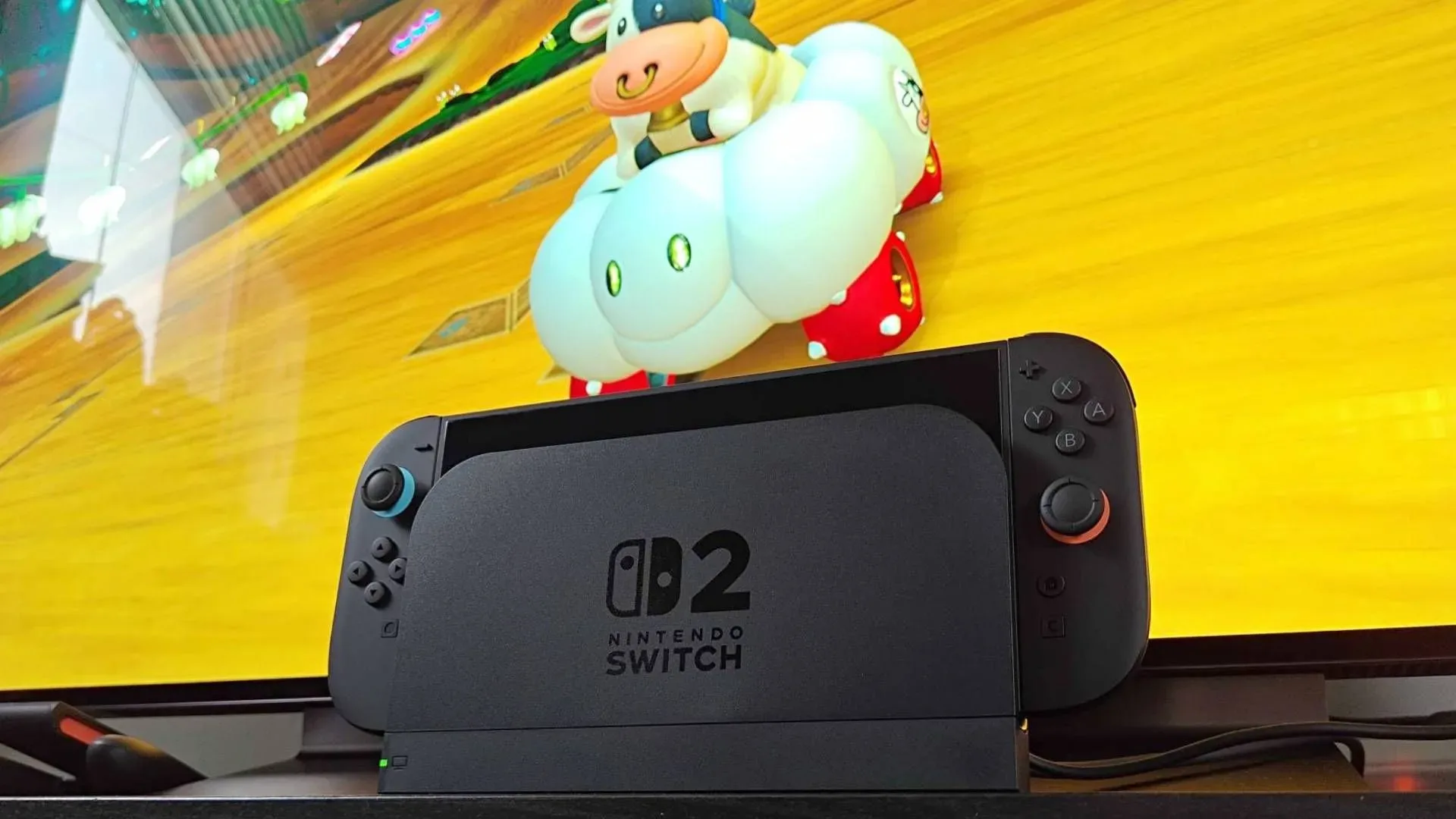
Nintendo’s Switch 2 has reached 26.35 million console sales, a huge installed base achieved in a relatively short period — even as the latest quarter shows the inevitable deceleration that follows an enormous launch window.
For the July-to-September 2026 quarter, Nintendo reported 6.49 million additional Switch 2 systems sold. That is down 37.4% year over year from the 10.36 million sold in the comparable 2025 quarter. Read without context, a decline of that size looks severe. Read alongside the cumulative total, the launch timing, and the expanding catalogue, it looks more like a hardware business shifting from first-year eruption toward a larger, steadier market.
The important distinction is simple: a year-over-year comparison measures the pace of sales, not whether a platform has stopped selling. Switch 2 sold fewer consoles than it did in an exceptionally strong earlier period, but it still moved 6.49 million systems in one quarter and sits at 26.35 million overall. Those are two very different truths, and both matter.
A slowdown after a record-setting start
Switch 2 launched last June and had an unusually strong first year, becoming the fastest-selling console of all time. A major part of that performance was that buyers could actually find the machine. Availability can determine whether demand turns into recorded sales: people may want a console, but a company cannot count a sale until stock reaches a customer.
That also makes the year-over-year hardware drop less surprising than the percentage alone suggests. The earlier comparison period contained 10.36 million console sales, an extraordinary volume that set a daunting base for future quarters. Comparing a maturing phase against a breakout phase will often create a negative percentage even when the newer period is commercially significant.
There is another basic market effect at work. Early in a console’s life, sales can be driven by enthusiasts, returning platform owners, and households ready to upgrade immediately. As those groups buy in, future growth relies more heavily on people who are waiting for particular games, seasonal spending, or the right moment to make a larger purchase. The supplied figures do not identify which of those factors is most important for Switch 2, but they show the familiar result: console demand is still high while the rate of purchases has cooled.
What “year over year” means here
Year-over-year compares a period with the same period one year earlier. It is useful because it avoids confusing seasonal patterns with growth or decline. But it can also be misleading if the earlier period was unusual. In this case, Switch 2’s 37.4% reduction is being measured against a quarter in which it sold 10.36 million units during its exceptional early run.
That is why cumulative sales and quarter-by-quarter sales should be considered together. Cumulative sales tell us how many systems are in homes in total; quarterly sales show the current momentum. Switch 2 is lower on the second measure than it was a year earlier, while remaining extremely strong on the first.
Related coverage includes Nintendo Switch 2 Reaches 26.35 Million Sales Despite Year-Over-Year Decline.
Still ahead of early Switch and PS5 benchmarks
At 26.35 million consoles sold, Switch 2 is ahead of the comparable early performance cited for both the original Nintendo Switch and PlayStation 5. The original Switch had reached 19.67 million units by the end of its 15th month. PS5 had reached 19.3 million by the end of March 2022, 16 months after launch.
These comparisons are helpful, but they should not be treated as a final ranking of entire console generations. Launch windows differ. Software schedules differ. Supply conditions differ. Companies also report their figures at different times and in different ways. A system can lead early and later slow; another can start more gradually and build momentum over a much longer cycle.
Still, the figures establish a clear point: Switch 2’s lower year-over-year quarterly sales do not mean it is lagging behind the early commercial trajectory of its closest modern console comparisons. It has instead amassed a larger installed base at this stage than the cited early totals for the original Switch and PS5.
Microsoft does not disclose Xbox console sales figures in the same way. Reports have placed Xbox Series X|S shipments at about 28.3 million by June 2024, but that is not a directly like-for-like comparison with Nintendo’s reported sales figure. Shipments generally refer to units sent into the retail channel, while a sales total may be presented using a different accounting basis. The numbers can offer broad context, but they should not be used to declare a precise head-to-head outcome.
Software is growing as the audience grows
The more encouraging half of Nintendo’s update is software. Switch 2 game sales increased 18.8% year over year despite the drop in console sales. That difference is logical: each new console adds another potential customer for games, and the system now has more titles available than it did around launch.
An installed base is the total number of consoles owned by customers. It is a foundational number for game publishers because every system in that base is a possible software buyer. Once a platform reaches 26.35 million units, even a modest share of owners buying a new release can produce substantial sales.
At launch, Switch 2’s available first-party line-up was much narrower, with Mario Kart World and Donkey Kong Bananza among its key releases, alongside Welcome Tour and Drag x Drive. A broader release slate gives buyers more entry points. A player uninterested in one genre may still find a reason to purchase the system for another game, while existing owners have more reasons to buy additional software.
The latest numbers illustrate that effect. Splatoon Raiders started with 2.42 million copies sold, while Fire Emblem Fortune’s Weave opened with 1.34 million. Rhythm Heaven Groove sold 2.89 million copies. These are not interchangeable results: each title addresses a different part of Nintendo’s audience, from multiplayer ink-slinging to tactical role-playing and rhythm action.
For owners, the practical implication is that a healthier software pipeline can matter as much as the hardware total. New games create a reason to use the console already in the living room, a reason for prospective buyers to finally pick one up, and a reason for publishers to take the platform’s audience seriously. That is the positive feedback loop console manufacturers pursue after launch.
Why hardware and game sales can move in opposite directions
It may seem counterintuitive for hardware to fall while game sales rise, but the two measures operate on different timelines. A console is usually bought once by a household; games can be purchased repeatedly by that household over years. As Switch 2’s installed base becomes larger, software can keep growing even if fewer new consoles are sold than in the launch-fueled period a year ago.
This is often described through attach rate: the average number of games sold per console owner. Nintendo has not provided an attach-rate figure in the supplied information, so it would be wrong to calculate or claim one here. But the underlying concept helps explain the trend. More owners, a growing catalogue, and active releases can lift game sales without requiring hardware sales to match their first-year peak.
The game results also argue against treating the hardware decline as the entire story. Switch 2 remains a very large platform, and its commercial health depends not only on boxes sold this quarter but on how often its existing owners buy and play software. An 18.8% software increase is a meaningful sign that the audience is expanding its library.
What to watch next
The figures leave several questions open. Nintendo’s results show the direction of hardware and software sales, but they do not break down the specific reasons customers bought or delayed buying systems in this quarter. They also do not establish whether the current hardware pace will settle, rise around future releases, or continue to decline against the extraordinary 2025 comparison.
What is clear is that the platform’s next phase will be judged differently from its launch. The initial question — could Nintendo sell the hardware at scale? — has been answered emphatically by 26.35 million units. The next question is how effectively a growing catalogue converts that installed base into enduring software demand.
For now, Nintendo has a console whose quarterly hardware sales have cooled from a remarkable peak, but whose overall reach remains ahead of the early benchmarks cited for Switch and PS5. Game sales moving upward at the same time give the company a useful counterweight: the Switch 2 is no longer defined only by launch demand, but by what millions of owners choose to buy after the system is already home.
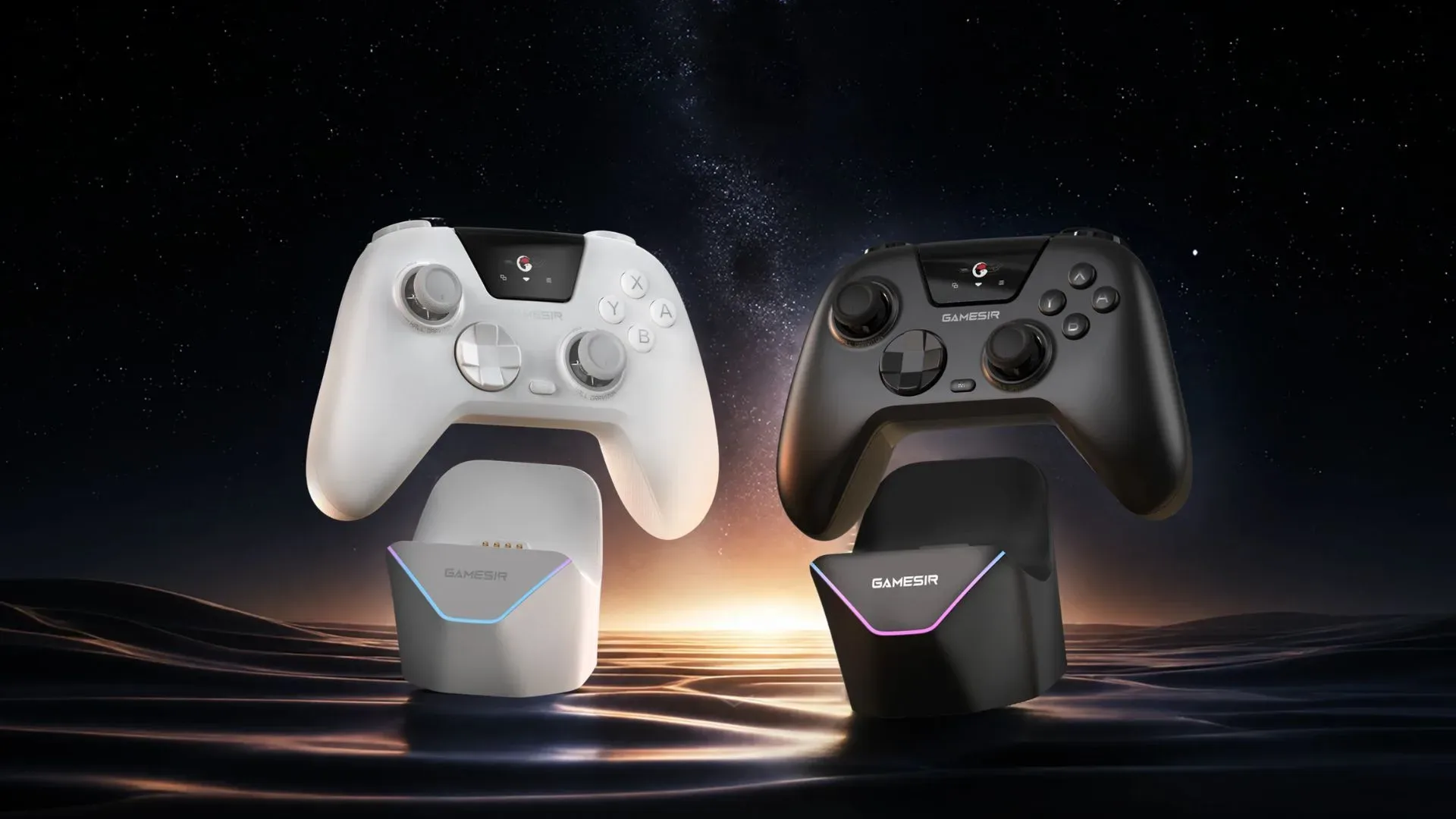
Accessory makers are also continuing to target that audience, including the GameSir Nova Vision controller built for Switch 2. That kind of peripheral activity is not a substitute for Nintendo’s own sales results, but it reflects the commercial attention that follows a rapidly growing console base.