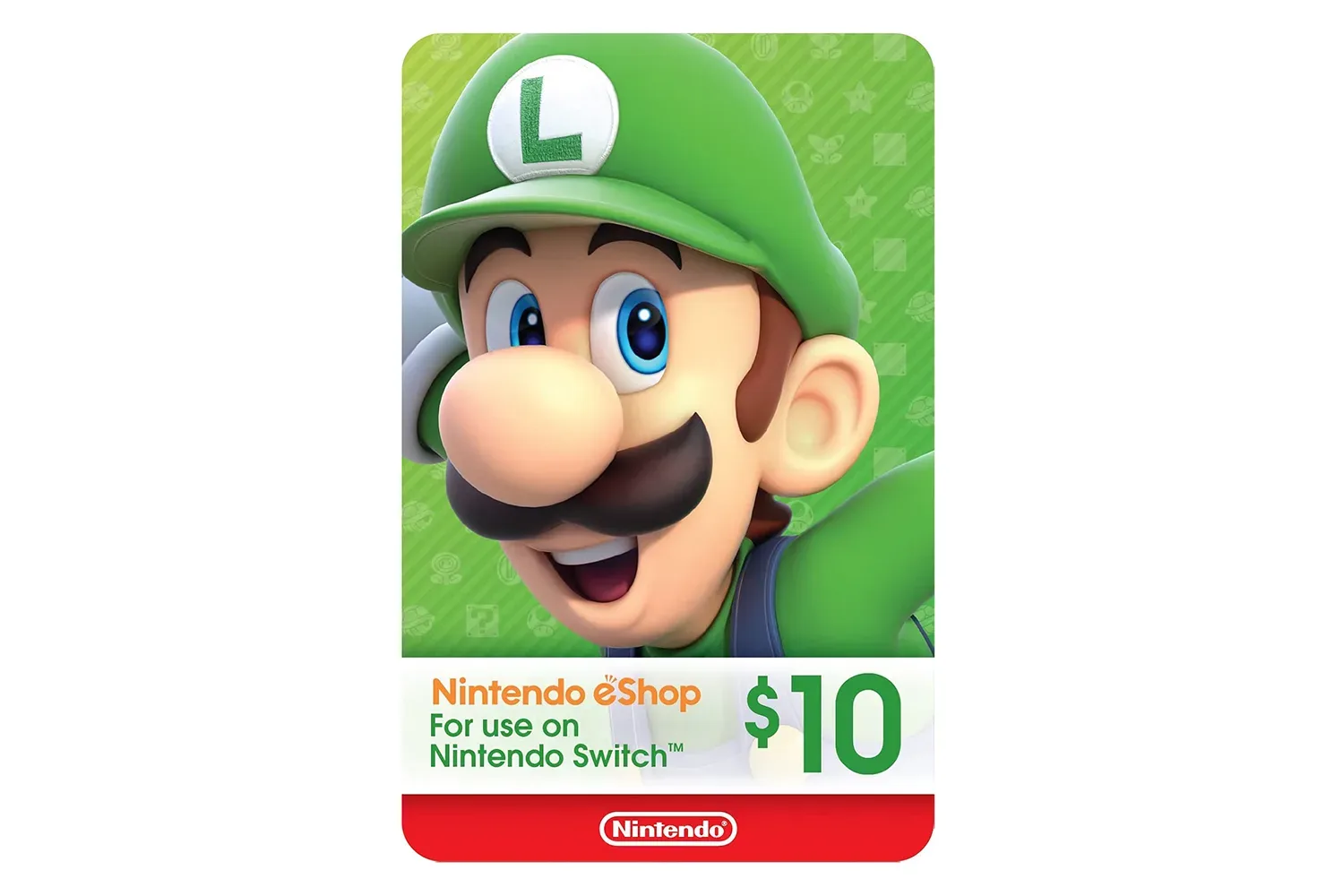
There are few feelings in modern gaming more familiar than watching a digital-store wish list, seeing a game finally dip in price, and then realizing the checkout process has become an unexpected side quest. A reported Amazon promotion offers a modest way to soften that scenario: Prime members can reportedly purchase a $10 Nintendo eShop Gift Card for $8.53.
That is effectively a 15% advertised reduction from the card’s face value, even if the exact dollar difference works out to $1.47. The deal is specifically attached to the $10 digital denomination and Prime membership. Other select Nintendo eShop card amounts are reportedly discounted by 5%, making the smaller card the more aggressive percentage offer of the bunch.
For anyone who knows they will eventually buy something through Nintendo’s storefront, the arithmetic is pleasantly uncomplicated. Spend $8.53 now, receive $10 in eShop credit, and reserve that $1.47 difference for the great causes of your choosing: part of another download, a DLC pack, or several minutes of staring at a game tile and wondering whether the backlog has become sentient.
The reported offer is digital rather than a physical code card, with delivery sent by email. Shoppers can review the currently reported $8.53 eShop card details, but as with many retailer promotions, membership eligibility, stock, regional settings, redemption conditions, and pricing can change. Checking the final price and the precise terms before completing an order remains the sensible move.
For more context, explore iPhone Duo Leak Points to 256GB Base Storage, $2,000 Entry Price, and White or Dark Blue.
What the $8.53 deal actually provides
The core product is straightforward: a digital Nintendo eShop Gift Card carrying $10 in store balance. After delivery, the code can be redeemed through the Nintendo eShop. That balance can be used across Switch, Wii U, and the Nintendo 3DS family of systems, provided those systems are using the applicable Nintendo eShop account.
That cross-platform wording deserves a little more attention than it usually receives. The credit does not function like a magical household pool of coins where every console owner can grab a few dollars for their personal shopping cart. Instead, the balance attaches to one Nintendo eShop account. Once it is redeemed, it stays associated with that account, while being available across the supported platforms tied to it.
In other words, the coupon code is easy; choosing the account is the boss battle. The account decision matters especially when the card is intended as a gift. A recipient should make certain they are signed in with the Nintendo Account on which they genuinely want the funds to reside before applying the code. A misplaced redemption can turn a thoughtful present into an administrative puzzle nobody ordered.
A practical checklist before redeeming
- Confirm that the offer still shows the expected $8.53 price and Prime eligibility at checkout.
- Verify the intended recipient’s Nintendo eShop account before entering the code.
- Remember that the balance is attached to a single account rather than freely transferable between accounts.
- Consider whether the recipient uses Switch, Wii U, or a Nintendo 3DS-family system under that same account setup.
- Keep the delivery email and code information until redemption is complete.
None of this makes the promotion complicated, but it does make it worth treating the code like a digital item with a permanent destination. Gift-card credit is not a spare controller that can casually move from couch to couch after someone calls next game.
Why a small eShop discount can still matter
A $1.47 saving is not enough to make anyone abandon a career and take up full-time bargain mathematics. It is, however, a genuine discount on money that many Nintendo players may spend anyway. If the plan is to buy $10 of eShop content at some point, purchasing $10 of credit for $8.53 lowers that later purchase’s effective cost without waiting for the game itself to receive a deeper markdown.
That distinction matters because eShop game pricing does not always behave on a timetable players can confidently predict. A title might go on sale soon, later, or at the exact moment a person has committed to “being responsible” and started saving for something less fun, such as a kitchen appliance. Preloading credit can make it easier to act when a desired game finally hits a tolerable price.
The savings become more noticeable for those who buy several eligible cards, assuming the promotion’s terms permit multiple purchases and the buyer actually expects to use that much credit. Several $10 cards can help offset the cost of a full-price release. The example attached to this deal places Donkey Kong Bonanza at around $70, an amount that gives a $1.47 reduction some room to multiply if a player is methodically loading funds.
Still, buying extra gift cards solely because a percentage looks cheerful is not automatically a win. Store credit is most useful when it is destined for games, expansions, downloadable content, or other eShop purchases the buyer already expects to make. A discount can save money; it can also, with enough enthusiasm, convince someone to convert money into a pile of unused numbers. The eShop balance will not judge, but a bank statement might raise one eyebrow.
Using prepaid credit during an eShop sale
There is also a convenience angle. Having eShop balance ready can reduce friction when a limited-time discount appears. Rather than adding or changing a payment method while the sale clock keeps ticking with theatrical menace, an account with available credit is already prepared for the purchase.
Preloaded funds can also be useful when the price of a game exceeds the account balance. The stated use case for this promotion includes splitting a transaction between gift-card credit and another payment method. For a $70 game, for instance, a player could apply whatever eligible eShop balance they have and cover the rest through another available checkout option.
This is not a declaration that every sale is urgent. Digital storefronts have a habit of making countdown timers feel like meteor impacts, when the more likely outcome is simply that a game returns to a similar sale price later. But for a purchase someone has already settled on, prepaid credit can make the transaction less cumbersome.
A deal for deliberate Nintendo shoppers, not panic loading
The reported $8.53 price is most appealing to a specific kind of player: someone with Prime membership who expects to spend at least $10 in the Nintendo eShop and is comfortable locking that amount to one account. It is a small advance discount, not a broadly transformative price cut. The card still represents $10 of credit, and the savings remain $1.47 per eligible $10 card.
That modest framing is useful because it keeps expectations calibrated. The promotion does not reduce the listed price of every eShop game by 15%. It reduces the cost of acquiring this particular chunk of eShop spending power. If a player uses the full credit, the benefit is real. If it remains unused for years beside an expanding digital backlog, the deal has mostly purchased the right to feel organized.
There is also a generational wrinkle that makes this more than a strictly Switch-focused offer. The balance is described as carrying across Switch, Wii U, and the Nintendo 3DS family of systems through the associated eShop account. For people who maintain purchases and accounts across Nintendo hardware eras, that compatibility may make a $10 top-up more flexible than it first appears. For a gift recipient, it reinforces the importance of applying the code to the correct account on the first try.
Ultimately, the deal’s appeal comes down to intent. Prime members who already have an eShop purchase in mind can reportedly turn $8.53 into $10 of digital credit, while shoppers eyeing other denominations may find smaller 5% reductions. It is not flashy, but the best budget assists rarely are. Sometimes the power-up is a mushroom. Sometimes it is $1.47 that survives checkout.
Shop the products
Check current price, model and availability at the retailer.