Order of the Sinking Star is set to arrive on PC and Nintendo Switch 2 on October 8 with a bold proposition: take the core ideas behind four small, browser-based puzzle games, build new puzzles around them, and place the whole thing inside a larger explorable world. The result is reportedly enormous, with more than 1,000 puzzles, and it appears aimed squarely at players who want to spend substantial time untangling movement rules rather than simply following a story from one waypoint to the next.
That focus matters. The game’s strongest case is not merely that it contains lots of puzzles, but that it gathers four distinct approaches to the Sokoban tradition and then combines their rules. For players who live for the moment when a board that looked impossible suddenly becomes legible, that is a tantalizing premise. For people hoping for an equally compelling mystery, character drama, or accessible visual read, the early picture is much less settled.
What “Sokoban” means here
Sokoban is commonly used as shorthand for a style of spatial puzzle centered on moving crates or blocks through a confined space. Its deceptively simple foundation carries a demanding consequence: pushes are often irreversible. Put an object into a corner or against the wrong obstacle and the puzzle can become unsolvable, requiring a restart or a carefully considered undo.
Order of the Sinking Star expands that basic idea well beyond a person shoving boxes onto targets. Its four regions are built from concepts licensed from existing games, each with its own interaction model. The important practical distinction is that these are not just four visual themes. The available actions, the objects that can be manipulated, and the chain reactions a player must foresee can all change from one area to another.
That makes the game potentially intimidating, but it also gives it range. A player who becomes mentally stuck in one region may be able to change course, learn a different ruleset elsewhere, and return with a clearer head. Puzzle games are often experienced as a series of private dead ends before a breakthrough, so an overworld designed to accommodate detours could be a significant quality-of-life choice rather than mere decoration.
The four puzzle foundations
Heroes of Sokoban: a party with different tools
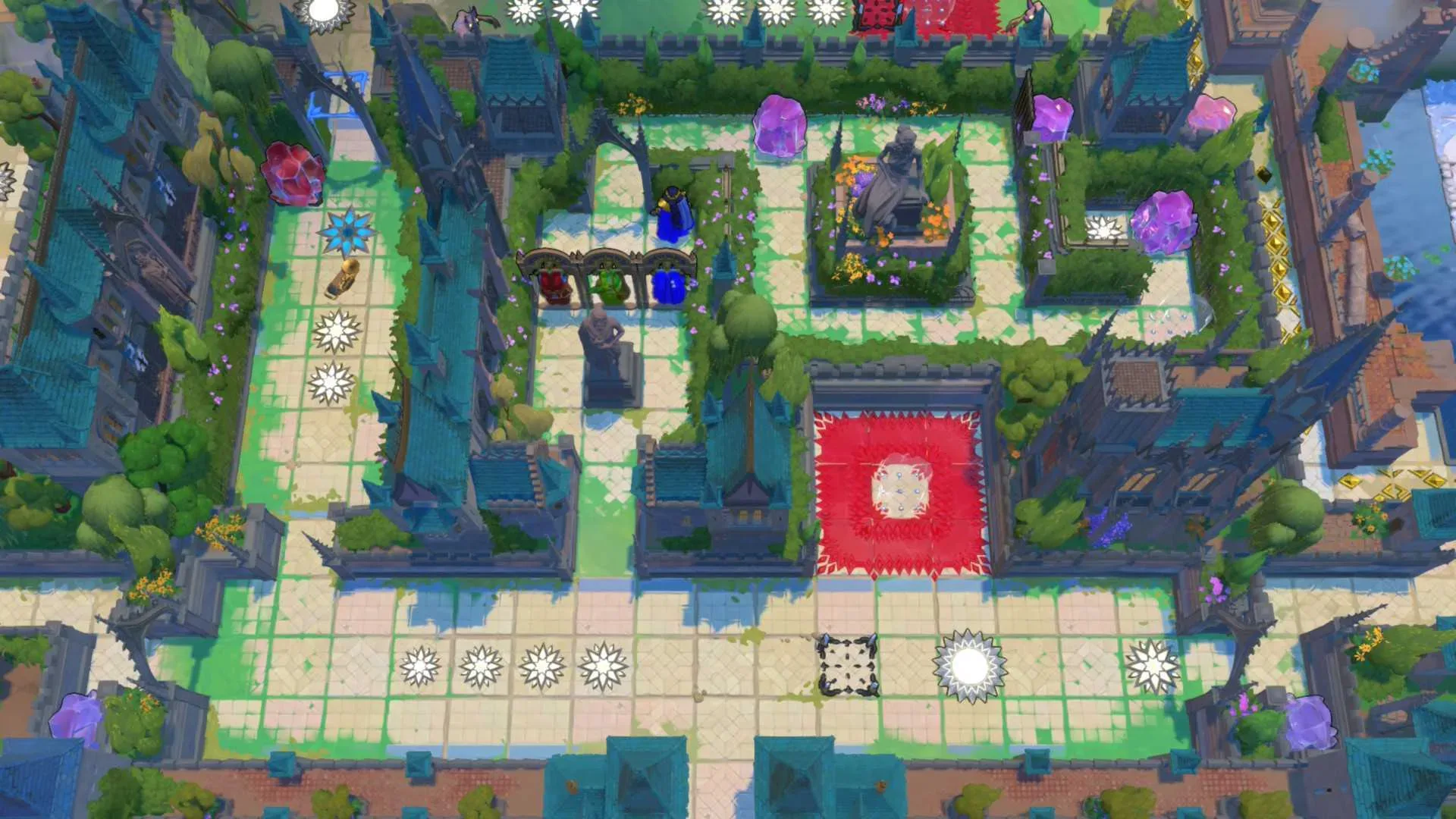
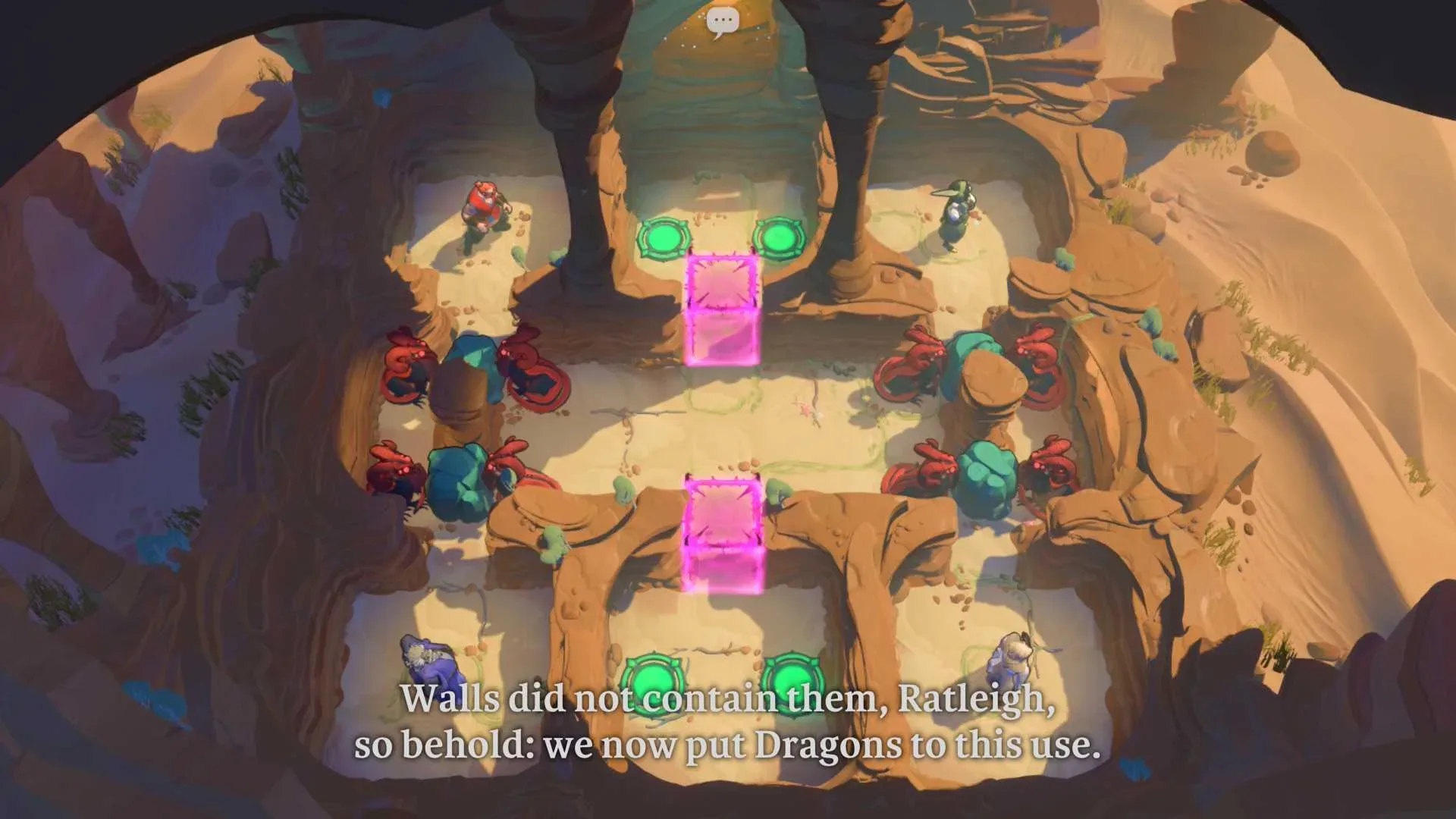
The first underlying game is Jonah Ostroff’s Heroes of Sokoban. Rather than giving the player one uniform character, it uses a party of adventurers whose members have distinct abilities. One can push, another can pull, and another can exchange places with blocks. The puzzle is therefore not just about where an object needs to finish. It is also about which character must be positioned at a particular point in the sequence.
That shift turns a standard route-planning problem into a coordination problem. A block may be in the right square but still be functionally useless if the party member who can move it in the needed direction cannot reach the appropriate side. In the new game’s setting, these characters are presented as the Heroes of Hauling, a group caught up in trouble with a king and subsequently working for him.
Promesst: switches, beams, and conditional movement
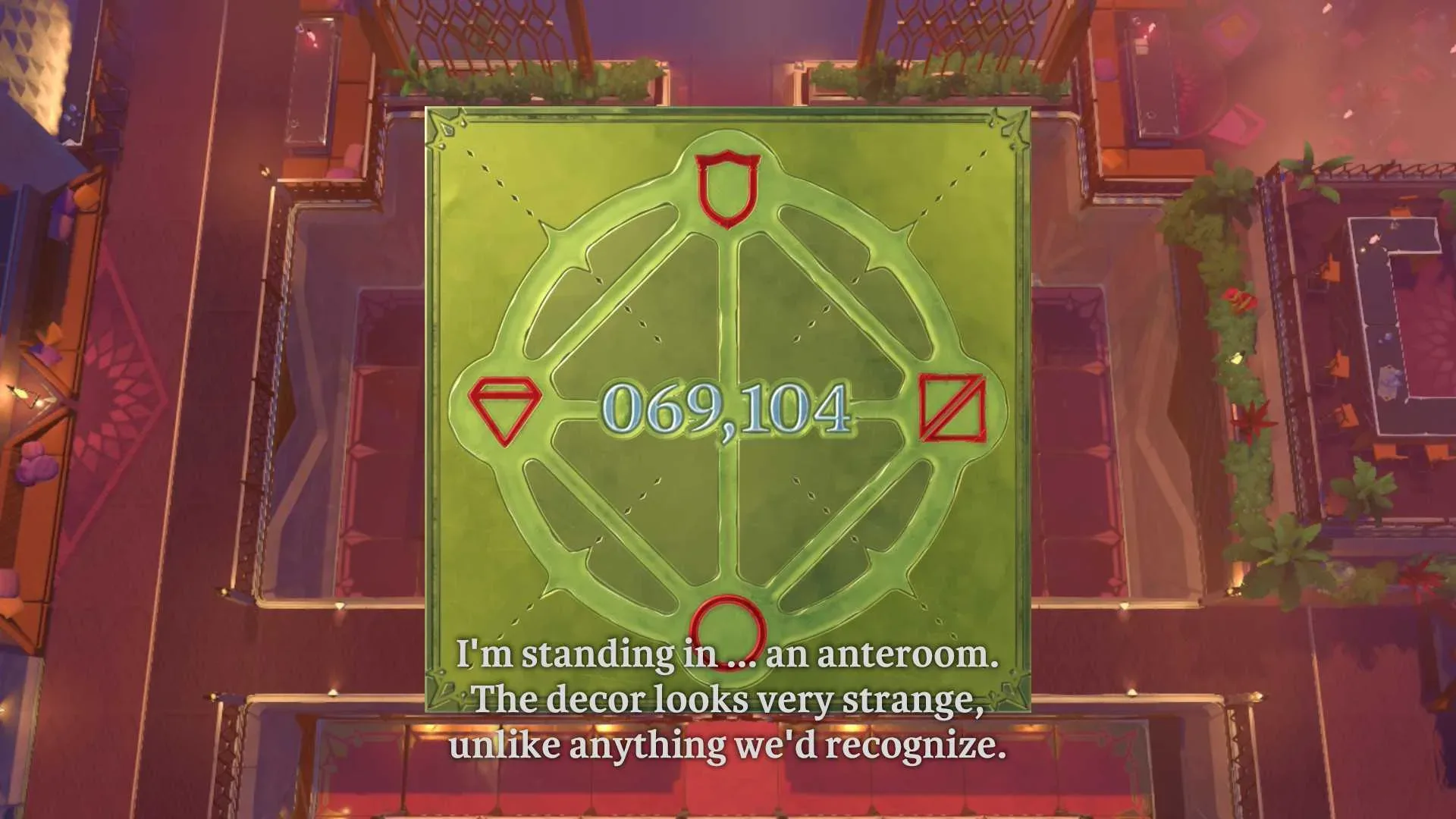
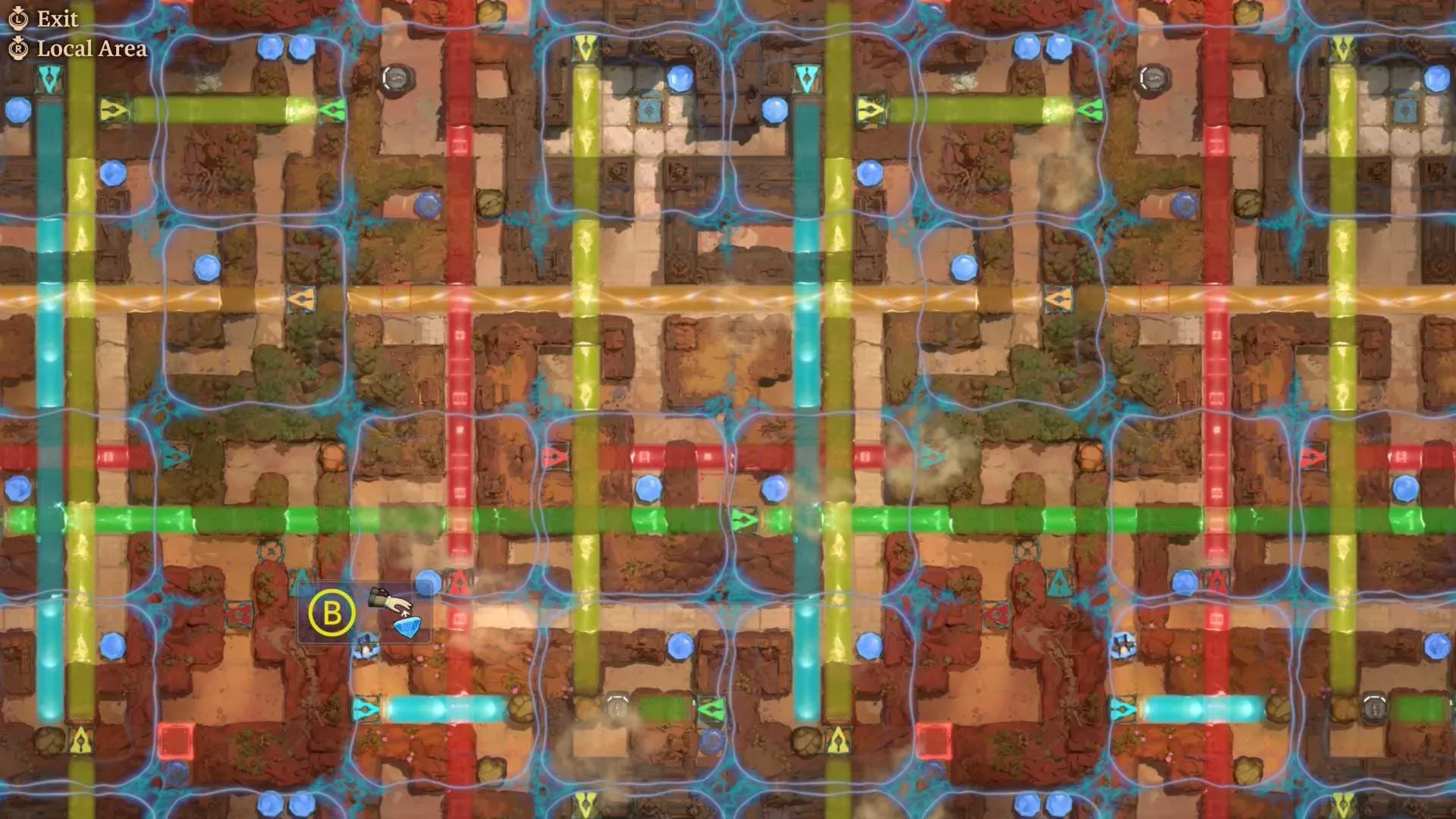
Sean Barrett’s Promesst provides a very different type of spatial logic. Switches activate machines, machines emit colored beams, and standing in those beams affects the player in different ways. Gems feed into the wider progression of activating more beams and reaching new parts of a maze.
Related coverage includes Order of the Sinking Star Impresses as a Puzzle Collection, but Its Larger Mystery Remains Unclear.
In a traditional crate-pushing level, the question might be, “Can I move this block there without trapping it?” In a beam-based puzzle, the question can become, “What state does the room need to be in when I cross this tile?” The distinction sounds small, but it demands a different planning habit. Players need to track not only objects and destinations, but also the effects of an environment that can be reconfigured through switches.
Mirror Isles: reflections become extra bodies
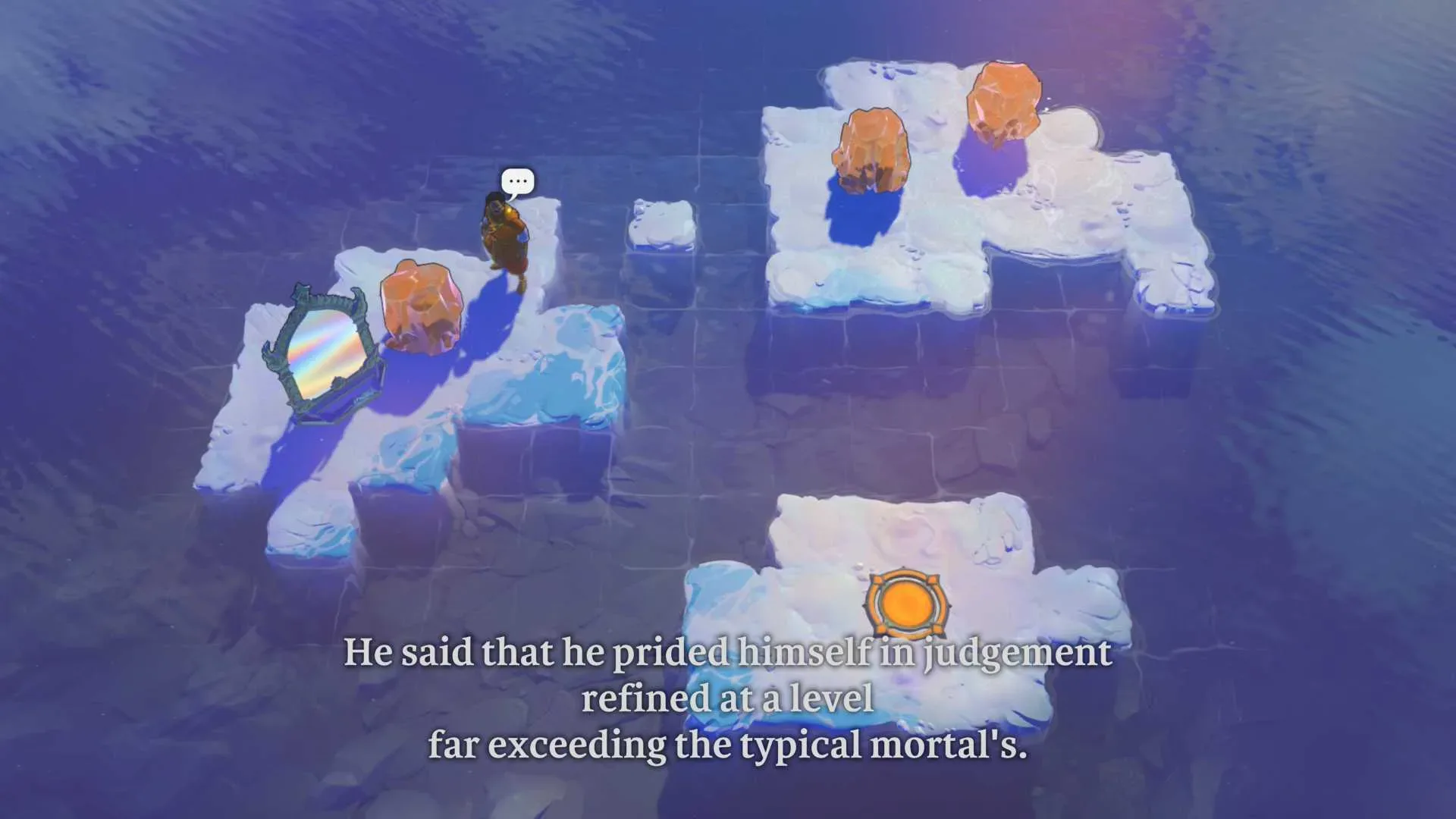
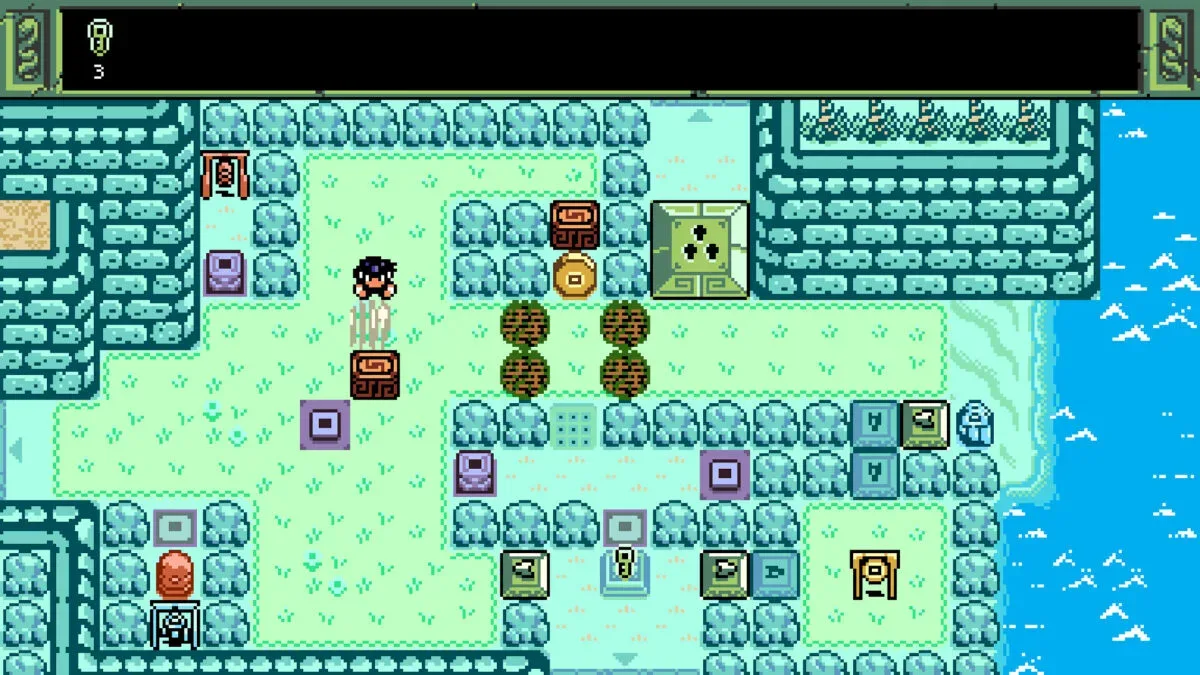
Alan Hazelden’s Mirror Isles turns reflections into a mechanical system. Mirrors reflect the protagonist across the map, and later allow the player or objects to be split into multiple versions. Those copies can then be used to traverse a collection of islands.
This is an especially fertile puzzle concept because duplication complicates agency. One position can produce another position elsewhere, and an action may need to account for both at once. When objects can also be divided, the puzzle space gets broader still: something that first appears to be a bridge-building problem may really be a problem of creating the right number of useful pieces in the right locations.
The associated story follows a man returning to a place from his childhood while believing that he may die soon. Whether that premise becomes a strong emotional thread remains unclear from the material available before launch.
Skipping Stones to Lonely Homes: momentum across water
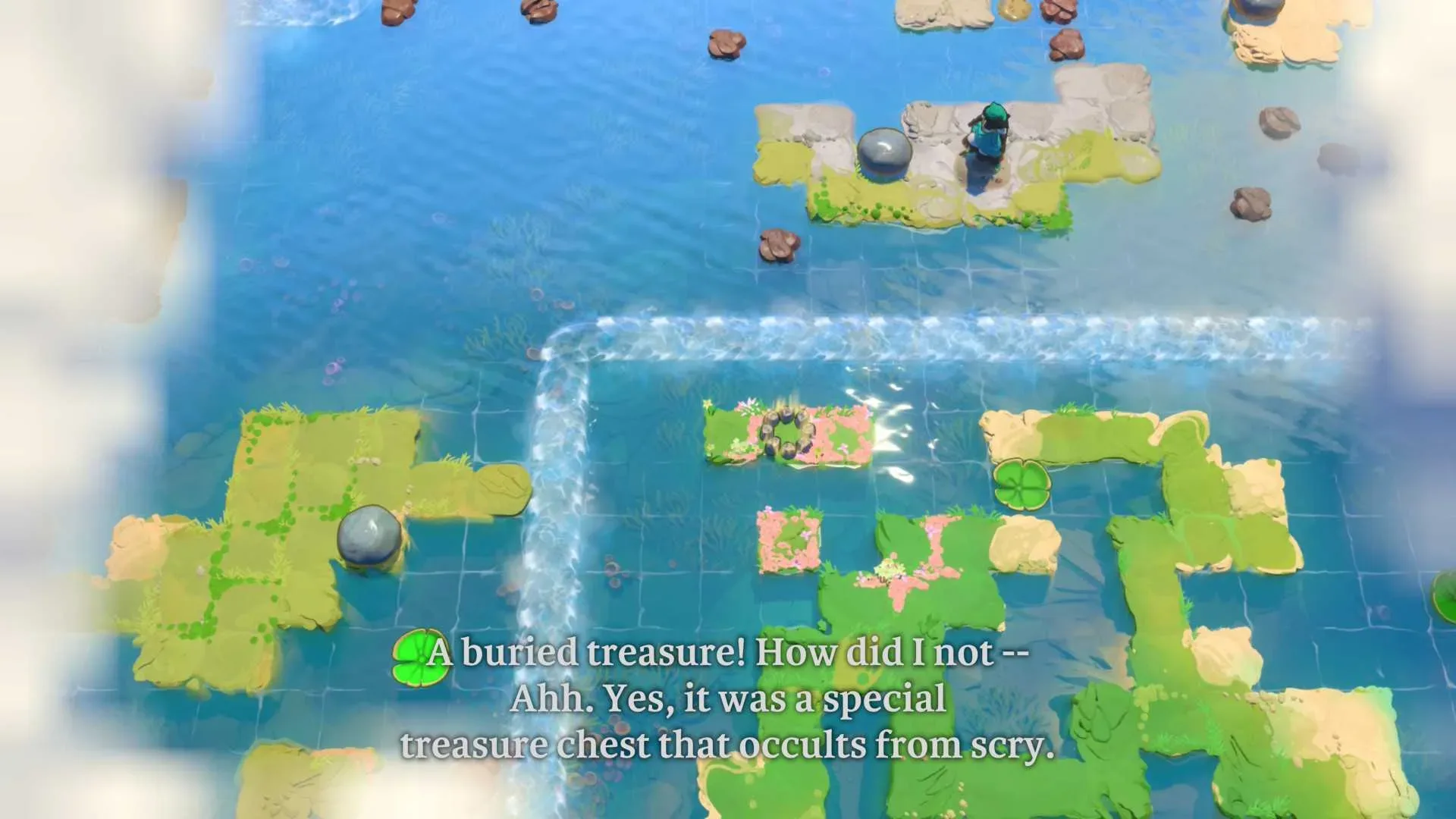
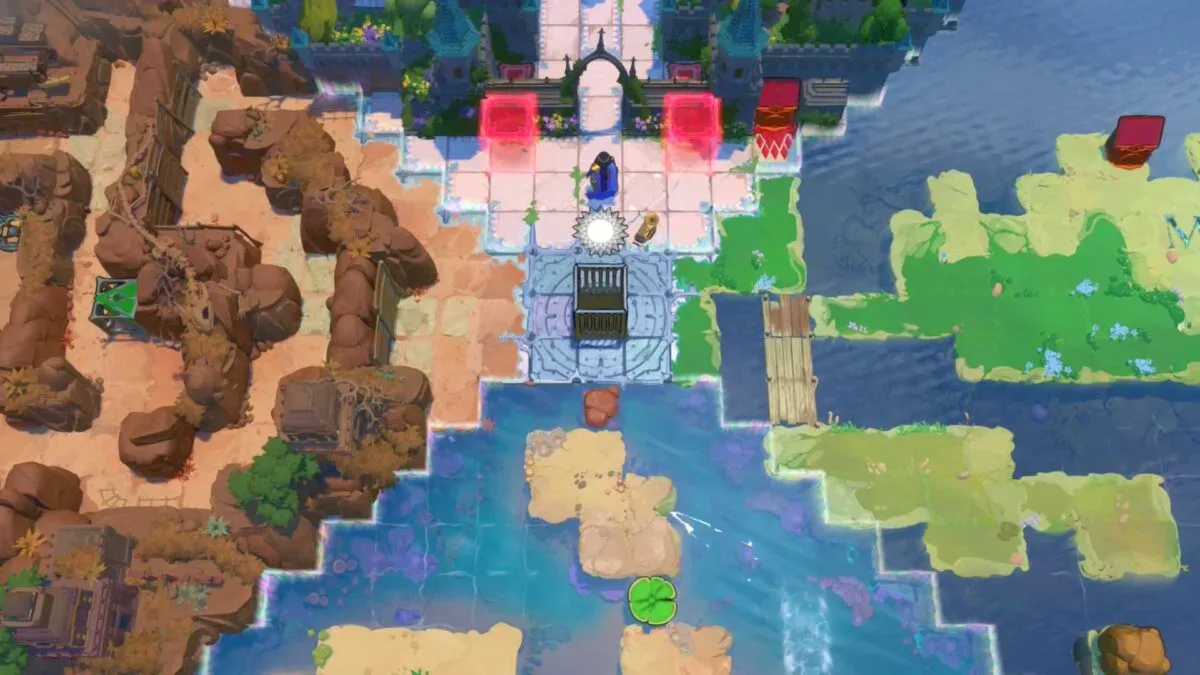
Hazelden’s other contribution, Skipping Stones to Lonely Homes, is built around rocks pushed into water. Rather than stopping immediately, a stone skips across to the next land platform. Interactions with objects including lilypads are part of the route forward.
The mechanic changes how players read distance. Water is not only an obstacle, and a rock is not merely a movable block; the act of pushing carries it through an additional movement rule. That can create satisfying multi-step plans, particularly when a stone’s destination affects other objects or opens a path that did not previously exist.
A world that is itself part of the puzzle
Order of the Sinking Star reportedly organizes these systems through a four-part world led by a Queen. She moves between discrete puzzle spaces, then uses the principles learned within them to solve problems in the overworld and access further areas. In other words, the game is structured around nested puzzle layers: a self-contained board, a regional ruleset, and a world map that asks the player to apply those lessons outside their original context.
There is also a broad, zoomed-out travel view. Players can pull back to a smaller representation of the world, cross it more quickly, and return to the closer perspective where they want to continue. This is an elegant answer to a common puzzle-game problem. A hard puzzle is exciting until it becomes the only thing standing between a player and any new idea. Being able to leave, explore, and come back later helps preserve the difference between difficult and exhausting.
The project is overseen by Jonathan Blow at Thekla, with Patrick Traynor also heavily involved in the puzzle work. The basic design ambition is clear: these are not simply preserved browser games placed in a new launcher, but newly realized puzzle sets that can mix their constituent concepts. Combining systems is where such a project can become especially demanding. A player who understands pushing, pulling, reflection, colored beams, and skipping stones independently may still need time to comprehend how two or more of those ideas affect one another.
Challenge is a feature, but readability remains crucial
Early impressions describe the puzzle design as rewarding and frequently overwhelming. That is not a contradiction. Good high-difficulty puzzle design often asks a player to hold several constraints in mind until a previously invisible sequence becomes obvious. The desired payoff is a feeling of recognition: not random experimentation, but an understanding of why the solution had to work.
However, a dense mechanical game relies on visual clarity. Players must be able to quickly distinguish movable blocks, fixed scenery, reactive objects, and objects that look similar but follow different rules. In the available pre-release account, the wider world was considered visually busy, with some objects and environmental details difficult to parse on a docked Switch 2 display.
An early example involved a wardrobe-like object that the Queen can pass through to change the color of her cape and gain different abilities. The function reportedly took time to understand because the object did not read clearly as a wardrobe, the color difference between the usual purple cape and its blue state was subtle, and elements appeared small at that viewing distance.
This is worth noting because it is not an objection to challenge itself. A puzzle can be difficult because its solution requires thought; it becomes frustrating for a different reason when the player cannot tell what an object is or whether it is interactive. Players considering the Switch 2 version may want to keep their preferred play mode and screen distance in mind. The same report suggested that a closer PC screen or handheld presentation could make the scene easier to interpret, though that is not a substitute for an assessment of the finished release across platforms.
The larger mystery has more to prove
The framing narrative places the Queen in an unusual location, possibly a temple, where she finds recordings left by someone who previously followed the same route. She is pulled into the worlds connected to the four puzzle foundations, each with its own small plot and unanswered questions. Signs in the landscape and the suggestion of hidden, larger-scale puzzles indicate a mystery beyond the individual rooms.
On paper, that structure resembles games that use secrets and environmental details to give abstract puzzle solving a larger sense of purpose. But a pre-release playthrough of roughly ten hours found the characters and dialogue less compelling than the mechanical work. Dialogue was described as sometimes vague about the present situation and, at other points, so specific or elaborate that it became hard to follow without stronger context.
That does not establish that the full game’s story fails. The playthrough was unfinished, and late-game revelations or better-defined connections can substantially change how an early mystery reads. It does establish a sensible caution for players whose interest depends on narrative momentum. The mechanics appear to be the clearest reason to play; the larger story may need post-launch discussion before its strengths can be judged confidently.
An incomplete pre-release build complicates the narrative assessment
One major caveat concerns the version used before release. It reportedly included a mixture of recorded human performances and AI-generated voices, plus subtitles with typos, mismatches with spoken lines, and occasional unclear text. Thekla indicated that the final launch build would not retain those issues and would instead use a full voice cast.
That distinction is essential. Placeholder or incomplete presentation can alter the perceived rhythm, tone, and emotional force of a scene. If some characters sound natural while others do not, the contrast can make the entire conversation feel disconnected, even where the writing itself may not be the root problem. Likewise, inaccurate subtitles can make already dense exposition harder to follow.
There is a wider practical lesson for anyone reading pre-release coverage: technical and presentation caveats should not be flattened into definitive verdicts. A game’s puzzle rules can often be evaluated in an unfinished build because their logic is already present. Acting, script polish, and the flow of a mystery are more vulnerable to last-stage changes. Readers interested in synthetic-media questions can also see related concerns in this look at AI-generated code in homebrew, where provenance and reliability are likewise central issues.
Who should consider it?
Order of the Sinking Star looks best suited to players who actively want difficult, systems-heavy Sokoban puzzles and appreciate revisiting a problem after learning a new rule elsewhere. The count of more than 1,000 puzzles alone signals a long-term commitment, not a brief narrative diversion. Its overworld travel option and four-region structure may make that commitment more manageable than a single uninterrupted gauntlet.
For players mainly interested in the individual concepts, there is another route: Heroes of Sokoban, Promesst, Mirror Isles, and Skipping Stones to Lonely Homes are all available free in a browser. Their minimalist presentation may appeal to people who prefer unambiguous boards over a busier 3D-style world, although they do not offer the convenience of a unified PC or Switch 2 package.
Ultimately, the available evidence points to an unusually rich puzzle collection built on proven ideas, with a compelling overworld structure and a potentially steep learning curve. The final game’s voice work, subtitles, visual readability, and narrative cohesion remain the meaningful unknowns. For pure block-pushing devotees, the mechanical foundation may be enough. For everyone else, waiting for impressions of the finished build is the most practical move.