Isles of Sea and Sky is coming to Nintendo Switch on October 8. The island-based block-pushing puzzle game from Cicada Games is built around open exploration, compact Sokoban-style challenges, colorful pixel art and a story communicated without dialogue. Its arrival gives Nintendo players a new way to tackle its interconnected puzzles in handheld or docked play.
The date was shared by Cicada Games, addressing players as “turtle riders” in a fitting nod to the game’s sunny island setting. The Switch version follows the game’s earlier release and comes after the Mysterious Update, which added more puzzles and new block types.
What kind of game is Isles of Sea and Sky?
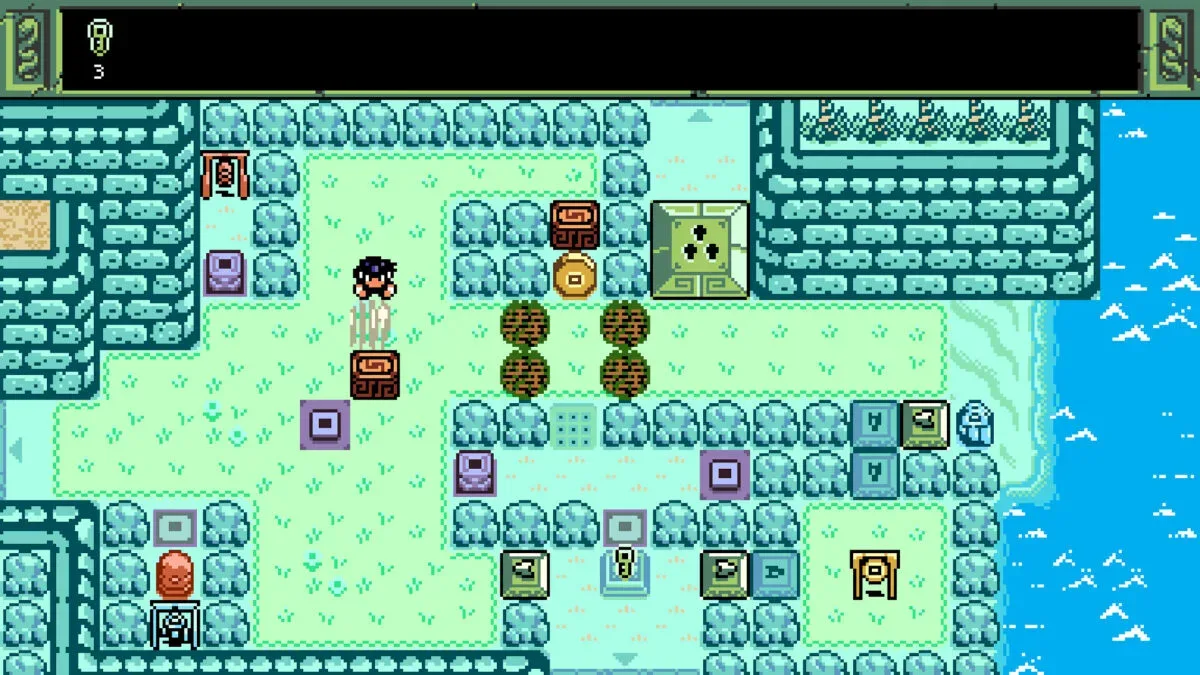
At its foundation, Isles of Sea and Sky is a Sokoban. The term generally describes a puzzle format centered on moving objects—most often blocks or crates—through a confined space toward designated goals. The core rule sounds wonderfully harmless: push a block into the correct location. The complication is that blocks typically cannot be pulled back. One optimistic shove can therefore turn into the sort of permanent logistical disaster that makes a player stare at a tiny square of grass as though it has personally betrayed them.
That push-only structure is what gives the genre its force. A solution is not merely about getting an object to its destination; it is about preserving access, creating room to maneuver, and deciding the order in which each move must happen. The game presents those block-pushing ideas across a chain of islands that opens up relatively early, while using puzzles to gradually uncover its secrets.
That broader island structure matters. Rather than presenting a bare list of isolated levels, the game connects its challenges through geography and theme. Exploration and puzzle solving feed one another: reaching new spaces creates more questions, while clearing puzzles expands what the player can understand about the world around them.
A wordless mystery carried by puzzle design
Isles of Sea and Sky also tells its story without written dialogue. In practical terms, that makes the environments and the progression of puzzles do more than simply frame the mechanical challenges. The arrangement of islands, obstacles and discoveries carries narrative weight, asking players to interpret the world through what they encounter and unlock rather than through explanatory text.
Wordless storytelling can be particularly effective in puzzle games because it leaves the act of discovery in the player’s hands. When the main activity is carefully observing a space, recognizing a constraint and testing an idea, environmental clues can feel like part of the same process. The story is not delivered in a separate lane; it is encountered through movement and problem solving.
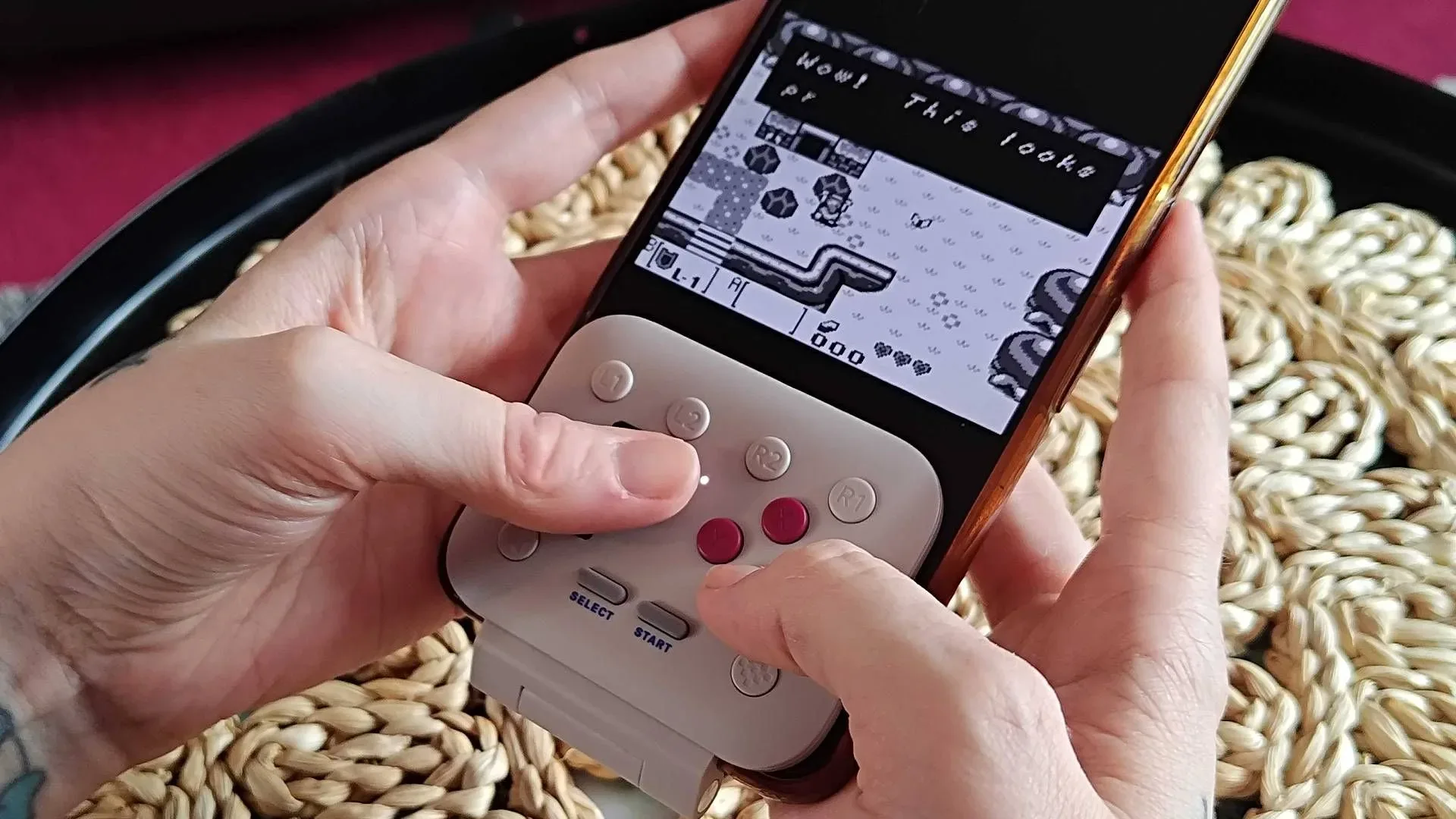
That design also makes the visual presentation important. The game uses bright colors, pixel art and a look reminiscent of the Game Boy Color era, alongside music that supports its atmosphere. “Game Boy Color feel” here should not be mistaken for a claim that the game belongs to that platform’s library. It describes an aesthetic association: small-scale pixel imagery, vivid color and a visual style that can read clearly on a compact screen. Players interested in that handheld visual language may also appreciate how modern accessories are extending phone-based Game Boy-style play, as covered in this look at the 8Bitdo FlipPad.
Related coverage includes Isles of Sea and Sky Brings Its Clever Sokoban Puzzles to Nintendo Switch on October 8.
The Mysterious Update is part of the picture
The Switch release arrives after the Mysterious Update, an expansion of the game’s puzzle inventory that introduced additional puzzles and new kinds of blocks. That is meaningful in a Sokoban-style game because a new block type can alter the basic vocabulary of play. A fresh object or interaction does not only create another route through a single screen; it can change the assumptions players bring to spatial planning, sequencing and movement.
The available details do not spell out the exact functions of those new blocks, so it would be premature to assign them specific mechanics. What is clear is that the update enlarged the game with more challenges and additional block varieties. For returning players, that creates a reason to revisit the islands beyond replaying familiar solutions. For newcomers on Switch, it means the version is arriving after that body of post-release puzzle content was added.
It is worth drawing a distinction here: the update has been described as the Mysterious Update, not as separately priced DLC. Nothing in the available information establishes price, whether the update is a separate download on Switch, or any platform-specific feature differences. Those details should be left to official store information rather than guessed from the announcement.
Why handheld play suits a block-pushing puzzler
The Nintendo Switch version is a natural fit for the game’s premise. Sokoban puzzles are fundamentally turn-based exercises in attention rather than reaction speed. A player can inspect a layout, stop after a setback, walk away for a few minutes, then return to the same problem with a less emotionally compromised relationship to that one block in the corner.
Handheld systems encourage that rhythm. A puzzle can be approached in short sessions without demanding that a player remember an elaborate combat control scheme or re-enter a fast-moving encounter. The Switch also provides the option to play on a television when a particular layout calls for more visual space. The key point is flexibility: the same island can accommodate a quick bit of route planning on the go or a longer evening spent working through a difficult sequence.
That does not mean every puzzle will be easier on a smaller display. Detailed layouts always benefit from legibility, and individual preference will matter. But the game’s bright palette and deliberately compact pixel-art look appear well aligned with portable play, while the Switch’s docked mode offers an alternative for players who prefer to study each square at a larger size.
What has been confirmed—and what has not
- Confirmed: Isles of Sea and Sky is scheduled to release on Nintendo Switch on October 8.
- Confirmed: It is a block-pushing, Sokoban-style puzzle game set across an interconnected group of islands.
- Confirmed: The game uses a dialogue-free approach to storytelling, pixel art, bright colors and music.
- Confirmed: The earlier Mysterious Update added puzzles and new block types.
- Not established by the announcement: Switch pricing, exact store-page details, performance specifics, platform-exclusive features or precise implementation of the update’s content on Switch.
For puzzle fans, the most useful takeaway is simple: the Switch release provides another home for a game whose structure favors deliberate, portable-friendly sessions. Its appeal is not just that it contains blocks to push, but that it makes each push part of a larger process of exploring islands, identifying connections and uncovering a wordless mystery. On October 8, Nintendo players will be able to begin that process—and, inevitably, discover the exquisite horror of realizing they pushed the correct block in the incorrect order.