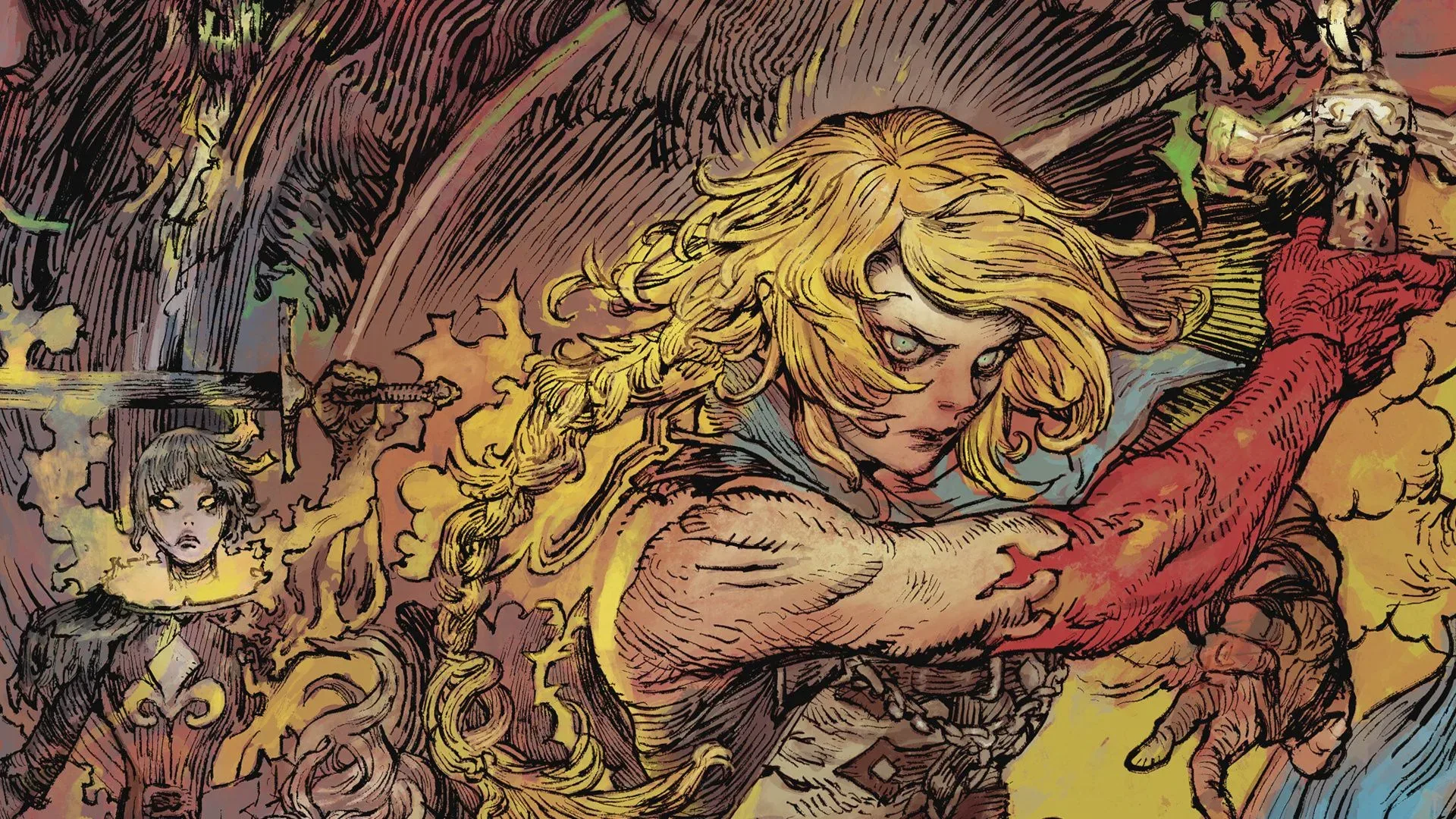
Castlevania: Belmont’s Curse may not have the native Nintendo Switch 2 edition that many players have been asking for, but the Switch demo offers a meaningful consolation: it is reported to run at 60 frames per second on Switch 2.
That detail matters because the apparent choices had seemed unusually stark for players who prefer the series’ exploration-led action in portable form. On the original Switch, the game had been associated with a 30fps presentation. Elsewhere, playing at a higher frame rate could mean moving to a TV-based setup or another handheld PC platform. The demo indicates that Switch 2 owners can get smoother motion from the existing Switch release, even without a separately labelled Switch 2 version.
The caveat is just as important as the good news. There is still no native Switch 2 release confirmed, and reports indicate that the image resolution is not especially impressive on the newer console. This is an upgrade in performance rather than a complete next-generation overhaul. Players should not read the 60fps result as confirmation of enhanced assets, a redesigned release, or a broad set of Switch 2-specific features.
What the demo result changes
The newly available Switch demo is the relevant test case. On Switch 2 hardware, it reportedly operates at 60fps despite the game being distributed as a Switch version rather than a native Switch 2 product. Coverage of the demo’s performance has focused on that distinction: compatibility with the newer system appears to deliver a frame-rate benefit, but does not turn the software into a dedicated Switch 2 edition.
For more context, explore Diablo 4 Will Leave Hellfire Torch’s Unintended Season 15 Power Intact for Now.
For an action-focused Castlevania game, that can be a practical difference rather than a number reserved for specification debates. A frame rate describes how many individual images a game displays each second. At 30fps, the game presents 30 frames in that time; at 60fps, it presents twice as many. When performance is stable, the latter can make movement, camera scrolling, animation, and rapid changes in player input appear more fluid.
It is worth separating “60fps” from claims it does not make. A higher frame rate does not automatically establish that every scene is locked to that target under all conditions, nor does it necessarily improve resolution. It also does not itself confirm lower input latency, though a faster display cadence can be valuable in a game where players need to track attacks, jumps, enemies, and environmental hazards quickly. The reported result concerns the demo on Switch 2, not an exhaustive technical account of every area of the full game.
Why the absence of a native edition still matters
A native edition is software built or specifically updated to take advantage of a particular system. In this case, a native Switch 2 version could potentially offer its own performance and image-quality targets. None of that has been announced for Belmont’s Curse. What has emerged instead is a more limited but welcome outcome: the existing Switch demo performs at 60fps on the new console.
Resolution and frame rate address different parts of the visual experience. Resolution concerns the amount of image detail being rendered, while frame rate concerns how often the image updates. A game can look sharper at a higher resolution but still animate at 30fps; it can also animate smoothly at 60fps while retaining a softer-looking image. The report around Belmont’s Curse points toward the second situation on Switch 2.
That trade-off will land differently depending on how and where someone plays. A player primarily using the system handheld may consider smoother traversal and combat the priority. Someone using a large television, meanwhile, may be more sensitive to a less crisp image. Neither preference invalidates the other, and the current information does not establish a universal best version. It does, however, make the Switch 2-compatible version a more plausible option for people who had been concerned that portable play would be confined to 30fps.
Metroidvania pacing makes smooth motion especially welcome
Belmont’s Curse sits in the Metroidvania conversation, a label generally used for action-adventure games structured around exploration, interconnected spaces, and progression that opens new routes or capabilities. These games can ask players to revisit locations, learn enemy patterns, react to hazards, and move repeatedly through dense environments. That rhythm is one reason a smoother frame rate has obvious appeal even when it is not the only measure of a release.
Portable hardware also suits that structure well. Exploration-heavy games can be played in short bursts while preserving a sense of gradual progress: uncovering a route, reaching a save point, or finally clearing an obstacle can feel like a natural stopping point. The report does not change the game’s underlying design, but it does potentially remove one performance concern from the handheld equation for Switch 2 owners.
There is also a difference between a technical disappointment and a deal-breaking one. A 30fps game can be entirely playable, and some players will place greater weight on art direction, controls, level design, or portability than on frame rate. At the same time, the shift from 30fps to 60fps is one of the more immediately visible improvements a backward-compatible game can receive. It is therefore understandable that the discovery has drawn attention despite the continued lack of a dedicated release.
A precedent exists, but it is not a promise
Konami has previously updated Metal Gear Solid Master Collection Vol. 1 on Switch so that its ports of Metal Gear Solid 2 and Metal Gear Solid 3 performed better on Switch 2. That provides a reason for optimism that Belmont’s Curse could receive more attention after launch, whether through performance-focused updates or another approach.
But precedent is not confirmation. No comparable plan for Belmont’s Curse has been announced. It is possible that the current Switch 2 result is simply how the existing demo behaves under the newer hardware’s compatibility environment. It is also possible that the developer and publisher could decide to issue a native version later. Sega’s later native-version approach with Shinobi: Art of Vengeance illustrates that a delayed dedicated edition is at least a model that exists elsewhere, not evidence that the same decision has been made here.
For now, the practical information is narrower and clearer: people considering the Switch version can use the demo to assess its presentation on their own Switch 2 hardware. They should treat it as a preview of the currently available compatibility experience, not as a substitute for official technical specifications or a guarantee of a future enhancement path.
What players should take from this
- There is no announced native Switch 2 version: the 60fps report concerns the Switch release running on Switch 2.
- The demo is the evidence currently available: it reportedly runs at 60fps on the newer system.
- Image quality remains a consideration: reports suggest the resolution does not match what some players may expect from a native current-generation release.
- A patch or dedicated edition remains unconfirmed: Konami’s work on another collection shows that post-release improvements are possible, but it says nothing definite about Belmont’s Curse.
- Trying the demo is the sensible next step: it lets prospective players judge the frame rate and image quality on the display and play style they actually intend to use.
In short, the lack of a native Switch 2 package remains a legitimate limitation, particularly for players hoping for a cleaner image and an explicitly optimized release. Yet the demo’s reported 60fps performance means that the situation is less restrictive than it first appeared. For a portable-friendly action exploration game, smooth motion may be enough to shift the calculation for a significant portion of the audience.