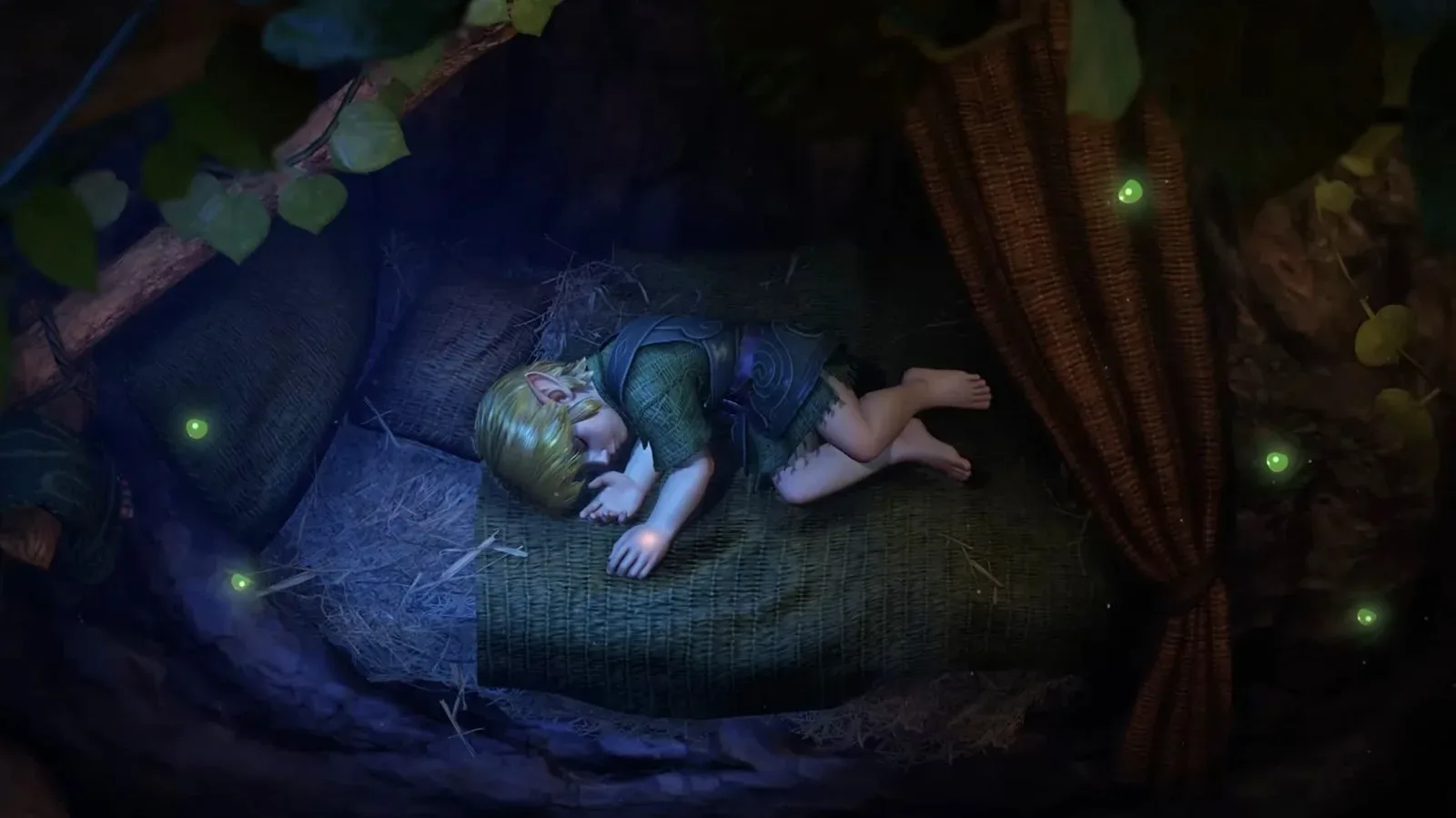
A possible price clue for The Legend of Zelda: Ocarina of Time on Switch 2 has appeared in an unexpected place: a search result on Nintendo’s Australian and New Zealand web stores. The result is not a full eShop product page, and Nintendo has not formally announced a price. Still, the figure attached to the entry—A$94.95 for a digital version—has immediately stirred up a familiar Zelda debate: is this a lavish rebuild of an all-time classic, or a more focused remake designed to preserve the 1998 adventure’s original shape?
The answer remains unconfirmed. Nintendo’s official information is still limited to a short tease and a 2026 release window for the Switch 2 project. Yet pricing is one of those small pieces of retail metadata that fans understandably scrutinize. It does not reveal dungeon layouts, combat systems, or how Hyrule Field will look on new hardware. It can, however, establish expectations for a game’s scope—sometimes fairly, sometimes disastrously early.
What the Australian Store Result Appears to Show
Searching “Zelda” on the Australian and New Zealand Nintendo websites reportedly brings up an entry for the Switch 2 remake with a listed digital price of A$94.95. There does not appear to be a corresponding public eShop page with the usual detailed description, screenshots, pre-order information, or finalized release date. That distinction matters. Search indexing can surface placeholder data, region-specific catalog details, or information that changes before a publisher intends the public to treat it as final.
As presented, the listing has led to speculation that a physical edition could be priced at A$109.95. That physical figure is an inference, not a confirmed MSRP. Nor should Australian pricing be converted mechanically into every other territory’s price. Regional game pricing reflects local taxes, currency strategy, retailer practices, and platform-holder policies; it is not a simple exchange-rate exercise.
Even so, the A$94.95 number has been read as a possible signpost toward a US$59.99 digital price. If that proves correct, it would align the remake with the price charged for Yoshi and the Mysterious Book, while placing it $10 above the recent Star Fox remake. The important word, for now, is if. Until Nintendo posts regional storefront pages and confirms its plans directly, players should treat the number as a credible-looking indication rather than a settled fact.
Why a $60 Price Has Started a Scope Conversation
Ocarina of Time is not merely another old game due for a refresh. Its original Nintendo 64 release became an enormous reference point for 3D action-adventure design, from Z-targeting and lock-on combat to dungeon progression, cinematic staging, and the sense of moving through a connected fantasy world. A remake carries the unusual burden of serving returning players with decades of memories while introducing an influential game to people who never met Navi, rode Epona, or accidentally rolled into every wall in Kokiri Forest.
That legacy makes the term “remake” broad enough to contain wildly different expectations. One possibility is a faithful game with modern presentation, improved performance, refreshed controls, quality-of-life work, and a handful of carefully chosen additions. Another is a fundamentally reimagined Ocarina of Time: expanded regions, altered progression, redesigned dungeons, a dramatically enlarged Hyrule, and systems informed by The Legend of Zelda: Breath of the Wild and Tears of the Kingdom.
A potential US$59.99 price is being interpreted by some fans as support for the first option. It could suggest a polished, substantial modernization rather than the kind of huge structural rework associated with a top-tier, open-world production. But price alone cannot prove that conclusion. A publisher can price a game based on market positioning, catalog strategy, perceived audience, or a desire to make an older classic accessible. Conversely, a game can be costly while remaining conservative in design. The price may be informative; it is not a development document.
Star Fox Offers a Useful, Limited Comparison
The recent Star Fox remake is an understandable point of comparison because it reportedly added material beyond a visual pass. It included newly made story scenes with voice acting alongside gameplay tweaks, quality-of-life changes, and new features. At the same time, its underlying identity remained anchored to the much older game. That balance—new polish and new context without discarding the original framework—is one possible template for what Nintendo could do with Ocarina of Time.
Of course, Star Fox and Zelda have very different design needs. Ocarina of Time is a long-form adventure built around exploration, puzzle dungeons, equipment, time travel, bosses, side activities, and the gradual transformation of its world. Small adjustments can have large consequences. Make navigation more explicit and a notorious moment becomes smoother; make it too explicit and a player loses the pleasure of discovery. Expand a location and it might feel richer, but it could also change the pacing that made the original’s progression memorable.
That is why “faithful” should not be mistaken for “effortless.” Updating an older 3D game for a modern audience may require careful camera behavior, interface revision, accessibility considerations, save-system improvements, and performance work, all without making the original’s unusual rhythm feel generic. The most exciting remake news would not necessarily be a checklist of the biggest changes. It might be evidence that the project understands exactly which quirks are part of the game’s personality and which are simply artifacts of 1998 hardware.
Modern Zelda Is an Inspiration, Not Yet a Promise
There has naturally been curiosity about whether the remake could reshape Ocarina of Time around the newer Zelda games’ open-ended philosophy. Breath of the Wild and Tears of the Kingdom gave players immense freedom, systemic experimentation, and landscapes built for improvisation. Ocarina of Time, by contrast, is largely a curated journey. Its locks, keys, songs, items, and story revelations guide players through an intentional sequence.
Neither approach is inherently superior. They simply create different kinds of adventure. A Switch 2 remake could borrow selected modern conveniences—faster loading, better map tools, optional guidance, flexible control settings, or technical spectacle—without turning Hyrule into an entirely different game. In fact, preserving the contrast may be part of the appeal. Not every classic needs to be retrofitted into the current series formula to feel worthwhile.
For players in the mood to revisit the strange side roads of late-1990s adventure design while waiting for firmer Zelda details, Radical Dreamers’ compact detour through another beloved era is a useful reminder that revisiting an old favorite need not mean rebuilding every part of its identity.
What Nintendo Still Needs to Clarify
The immediate situation is straightforward: an apparent regional store result has produced a plausible price theory, but the game’s official particulars remain sparse. Nintendo is expected to provide more information through two presentations scheduled for this week: a dedicated Zelda Direct on September 8, followed by a broader Nintendo Direct on September 9. Those events could answer the questions that actually determine how the remake should be understood.
- Is A$94.95 a final digital price, a placeholder, or an incomplete regional listing?
- Will there be a physical edition, and if so, what will its official price be?
- Is the 2026 window still the intended launch period?
- How closely does the remake follow the Nintendo 64 original’s world, dungeons, story, and progression?
- What new features, technical upgrades, accessibility options, or story additions are planned?
- Will Nintendo position it as a preservation-minded remake, a major reinterpretation, or something between those two labels?
Until those details arrive, the reasonable takeaway is modest. The A$94.95 listing is a notable lead, and its possible US$59.99 equivalent may shape expectations around the remake’s scale. It is not confirmation of the North American price, the physical MSRP, or the precise creative ambition of the project. Ocarina of Time has survived multiple generations because its foundation is strong enough to invite both nostalgia and scrutiny. Nintendo now has the opportunity to show whether Switch 2’s version is chiefly a return to that foundation—or a new path through the Temple of Time.