Radical Dreamers: Nusumenai Hōseki occupies one of the oddest positions in RPG history. It is a small, text-led side story connected to two enormously beloved console role-playing games, yet for decades it was effectively inaccessible outside its original Japanese broadcast context. Released for the Super Famicom’s Satellaview service in 1996, it predates Chrono Cross while borrowing the lingering emotional weight of Chrono Trigger. It was not officially brought to a broad modern audience until 2022, when it arrived with Chrono Cross: The Radical Dreamers Edition.
That long gap matters. The game has often felt like a legend whispered around the Chrono series: a rough, mysterious prototype containing characters, ideas and locations that would be reshaped for Chrono Cross. Director Masato Kato had reportedly regarded it as unfinished and was reluctant to revisit it publicly. But its eventual preservation was worthwhile. Radical Dreamers is brief, imperfect and plainly from a different era of interactive storytelling, yet it has a sharp identity of its own. It is less a lost JRPG than a moody interactive novella that lets players step through one especially haunted night in Chrono history.
A heist at Viper Manor, told through prose
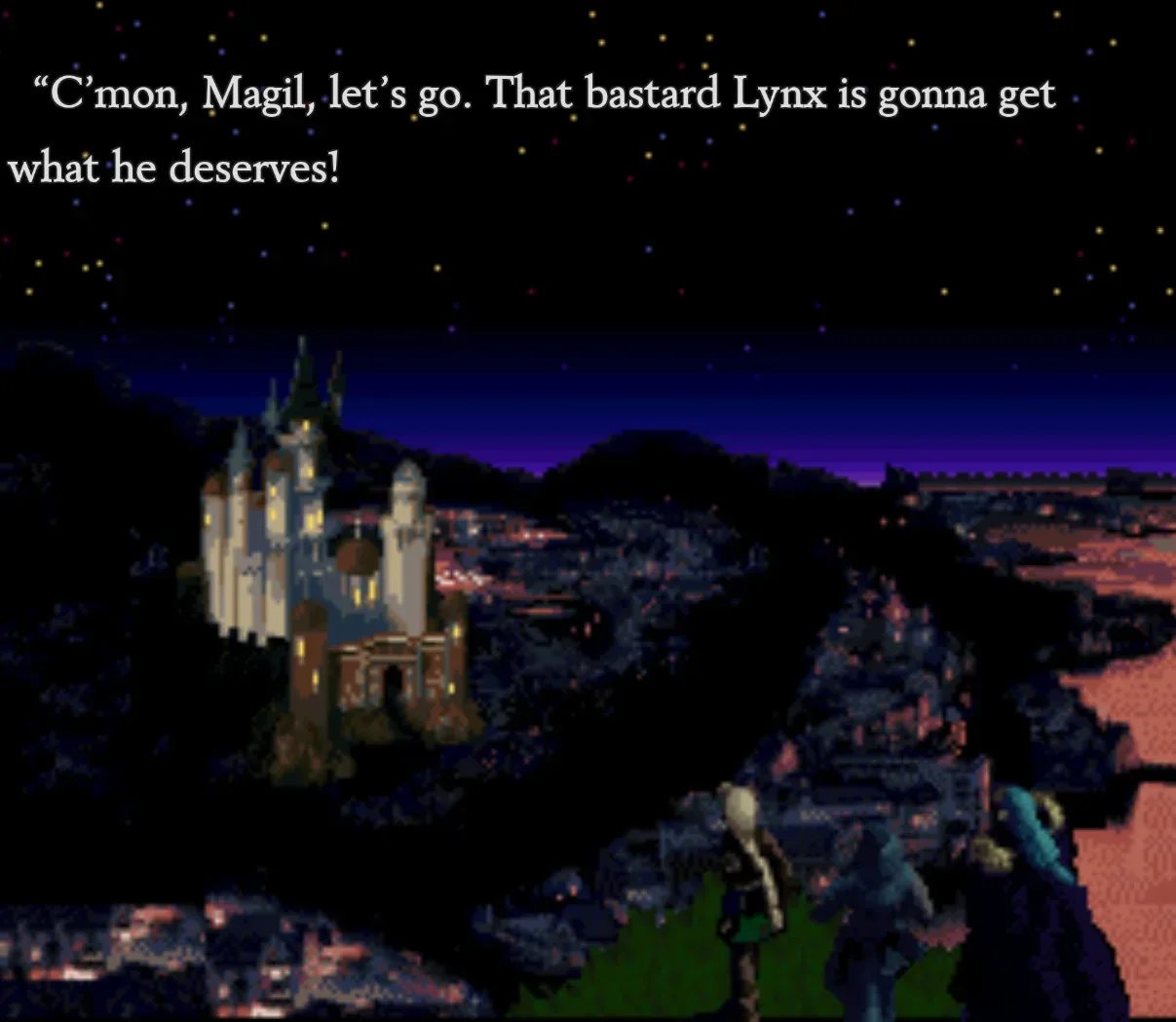
The premise is direct: several years after Chrono Trigger, Serge narrates a break-in at Viper Manor. He travels with Kid and the enigmatic magician Magil, and all three are seeking the Frozen Flame. The party enters the manor as thieves, but the mission quickly exposes more personal motives. Kid is pursuing vengeance against Lynx, the manor’s owner, over an atrocity that took somebody deeply important from her.
Fans coming from Chrono Cross will recognize names and broad strokes, but Radical Dreamers is not simply Cross with fewer polygons. Serge is more overtly characterized because he narrates the story. His attraction to Kid, his observations and his occasional nerves give him a voice distinct from the quieter lead players knew in the later game. Kid already has her familiar edge, while Magil immediately projects the kind of imposing magical competence that makes every mention of him feel loaded with significance.
That significance is intentional. Magil strongly evokes Magus from Chrono Trigger, right down to the obvious similarity in name and the shadow of Zeal that hangs around his past. The relationship is complicated by the way Chrono stories handle alternate possibilities, revisions and echoes of people across worlds. Chrono Cross ultimately uses Guile rather than Magil, although a secret ending in the Nintendo DS version of Chrono Trigger has helped keep the connection alive for fans. Radical Dreamers does not settle every question. It makes the uncertainty part of its appeal.
Text is not a limitation here; it is the atmosphere
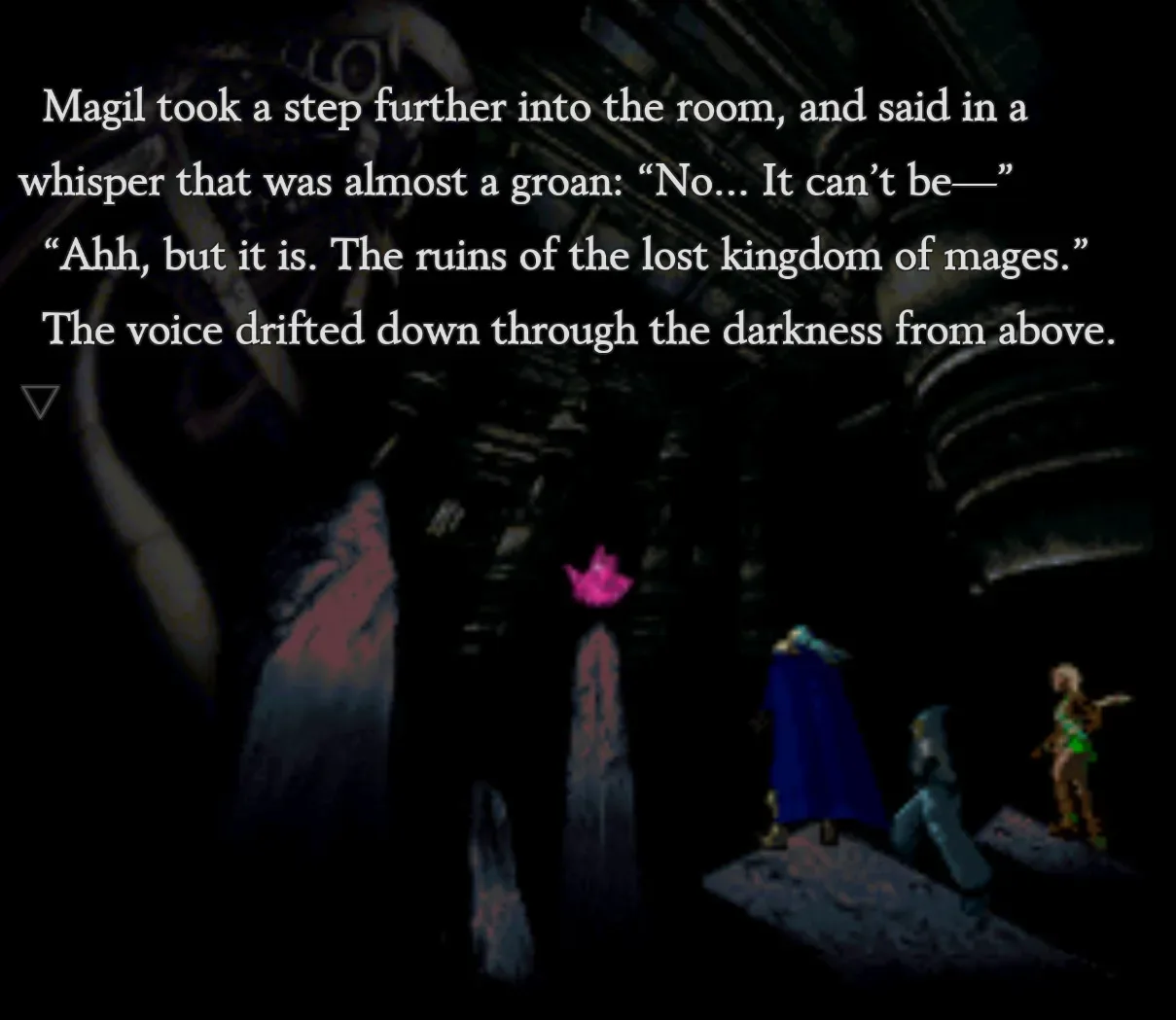
There is very little visual detail carrying the adventure. Instead, locations, enemies and sudden dangers are rendered through prose. The party moves from corridors to libraries, clocktower spaces, stairways and chambers where the manor’s architecture seems positively eager to kill intruders. That makes the experience feel less like a conventional Chrono quest and more like a horror-tinged escape room.
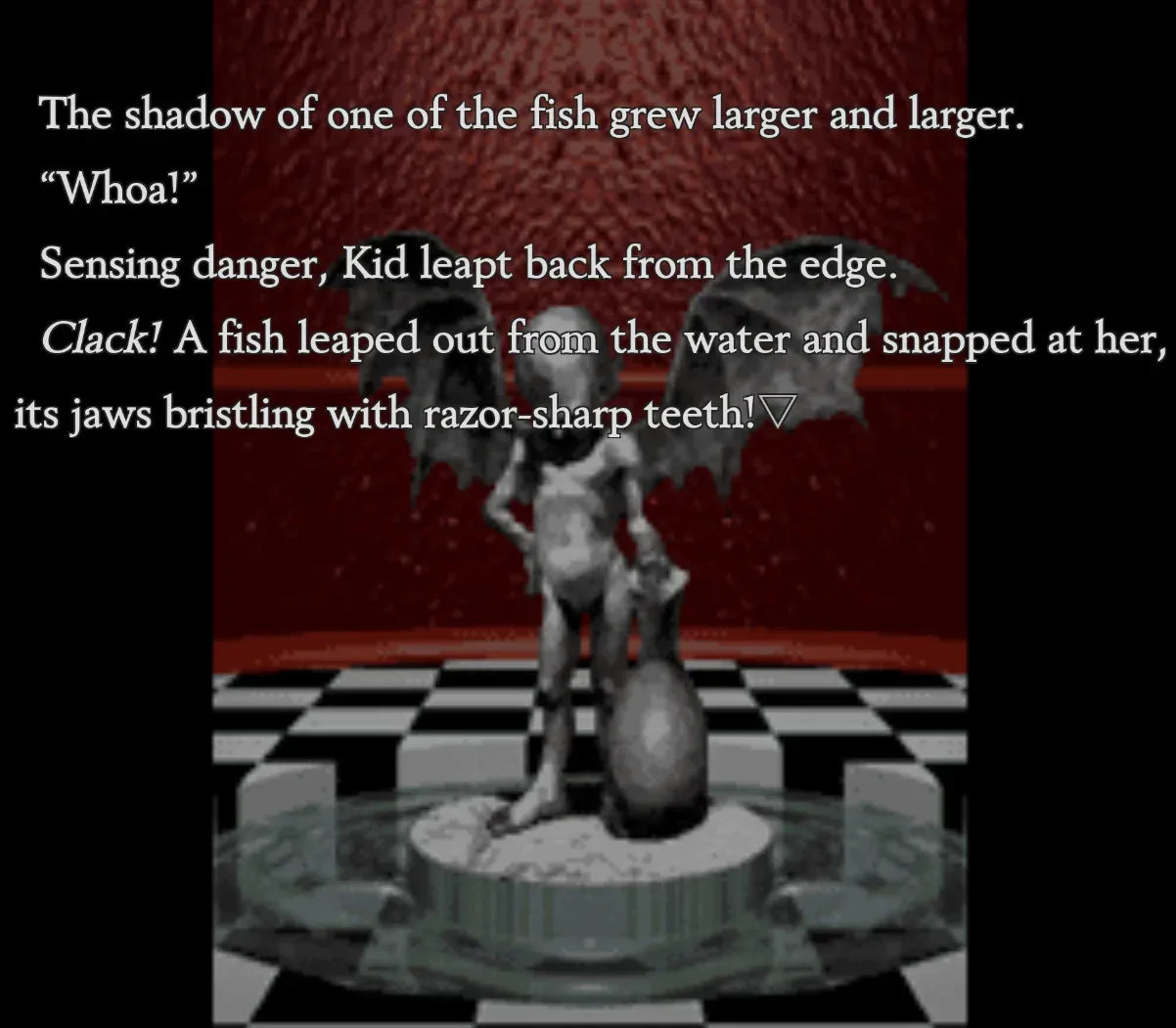
The closest tonal cousins may be the original Resident Evil and Shadowgate, even though Radical Dreamers is not a point-and-click game. Viper Manor is a puzzle-box building full of terrible history, strange inhabitants and rooms that demand caution. An atrium fountain has piranadons waiting to attack. A spiked ceiling can turn a wrong response into disaster. Ghosts, goblins and traps constantly challenge the party’s progress, and Serge’s narration maintains just enough wit to stop the gloom from becoming oppressive.
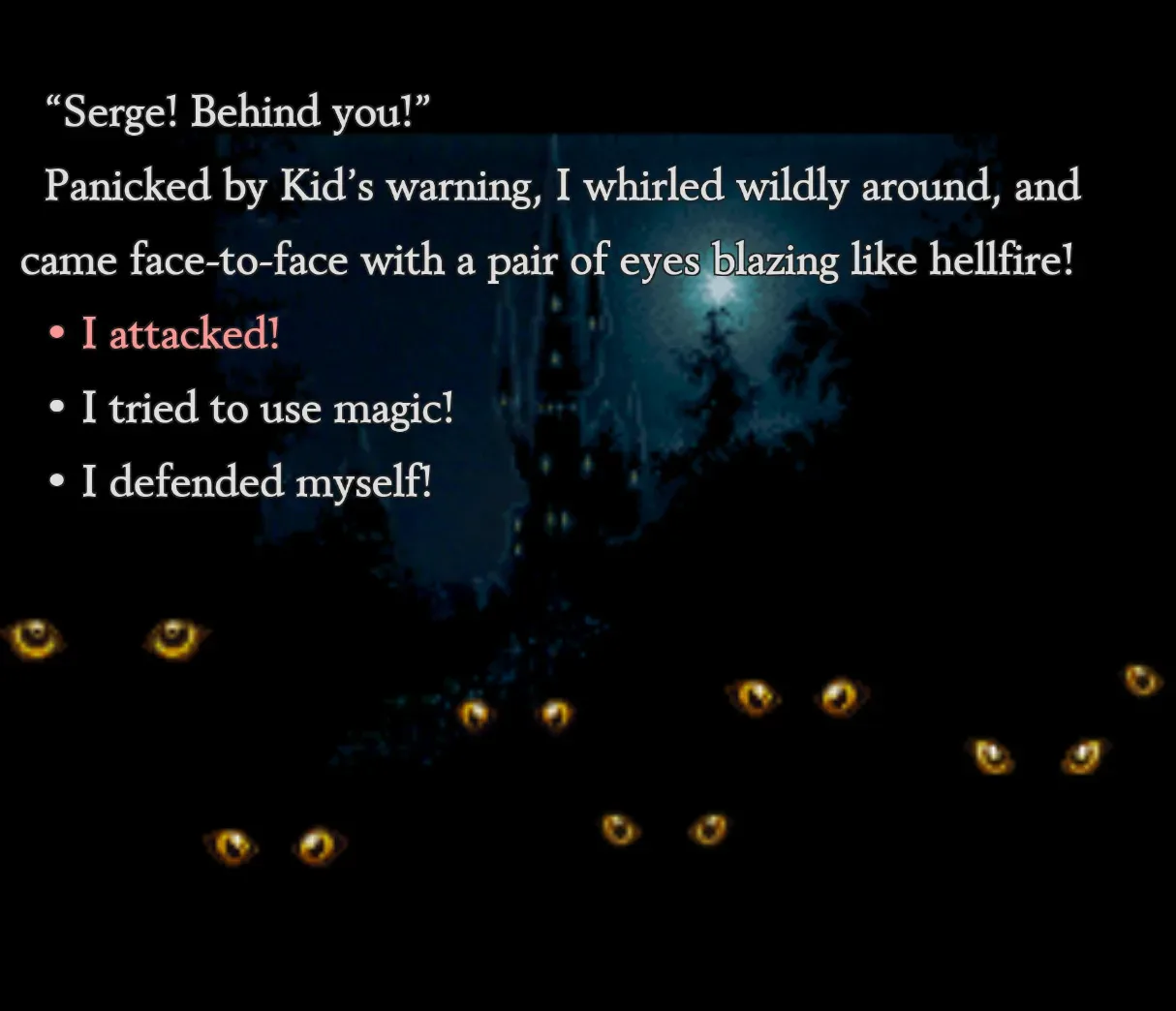
Combat also exists in prose. Players select actions such as attacking, defending or using magic, but the game does not hand over a familiar visible HP meter. Serge’s condition is communicated through narration instead. It is an elegant way of making damage feel immediate: rather than watching a bar shrink, players are told when the protagonist is weakened, battered or near death. Healing comes from specific situations, including a helpful older woman in Clocktower Storage, while generous saving makes it possible to recover from fatal decisions without replaying huge stretches.
Related coverage includes Radical Dreamers Remains a Fascinating Chrono Detour.
The design is simple, but it produces useful tension. Radical Dreamers asks players to read carefully, react to danger and accept that a seemingly harmless choice can go very wrong. Picking the wrong item while looking for a library key, for instance, can hurt Serge’s standing with Kid as well as complicate the immediate problem. It is a compact game with an admirably low tolerance for inattentive adventurers.
Kid’s trust is more than a side mechanic
Choices influence Serge’s relationship with Kid. Successful, confident decisions can impress her; clumsy ones can have the opposite effect. Magil does not operate on the same visible relationship track, which keeps the emotional focus pointed firmly toward Serge and Kid.
This matters greatly near the end. The strength of that bond is tied to whether the group can survive the confrontation with Lynx. If Serge and Kid have not accumulated enough affection, the story can reach a bad ending. It is a surprisingly earnest system for a game built around break-ins, monsters and an artifact with catastrophic historical baggage. The choice says that connection is a form of strength, even in a cast defined by fractures.
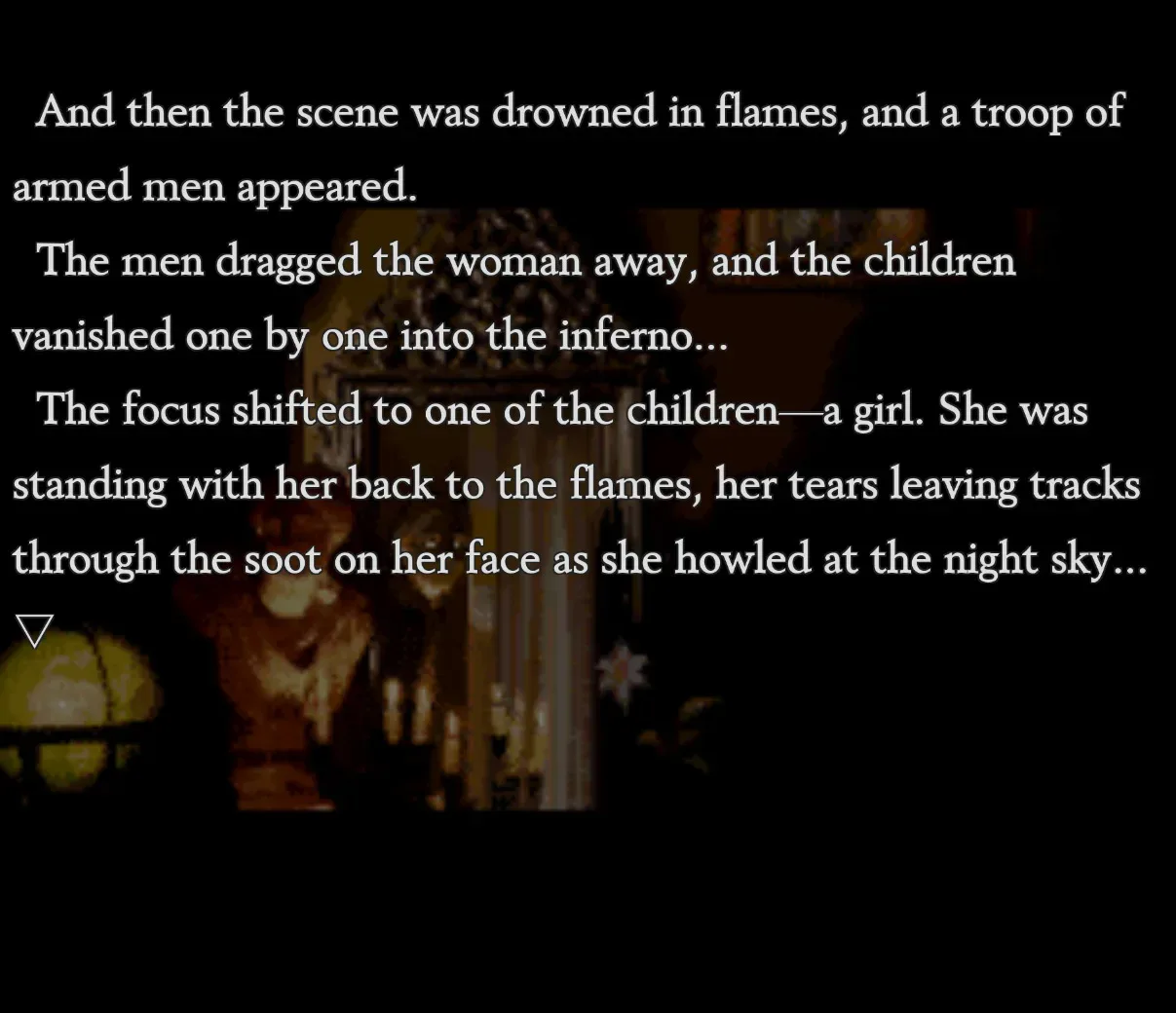
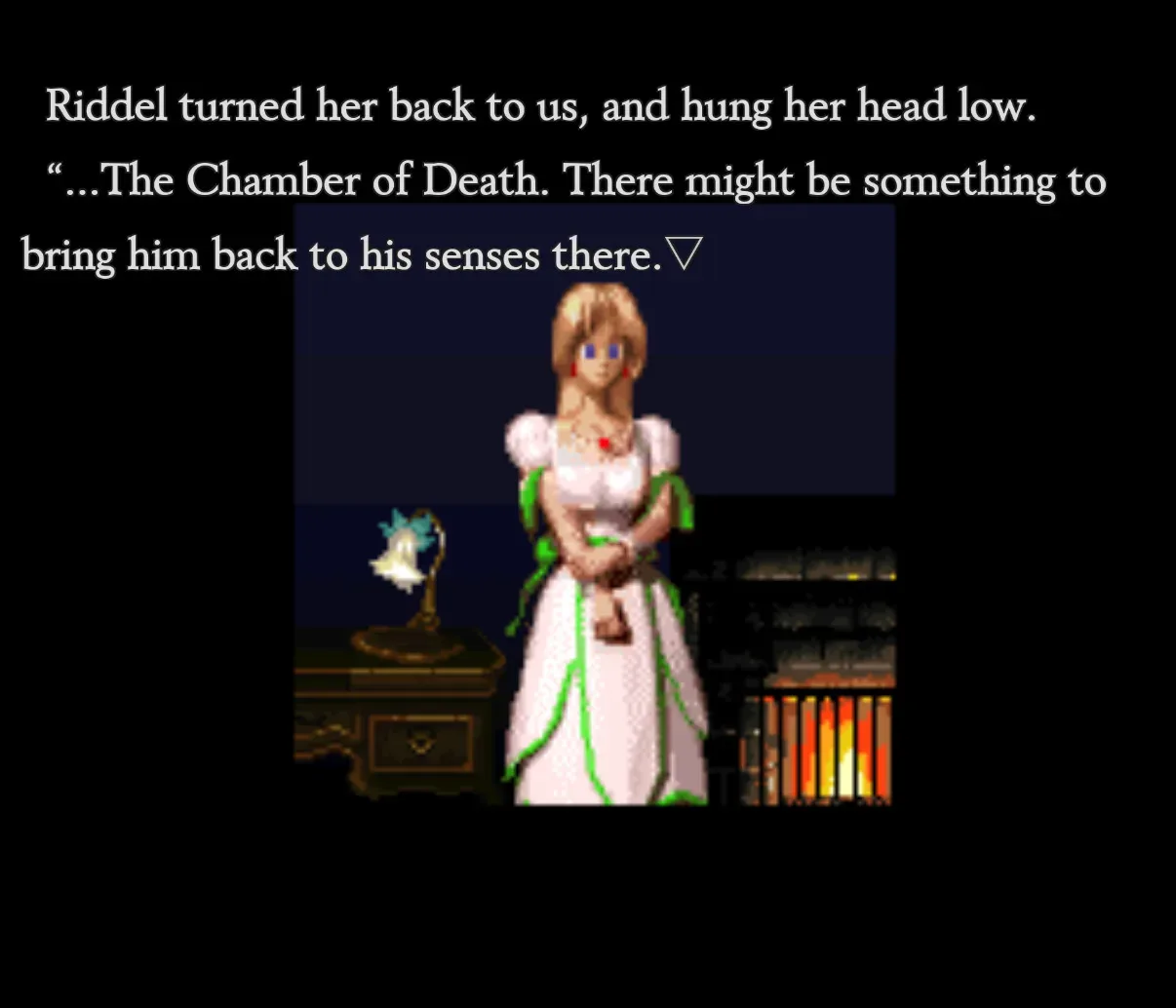
Those fractures are everywhere. Kid’s search for Lynx comes from the murder of the woman who raised her after she was orphaned, and revelations about that caretaker tie the story back to the earlier Chrono mythology. Riddel, initially perceived as somebody who might defend Lynx, has her own devastating reason to oppose him: Lynx killed her real father, General Viper, to claim the Frozen Flame. Even the guilt-stricken old man in the dungeon has a past bound up in betrayal and a fallen kingdom.
The story does not use these discoveries to manufacture a neat victory. That is one reason it lingers. Answers arrive, but they hurt. Kid learns crucial truths about herself, yet she and Serge part. Lynx escapes. Optional endings add flavor, but the central feeling is unresolved loss rather than triumphant closure.
The Frozen Flame and a glimpse of Zeal’s ruin
For Chrono devotees, the Frozen Flame sequence supplies the biggest jolt of recognition. Magil connects the relic to the remains of a forgotten magical civilization, pointing toward Zeal and its disastrous pursuit of power. The Flame is described as a fragment of a celestial object that awakened humanity’s dormant potential: a gift capable of making dreams real, but one dangerous enough to ruin those seduced by it.
That theme fits the entire series. Chrono stories repeatedly treat time, technology, magic and desire as forces that can create miracles or magnify human mistakes. Lynx wants the Time Egg and Frozen Flame together because he believes they could rewrite the past. Later continuity would give his ambitions additional context through FATE and Serge’s father, but Radical Dreamers presents an especially interesting shade of the character: cruel and dangerous, certainly, but driven by a belief that past errors can be corrected.
For a broader example of how old-school RPG communities keep revisiting and reshaping familiar worlds, check out this look at a Final Fantasy Resonance demo mod. Radical Dreamers represents a more official kind of rediscovery, but it similarly illustrates how much curiosity can gather around games and ideas that seemed buried.
A soundtrack that makes the manor feel larger
Yasunori Mitsuda’s music does considerable work in establishing the game’s identity. Several pieces would later be adapted for Chrono Cross, including its battle music, and the material already sounds at home amid Viper Manor’s haunted passages. The score bridges the gap between the game’s compact presentation and its immense lore. A few lines of text can suggest a room; the music helps make that room feel ancient, dangerous and sorrowful.
There is still room for oddball humor. A trapped mouse can reveal itself to be a hostile griffin. A goblin with glasses offers a beverage called “healmyailin” and may exchange an essential key for a worthwhile story. These encounters keep the game from becoming a completely solemn lore document. They also preserve a crucial Chrono quality: even beside grief, cosmic artifacts and doomed kingdoms, the series has always made space for silliness.
Short enough to be a detour, substantial enough to matter
Radical Dreamers can be completed in a little over an hour, depending on choices and retries. That is not enough time to match the huge scope or character development of Chrono Trigger or Chrono Cross, and it should not be judged as though it were attempting to do so. Its value lies in concentration. It turns Viper Manor into the setting for a single nocturnal caper, fills it with grief and menace, and lets familiar names appear at alternate angles.
Its 2022 inclusion with Chrono Cross: The Radical Dreamers Edition was therefore more than a bonus feature. It made an unusual piece of RPG history playable without treating it as disposable. Radical Dreamers may be an incomplete branch of the Chrono tree, but it is a vividly strange one: a short story about love, revenge, impossible artifacts and a manor that would very much like to drop spikes on its guests.