Nintendo has confirmed an unusually neat casting story from The Legend of Zelda: Ocarina of Time remake: an actor selected through a blind Japanese audition had voiced the very same character in the Nintendo 64 game. The development team did not know the performer’s identity when it made the selection.
That confirmation is meaningful, but it also leaves a central fan question open. Kaori Mizuhashi has been widely suspected of returning as Navi in the Japanese cast, while the remake’s English Navi voice is new. Nintendo has not said that Mizuhashi is the returning actor, and it has not publicly named the role or performer involved. The coincidence may be Navi-related; it may also concern someone else. For now, the only firm point is that at least one original Japanese voice actor was recast for the same part on merit without the decision-makers recognizing them first.
What Nintendo confirmed — and what remains speculation
Director HokWai Ng said the casting process used completely blind auditions for every role. The stated goal was to find voices that reproduced the sound and feeling of the original game. Eiji Aonuma explained that performer names were intentionally concealed during the Japanese auditions, then revealed that one chosen actor turned out to have voiced the same character in the Nintendo 64 release.
Blind auditions are a process in which evaluators judge a performance without identifying information that might influence the decision. In this case, that approach appears to have prevented familiarity, professional reputation, and nostalgia from steering the choice. The selected actor had to satisfy the remake team’s target through the audition itself.
That does not mean the process was designed to bring back original actors. It means the opposite: returning to the old cast was not presented as the deciding requirement. The team was listening for a performance that felt faithful to the original, and one veteran performer evidently delivered that result independently of their name.
There is a pleasing creative implication here. Voice continuity in a remake can be valuable, but it is not necessarily the same thing as exact imitation. A performer returning decades later could have a changed voice, a different understanding of the character, or simply a different take in the booth. An anonymous audition puts the emphasis on what the new recording sounds like now, rather than treating a past credit as automatic qualification.
Why the Navi theory is plausible, but still unproven
Navi is naturally the focus of the speculation because the Japanese original’s voice has been associated with Kaori Mizuhashi, and fans have already been listening for signs of her return. Nintendo’s revelation that an original actor did come back for the same role is consistent with that theory. It does not verify it.
The distinction matters. Nintendo’s comments identify neither the character nor the actor. Presenting Mizuhashi’s involvement as confirmed would turn a possibility into a fact the company has not supplied. Until Nintendo names the returning performer, the most accurate reading is straightforward: there is one confirmed but unidentified returning Japanese actor, and a separate, unconfirmed possibility that the actor is Mizuhashi as Navi.
Related coverage includes Ocarina of Time Remake Recasts an Original N64 Voice Actor in a Blind Audition.
The English casting also shows why each language version should be considered on its own terms. The English Navi voice is new, while the blind-audition anecdote concerns the Japanese auditions. A remake can preserve a character’s intended personality and audio identity across languages without matching every performer or every prior casting decision.
A remake built around sound, not just recognizable melodies
The casting detail came from Nintendo’s discussion of the remake’s music and sound work, which points to a broader approach: preserve the memory of the Nintendo 64 game while building a much larger soundscape for the new version.
Sound director and music lead Masato Ohashi said the team wrote new music for many of the remake’s additional cutscenes. The total exceeds 150 background tracks. That figure suggests the project is not limited to re-recording familiar themes; new narrative scenes required music able to support their own pacing and emotional context.
Ohashi also described tracks that combine a live full orchestra with sounds recreated from original Nintendo 64 sound sources. Crucially, Nintendo did not simply insert the old console’s finished audio output into the remake. The original sound source was used as a reference, with certain sounds faithfully recreated.
In practical terms, that is different from a direct sample or a straight port. A finished Nintendo 64 audio signal carries the constraints and processing of that hardware. Working from an original source as reference allows a team to identify the qualities that made a sound distinctive, then rebuild them for a modern mix alongside orchestral recording. It is a preservation-minded method, but not an archival playback mode.
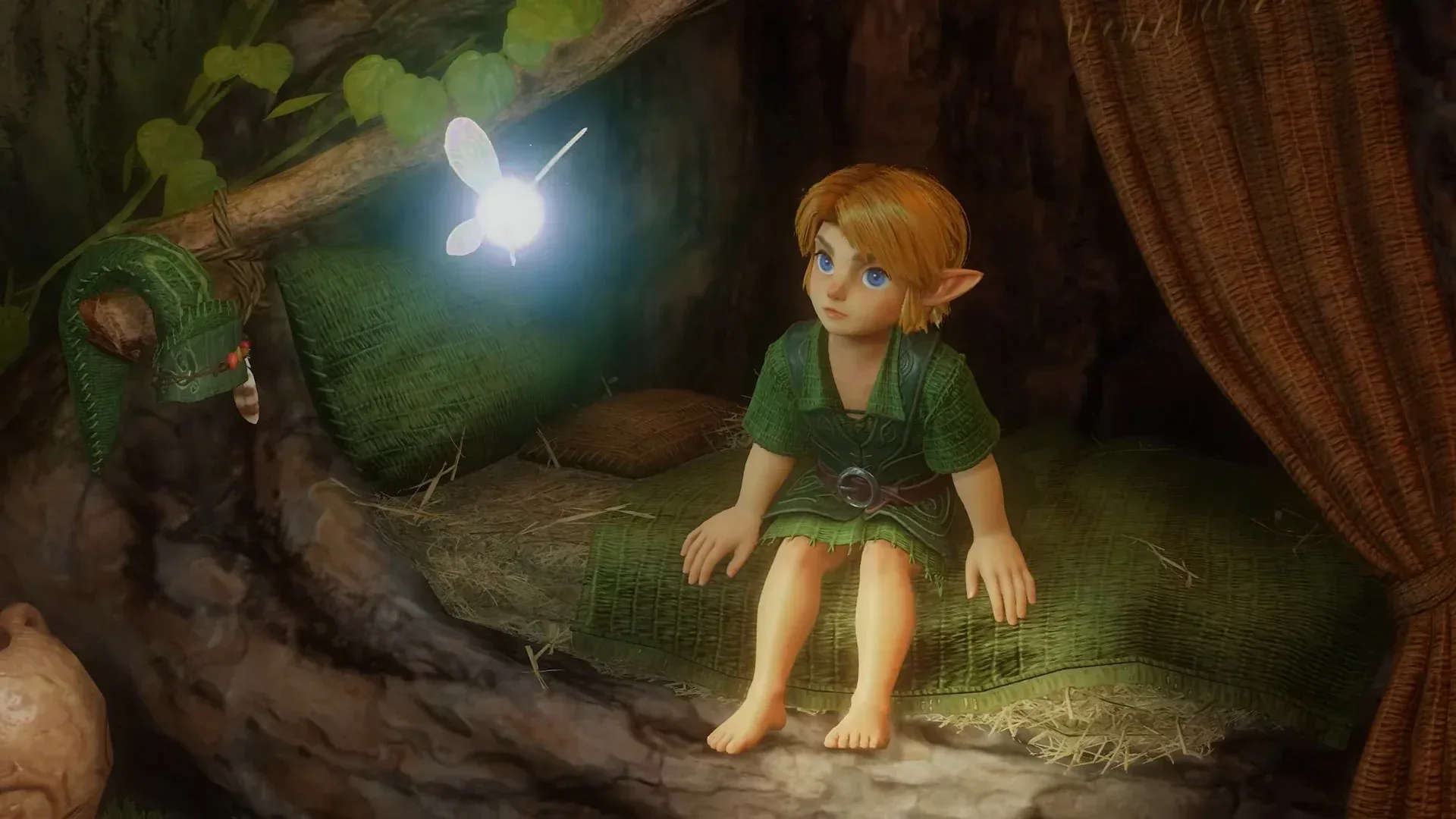
Link’s house music was used as an example in Nintendo’s discussion. The company’s description does not require that every listener will immediately isolate a one-to-one match between an old instrument sound and a new one. The objective appears to be evocative continuity: retaining sonic character from the original while giving the remake a different production scale.
Ambient audio is doing more of the world-building work
The remake’s sound design goes beyond music and character voices. Ohashi highlighted smaller environmental details, including leaves rustling and water flowing over rocks. These are examples of ambient sound: audio that establishes the sense of a place rather than functioning as a melody, spoken line, or obvious effect tied to a player action.
Ambient layers can make a game world feel populated even when no major story beat is happening. A forest has its own acoustic identity if foliage shifts in the wind; a stream has a different presence if water is audible against stones. Such details are easy to overlook individually, but they shape the texture between objectives, combat encounters, and dialogue.
The ocarina performances are another deliberate choice. Nintendo recorded them with a real ocarina, preserving breath in the instrument’s sound. That breathiness is not merely decorative. It gives the music a physical, human quality that a purely synthetic rendering might not provide, especially for an instrument tied so closely to the game’s identity.
This is where the voice-audition story and the sound-design discussion align. In both cases, the team appears to be chasing a particular feeling rather than preserving the old game through literal reuse alone. The casting process sought performances that recalled the original. The music team drew on original sound sources as references rather than dropping in old output. The environmental team added detailed ambience to make locations more dimensional.
What 5.1-channel sound changes
Nintendo says the remake supports 5.1-channel surround sound. “5.1” refers to an audio arrangement with five main speakers and one low-frequency effects channel. The basic purpose is positional audio: sounds can be placed around the listener rather than being confined to a conventional left-right stereo field.
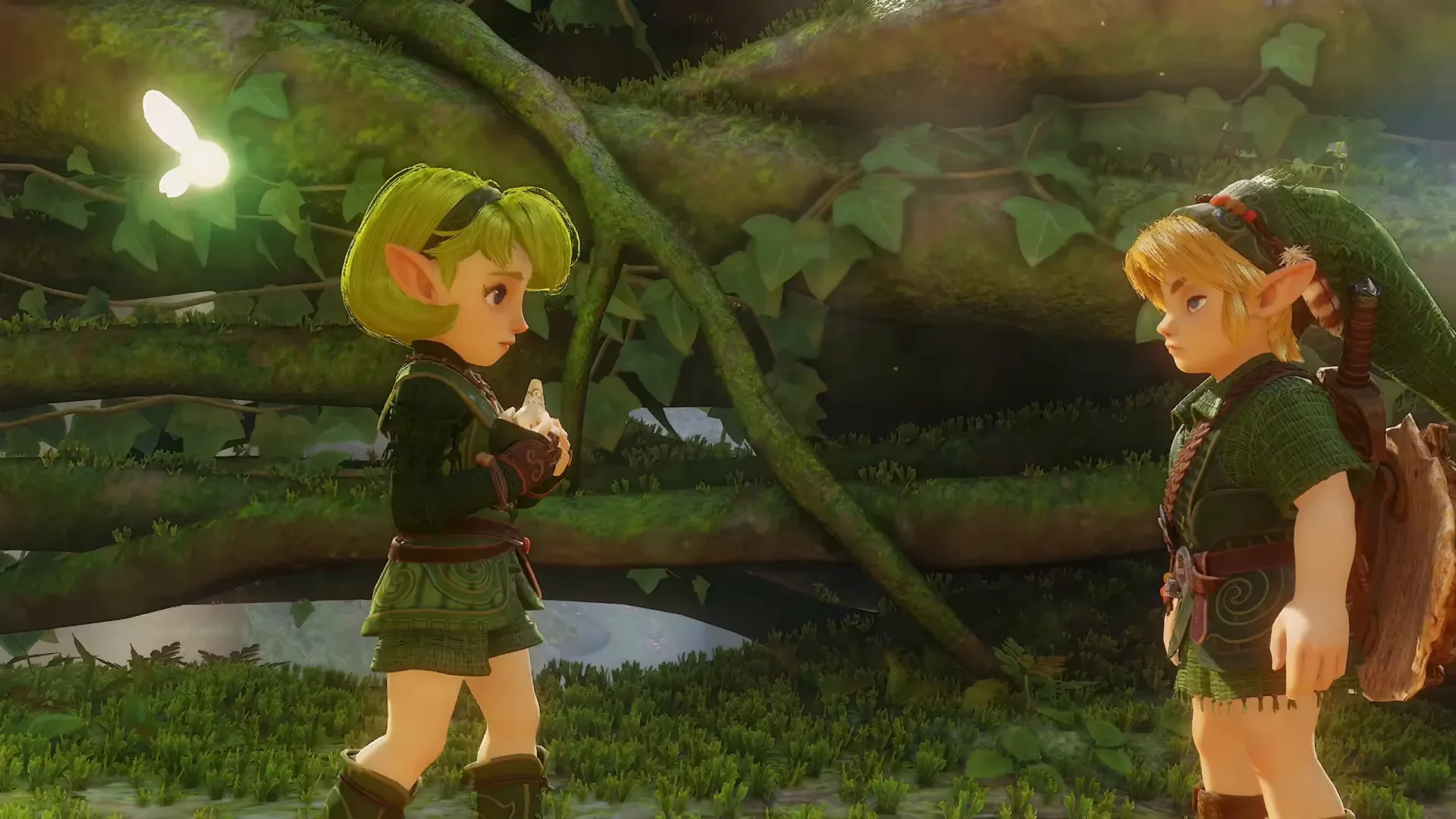
That matters for a location such as Kokiri Forest, which Nintendo specifically mentioned when discussing the remake’s ambience. Water, leaves, music, character sounds, and other environmental elements can be arranged to suggest space and direction. A player does not need to know the technical mix layout to benefit from it; the goal is for the world to feel less like a flat layer of audio and more like an environment with depth.
Nintendo also says players without a home-theater arrangement can use headphones connected to a Nintendo Switch 2 system to experience the rich ambient sound. Headphones cannot turn into a literal five-speaker room setup, but they can still give listeners clearer separation and make subtle effects easier to notice than television speakers might.
For players revisiting a defining Nintendo 64 adventure, that emphasis is notable. The remake’s audio strategy is not just about having a more powerful orchestra or cleaner recordings. It is about deciding which old sonic details should be revived, which new scenes need their own musical language, and how environmental sound can make familiar places feel newly inhabited.
The most revealing part is the lack of recognition
The anonymous recasting anecdote is easy to treat as a charming piece of trivia, but it also offers a useful measure of the team’s stated creative standard. If the performers were hidden from evaluators, an original actor could not win simply because they were an original actor. Their audition had to recreate the intended character sound convincingly enough to rise to the top.
That makes the eventual discovery more than a nostalgia beat. It is evidence, at least within the process Nintendo described, that a past performer’s connection to the role and the remake team’s current interpretation happened to meet at the same point. Whether the unnamed actor proves to be Mizuhashi or another member of the original cast, the story underlines how carefully the remake is handling audio continuity.
It also adds another layer to the ongoing appeal of Nintendo 64-era game preservation. The original performance, hardware-era sound character, and player memory all matter, but none can be carried forward automatically. As another recent retro story shows, even long-known games can still yield unexpected discoveries decades later, from a newly recruited hidden party member in the original PlayStation version of Tales of Destiny to fresh insight into how a remake rebuilds familiar audio.
For Ocarina of Time, Nintendo has supplied the broader outline: new cutscene music, more than 150 background tracks, recreated references to original Nintendo 64 sounds, real ocarina recordings, denser ambience, surround support, and an unidentified returning Japanese performer selected blind. The identity behind that final detail remains the one unresolved note — and one Nintendo has not yet named.