Nintendo Switch Online’s NES Classics library has added three games with very different ideas about how a player should spend an afternoon getting thoroughly humbled by 8-bit hardware: Ninja Gaiden III: The Ancient Ship of Doom, Ikari Warriors, and R.C. Pro-Am II. All three are now available to Nintendo Switch Online subscribers.
The update is a particularly tidy one for fans keeping track of series rather than simply counting total additions. With Ninja Gaiden III now on the service, the full original NES Ninja Gaiden trilogy can be played through Nintendo Switch Online. R.C. Pro-Am II similarly joins the first R.C. Pro-Am, which entered the lineup in February 2024. Ikari Warriors, meanwhile, brings an arcade-rooted run-and-gun landmark into the NES collection.
There is no single shared mood between the trio beyond the broad 8-bit understanding that mercy is a limited resource. One game is a fast, demanding action adventure, another is a military shooter with arcade ancestry, and the third turns miniature radio-controlled racing into a competition involving hazards, upgrades, and a healthy suspicion of every corner. Together, they make the NES catalog feel a little more complete—and a little more capable of ruining a previously relaxing evening.
Ninja Gaiden III completes the NES trilogy
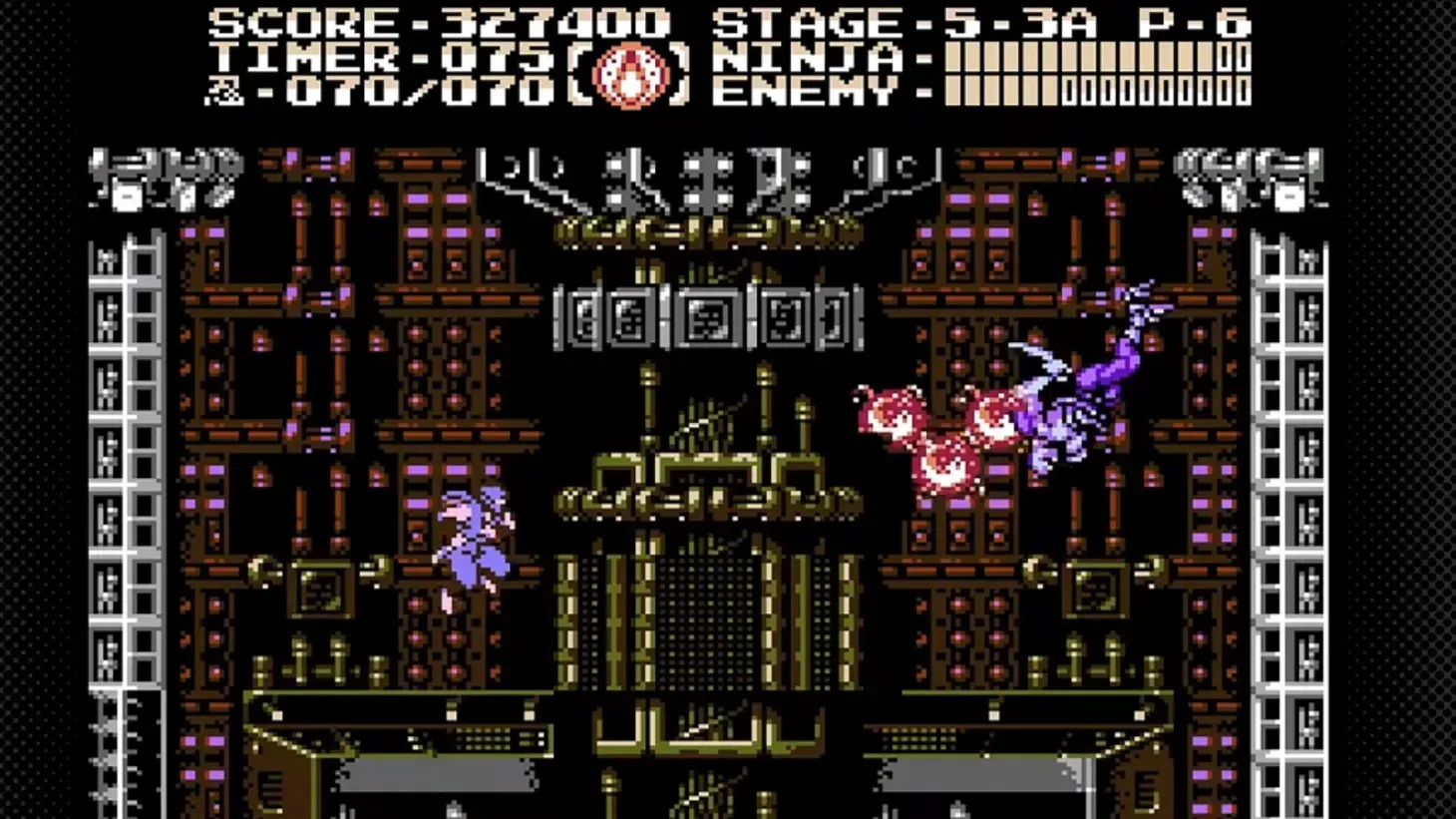
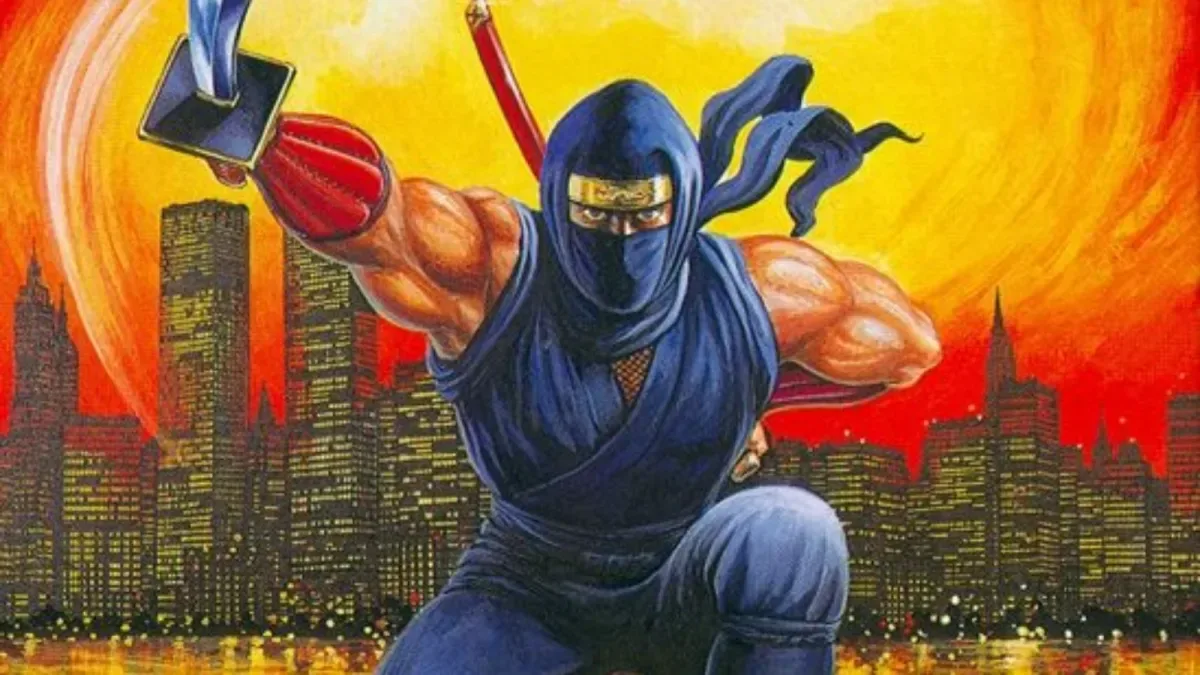
Released in 1991, Ninja Gaiden III: The Ancient Ship of Doom was the final NES installment of the classic Ninja Gaiden series. Its arrival is significant because Nintendo Switch Online subscribers can now access all three of the original NES games in the trilogy through the service.
That matters for more than checklist satisfaction. The three NES Ninja Gaiden games form a recognizable action series from an era when sequels were often expected to give players more stages, more enemies, more elaborate set pieces, and more reasons to develop a personal grudge against bottomless pits. Having the trilogy together makes it easier to approach the games as a connected set rather than as isolated pieces of retro-game history.
For anyone returning to the series, the release also offers a simple opportunity: start at the beginning, proceed in order, and see how long the heroic momentum lasts before the controller becomes an object of intense diplomatic negotiation. For newcomers, Ninja Gaiden III fills in the final chapter of a foundational NES action run without requiring a separate original cartridge, console setup, or a late-night investigation into why old game labels can look like they survived a small weather event.
The convenience is different from the appeal of original hardware, of course. Collectors who own the NES releases may still value the physical objects, manuals, boxes, and the particular ritual of playing on the original platform. But access through a subscription library lowers the barrier for players who want to experience the games themselves. Those are not competing impulses. One is about preserving and appreciating an object; the other is about making sure the game remains easy to encounter and play.
Players putting together a broader NES shelf can also benefit from treating physical copies and digital access as complementary. Our guide on how to store retro games so a collection stays playable and findable covers the practical side of keeping older games organized while the modern library handles the instant-start side of the hobby.
R.C. Pro-Am II finishes another two-game set
R.C. Pro-Am II, released in 1992, is now available alongside the original R.C. Pro-Am. The first game had already been available through Nintendo Switch Online since February 2024, so the arrival of the sequel means the service now contains both entries in the R.C. Pro-Am racing series.
That is a nicely focused bit of archival housekeeping. Racing games can sometimes get reduced to a blurry memory of tiny vehicles and even tinier grudges, but R.C. Pro-Am has a specific place in the NES conversation. Its radio-controlled premise, overhead perspective, and hazard-filled races offer a different flavor from more straightforward circuit racers. The sequel’s addition means interested players can now move from the original to its follow-up without changing platforms or hunting down another version.
It also gives couch multiplayer advocates another reason to quietly clear the coffee table. The rules of local play may be unwritten in many homes, but the social physics are eternal: someone will choose the best seat, someone will claim they were looking at the wrong car, and someone will insist that a race involving weapons and track hazards was somehow unfair. For a refresher before the inevitable living-room tribunal, revisit the unwritten rules of couch multiplayer.
Not every retro game needs to be approached as a solemn museum piece. Sometimes its lasting value is that it can still create the immediate, slightly chaotic energy of people gathered around one screen. The arrival of R.C. Pro-Am II makes that kind of rediscovery easier for subscribers, while also giving solo players another classic racing challenge to explore.
Ikari Warriors brings arcade history to the NES selection
The oldest game in this batch is Ikari Warriors. It debuted in arcades in 1986 and later received a U.S. NES port in 1987. Its top-down, run-and-gun action places it in a very different lineage from the ninja acrobatics of Ninja Gaiden III and the miniature motorsport of R.C. Pro-Am II.
Ikari Warriors is more than an old shooter arriving to bolster a catalog count. It was one of the highest-grossing arcade games of its era and played an important role in helping SNK establish itself in Western markets. That historical context gives the Nintendo Switch Online version added interest. It is a chance to encounter a game connected to a major moment in arcade culture, then see the form it took when adapted for the NES audience in the United States.
Arcade-origin games often carry the design DNA of their original setting: immediate action, escalating danger, and a structure built to keep attention locked in. Home versions can become the version many players remember most clearly, particularly for those whose first encounters happened on an NES rather than in an arcade. Ikari Warriors sits at that intersection of arcade history and home-console memory.
It is also a useful reminder that a service catalog can tell stories through adjacency. Putting Ikari Warriors beside two later NES releases does not erase the differences in their origins, years, or ambitions. Instead, it creates a small playable timeline: an arcade hit from 1986 with a 1987 U.S. NES port, a 1991 action sequel, and a 1992 racing sequel. The collection is not merely three more icons on a menu; it is a compact sampling of how varied the NES era could be.
A meaningful update for NES completists and curious players
This particular Nintendo Switch Online update is modest in quantity but unusually satisfying in what it completes. Ninja Gaiden III brings the full classic Ninja Gaiden NES trilogy together. R.C. Pro-Am II does the same for its two-game racing series. Ikari Warriors adds a historically important arcade-to-NES release associated with SNK’s rise in the West.
For subscribers, the practical news is simple: the three titles are available now. For retro fans, the more interesting point is that each addition has a reason to be here beyond nostalgia alone. Ninja Gaiden III rounds out a celebrated action trilogy. R.C. Pro-Am II closes a small but distinctive racing pair. Ikari Warriors represents an influential arcade success and its home-console afterlife.
That combination makes the update worth a look whether the goal is series completion, arcade history, competitive racing, or simply the noble pursuit of finding out which old game still has the fastest route from “I remember this” to “I absolutely did not remember this.”