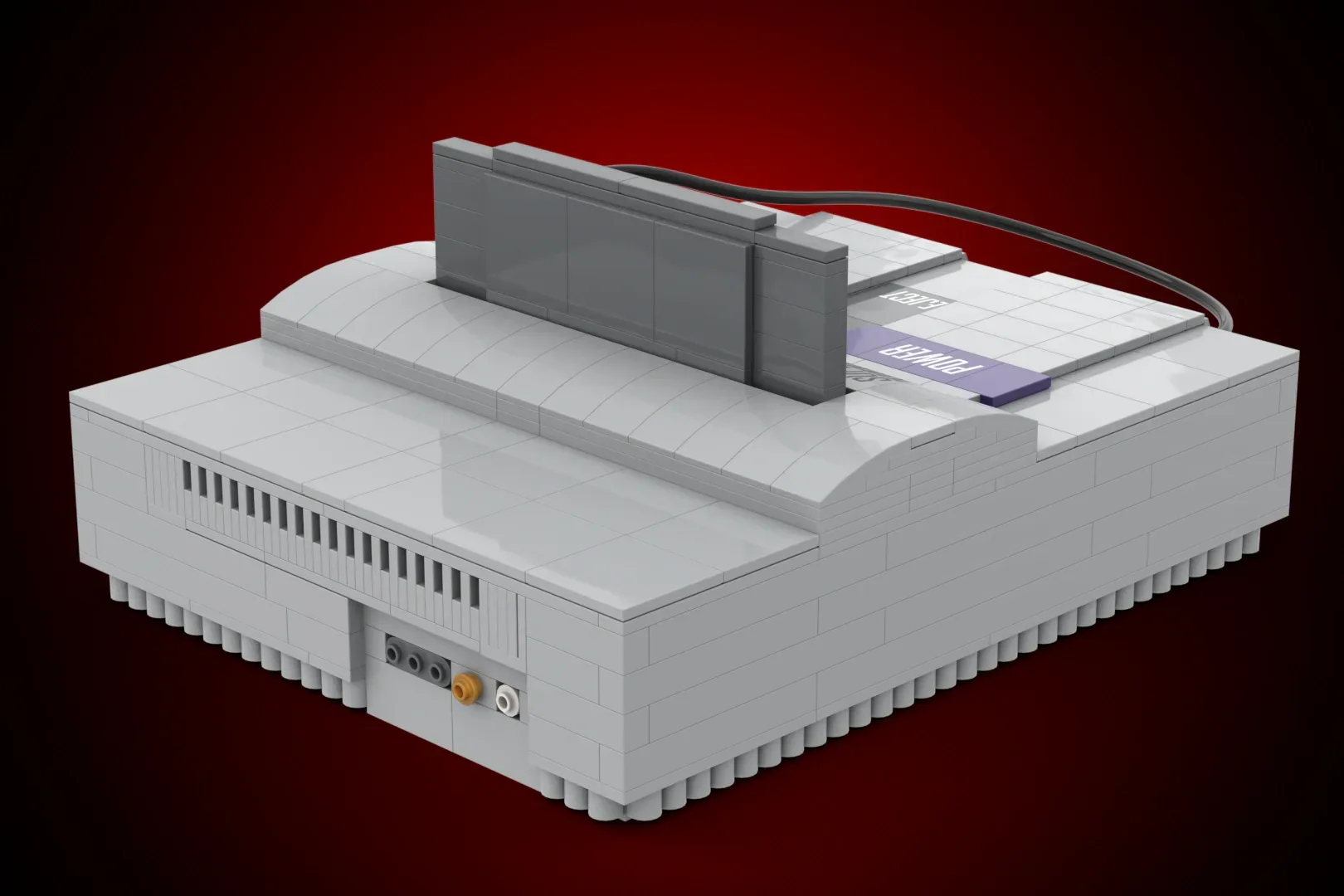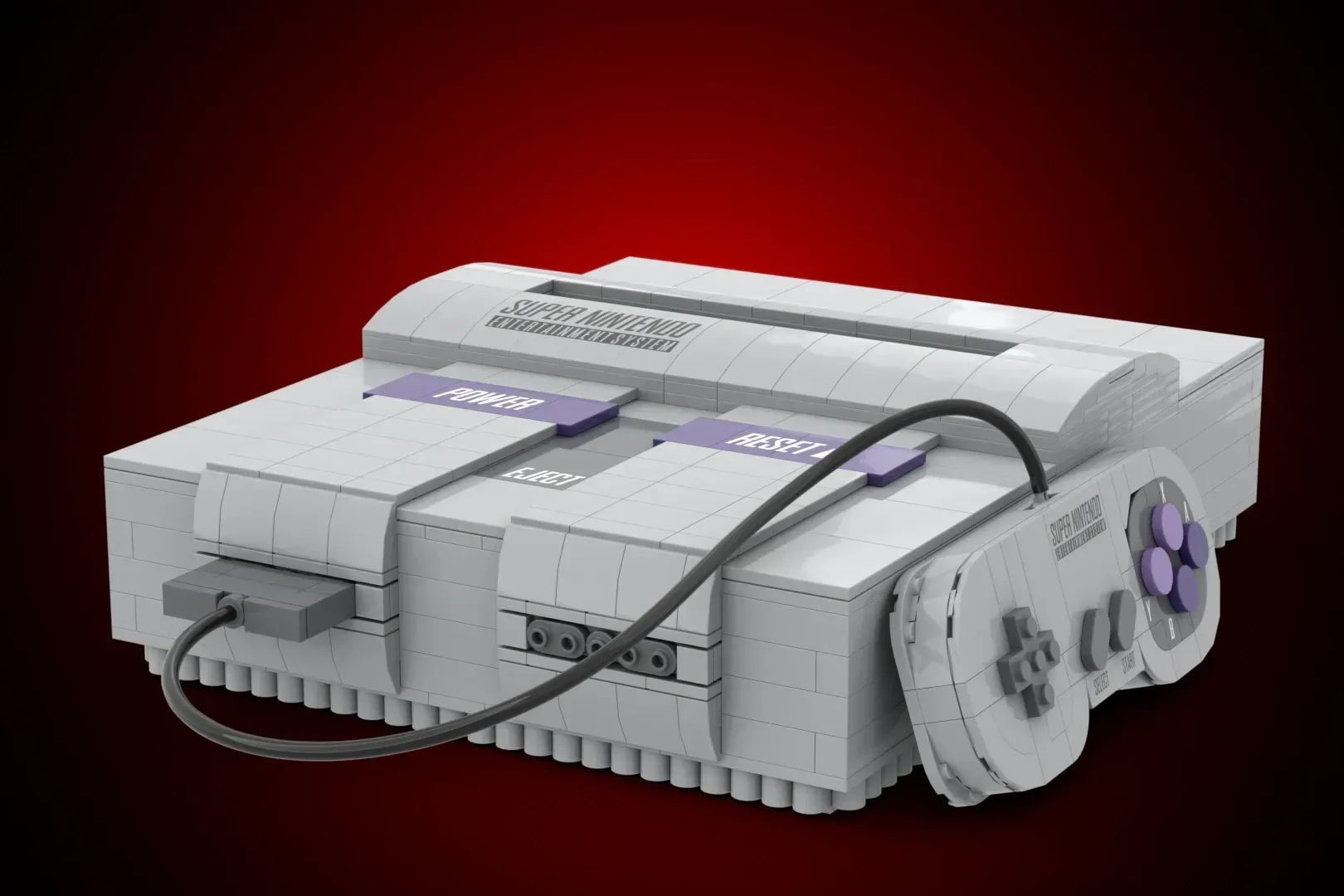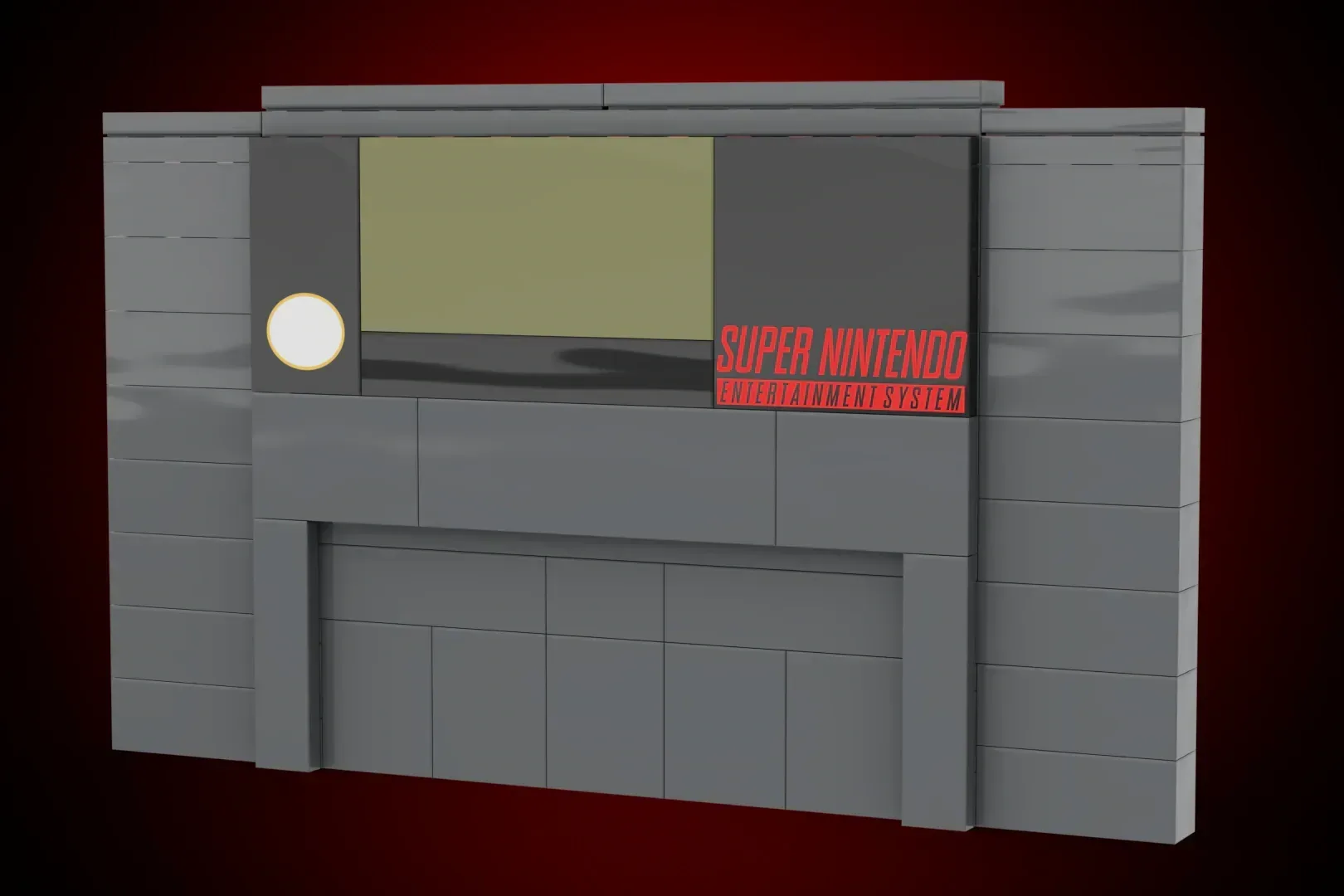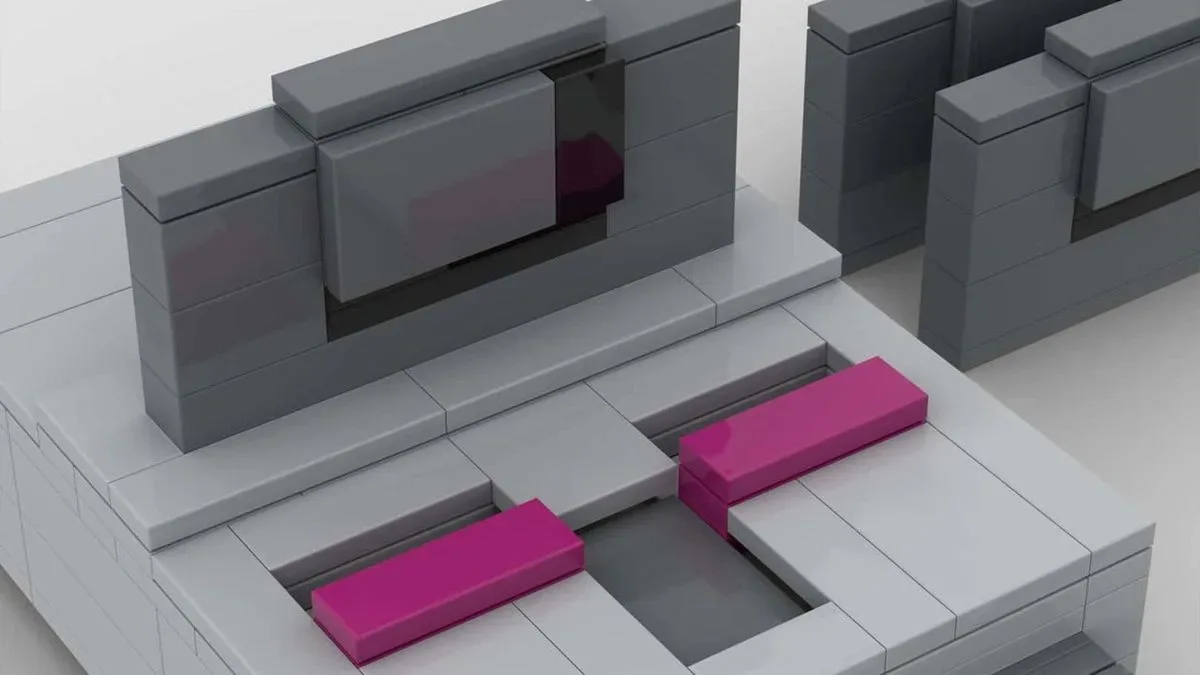
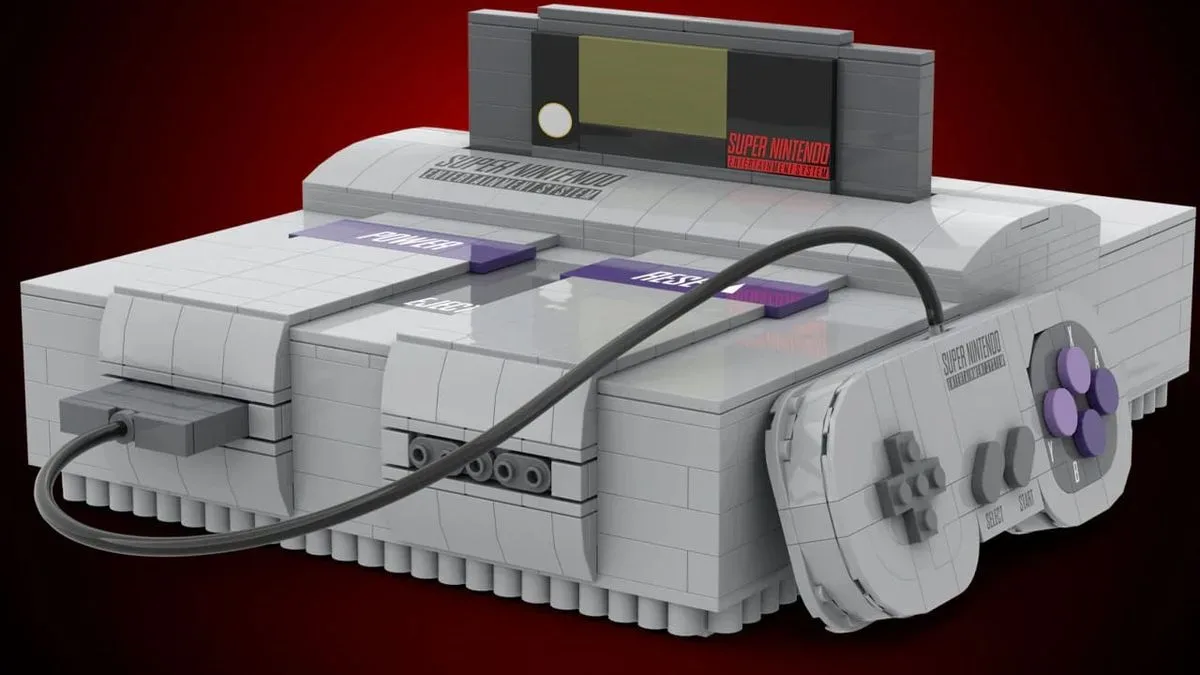
A brick-built Super Nintendo concept is gaining momentum on LEGO Ideas, proposing an 864-piece homage to Nintendo’s NTSC-era 16-bit console. Created by LEGO Ideas user banStickers, the project is designed to look as close to the original hardware’s real-world size as the brick format allows.
The standout is not simply that it is a recognizable SNES. The concept concentrates on the details that make the console immediately legible from a distance: its low, broad body, its familiar front face and a controller intended to match the overall illusion rather than act as a loose symbolic extra. It also includes a cable and adapter that connects to the front of the console, giving the display the appearance of a complete, connected machine.
A display model built around recognition
Retro-console LEGO projects live or die on silhouette. A model can include plenty of clever construction techniques, but if the proportions are wrong, it quickly reads as a generic gray box with buttons. This SNES proposal takes the opposite route. Its apparent goal is to make viewers recognize the hardware first and notice the bricks second.
That approach matters for an object as visually specific as the Super Nintendo. The project follows the NTSC version of the console, meaning the design is based on the hardware style associated with the North American market rather than another regional shell. The distinction is useful for collectors and longtime players because console-region designs were not always visually identical, even when they belonged to the same generation.
For more context, explore Google Sets January 2027 Shutdown Date for Nest App as Google Home Takes Over.
At 864 pieces, the model would be relatively restrained by the standards of elaborate display sets, but the count suggests a set focused on form and recognizable hardware details instead of sheer size. A smaller piece count is not automatically a sign of a simpler model: recreating smooth consumer electronics with rectangular plastic bricks often requires careful choices about proportions, slopes, spacing and surface texture.
What “as close to real size as possible” means here
BanStickers has said the proposed build comes as close as physically possible to the actual console’s dimensions. That is a design constraint, not just a selling point. LEGO elements come in fixed measurements, so builders cannot precisely reproduce every curve, recess or panel line found on vintage hardware. A successful scale model has to decide which features deserve exact attention and which ones can be suggested through brick placement.
For a display piece, getting the overall footprint right can be more important than chasing microscopic accuracy. It lets the model sit alongside other gaming décor without looking toy-sized or oversized. The concept is positioned naturally as a companion piece to the existing LEGO Game Boy, creating a compact shelf display that spans Nintendo’s 8-bit and 16-bit eras.
Related coverage includes LEGO SNES Concept Gains Rapid Support on LEGO Ideas.
The controller, cable and adapter are especially important in this context. A console without its controller is recognizable, but it can feel incomplete. Including those pieces turns the project from a static block of hardware into a miniature representation of the whole living-room setup: console, pad and connection all accounted for.
The project’s early LEGO Ideas progress
The submission reportedly approached its second 1,000-supporter milestone in only two days. That is an encouraging early signal, particularly because LEGO Ideas projects typically have far longer to build support. Still, early enthusiasm is not the same thing as a confirmed retail set.
For the project to be considered by the LEGO Ideas review panel, it must reach 10,000 supporters. Supporters are users backing a fan proposal through the platform; their votes help a project advance, but they do not function as preorders and do not guarantee production.
That distinction is central to understanding LEGO Ideas. The platform gives fan designers a route to present concepts publicly and demonstrate demand, but the review stage is where practical and commercial questions come into play. A project may be popular and still not become a product. In this case, any eventual official release would also involve Nintendo’s participation, since the proposal is based on its console design and branding.
“I think this would make a great LEGO set because the SNES is the most famous 16-bit gaming console and one of the most famous gaming consoles in general,” banStickers wrote in the project description, pointing to the existing LEGO Nintendo Entertainment System as a reason the SNES could fit the lineup.
That existing NES set is the clearest argument for why the idea feels plausible as a product category, although it should not be treated as evidence that this particular build will be approved. The NES came before the SNES in Nintendo’s home-console line, and a brick-built Super Nintendo would make an intuitive companion from a display perspective. It would also extend the idea of turning old game hardware into buildable shelf pieces rather than merely adapting individual games or characters.
Why the SNES is a compelling subject for a brick model
Console replicas occupy an interesting space between toy design and gaming memorabilia. They are not meant to replace original hardware, play cartridges or recreate the tactile feel of operating a vintage machine. Their value is in recognition, construction and display. For fans, the appeal is the chance to build an object associated with a formative era of gaming, then keep it visible without needing the maintenance, cables or space of a working retro setup.
The SNES is particularly suited to that format because it is an object with a strong physical identity. A great deal of gaming nostalgia is attached to screens and software, but consoles themselves also carry visual memory: the shape of a controller, the location of a port and the particular arrangement of buttons can be enough to summon an era. The proposal leans into those cues instead of trying to overcomplicate the premise.
There is also a useful contrast between the source material and the medium. The Super Nintendo was a polished piece of consumer electronics. LEGO is intentionally modular, stepped and visibly constructed. When a design manages to preserve an electronics product’s proportions despite those limitations, the tiny imperfections become part of the charm. The double-take effect is precisely what a model like this is trying to earn.
What supporters should keep in mind
Anyone interested in the concept can support it through LEGO Ideas without treating that action as confirmation of an eventual release. The immediate milestone is 10,000 supporters; only then can the project enter consideration. Even reaching that threshold leaves open questions about approval, licensing and how any official version might differ from the fan submission.
- It is a fan concept: the 864-piece SNES is not an announced retail product.
- The platform threshold matters: 10,000 supporters are required before review consideration.
- Support is not a preorder: backing the project shows interest but does not reserve a set.
- Licensing remains relevant: Nintendo’s involvement would be necessary for an official product based on its hardware.
- The submitted design may not be final: any approved version could be changed during development.
For now, the proposal’s rapid start makes it one to watch rather than one to put on a shopping list. Its strengths are straightforward: a recognizable NTSC SNES form, a matching controller arrangement, connected accessories and a scale intended to sit credibly among other gaming display pieces. Whether those qualities carry it all the way through the LEGO Ideas process remains uncertain, but the concept has already made a persuasive case for why Nintendo’s 16-bit console deserves the brick treatment.