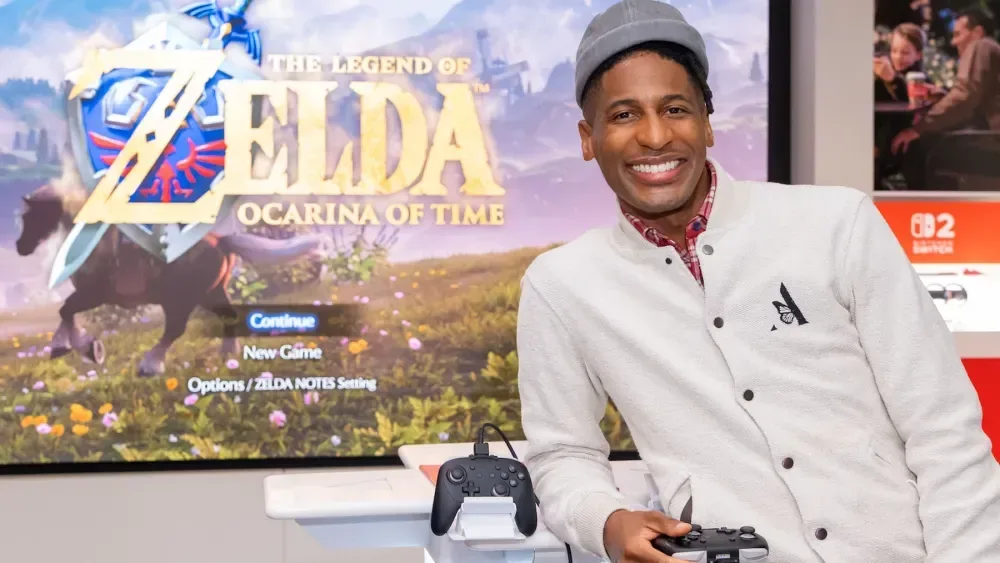
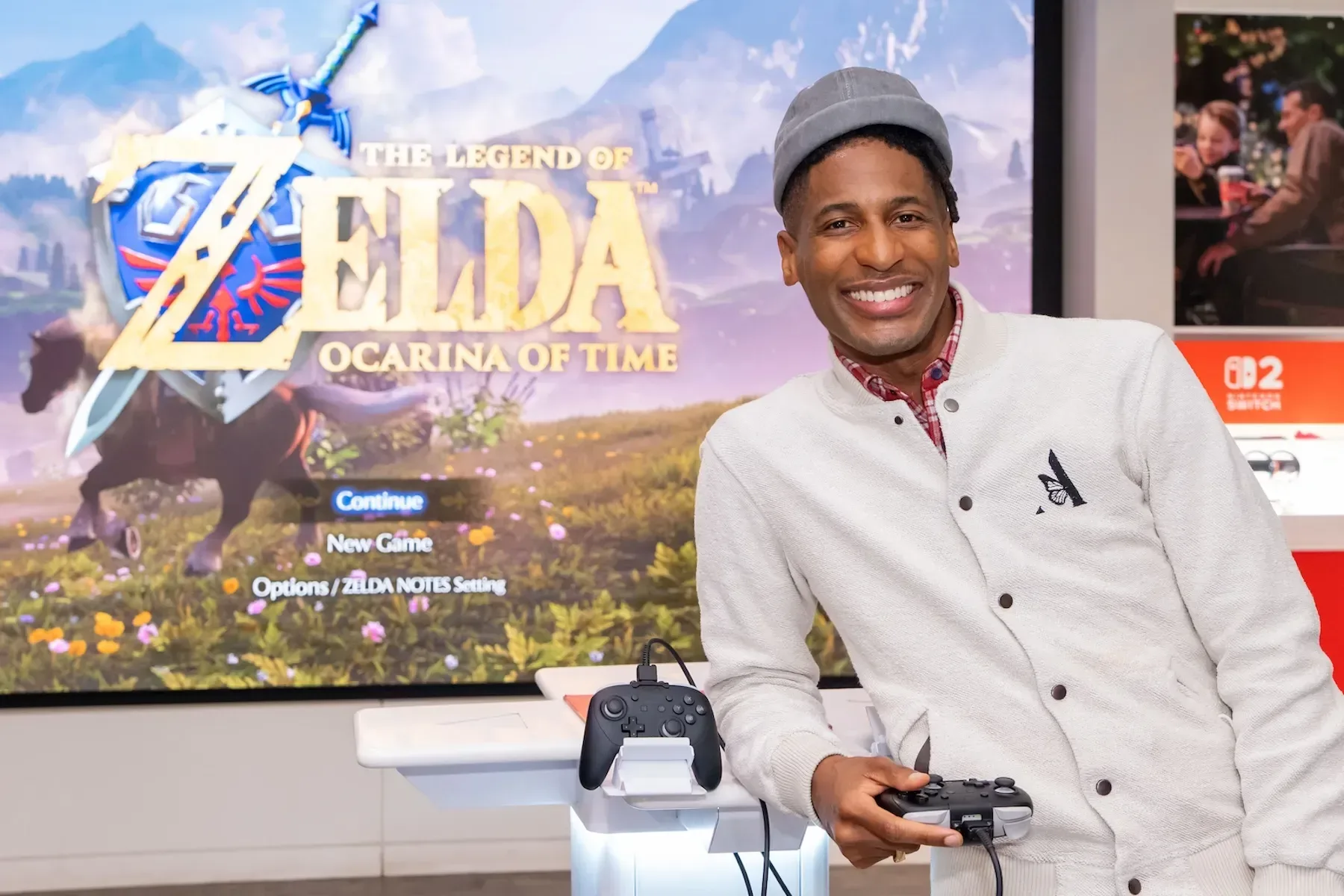
There is a particular danger in remaking a game as closely held as The Legend of Zelda: Ocarina of Time: change too little and the project can feel like a museum display with a higher resolution; change too much and it risks misplacing the exact qualities people wanted to revisit. Jon Batiste’s early comments on Nintendo’s new version suggest the remake is attempting to walk straight down that famously narrow Hyrulean bridge.
Batiste, who received early access but has not finished the game, says he can feel room for “twists” and welcome surprises. Crucially, he does not expect a total reinvention. His initial impression is that the remake holds onto the core of the 1998 Nintendo 64 original while adding elements intended to make it feel contemporary.
That is a limited but useful snapshot. It is not a full review, a score, or evidence of precisely what Nintendo has changed. It does, however, frame the remake’s apparent goal in unusually clear terms: preserve the essential experience first, then use new material carefully enough that familiarity does not become predictability.
A remake with a difficult inheritance
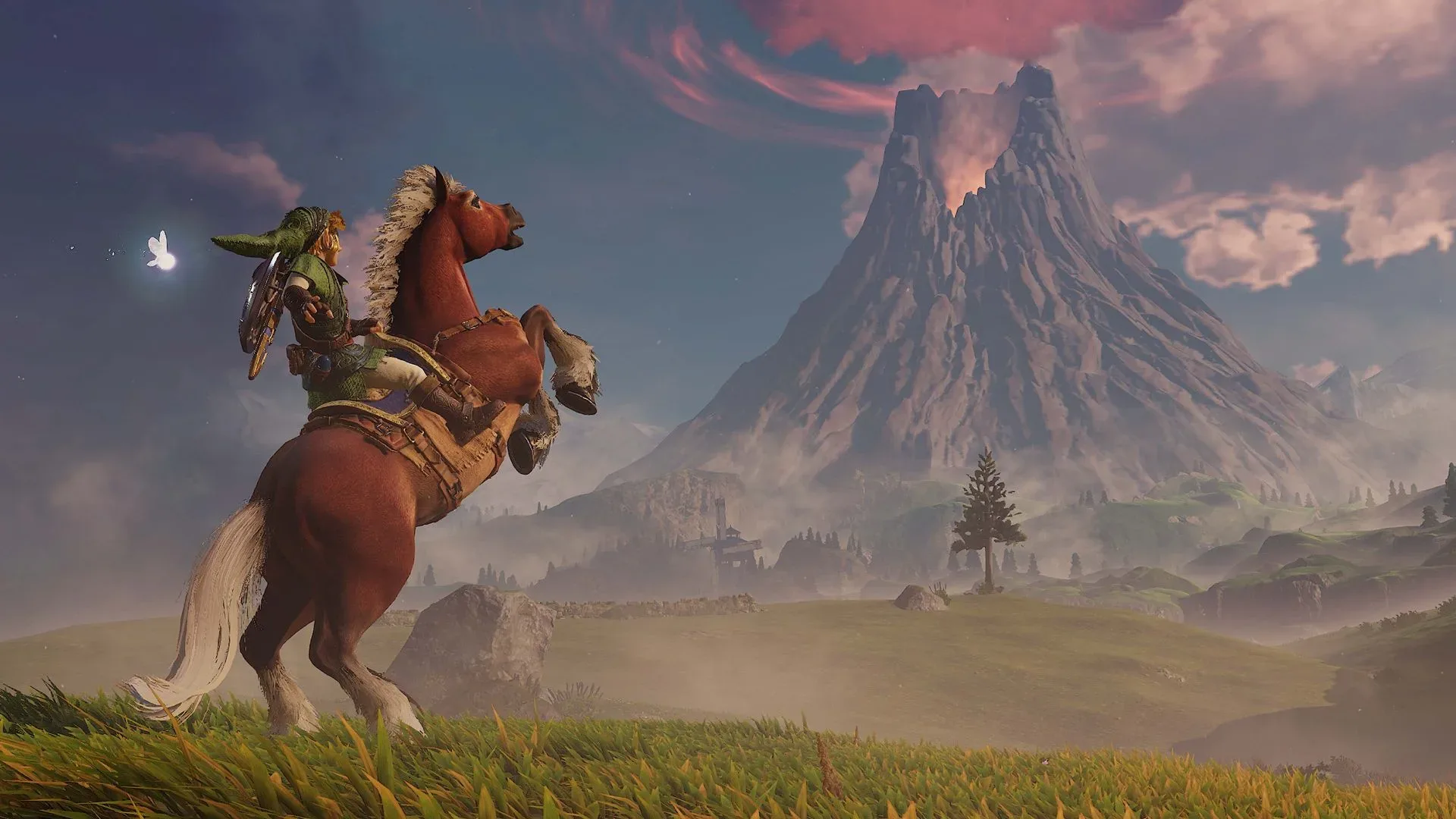
Nintendo’s Ocarina of Time remake is built exclusively for Nintendo Switch 2 and revisits the game first released for Nintendo 64 in 1998. Its central premise remains Link’s journey to become the Hero of Time and defend Hyrule from Ganondorf, who seeks the Triforce from the Sacred Realm as part of a plan to take over the world.
That setup supplies a recognizable narrative backbone, but the larger challenge is experiential. A remake is more than a story told again. It is a new version of a game people remember through places, music, combat rhythms, discoveries, puzzles and the feeling of finding their way through a world that seemed enormous at the time. Those memories are often intensely personal, and they are not always identical to the original game as it actually plays today.
Batiste described the process with a musical analogy: a melody moves between generations, retaining what resonates while gaining something of the present. It is a fitting lens for this particular game. A melody can still be recognizable after a new arrangement changes its tone, pace, instrumentation or emphasis. The identity lies in more than a strict note-for-note repetition.
Applied to a remake, that principle suggests an approach where the defining shape remains intact even if individual moments are refreshed. The key unknown is where Nintendo has drawn that line. Batiste’s remarks establish that he expects surprises, but they do not identify specific systems, story revisions, areas, mechanics or other changes. Players should be wary of treating “twists” as confirmation of any particular rumored feature.
Why “not completely different” can be a compliment
The phrase can sound cautious in ordinary marketing language. In this case, it is closer to a statement of priorities. Batiste considers the decision not to make the remake completely different a strength. His point is not that a new version should refuse all change; it is that the original’s character is worth carrying forward.
Related coverage includes Jon Batiste Sees Ocarina of Time Remake Balancing Memory and Surprise.
For a game with this kind of reputation, fidelity is not simply about reproducing plot beats. It can mean retaining the relationship between exploration and action, or keeping the emotional cadence that turns a major destination, a recurring motif or a return to a familiar place into more than a checkpoint. A remake can revise its presentation and still need to protect those structural feelings.
Batiste’s own memory of the original is rooted in that breadth. He says it expanded his sense of what games could be, creating a universe that stood apart from his earlier gaming experiences. He contrasts its appeal with the shared competitive energy of playing Street Fighter 2 with his sister and cousins. In his view, Ocarina of Time blended different kinds of appeal: action-adventure play, a world to inhabit and a sense of expanded possibility.
His terminology also usefully avoids forcing the original into one overly neat label. He characterizes it as having an open-world feeling, while also distinguishing it from a conventional role-playing game. That distinction matters. “Open world” is often used loosely to mean any game that feels expansive or invites wandering. In this context, Batiste is describing a player’s perception of a coherent world and wider possibility, not providing a technical classification of the game’s structure.
Likewise, action-adventure generally describes a game centered on direct movement and combat while using exploration, tools, navigation and progression to shape the journey. Batiste’s recollection is that Ocarina of Time made this mixture feel unusually complete. Whether the remake recreates that sensation for returning players and communicates it to new ones will be a much bigger question than whether every moment is familiar.
The score is part of the identity, not background decoration
As a musician, Batiste naturally gives special attention to the franchise’s music. He singled out the Ocarina of Time score by composer Koji Kondo and explained that game music was something he began playing on instruments as he grew more serious about music.
That perspective matters because soundtrack discussions can flatten into a list of beloved tunes. Batiste instead describes a more lasting effect: music from games helped shape what he chose to play and what he wanted to immerse himself in. In other words, the score was not merely accompaniment to his memory of the game; it became part of the reason he kept chasing that feeling in later games.
In game terms, a score does practical narrative work. It can create a sense of place, signal danger or safety, distinguish a character or location, and give a player an emotional cue before dialogue or plot makes the same point. In a work remembered across generations, it also has a second job: it can trigger recognition nearly instantly. That makes musical continuity especially consequential in a remake built on nostalgia.
Nothing in Batiste’s remarks details the remake’s music direction, arrangements or audio design, so there is no basis to claim how individual pieces have been handled. But his response shows why the question will matter. For players whose relationship with the original is tied to Kondo’s compositions, music is part of the “essence” that a successful reintroduction must preserve.
Early reactions need the right amount of caution
The remake has launched, and the initial critical response has been strongly positive. Still, Batiste’s comments are deliberately preliminary: he has played the game but has not reached the end. That means his view is most valuable as an account of its early direction rather than a verdict on the entire package.
It is also an individual perspective shaped by a deep affection for the Nintendo 64 release. Batiste calls the 1998 game the title that opened his mind to “peak gameplay,” an exceptionally high personal standard for any new version to meet. His enthusiasm therefore speaks most directly to whether the remake seems aware of the original’s significance to longtime fans.
For players approaching the game for the first time, the relevant question may be different. They will not be measuring it only against a memory of the Nintendo 64 era. They will be encountering Link, Hyrule, Ganondorf and the Triforce story as a current Nintendo Switch 2 release. The remake needs to work on those terms as well, rather than relying on recognition alone.
That is why Batiste’s melody comparison is more useful than a simple promise of nostalgia. A melody survives because its core remains legible even as performers bring their own time and texture to it. If the remake truly maintains the qualities he identifies—its sense of a distinctive universe, adventurous possibility and musical identity—then the changes may feel like interpretation rather than interruption.
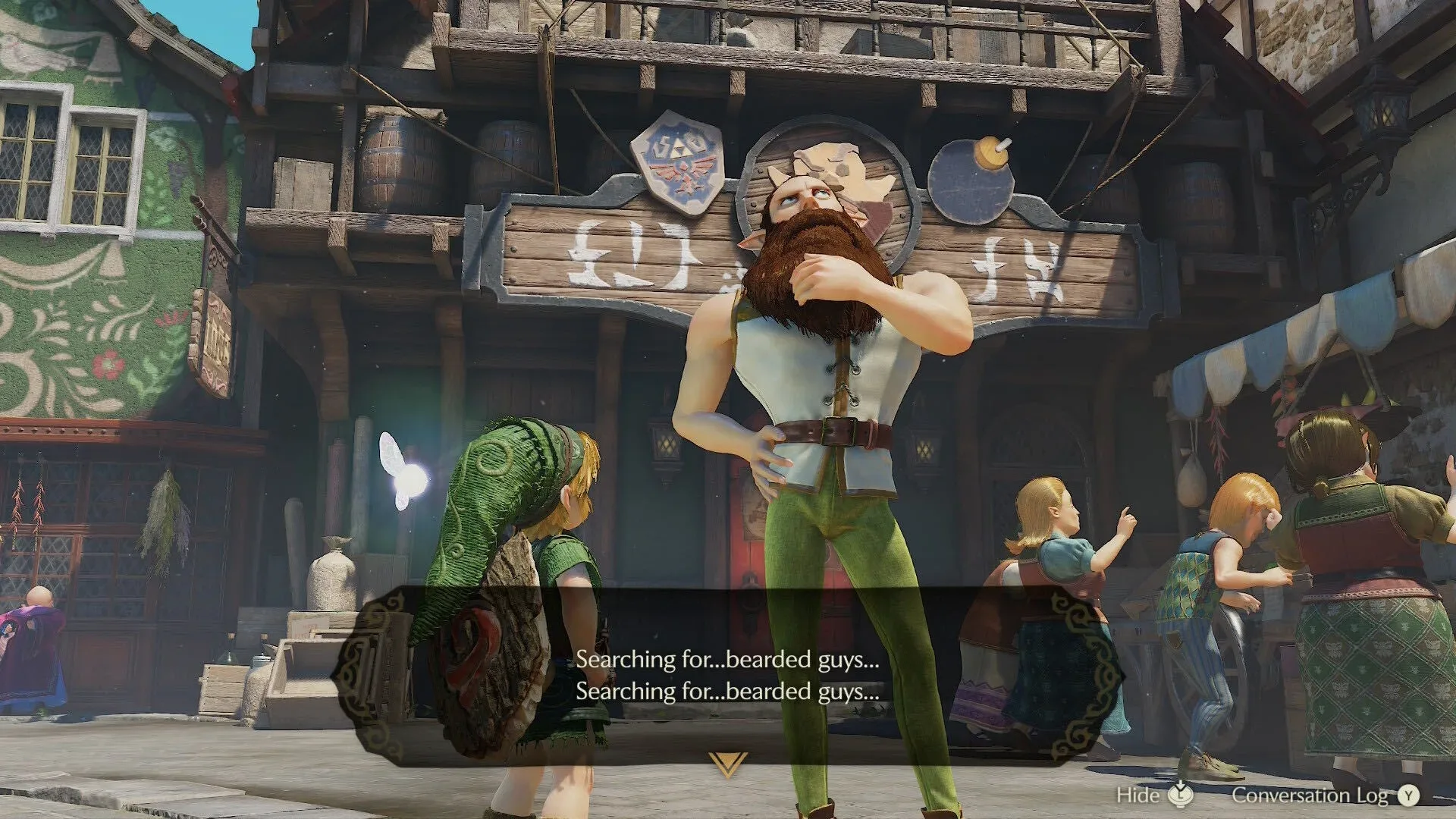
There is already speculation around what may have been added to Hyrule, including talk of a Castle Town figure with a rather memorable facial-hair angle. For the lighter side of that conversation, see our take on the reported Castle Town newcomer and its beard-based quest potential. Until Nintendo’s remake is examined more fully, though, Batiste’s measured description is the sensible framing: familiar at its core, potentially surprising at the edges, and carrying a musical legacy that remains inseparable from the adventure.