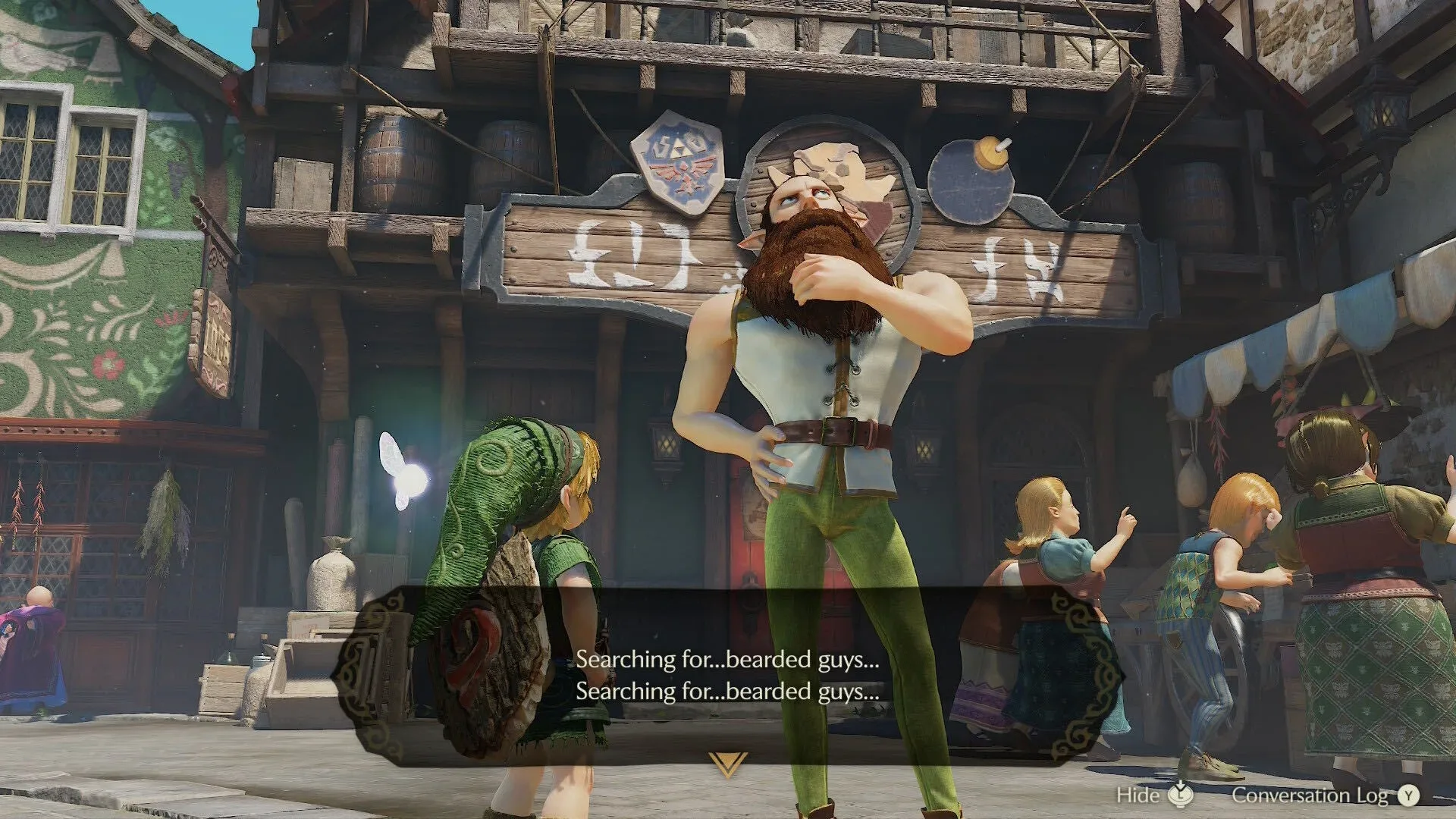
There are landmark moments in a Zelda adventure: drawing a blade, entering a dungeon, hearing a familiar melody at precisely the moment it will lodge in your brain for three business days. And then there is apparently meeting a huge, unnamed Castle Town resident whose beard functions as an inter-Hyrule tracking device for other bearded men.
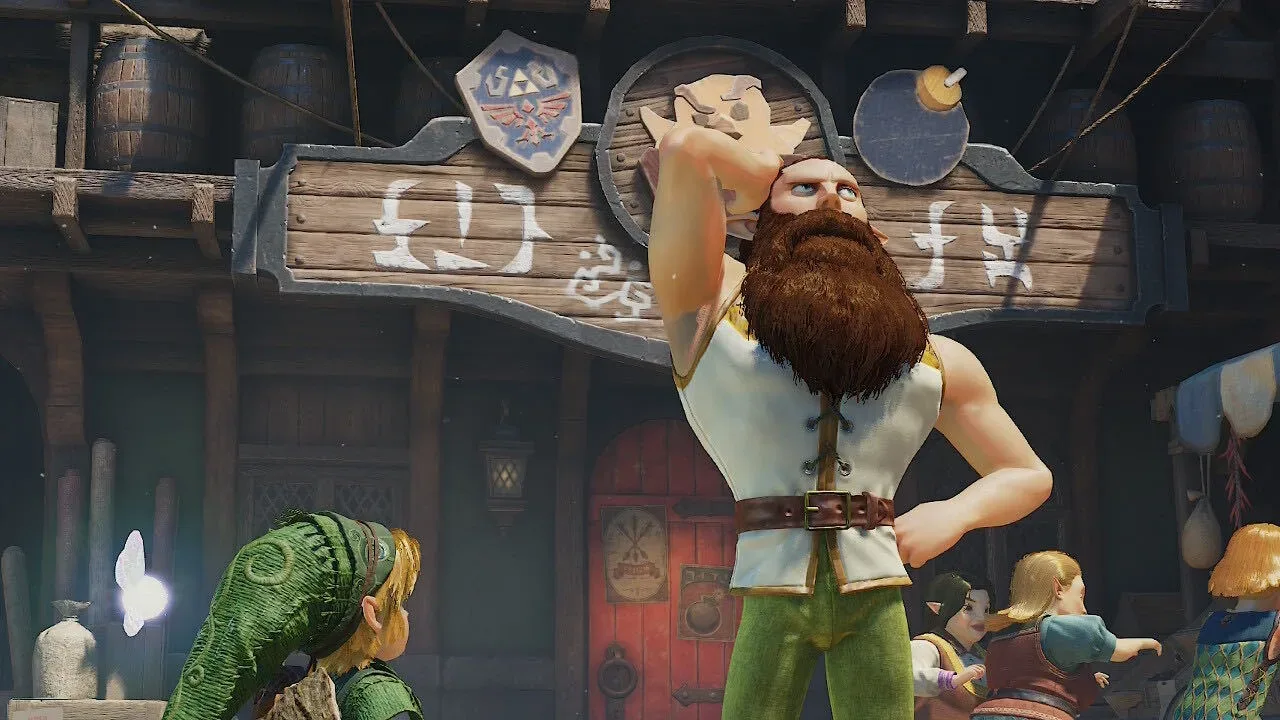
That is the important reported addition in the current discussion around an Ocarina of Time remake: the so-called Bearded Guy of Castle Town, a towering new non-player character with a spectacular face-to-chest beard and an even more spectacular claim. His facial hair is said to act as a beacon capable of locating other bearded men across Hyrule.
This is not a sentence anyone reasonably expects a fantasy adventure to hand them. It is, however, the kind of extremely specific bit of background-character comedy that can make a return trip to a beloved game world feel newly worthwhile. A town NPC does not need an elaborate quest chain, a tragic monologue, or a name that fits inside a save-file menu to become memorable. Sometimes he just needs to look like a sentient Dorito wearing a cathedral-length beard and insist that the beard has reception.
The beard beacon is a joke with a job to do
Beneath the sheer majesty of the premise sits a practical purpose. The gag reportedly directs players toward Talon, the bearded proprietor of Lon Lon Ranch. Talon is tied to a side objective that leads to acquiring a horse, giving Link a faster way to travel across Hyrule than walking.
That makes the Castle Town character a form of diegetic guidance. In game-design language, diegetic guidance is information delivered through the world itself rather than through a detached interface prompt. Instead of an arrow hovering over the next destination or a menu item bluntly ordering a player to visit the ranch, a resident gives a goofy, in-universe clue. The player is still being helped, but the assistance arrives as character flavor rather than administrative paperwork.
It is a useful distinction. A direct instruction is efficient, but it can feel mechanical: go here, speak to this person, receive transportation upgrade. A beard with apparently continent-spanning detection powers is not efficient in any ordinary sense. It is memorable. It turns a directional hint into a miniature encounter, and it gives the destination an identity before the player reaches it.
There is also a small but meaningful benefit for returning players. Anyone who knows the broad shape of Ocarina of Time may already understand that Lon Lon Ranch matters. A newly added NPC can still make the route feel less like a checklist replay. Rather than merely revisiting Castle Town on the way to an expected milestone, players have a fresh oddball to find, read, and immediately wonder whether Hyrule has a telecommunications regulator.
An unnamed NPC can still own the scene
The reported character has no conventional personal name, only the functional label Bearded Guy of Castle Town. That is not a weakness here. It might even be the point. “Bearded Guy” has the economy of a folktale and the confidence of a professional wrestler’s entrance name. You know exactly who is being discussed. More importantly, the game seems to know that this man’s beard is doing nearly all of the narrative labor required.
His visual design is described as tall, imposing, and defined by a vast beard that drapes down over his chest. The design and dialogue appear to be in total agreement: this is a man for whom a beard is not simply a grooming choice. It is infrastructure. It is a map, a signal tower, and perhaps an accessory with better range than the average fantasy kingdom’s postal service.
That clean alignment between silhouette and joke matters. Background NPCs have only a few seconds to make an impression. Players passing through a dense town may never stop for a second conversation, so a character’s shape, clothing, animation, and first line need to work fast. The Bearded Guy’s premise is instantly legible: enormous man, enormous beard, deeply unreasonable confidence in the beard’s capabilities. No encyclopedia entry required.
In a world of magic, monsters, prophecies, and sacred relics, the least believable thing may be a beard that can locate Talon with no visible antenna.
Why this kind of absurdity suits Castle Town
Castle Town is described as a jubilant town square, making it a natural place for broad personality rather than solemn exposition. Major settlements are where a game can widen the tone beyond the hero’s central destiny. A world-saving plot may be grave business, but a town needs residents with preoccupations that have nothing to do with the fate of the realm.
The beard beacon is exactly that sort of local nonsense. It does not appear to overturn the main story, redefine the setting’s mythology, or demand that players accept a new branch of ancient lore. It is a self-contained joke that also gives the player somewhere useful to go. Those are often the best kinds of additions to a remake: small enough to preserve the familiar shape of the experience, strange enough to produce a new anecdote.
And, crucially, the character’s supposed power is never treated as a serious system that requires explanation. No one needs a lengthy tutorial on beard frequencies, signal interference, or whether clean-shaven travelers are effectively invisible. The humor comes from accepting the claim long enough for it to deliver a lead toward Talon. The game can move on; players can remain spiritually occupied with the question forever.
The real upgrade is social navigation
The horse-related reward gives the encounter a clear gameplay implication. Faster travel changes how a player crosses a large game world: routes take less time, familiar ground becomes easier to revisit, and the distance between objectives is less likely to become a chore. That is a straightforward practical incentive to follow the clue.
But the more charming part is that the game reportedly frames that nudge as social navigation. Link is not just following a system marker. He is being recruited into a very peculiar network of facial-hair awareness. Talon is not merely the next relevant NPC; he is another point on the beard grid.
That is an unusually human way to make a side objective feel connected. People remember places through eccentric encounters all the time: the shopkeeper with the odd advice, the neighbor who knows everyone, the stranger with an explanation that sounds suspiciously like a conspiracy but happens to get you where you need to go. The Bearded Guy gives Castle Town one of those conversational landmarks.
For players, the broader practical lesson is simple: talk to the townspeople, especially when a remake has reportedly added faces to familiar spaces. Optional dialogue can carry a joke, a clue, a reward lead, or all three at once. In this case, it appears to offer a direction toward Lon Lon Ranch while supplying an image that will likely outlive the exact wording of the hint.
No firmware update has been confirmed
There is, sadly, no evidence that real-world beards can identify the nearest compatible bearded person, transmit location data, or spare anyone the ritual indignities of a dating app. The Castle Town man’s gift remains firmly in the realm of fantasy, alongside time travel, magical instruments, and the idea that a man with that much beard would not need to spend at least part of every morning removing breakfast from it.
Still, the fantasy has appeal. The reported joke speaks to a specific, recognisable wish: a little less friction in finding one’s people. The original reaction to the character treats the beacon less as a route to Talon than as an enviable social tool, particularly for anyone drawn to burly, scruffy men. It is an intentionally ridiculous leap, but it is also why the gag lands. An NPC describes an impossible convenience so perfectly tailored that the listener immediately wants the consumer version.
For now, players have the next best thing: a potentially delightful reason to pause in Castle Town, chat with a minor character, and head toward Lon Lon Ranch. The reward may be faster travel. The lasting prize may be the certainty that somewhere in Hyrule, an unnamed giant is standing absolutely still, beard gently humming, waiting for another bearded signal to enter range.
That is an excellent use of a background NPC. For another example of a game turning a confined location into an unusual character-driven space, see this look at Tenebris Somnia’s live-action horror maze. Castle Town is not an apartment and the Bearded Guy is not a horror antagonist, although the thought of that beard appearing around a corner at midnight may be worth preserving for future nightmares.