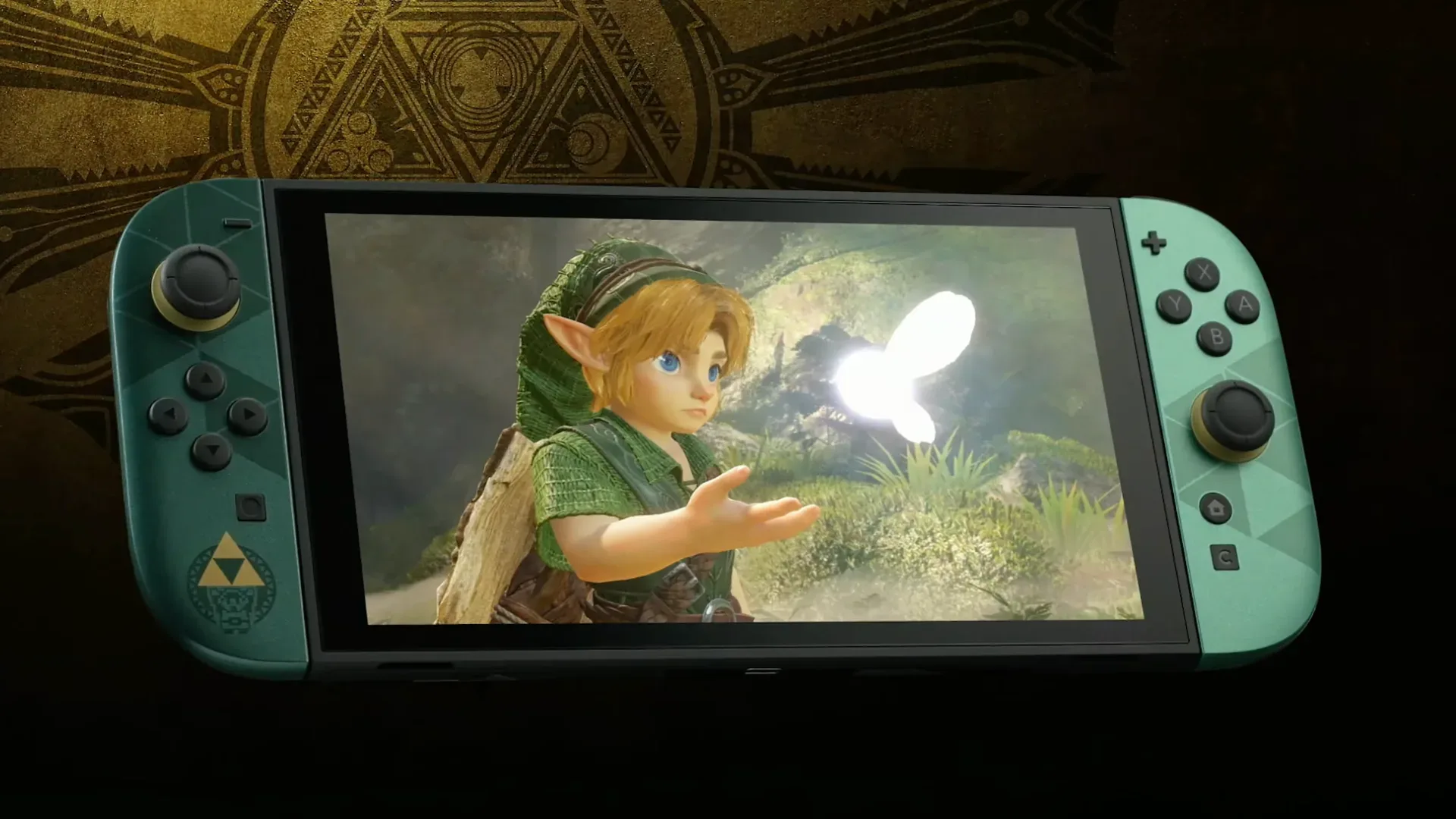
Nintendo’s newly revealed The Legend of Zelda: Ocarina of Time remake has inspired a familiar mix of delight, skepticism, nitpicking, and the sort of intense visual-analysis sessions usually reserved for identifying a cryptid in a blurry forest photo. Some fans are excited to revisit Hyrule with a lavish new presentation. Others question the more realistic art direction, the degree to which the remake changes the original, or whether another return to Ocarina is needed at all.
Those are all fair debates. But one detail has the potential to be more disruptive than a controversial texture on Link’s sleeve: Zelda Notes. Specifically, the remake appears set to make Nintendo’s companion-app concept part of the game experience in a more substantial way than before. It may sound like a small addition beside dungeons, bosses, and a 40-year legacy. Yet it raises a big design question: why should a game built around disappearing into an imaginary world ask players to consult the most distracting object in their real one?
A companion app becomes part of the quest
Zelda Notes arrived through the Nintendo Switch App in 2025 alongside the Switch 2 Editions of The Legend of Zelda: Breath of the Wild and Tears of the Kingdom. In those games, it can function as a navigation aid, offering assistance with finding locations, alongside bonuses, voice-acted logs, gameplay statistics, and item-sharing functions with friends.
That is an easy enough arrangement to ignore. Players who want a little extra guidance can take it; players who want a less mediated adventure can leave the phone on a table, in a pocket, or ideally in another dimension where it cannot buzz because a grocery app has detected an exciting discount on yogurt. The core game remains on the console.
The Ocarina of Time version sounds more integrated. Its Zelda Notes content is set to include a virtual ocarina, a trivia minigame, and a statistics page. Those are optional-looking extras, the kind of companion features that may amuse collectors of menus and completion data without demanding attention from everyone else.
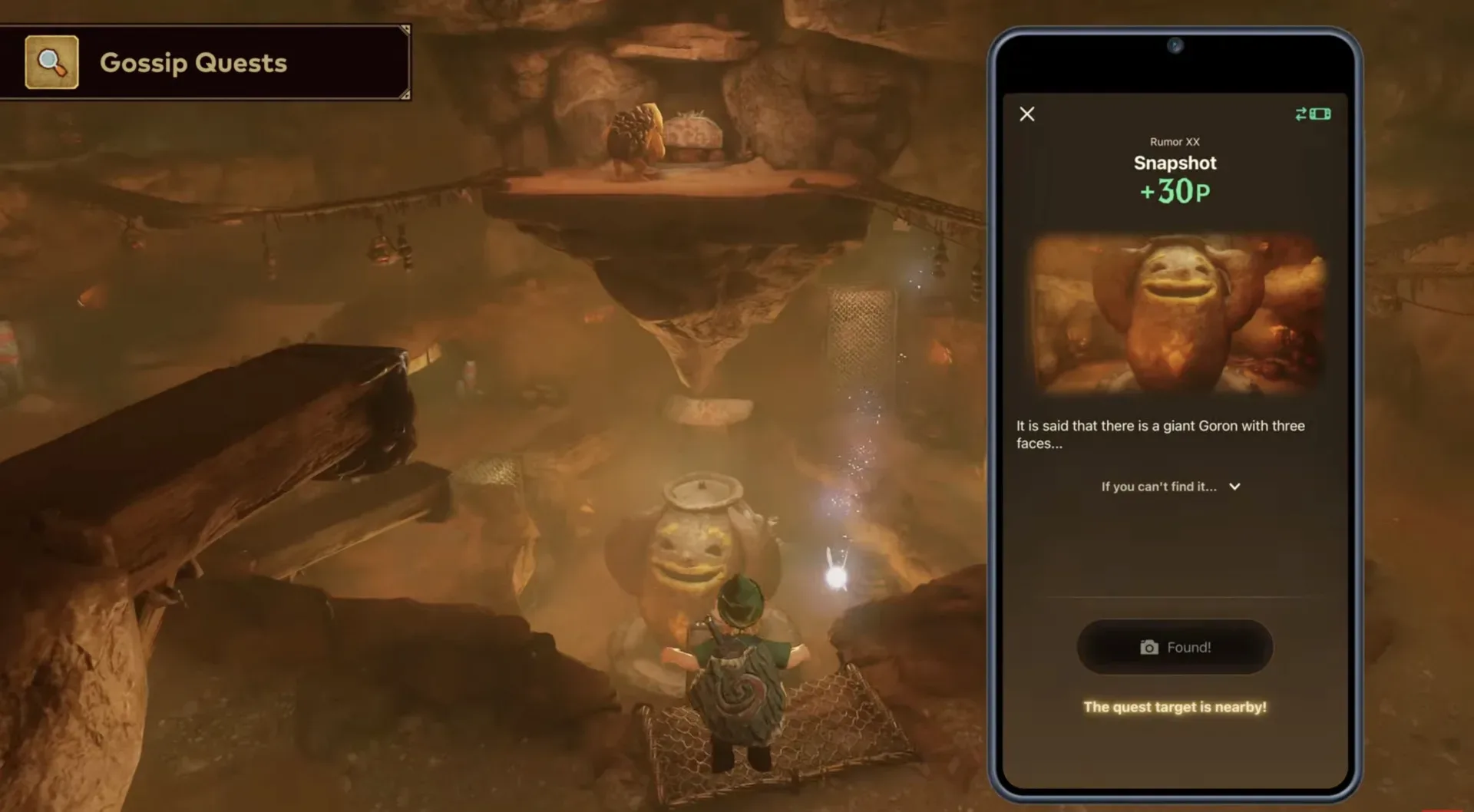
Gossip Quest is the more consequential piece. The activity appears to ask players to identify locations from images, creating a Hyrule-flavored photo-geography challenge. Completing these searches earns ocarina sheet music. It is an appealing premise: the world of Ocarina of Time is full of distinctive vistas, odd landmarks, temples, settlements, and routes that invite fans to show just how deeply they know the map.
The snag is that the location clues are apparently delivered only through Zelda Notes. Players would need the app to check the image, establish whether they have reached the proper location, and collect the reward. A charming optional scavenger hunt can therefore become a loop of console play, phone check, console play, phone check. Link rides across a field. The player briefly becomes an IT administrator verifying a side mission.
The idea is good; the second screen is the goblin in the room
A Zelda-themed geography game makes a great deal of sense on paper. Fan projects such as HyruleGuessr have already demonstrated that there is an audience for testing Hylian cartographic knowledge. It is not hard to see the appeal of trying to identify a patch of terrain from a carefully framed image, then racing through the world to prove that the suspicious rock, bridge, or hillside is exactly where memory says it is.
Related coverage includes Ocarina of Time Remake's Zelda Notes Quests Risk Turning Hyrule Into a Second-Screen Experience.
That form of challenge rewards observation rather than raw combat skill. It encourages players to appreciate environmental design, revisit overlooked paths, and turn familiarity with Hyrule into something playful. As an addition to a remake, it could give veteran players a reason to look at an old world with fresh attention.
But a phone should not be the gatekeeper to that pleasure. The central criticism is not that a virtual ocarina or a statistics page exists. It is that an otherwise promising quest chain risks being placed outside the game’s natural space. A Zelda adventure works best when its clues, mysteries, and rewards feel as though they belong to the world: a rumor from a villager, a signpost with suspicious wording, a message in a bottle, or an eccentric character with a task that somehow becomes everyone’s problem.
Ocarina of Time is especially ill-suited to frequent second-screen interruptions. Its sense of place is one of its enduring strengths. It is a game about traveling: stepping out onto Hyrule Field, following paths between strange regions, uncovering secrets through curiosity, and often spending time alone with music and scenery. Pulling out a modern phone during that journey is a blunt reminder that the player is not in a timeless fantasy kingdom. They are in the present, one notification away from a delivery update.
A feature meant to reward knowing Hyrule should make players look more closely at Hyrule, not more often at a handset.
An awkward moment for more phone dependence
Companion apps are not inherently bad. They can be practical in games where social coordination, fast messaging, trading, or match analysis are central to the experience. Checking statistics around Splatoon, for instance, is a very different proposition from interrupting a single-player expedition. Likewise, using a phone to streamline a trade in Animal Crossing: New Horizons does not necessarily clash with its rhythms in the same way.
But Ocarina of Time belongs to a franchise often valued precisely because it offers a break from the endless-feed atmosphere of modern devices. Many players turn to large exploratory games as an alternative to app-driven attention fragmentation. The appeal is not merely screen time swapped from one rectangle to another; it is the change in tempo. A game can ask someone to slow down, investigate, listen, remember, and wander without an algorithm competing for every spare second.
That makes a mandatory or semi-mandatory mobile layer feel dated in a particularly strange way. The game industry spent much of the 2010s exploring second-screen concepts, with uneven results. Some were useful, some were novelty extras, and many asked players to divide their focus for little reward. Today’s hardware and interface habits make the pitch even harder: players frequently want fewer reasons to unlock their phones, not another sanctioned reason to do so.
There is also a practical concern. Not every player wants to play with a phone nearby, has convenient battery life, uses the Nintendo Switch App regularly, or wishes to connect a personal device to an entertainment experience. Optional app support is one thing. Tying a distinct reward activity to it creates friction that need not exist.
Ocarina of Time already has better tools for this job
What makes the choice more puzzling is that the remake is not treating the 1998 game as an untouched museum piece. The revealed version reportedly adds dialogue, a jump button, and expanded areas. Once a remake is making those kinds of structural additions, there are plenty of ways to deliver Gossip Quest without making the phone a required travel companion.
A new non-player character in Hyrule Castle Town could hand out illustrated leads. A notice board could display a rotating set of photographs. The Sheikah, gossip stones, a traveling photographer, or even an absurdly committed Cucco enthusiast could direct Link to each destination. The clues could live in an in-game journal, with the reward arriving through a character interaction or automatically after discovery.
Any of those approaches would preserve the new activity’s core premise while strengthening its connection to the world. They would also make it feel like a genuine piece of Zelda side content rather than an adjacent app promotion. Nintendo can still offer Zelda Notes as a convenient companion for players who enjoy stat tracking or novelty features; it just should not be the only doorway to a quest line.
This is not a call for the remake to reject every modern convenience. Remakes have to make choices, and fans will never agree on all of them. A more detailed visual presentation, new traversal options, and expanded spaces will each have supporters and detractors. Even the debate over whether Ocarina of Time should be remade again is ultimately a matter of what people want from preservation, reinterpretation, and nostalgia. For a different angle on how seemingly modest game changes can matter, see our report on an Elden Ring patch closing a multiplayer item loophole.
Gossip Quest, though, sounds like an addition worth saving from its own delivery method. Put the pictures on the console. Put the prompts in Hyrule. Let players follow rumors, study landmarks, and earn their songs without breaking the spell to authenticate their adventure through a separate device.
November is reportedly close enough for the Ocarina of Time remake to feel real rather than theoretical. Before then, Nintendo has an opportunity to clarify exactly how much Zelda Notes is required and whether the quests can be experienced fully in-game. The virtual ocarina can stay on a phone. Trivia can stay on a phone. Statistics can stay on a phone. But the moment a player sees a mystery image and sets off into Hyrule to solve it? That belongs on the console, where the adventure is.