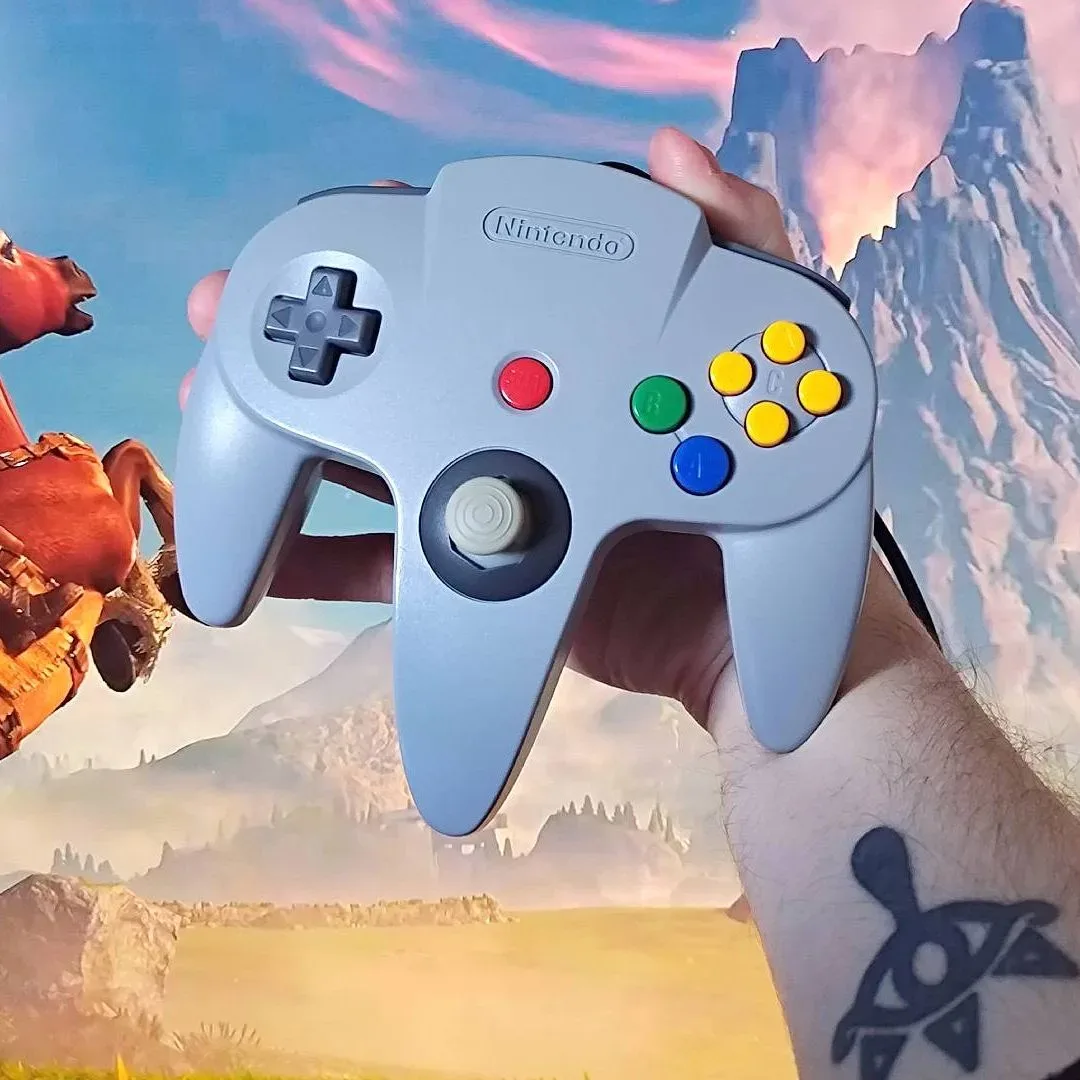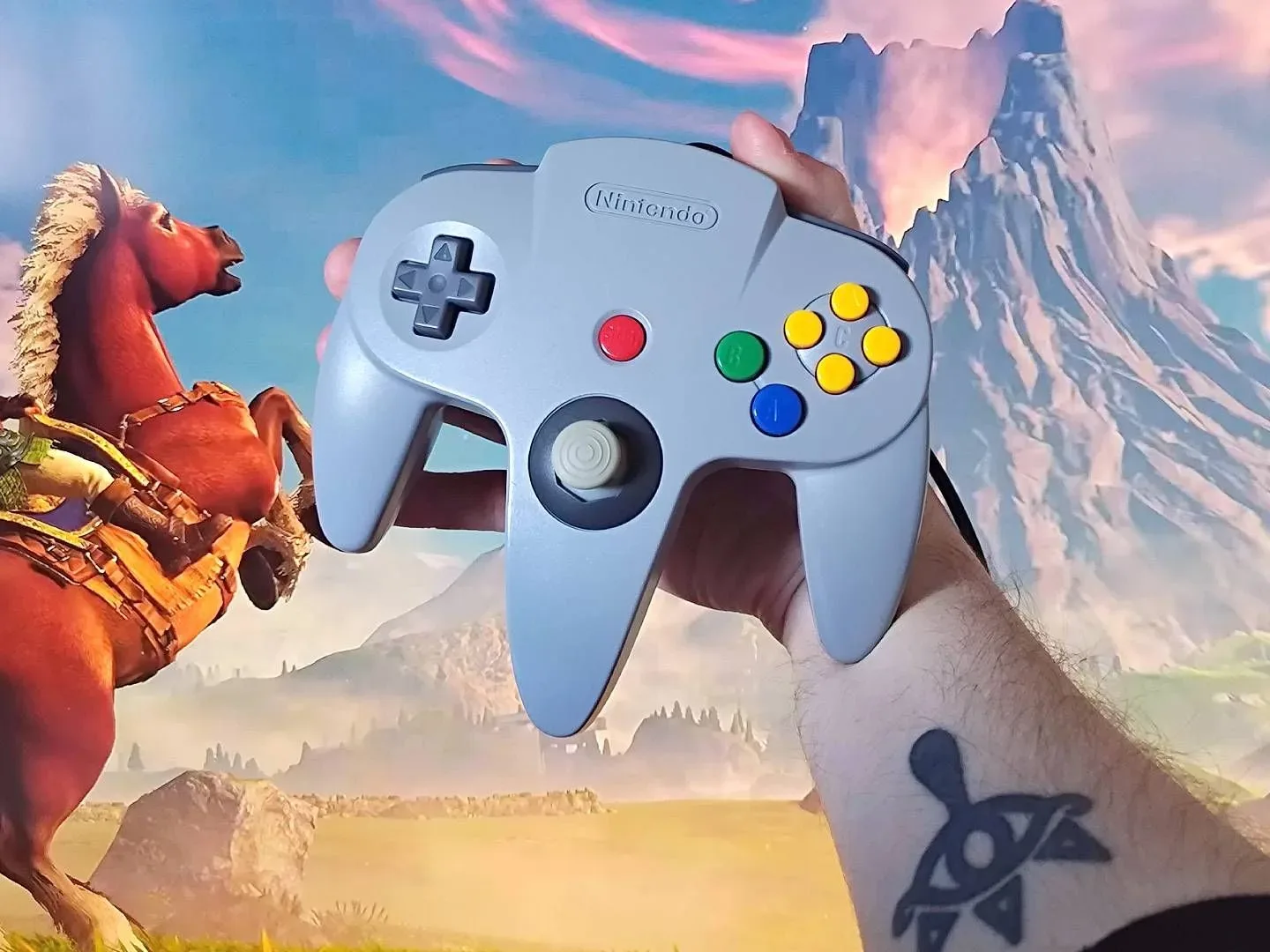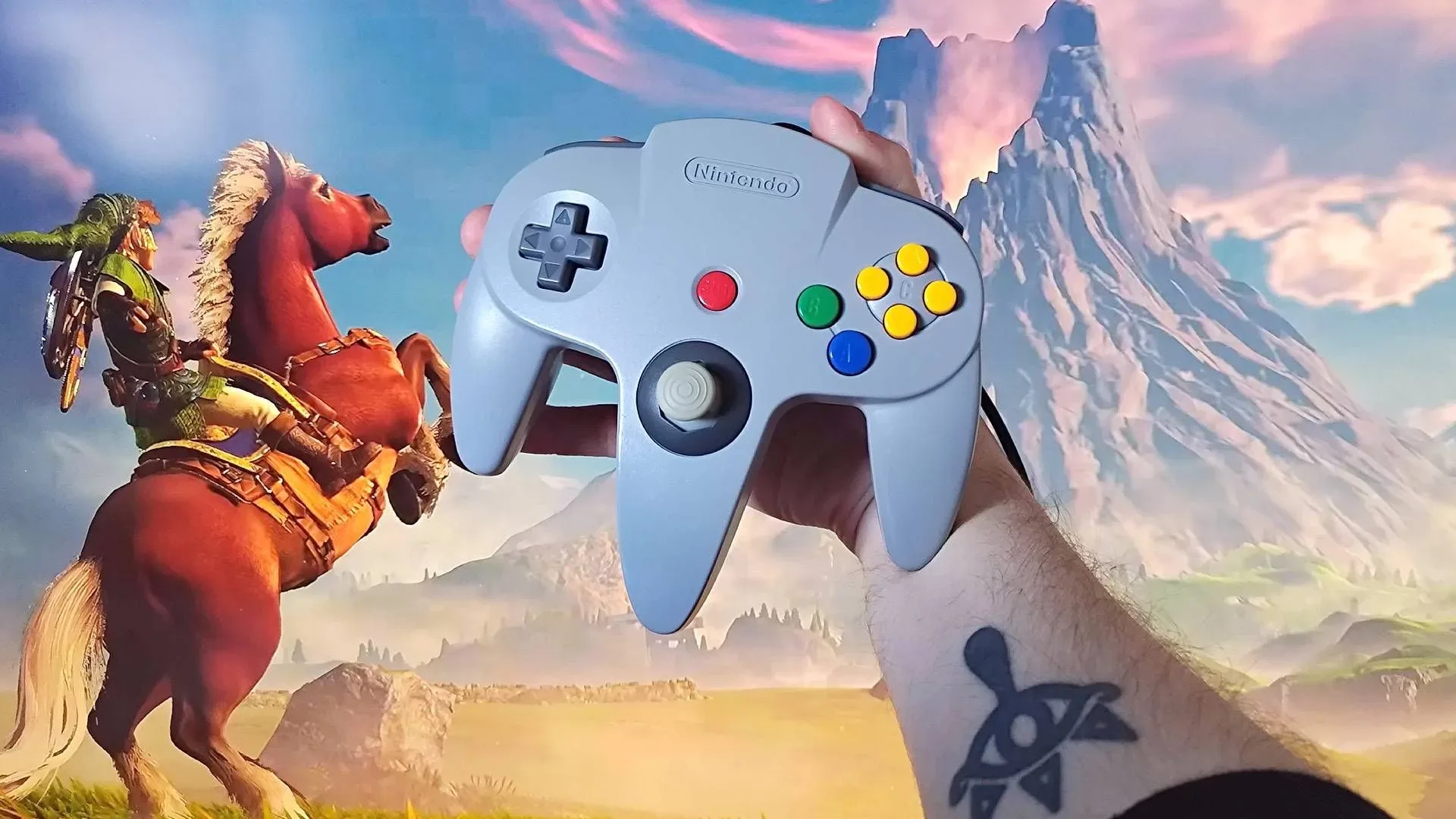
Modernizing The Legend of Zelda: Ocarina of Time means confronting an uncomfortable truth: the Nintendo 64 controller was never going to survive this assignment intact. Its three-pronged silhouette is an object of great nostalgia, occasional affection, and frequent ergonomic litigation. A remake built for Switch 2, with a freely controlled camera plus dedicated jump and sprint inputs, is plainly designed around contemporary expectations rather than 1998 muscle memory.
That is the sensible decision. It may even be the only sensible decision. But there is still a compelling case for an optional legacy-style control mode, or at least for preserving the audiovisual language attached to the original game’s Z button. The old control scheme did more than wrestle a young 3D adventure into a usable shape. It created a cadence: press a button, settle the camera behind Link, hear the world answer. The mechanic was a camera correction, yes, but it was also a tiny ritual.
The remake is scheduled for November 6, and its revealed features suggest a version of Hyrule that intends to feel very much of its era. A dual-stick camera and explicit movement actions can make exploration more immediately readable for people accustomed to newer Zelda games. Nobody should have to undertake a postgraduate course in 1990s controller geometry merely to look around a room. Still, convenience and atmosphere do not have to be enemies, particularly when a classic game’s identity was shaped by the compromises that modern design is eager to erase.
The camera limitation that became part of the adventure
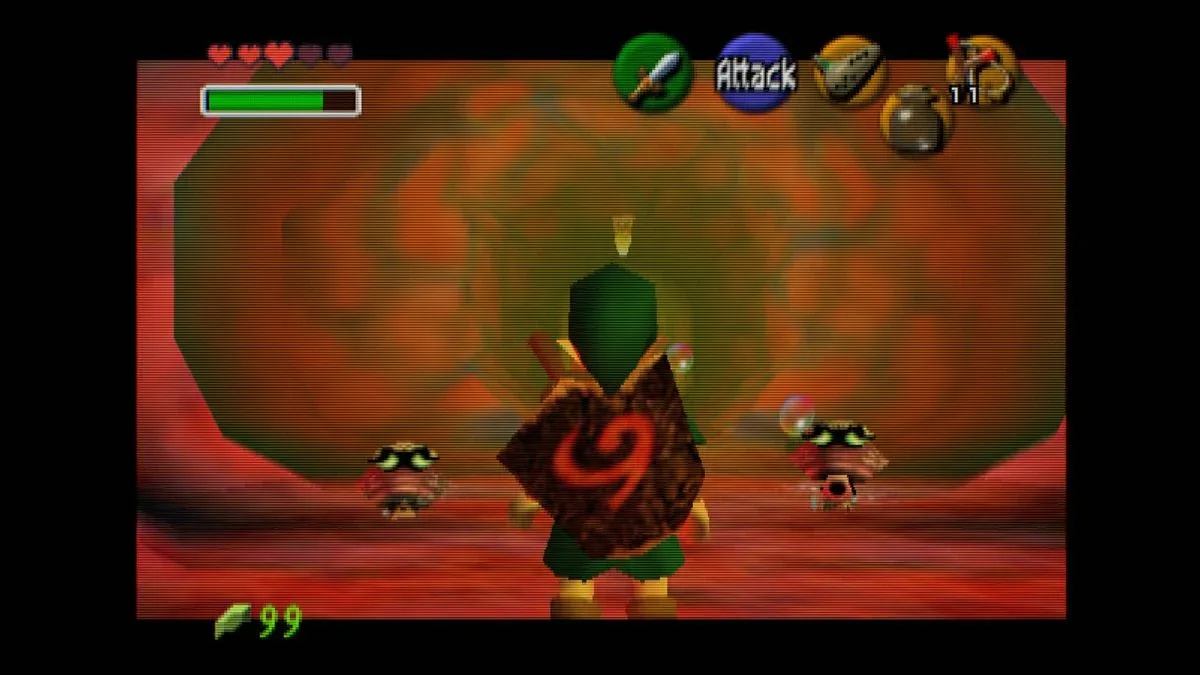
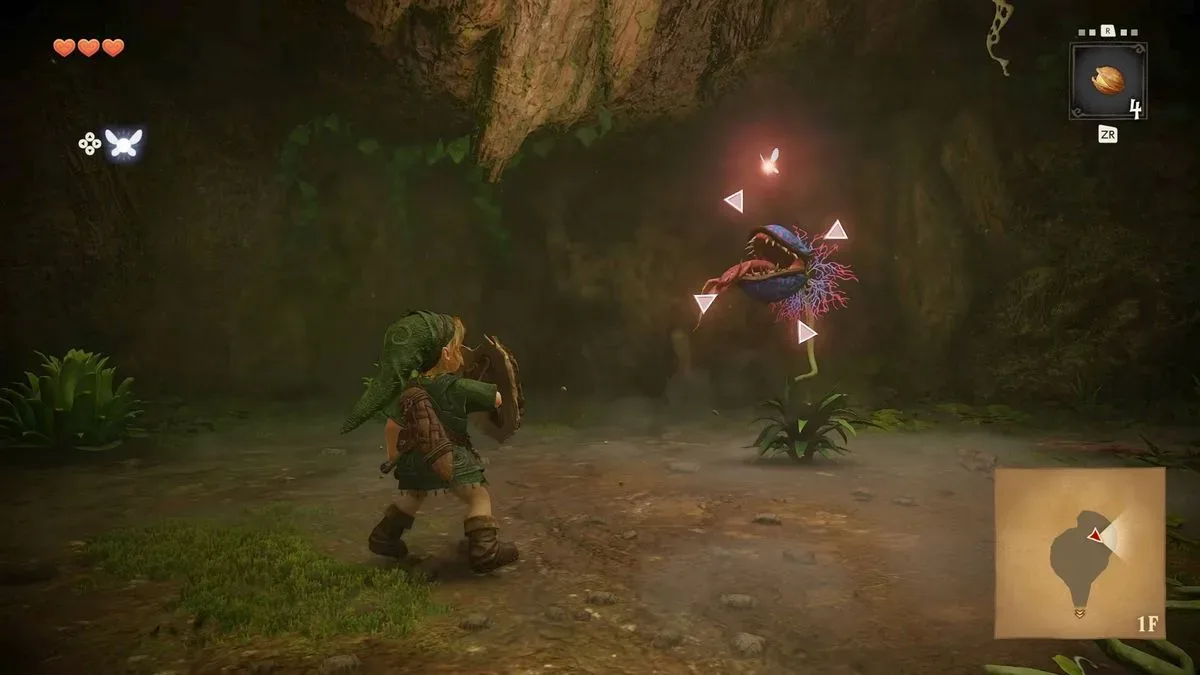
In the Nintendo 64 original, Z-targeting carried a remarkable amount of responsibility. It locked Link onto enemies, kept battles coherent, and pulled the camera into line behind him when the player needed a quick directional reset. That last feature mattered throughout the game, not merely in combat. One press could turn a slightly awkward viewpoint into a clear path forward, with none of the continuous camera steering now taken for granted.
By current standards, that arrangement can look restrictive. By the standards of early 3D action games, it was an ingenious response to a problem the medium had not yet solved. More importantly, Ocarina of Time did not present its camera behavior as neutral utility. The act of using Z had presentation attached to it, making camera management feel embedded in the mood of a location rather than bolted onto it.
Inside dungeons, targeting could bring in a cinematic letterbox effect while locking onto a threat. The framing evoked the tension of a standoff, and an echoing sound reinforced the sense that the stone corridors had noticed Link’s sudden alertness. In the open world, the sound cue was lighter, with a more playful, exploratory character. The result was subtle but powerful: the same functional button seemed to behave differently because Hyrule itself seemed different.
That is worth emphasizing because the nostalgia argument is often reduced to “old thing good.” This is not really about claiming that a fixed camera is objectively better than free camera control. It is about recognizing that a limitation can become expressive when the game consistently designs around it. The original did not simply lack a right analog stick. It built an entire sensory response around the act of asking the camera to find Link.
A remake can modernize without flattening the texture
Footage from Eiji Aonuma’s gameplay demonstration indicates that Z-targeting remains in the remake, but its original letterboxing and location-sensitive sounds do not appear to be part of the new presentation. The familiar target-lock sound and Navi’s warnings are still part of the experience, yet the broader environmental punctuation may be absent. That reading is necessarily limited by what has been shown, so players should not treat it as a complete accounting of every option, sound, or visual setting in the finished release.
Related coverage includes Ocarina of Time Remake Could Make N64 Controls a Fascinating, Flawed Option.
Even so, the difference raises an interesting design question. When a remake replaces an old camera system with a flexible new one, should it also discard all the dramatic feedback that made the older system distinctive? A free camera does not inherently prevent a quick re-center command. It also does not prevent an optional classic audio profile, a targeted cinematic frame, or a visual filter that recalls the original’s combat punctuation. These features could coexist with standard modern controls rather than forcing anyone to choose between accessibility and authenticity.
There is a broad middle ground between reproducing every awkward input of the Nintendo 64 era and sanding off every unusual characteristic of the original. A “legacy Z” option, for instance, could make one button snap the camera behind Link when no target is selected, then use a version of the old sounds and framing when it is appropriate. It would not need to replace the remake’s normal controls. It would simply acknowledge that the older interaction had personality.
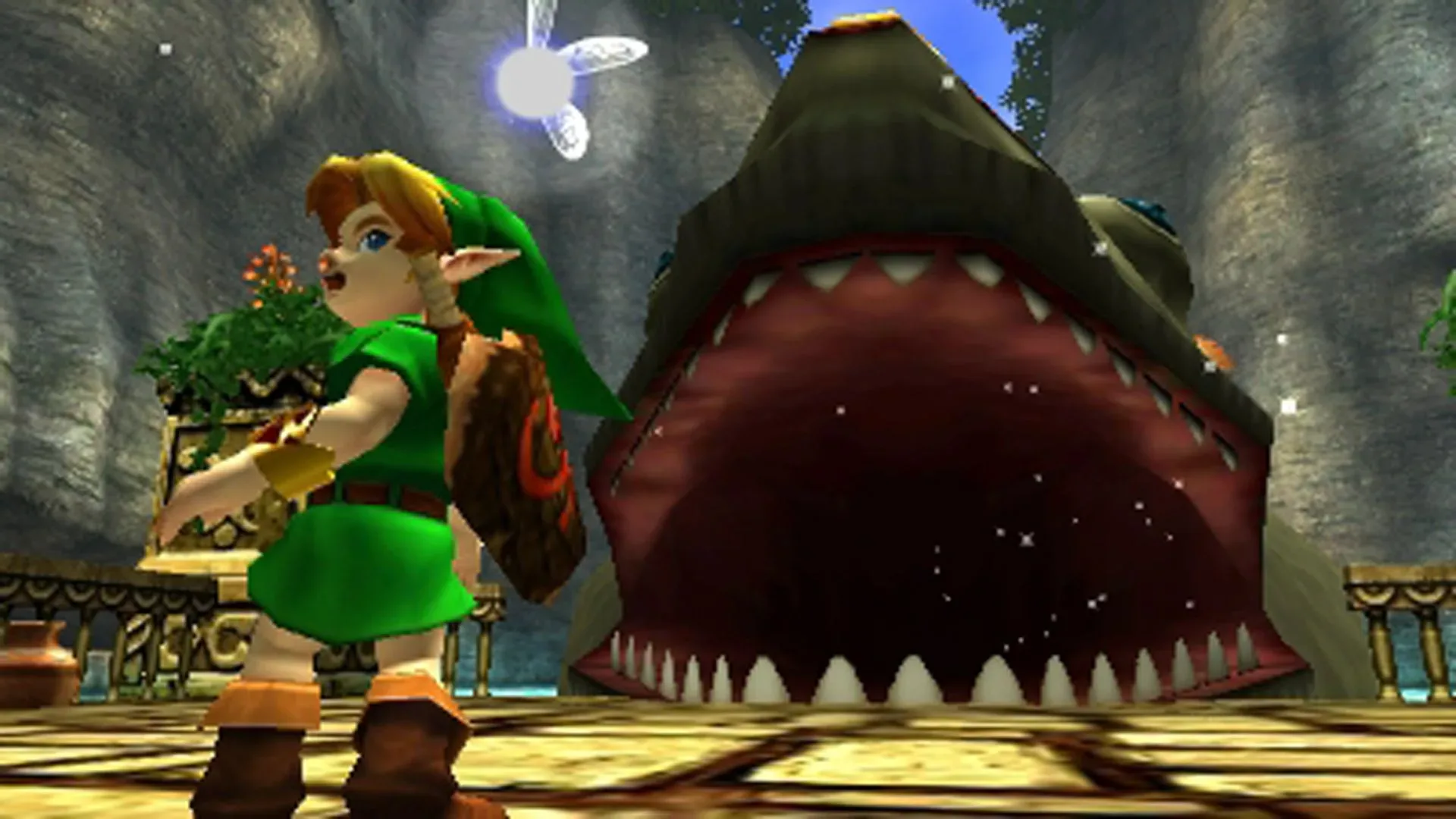
That sort of option is especially valuable in a remake of a game with a long history across Nintendo platforms. Ocarina of Time has appeared in versions tied to the Nintendo 64, GameCube, Wii storefront ecosystem, and Nintendo 3DS. Those editions did not feel identical, because controller layouts, screens, interface decisions, and hardware all changed the player’s relationship with the adventure. Z-targeting has been the through line, but the way it feels in the hands has never been wholly separate from the machine playing it.
The N64 controller is a museum piece that still wants a job
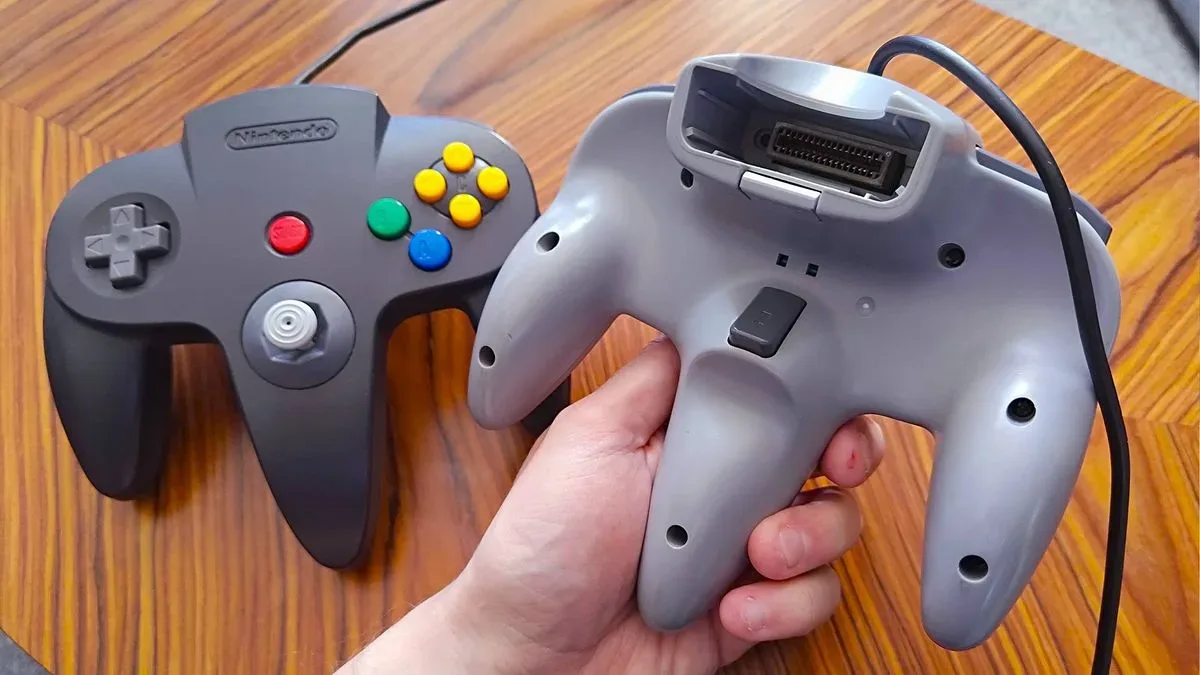
Support for an actual Nintendo 64-style controller would be an even more eccentric, more optional way to honor that history. It is not hard to see the difficulties. A controller with one analog stick was not made for a game structured around free camera movement, dedicated jumping, and dedicated sprinting. Mapping every new action cleanly could demand compromises, and players seeking the smoothest possible remake experience will almost certainly be better served by a Switch 2 controller.
Yet an N64 layout has a quality no modern pad can perfectly imitate: it directs the hands into a particular rhythm. The central stick, huge face buttons, and shoulder-mounted Z trigger make each input feel emphatic. Whether someone regards the controller as brilliant industrial design or a tiny plastic spacecraft built by pranksters, it is inseparable from how many players first learned 3D Hyrule. Giving it a supported role would be less about competitive practicality than historical texture.
There are two plausible hardware routes for enthusiasts. The official Nintendo Switch Online Nintendo 64 controller is described as a close reproduction of the 1990s original and is listed at $54.99. The 8BitDo 64 Bluetooth controller, listed at $39.99, uses the N64 button arrangement in a more modern shell and is compatible with Switch 2. Neither peripheral alone guarantees that the remake will be pleasant, complete, or even fully practical to play this way. Compatibility is not the same as a purpose-built control profile.
The crucial unknown is how the remake handles camera recentering. If its targeting system can rapidly pull the view behind Link outside of enemy, object, and character targeting, an N64-style pad could be usable in a charmingly compromised way. If camera adjustment depends chiefly on the second stick, players may find themselves improvising around a feature set never intended for their chosen relic. That experiment could be funny, frustrating, or both—the classic retro-controller range of outcomes.
Preservation is more than polygon counts
There is also a larger lesson here for remakes. Preservation is often discussed in terms of game code, original releases, visuals, frame rate, and access to legacy hardware. Those are vital subjects. But controls deserve a place in that conversation. A game’s feel is not trapped solely in its assets or mechanics; it lives in the delay before a camera snaps into position, the sound that accompanies it, and the small habits players develop over dozens of hours.
That is why even a partial nod to the original approach would matter. A modern remake does not have to make everyone play with an N64 controller, nor should it treat old friction as sacred. It can offer modern defaults while preserving the ability to summon a bit of the old atmosphere for those who want it. The best legacy options are not barriers. They are invitations: a way to understand why an older design became beloved in the first place.
Switch 2 is already becoming a place where Nintendo history is revisited in multiple forms, from new versions of familiar ideas to older catalog access. The arrival of Star Fox Adventures in the Switch 2 Nintendo Switch Online GameCube library is another reminder that platform history is not a single, fixed experience; hardware context changes what players notice and value.
For Ocarina of Time, the ideal outcome would be straightforward: let the remake be sleek, readable, and built for 2026, but leave room for one deliberately old-fashioned button press to carry its original dramatic weight. A freely moving camera can be progress. A quick Z-button snap, complete with a little haunted dungeon resonance or a cheerful overworld flourish, can still be Hyrule.
Shop the products
Check current price, model and availability at the retailer.