Tenebris Somnia starts from a deeply uncomfortable premise and pushes it somewhere supernatural: Julia returns to the apartment she once shared with her ex-boyfriend after nightmares about him. What she finds is not an awkward conversation waiting to happen. The building is damaged, personal keepsakes are wrecked, strange symbols mark doors, and her former partner has become entangled with demons seeking physical bodies.
That setup gives the horror game an unusually intimate frame. The danger is not an anonymous laboratory, a remote village or a haunted mansion inherited by a stranger. It is a former home filled with memories that Julia must revisit and untangle while fighting monsters. The game reportedly uses that emotional baggage as part of its structure, turning each floor of the apartment building into a space shaped by the relationship’s past.
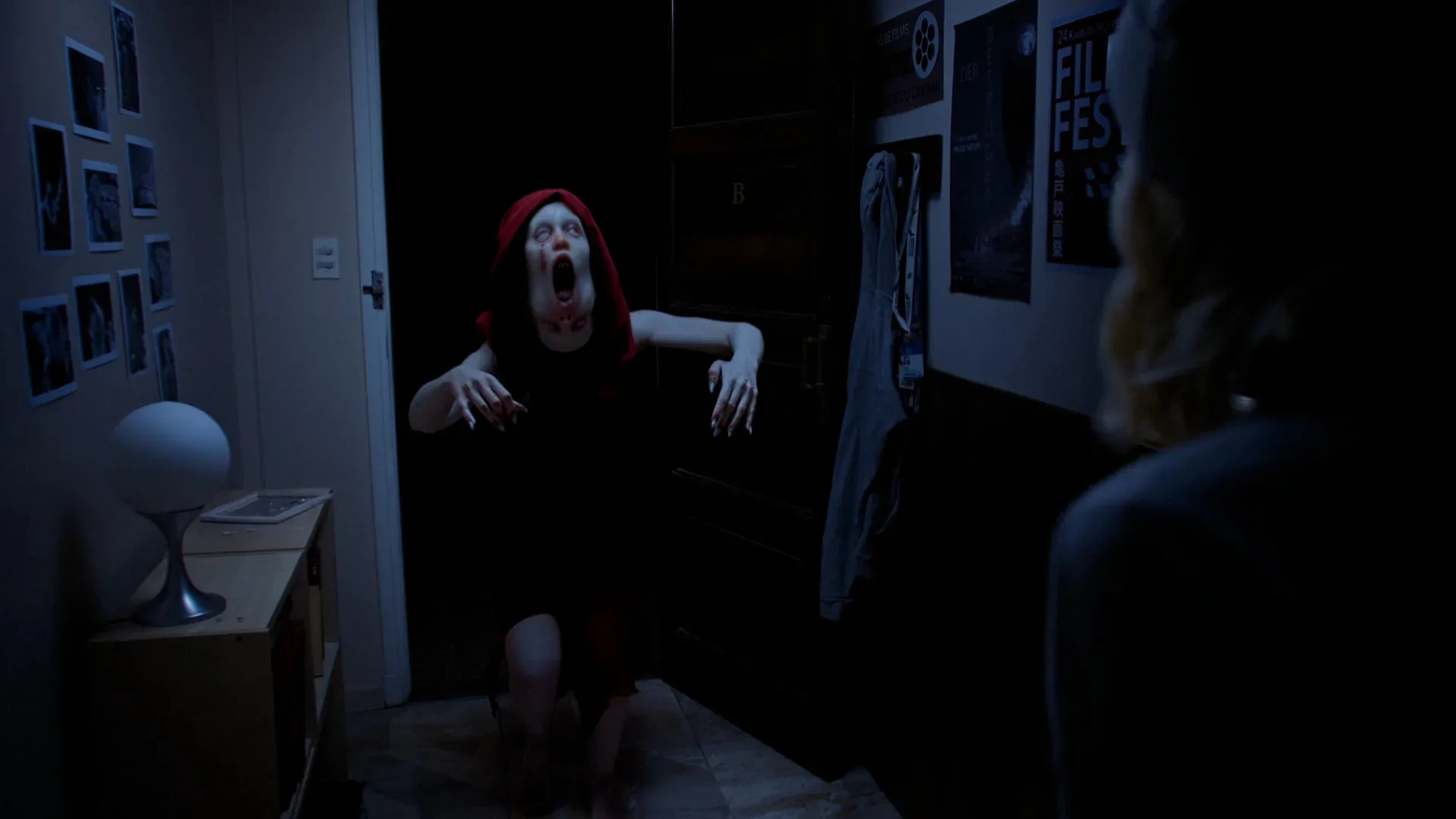
Its most distinctive formal choice is the use of live-action footage. Rather than making full-motion video the entire experience, Tenebris Somnia drops live-action cutscenes into a conventionally controlled horror game. The effect is less about replacing gameplay with filmed scenes and more about making those scenes feel like intrusions: a sudden shift in texture that can arrive without obvious warning.
Live action is an accent, not the whole format
FMV, short for full-motion video, generally describes filmed footage used within a game. It has a long association with games that make filmed performances central to their presentation, including interactive-video titles such as Night Trap. Tenebris Somnia draws on some of that eerie appeal, but its structure is different. The player still explores, solves puzzles and manages combat; the filmed material is deployed in bursts.
That selective approach appears crucial. A cutscene that arrives only occasionally can do more than deliver plot. It can unsettle a player who has become accustomed to the look and rules of the playable sections. In this case, the footage also reportedly tracks Julia’s condition. Her on-screen health is represented by a portrait that darkens as she takes damage. In the live-action scenes, her face similarly changes over time: she becomes more worn down, with tiredness increasingly visible around her eyes.
It is a small but meaningful connection between interface and performance. A health display is usually an abstract piece of information—bars, numbers, colors or icons. Here, the game ties that information to Julia’s appearance. That can make injury feel less like a detached mechanical penalty and more like part of the character’s deterioration. It also gives the live-action segments a functional relationship to play instead of making them purely decorative.
The creatures help sell the premise. One described foe is a man whose head resembles melted candle wax, a design that sounds grotesque but also theatrical in a way that particularly suits filmed footage. The game’s monsters are not confined to cutscenes, though. The stronger scares reportedly come from the playable space itself, including classic misdirection: training the player to anticipate a threat in one direction, then placing the actual shock somewhere else.
An apartment building built around memory and progression
Tenebris Somnia has been described as a possible example of “metroidbrainia,” a loose community term rather than a strict genre label. It borrows from “Metroidvania,” where exploration often depends on revisiting spaces after gaining access, information or tools, while emphasizing puzzles and deduction. The important idea is that progress can come from thinking through connections rather than simply following an objective marker.
Related coverage includes Tenebris Somnia Makes an Ex's Apartment a Terrifying Horror Maze.
Julia moves through the building one floor at a time, and each floor is associated with memories of her ex. The game therefore makes psychological processing part of practical advancement. A screening the couple once held for their short film becomes more than backstory: viewing the film provides a clue needed to continue. That is a promising use of narrative material. The memory is not merely a collectible note explaining who people used to be; it has an actionable role in the player’s investigation.
Some solutions involve combining items and identifying where those items belong. The required logic can ask for a modest leap, but extra hints are available. For players who enjoy horror atmosphere but do not want to stall indefinitely on inventory puzzles, that balance matters. A clue system can preserve forward momentum without flattening every puzzle into a highlighted interaction point.
There is also a thematic benefit to the design. An apartment is a contained setting, yet it naturally lends itself to locked rooms, altered routes, symbolic objects and spaces that acquire new meaning after a revelation. By tying floors to relationship memories, Tenebris Somnia can turn ordinary domestic details into evidence, obstacles or emotional triggers. The supplied details do not establish exactly how every floor works, but they do indicate a game interested in using location, recollection and puzzle logic together.
Combat favors survival over swagger
Julia can acquire multiple weapons, including a revolver and a lead pipe. But the reported feel of combat favors close-range strikes followed by escape over treating every encounter as a shooting-gallery challenge. That distinction says a great deal about the intended tension. A gun can create distance and confidence; a pipe or knife requires proximity, timing and a willingness to disengage quickly.
Enemies include hard-hitting ghosts, while healing items are limited. Those conditions encourage a survival-horror mindset: resources have value, combat carries risk, and getting through a space safely can be preferable to clearing it completely. The practical recommendation is straightforward—save frequently. There is no auto-save, so an unexpected fight can erase a meaningful stretch of progress.
That last point is particularly useful for anyone considering the game. Manual saving changes how players should approach exploration. Before testing a suspicious room, attempting a difficult encounter or spending a healing item, it makes sense to secure recent progress where possible. The game may be built to surprise, but losing progress because of an absent auto-save system is a separate kind of fright.
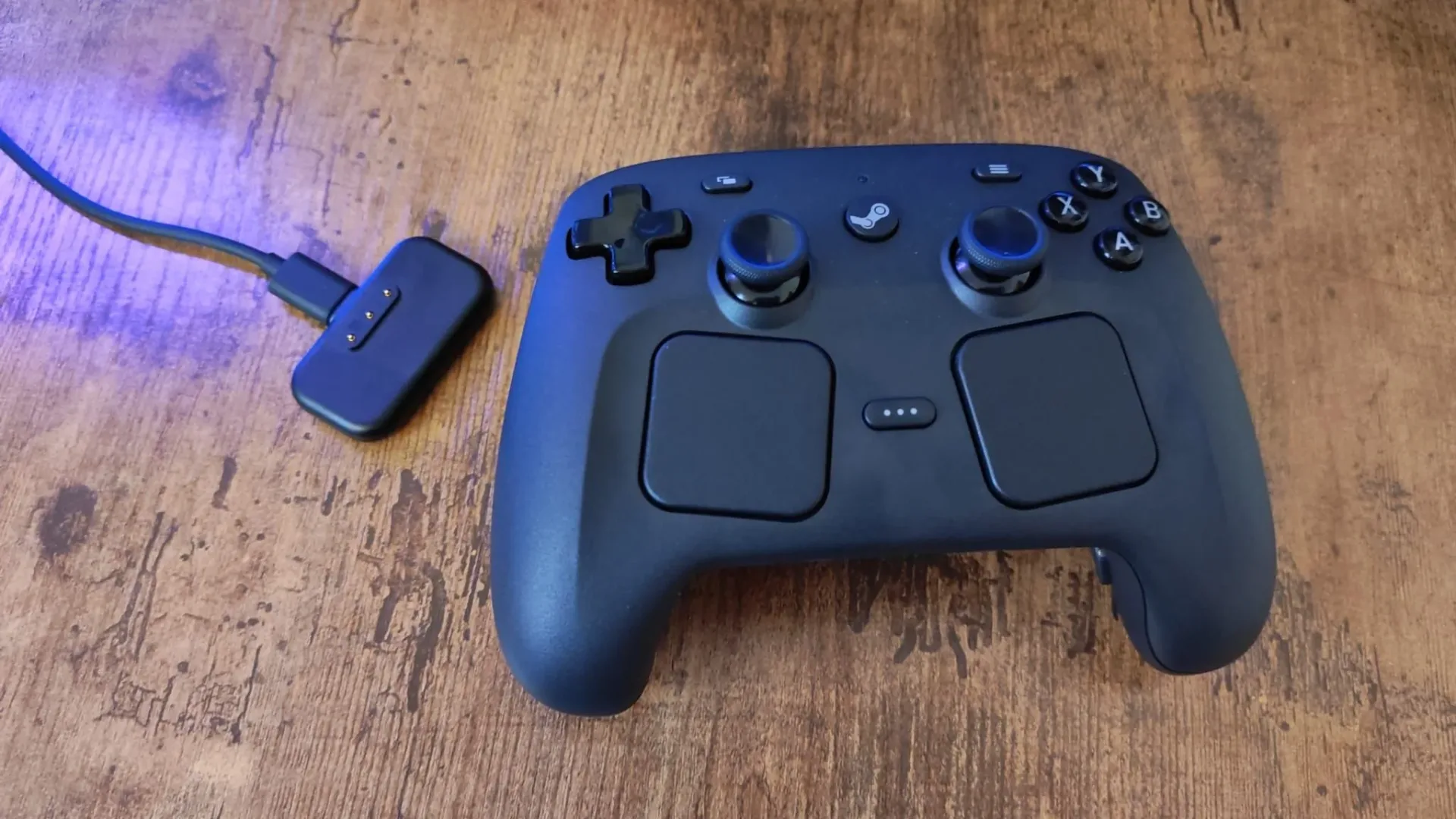
Control feel can also shape whether this kind of cautious, hit-and-run combat lands properly. Players interested in the broader question of how a controller changes the feel of PC play can read our Steam Controller guide. That discussion is not specific to Tenebris Somnia, whose platforms are not established in the available information, but the broader point remains: a horror game’s tension often depends as much on movement and response as on its monster designs.
Scary without leaning entirely on disgust
The reported early impression is that Tenebris Somnia may take roughly 10 hours to finish, though that remains an estimate from only a few hours of play rather than a confirmed completion time. It also suggests a horror style aimed at players who want suspense and jolts without an overriding focus on hyper-realistic gore or excessive violence.
That does not mean the game sounds gentle. Demons seek to use a person’s flesh to regain corporeal form, the apartment is littered with damage and occult imagery, and its creature concepts are intentionally disturbing. The distinction is in emphasis. The game appears to build fear through anticipation, sudden changes in perspective, resource pressure and a personally charged setting—not simply through escalating graphic imagery.
The involvement of game developers alongside an award-winning Argentine film crew may help explain why the filmed sequences and horror staging are receiving attention. The evidence supports a blend of disciplines rather than a claim that cinema has replaced game design. Exploration, item use, combat and saving remain central; filmed scenes intensify the mood around them.
Most importantly, Tenebris Somnia seems to understand that a familiar place can be frightening precisely because it was once safe. Julia’s old apartment is not just a monster-filled map. It is a record of a relationship, made hostile by damage, memories and demonic possession. If its puzzles, encounters and live-action interruptions continue to support that idea across the full game, it could offer a sharply focused horror experience: one where revisiting the past is dangerous in every sense of the word.