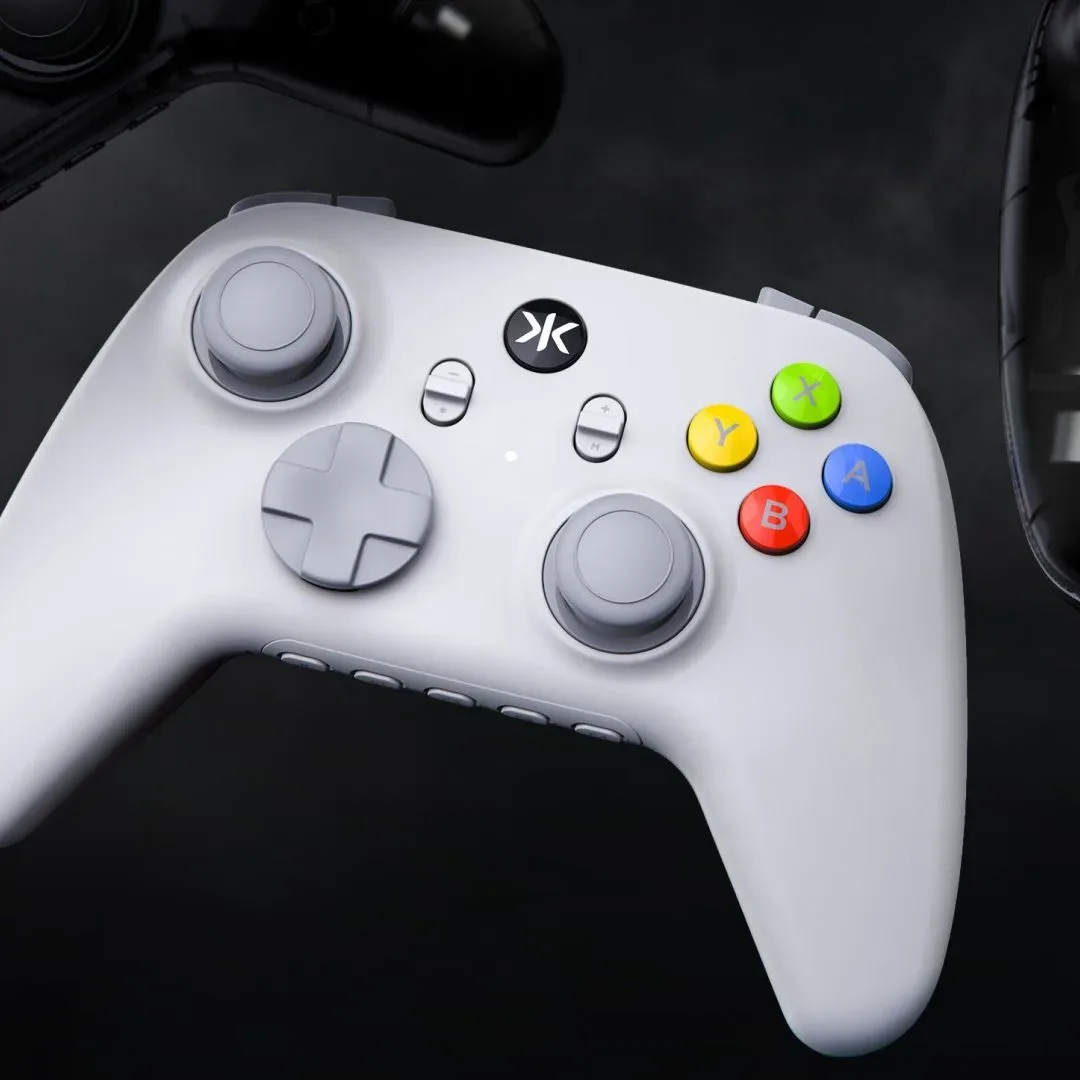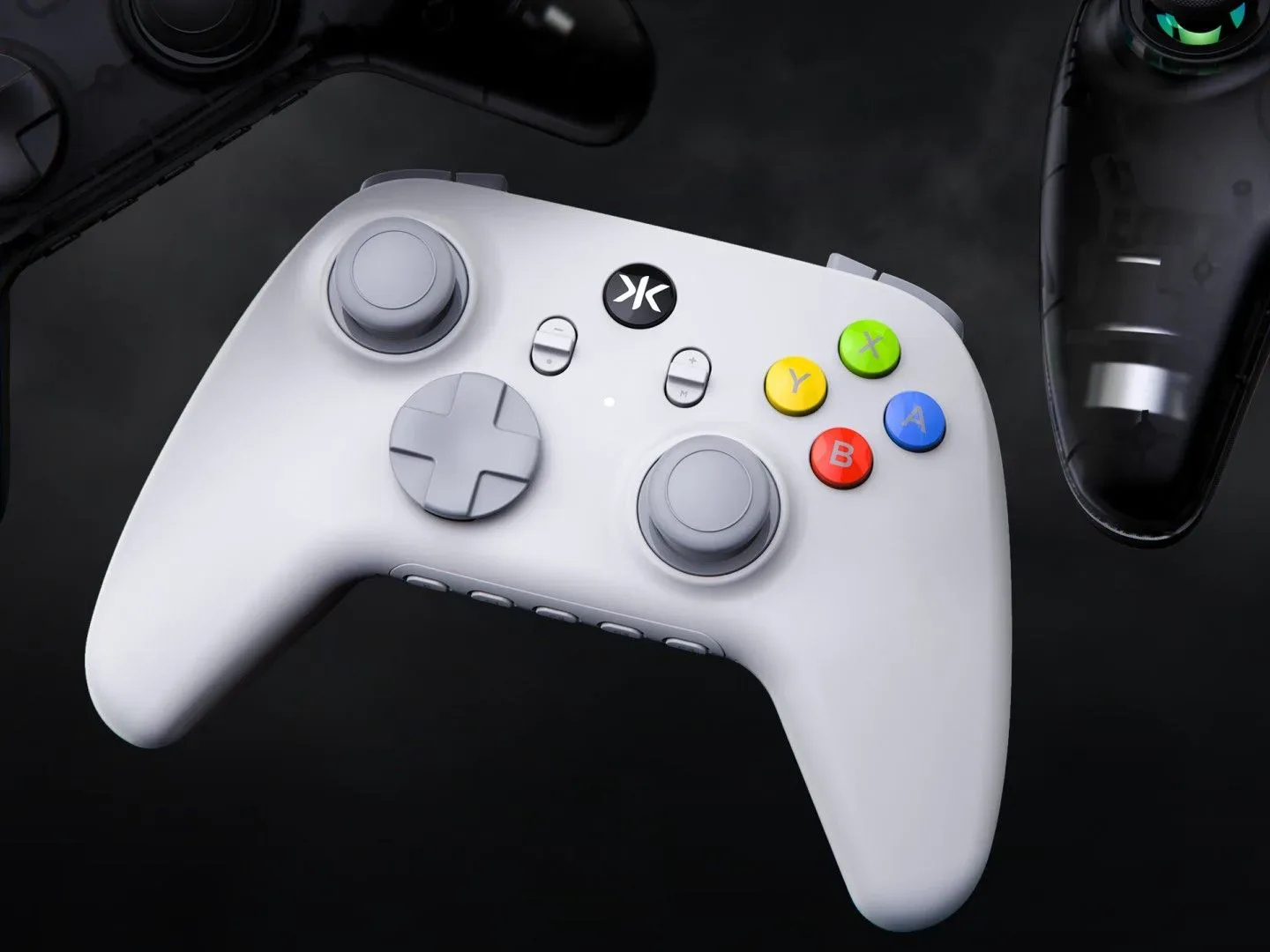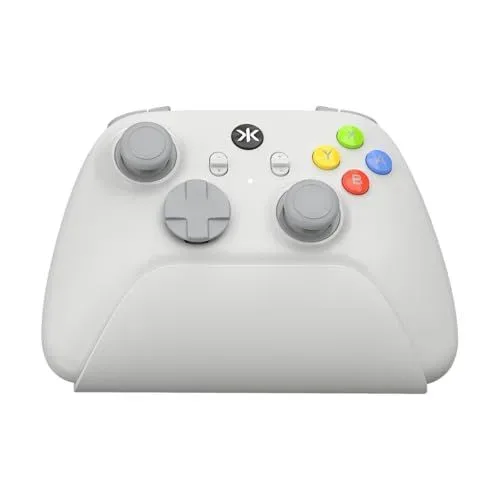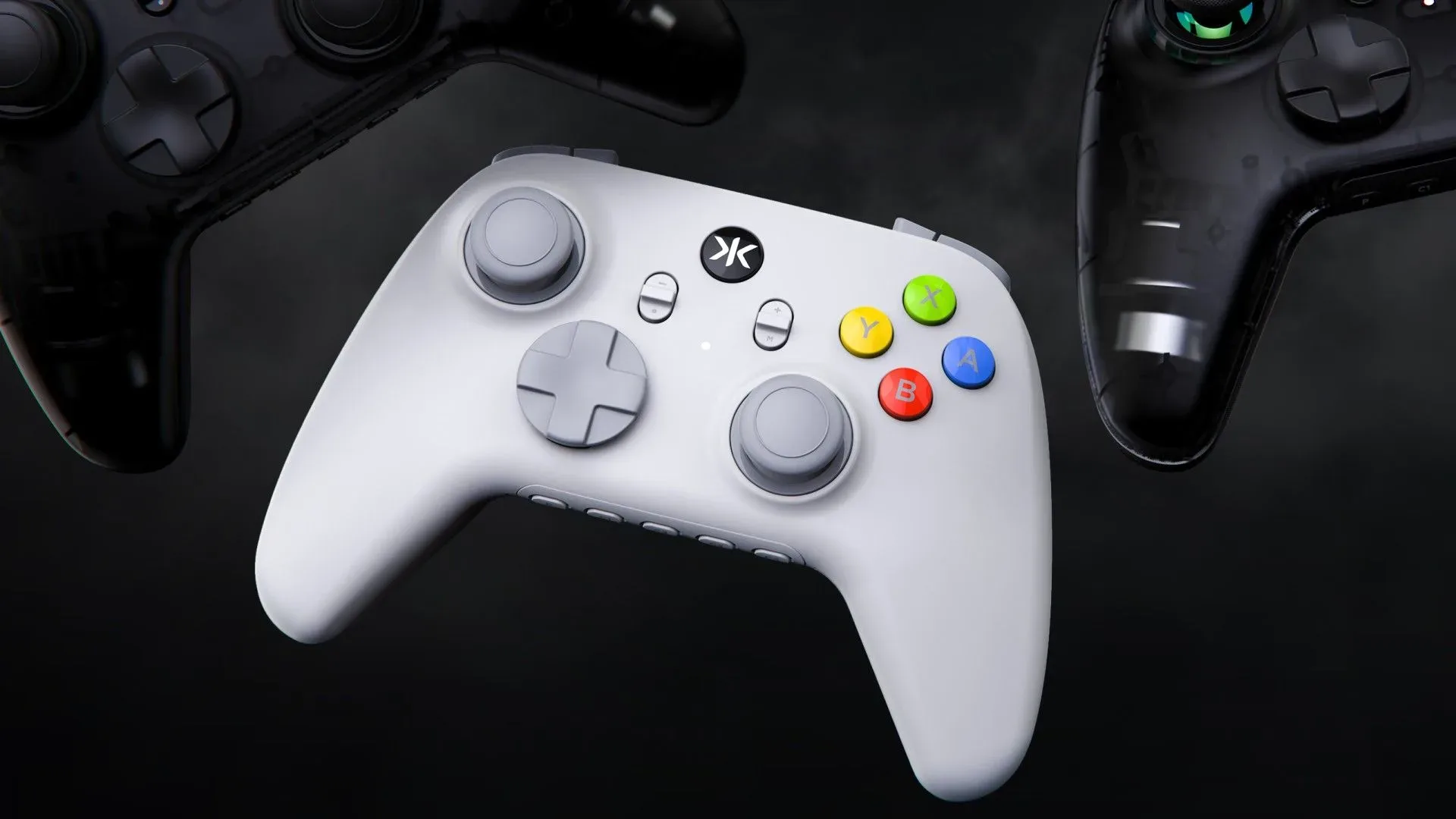
CRKD has launched the ULT PRO, its first pro controller, with a feature list that aims squarely at the increasingly crowded value end of the premium gamepad market. Priced at $69.99, the controller combines TMR thumbsticks, trigger stops, swappable components, programmable extra buttons and a charging dock in a package made for Switch 2 and PC players.
Two versions are listed: one for Switch and one for PC. The apparent distinction is the face-button orientation, with the Switch model using a BAYX layout. Both Pal Grey and Smoke Black color options are available. The product’s Switch 2 intent is especially clear from that Nintendo-style face-button arrangement, even though its control expansion is notably more PC-minded than many controllers designed principally for the console.
The headline is not that the ULT PRO tries to be the most technically extravagant controller available. It does not claim clicky mechanical face buttons, 8,000Hz polling, or a deep slate of software adjustments. Instead, CRKD is putting a broad collection of enthusiast-friendly physical controls at a price that is substantially below some high-end offerings, including the recently introduced $260 SteelSeries Aeon Pro.
That makes the ULT PRO less of a direct bid for the luxury-controller crown and more of an effort to make several formerly upscale conveniences available without pushing past the $70 mark.
What the ULT PRO brings to the table
The ULT PRO’s core specification list is built around controls that can matter in very different kinds of games. Its TMR thumbsticks are one of the major talking points. TMR, short for tunnel magnetoresistance, is a sensor technology used to detect stick movement. In practical buying terms, players will mainly recognize it as an alternative to more conventional stick-sensing methods; it has become a notable spec in the controller market because stick technology is a major consideration for people seeking a more durable-feeling or more responsive pad.
CRKD also includes trigger stops. These physical limits shorten the travel of the triggers, allowing players to choose a shallower press rather than using the full analog range. That can be useful for games where a quicker trigger press is preferred, while full trigger movement remains more relevant to games that make regular use of analog throttle or braking input. The value here is flexibility rather than a universally superior setting.
The controller includes swappable stick toppers and a swappable d-pad. Those parts give owners a chance to alter contact surfaces and layouts without replacing the whole controller. Alongside profile selection, the configurable hardware suggests CRKD is targeting players who move between games with very different control demands rather than those who simply want a basic second pad.
On Windows, the ULT PRO supports 1,000Hz polling. Polling rate describes how frequently a controller reports its input to the connected system. It is a specification commonly discussed in PC-controller circles, but it should not be confused with a promise that every game will feel radically different: the final experience also depends on the game, connection method and system. Still, its inclusion places the ULT PRO closer to modern PC-focused controller expectations than its Nintendo-leaning button labels alone might imply.
Four back buttons are the big differentiator
Where CRKD separates itself most clearly from one key rival is in the number of additional rear inputs. The ULT PRO has four back buttons, using relatively slim paddles, plus two extra shoulder buttons. Those controls are programmable, providing considerably more input real estate than a conventional controller layout.
Extra rear inputs are often useful because they can be assigned to actions that would otherwise require a player to move a thumb from a stick to a face button. Exactly how valuable that is varies by game and by a player’s comfort with paddles, but the option is important. Four rear controls are also a more PC-centric configuration than the two-button setup often seen on Switch-oriented alternatives.
The two added shoulder buttons further reinforce that approach. Together with profiles, trigger stops and replaceable components, they give the ULT PRO a clear design identity: it is a console-friendly controller that is willing to borrow the control density normally associated with more feature-heavy PC pads.
There is an obvious trade-off. More inputs are only useful when players actually want to configure and learn them. A buyer who values a simple, familiar layout over extra mappings may see less benefit than somebody who wants multiple saved arrangements and a wider set of assignable commands.
How it compares with 8BitDo and the official option
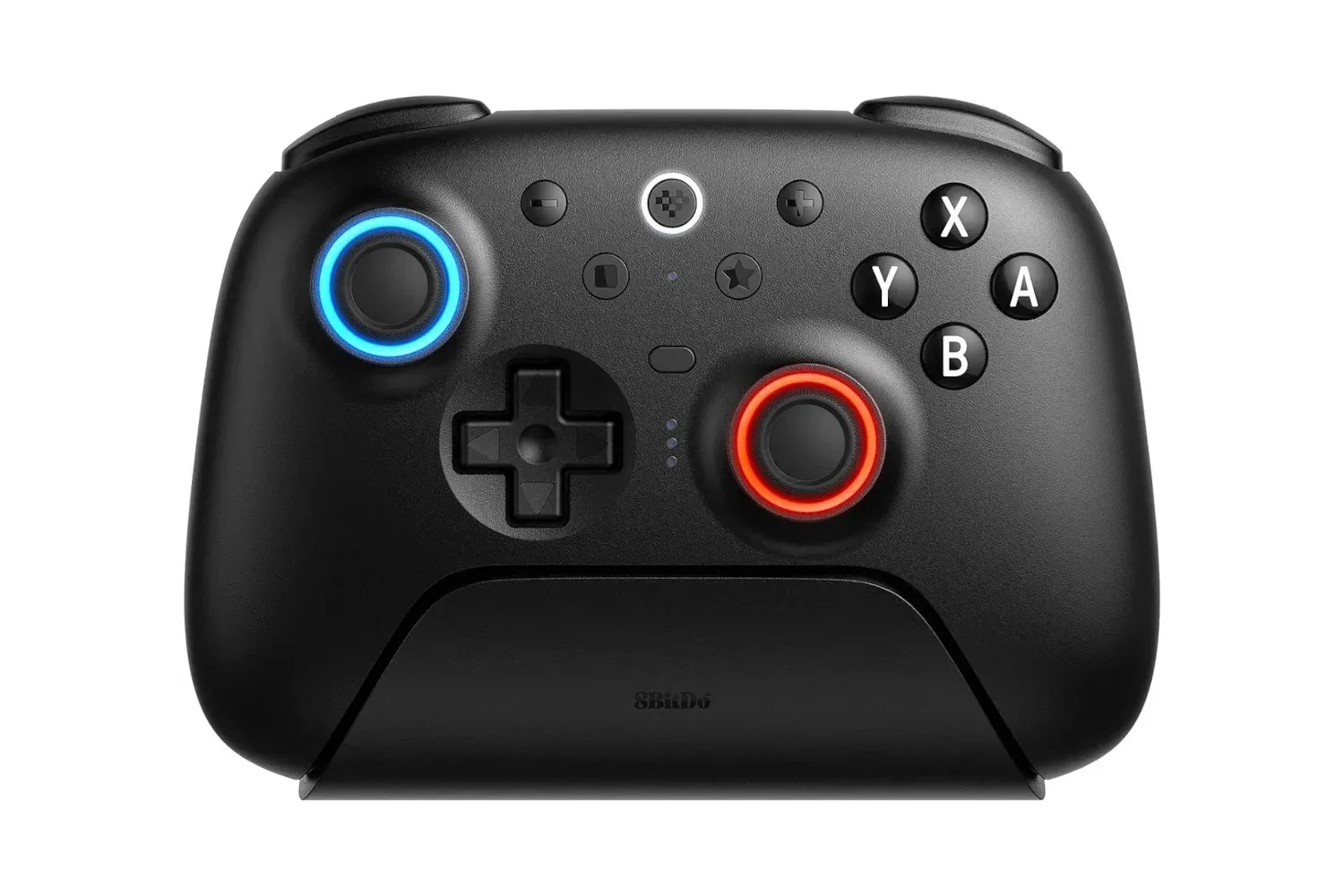
At the same $69.99 price, 8BitDo’s Ultimate 2 is the ULT PRO’s clearest comparison point. The two controllers overlap on several major features: TMR sticks, trigger stops, profile selection, an asymmetrical-stick layout and a charging dock. The Ultimate 2, however, adds motion control and wake functionality, while CRKD counters with twice as many back buttons.
Motion control generally refers to controls that use movement sensing, often called gyro or gyroscope input. For Switch players, its absence on the ULT PRO is a meaningful omission because it is a capability that some Nintendo-focused players may expect from a controller built around the platform’s button convention. Wake functionality is similarly practical rather than glamorous: it concerns the controller’s ability to wake the console. Buyers should therefore decide which omission or advantage matters more to their own routines—motion and wake support on one side, or more rear buttons and additional shoulder controls on the other.
The ULT PRO is also positioned as an alternative to the official $90 Switch 2 Pro Controller. The official pad is presented as a controller defined by its feel, including softly dampened face buttons and smooth thumbsticks. CRKD’s pitch is different. For $20 less, it offers profiles, extra controls, trigger stops and a dock. That does not establish which controller will suit every player best, particularly because button feel, ergonomics and long-term reliability are not settled by a specification sheet. It does make the decision more interesting than a simple price comparison.
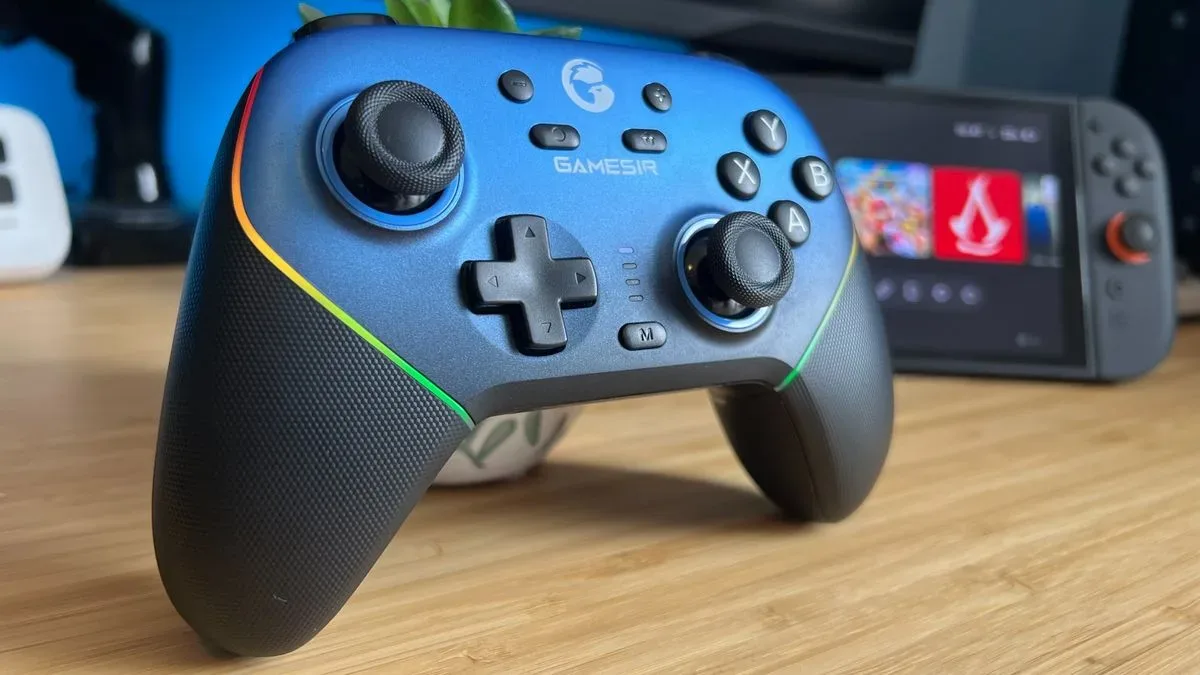
There are other competitors in the same conversation, including the GameSir Super Nova, but the 8BitDo comparison most clearly illustrates the ULT PRO’s central compromise. CRKD has not tried to include every popular Switch 2 convenience. It has instead prioritized programmable physical controls and modularity.
Who should pay attention
The ULT PRO looks most compelling for players who want one controller to bridge Switch 2 and PC habits while keeping the purchase below the official Pro Controller’s $90 price. Its Windows polling specification, four back paddles, extra shoulder buttons and component swapping all point toward someone who wants more than a standard console pad.
- Consider the ULT PRO if four rear buttons, extra shoulder inputs, profile selection and trigger stops are higher priorities than motion control.
- Consider the Ultimate 2 if motion control and wake functionality are must-have features at the same listed price.
- Consider the official controller if familiar button and stick feel is the deciding factor and the additional cost is acceptable.
It is worth separating confirmed specifications from the questions that cannot yet be answered by the launch details. The controller’s comfort over longer sessions, the quality of its buttons and paddles in everyday use, and how its swappable components hold up are all matters for hands-on evaluation rather than assumptions. The same is true of whether the ULT PRO’s slim rear paddles will prove preferable for individual hand sizes and grip styles.
For a broader look at this release, CRKD’s ULT PRO launch details also underline the controller’s Switch 2 focus and four-button rear layout.
The timing is notable because the controller market is offering increasingly distinct answers to the same question: how much “pro” functionality does a player actually need? At one extreme are highly priced hardware packages with exceptionally high polling claims and advanced customization. At the other are traditional console controllers that put familiar design and ease of use first. The ULT PRO occupies a sensible middle lane on paper, opting for tangible control additions rather than attempting to match every top-end specification.
Its success will likely come down to whether buyers agree with that prioritization. For players who want gyro and wake support, the similarly priced 8BitDo option has a straightforward advantage. For players who would rather gain two extra back controls, two added shoulder buttons and replaceable control components, CRKD now has a strong-looking alternative. Nintendo fans interested in smaller-format gaming curiosities can also find a very different kind of hardware throwback in this Stardew Valley Game Boy Color-style browser demake.
The CRKD ULT PRO is available now in Pal Grey and Smoke Black. At $69.99, it arrives with a particularly clear value proposition: fewer motion-oriented Switch conveniences than some rivals, but a notably ambitious set of programmable, swappable and performance-focused controls for the money.
Shop the products
Check current price, model and availability at the retailer.