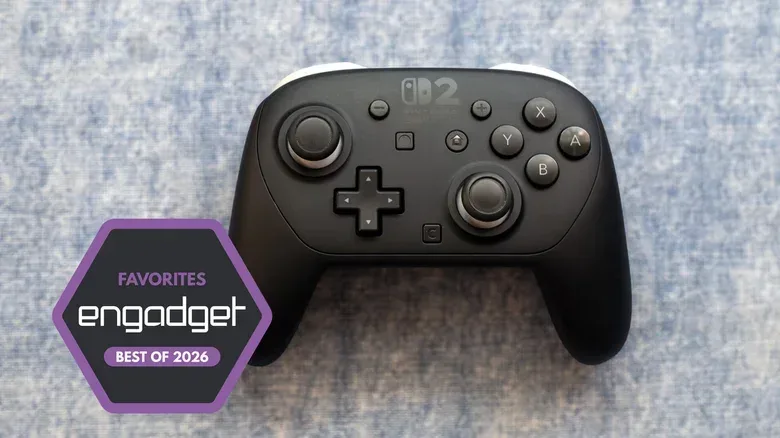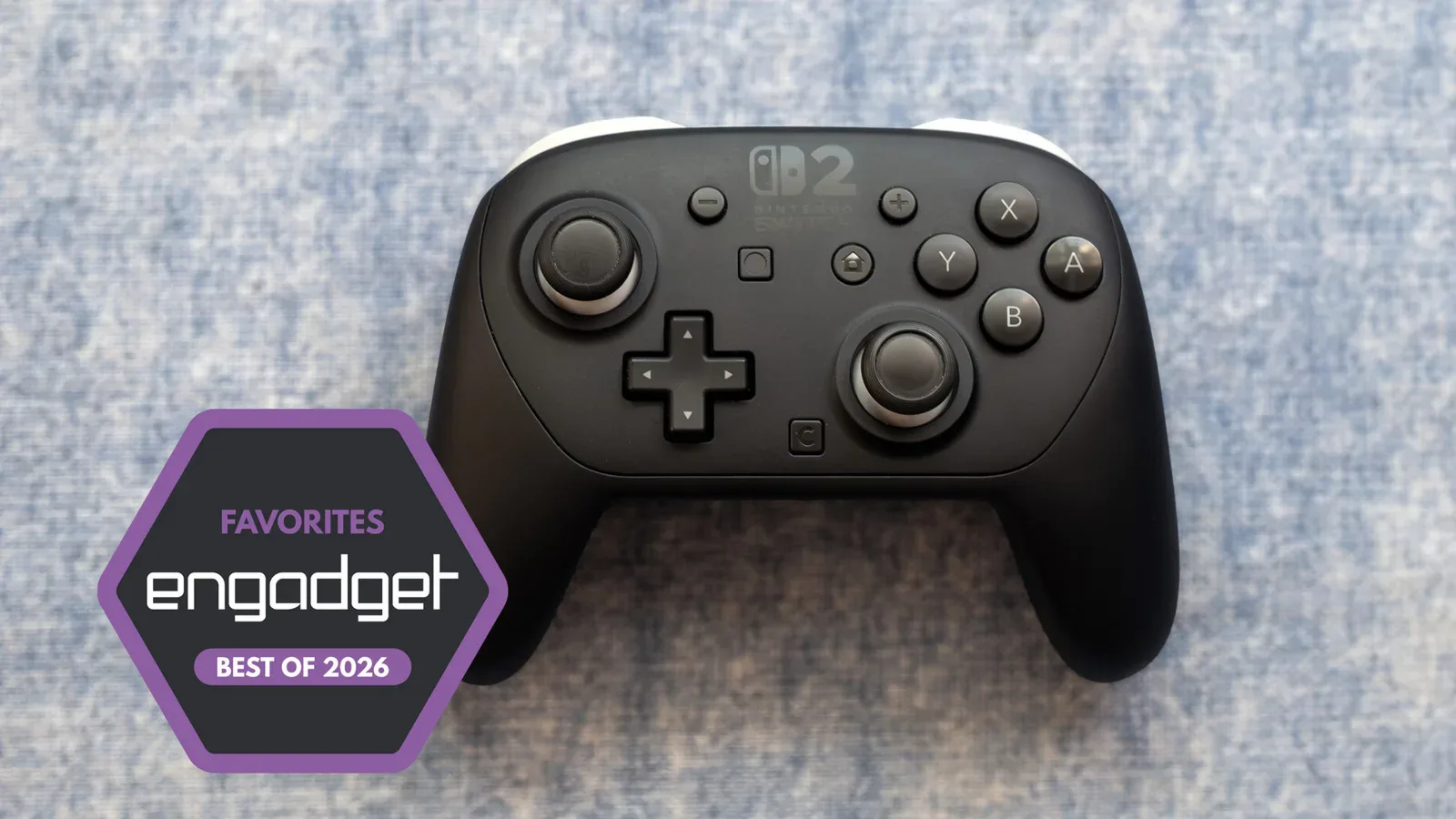
Nintendo’s Switch 2 Pro Controller is still the straightforward answer for players who want the most complete feature set without compromises. At $90, it combines wireless play, console wake support, motion controls, mappable rear inputs, precise haptics, Amiibo-compatible NFC, and a 3.5mm headset jack in a compact, quiet chassis. It is also $5 more than its original $85 price, which makes the case for looking beyond the official pad much easier.
The good news is that cheaper does not automatically mean bare-bones. Switch 2-compatible wireless controllers now span roughly $30 to $70, and several include features Nintendo’s own controller does not: Hall effect or TMR sticks, bright RGB lighting, extra customization options, bundled cases, docks, swappable parts, or licensed character artwork. The catch is equally important: no lower-priced option listed here replicates every Pro Controller feature. Most notably omit NFC support and the audio jack, while a few also drop rumble or the ability to wake the console.
That makes this less a hunt for a single “Pro Controller killer” than a question of priorities. Players who use Amiibo or wired headphones should take the official model seriously. Those focused on stick technology, style, extra controls, platform flexibility, or simply keeping as much as $60 in their wallet have credible alternatives.
The official baseline: Switch 2 Pro Controller
Nintendo’s controller earns its premium by covering nearly every practical base. Its offset analog-stick layout, lightweight form, soft matte finish and closely arranged triggers and bumpers aim for a comfortable, compact feel. The face buttons and D-pad are responsive, rear buttons can be remapped, and the controller can wake the Switch 2. It charges through USB-C.
It is the only controller in this group with both an NFC touchpoint for Amiibo and a bottom-mounted 3.5mm audio jack. That distinction matters more than a specification sheet might suggest. A player who regularly scans Amiibo cannot replace that routine with one of these third-party pads, while anyone using wired headphones will need another audio solution if they choose one of the alternatives.
The Pro Controller also emphasizes quiet operation. Its sticks use a sound-dampening design, while its haptics are presented as particularly detailed. Haptics means vibration feedback that conveys game actions through the controller, rather than simply a generic rumble effect. The quality and subtlety of that feedback vary between pads; not every model that lists haptics will feel alike, and two of the alternatives below do not include vibration at all.
Its sticks are not Hall effect or TMR units, two technologies heavily promoted in the controller market as answers to analog-stick wear. Nintendo has revised its stick approach after drift issues with earlier Switch accessories, and there have not been widespread drift reports for the Switch 2 Pro Controller or Joy-Cons. Still, shoppers who specifically want magnetic-sensing stick technology will find it more readily on third-party models.
Technical terms worth knowing before buying
Hall effect and TMR, short for tunneling magnetoresistance, are stick-sensing approaches that use magnetic fields rather than relying on conventional physical contact in the same way. They are marketed for their resistance to drift, the unwanted movement registered when an untouched analog stick no longer rests accurately at center. Their presence is a meaningful differentiator, but it should not be read as a lifetime guarantee; product claims and real-world longevity are not the same thing.
Related coverage includes Best Affordable Switch 2 Pro Controller Alternatives.
Motion controls use internal sensors to register controller movement, a useful capability for games built around aiming, steering or gestures. Every controller discussed here supports motion controls, although the EasySMX S10C Lite specifies nine-axis motion control and the 8BitDo Ultimate 2C specifies six-axis motion control.
Rear buttons or paddles provide extra inputs on the underside of a controller, often allowing a player to map actions away from face buttons. This can be useful when an action needs to be triggered without taking a thumb off the right stick. The 8BitDo Ultimate 2C is the exception in this group: it lacks rear buttons.
Dead zones are the small ranges around an analog stick’s center or outer edge where movement is intentionally ignored. Adjustable dead zones can help a player tailor sensitivity or compensate for a stick that does not feel exactly right. The GuliKit TT Pro offers dead-zone adjustment; the TT Max goes further with adjustable joystick sensitivity.
Best all-round value: 8BitDo Ultimate 2
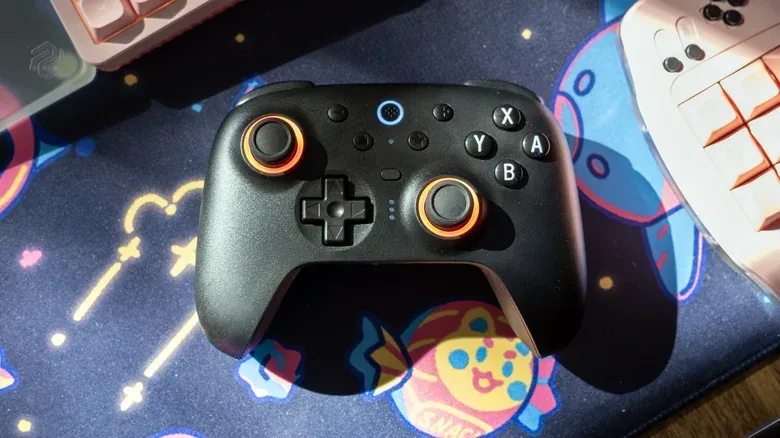
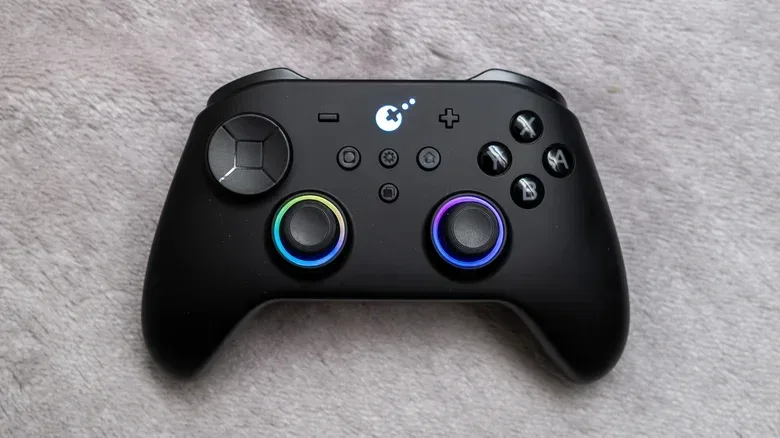
At $70 before any sale, the 8BitDo Ultimate 2 is the closest of these alternatives to a broad feature-for-feature challenge. It includes haptics, motion controls, two rear buttons, console wake capability, adjustable Hall effect triggers, TMR thumbsticks, and two additional bumpers for six bumpers in total. It also has RGB rings around the sticks and customizable lighting effects.
It brings unusually useful extras in the box: a charging dock, a 2.4G USB-C dongle, and spare neon-dotted key caps. The dongle provides a dedicated wireless connection for original Switch, Switch 2 and Windows hardware, while Bluetooth is another connection option. The console can be awakened with a shake, an unusual feature that is more playful than essential but does preserve a key convenience of the official pad.
For a player who wants a compact controller with configurable lighting, advanced sticks, docked charging and additional physical inputs, the Ultimate 2 presents the strongest overall value proposition. Its important omissions are NFC and a headphone jack. Those are not small omissions for every owner, but they may be irrelevant for players who do not use Amiibo and handle audio elsewhere.
Best budget route: 8BitDo Ultimate 2C
The $30 Ultimate 2C is the price outlier, undercutting the official controller by $60. It does not try to mimic every luxury feature of the Ultimate 2: there are no RGB stick rings and no rear buttons. Yet it retains haptic feedback, six-axis motion controls, wake support, six bumpers, Hall effect triggers and Hall effect joysticks.
That makes its trade-off unusually clear. If rear inputs, NFC and wired headset support are unimportant, the 2C delivers the fundamentals plus magnetic stick technology at an entry-level cost. Its textured plastic body is offered in pink, baby blue and dark blue. For a second controller, a younger player, or someone who simply does not see the value in a $90 pad, it is the most economical option without abandoning features such as rumble and motion sensing.
GuliKit’s customization-first pair: TT Pro and TT Max
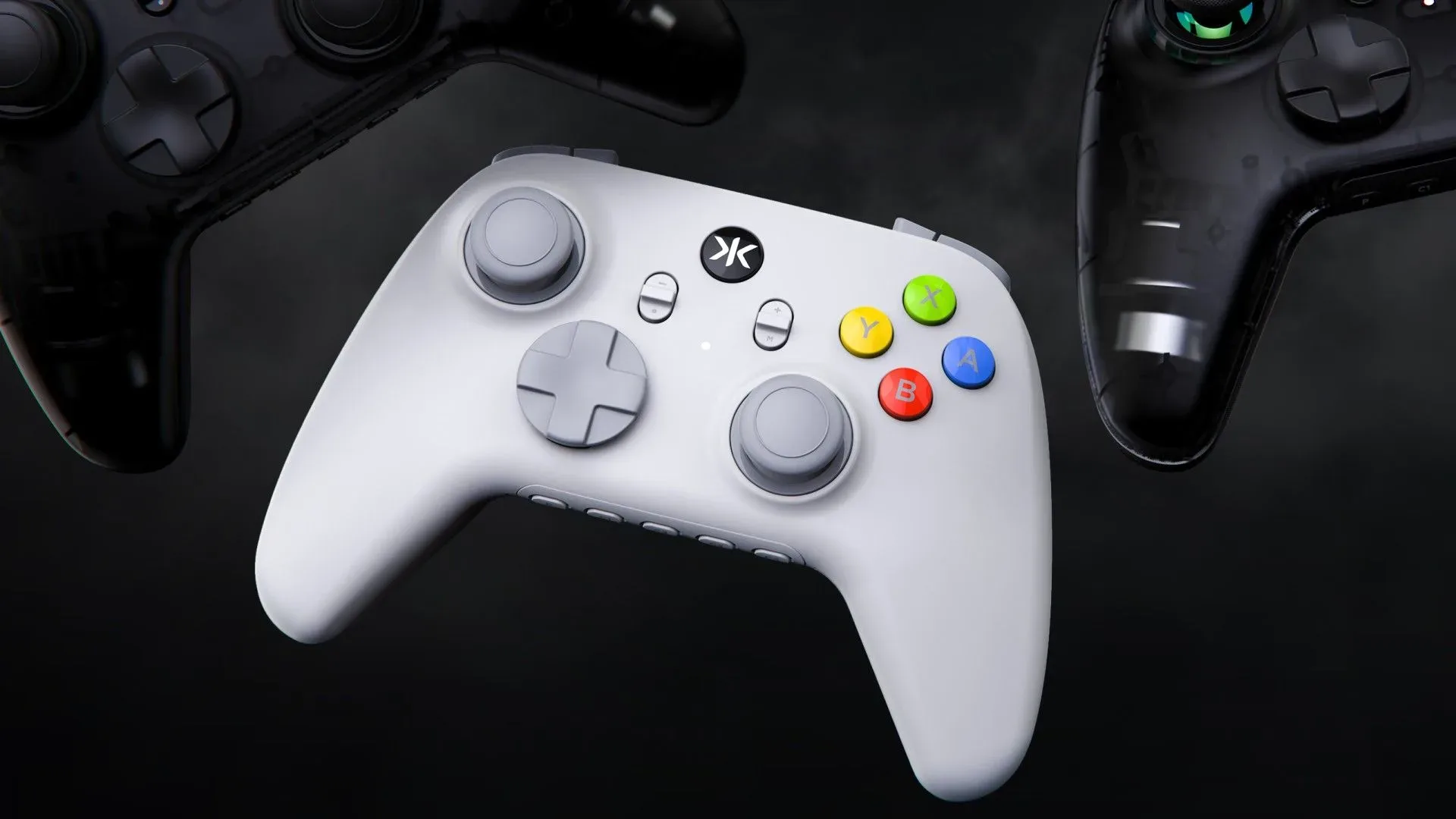
The $60 GuliKit TT Pro changes the physical formula with aligned analog sticks and an eight-way D-pad in the upper-left area. It is somewhat larger and heavier than Nintendo’s controller, includes a hard-plastic case, rear paddles and extra face buttons, and works with Switch 2, the original Switch, PC, iOS and Android.
It has TMR sticks, lighting around those sticks, four rear buttons, haptics, adjustable vibration intensity and adjustable dead zones. Its pairing process requires more effort than some rivals, but once connected it can wake the Switch 2 via the Home button. The main caveat is noise: its rumble can produce noticeable mechanical whooshing or grinding sounds. Anyone especially sensitive to controller noise should weigh that against the TT Pro’s broad customization and accessories.
The $70 TT Max costs $10 more and is the choice for players who want a more substantial controller. It adds adjustable stick sensitivity, manual AB-XY swapping, a D-pad that can switch between four-way and eight-way behavior, and three pairs of stick caps. Rear paddles further increase its more substantial feel. Like the TT Pro, it supports Switch, PC, iOS and Android, uses TMR sticks, has haptics, motion controls, wake capability and four rear buttons. It also shares the louder, mechanical-sounding rumble behavior.
Between the two, the TT Pro is the better value for someone who wants lots of inputs and platform coverage in a smaller package. The TT Max is the more appropriate fit for larger hands or a buyer who will actually use its D-pad, stick-cap and sensitivity options.
Turtle Beach choices: light show or licensed art
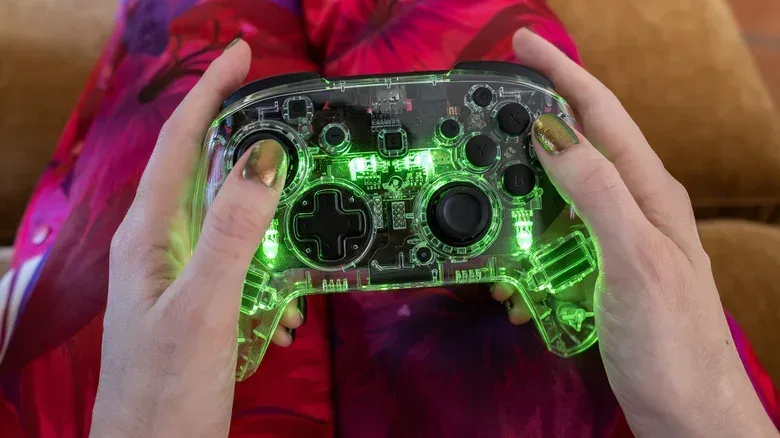
The $65 Turtle Beach Afterglow is aimed squarely at players who want a controller that looks as active as the screen. Its transparent chassis is illuminated from within and offers four lighting modes, including a reactive mode that changes as the analog sticks move. It has TMR or Hall effect stick technology, motion controls and rear buttons, but no haptics, NFC, wake support or audio jack.
Its hard transparent plastic construction and clackier operation distinguish it from softer, quieter rivals. The rear buttons use a see-sawing bridge arrangement, adding a physical flourish to the controller’s visual-first design. The Afterglow is not for someone prioritizing quiet play or vibration feedback. It is for someone willing to trade those qualities for an unmistakable clear-and-lit aesthetic.
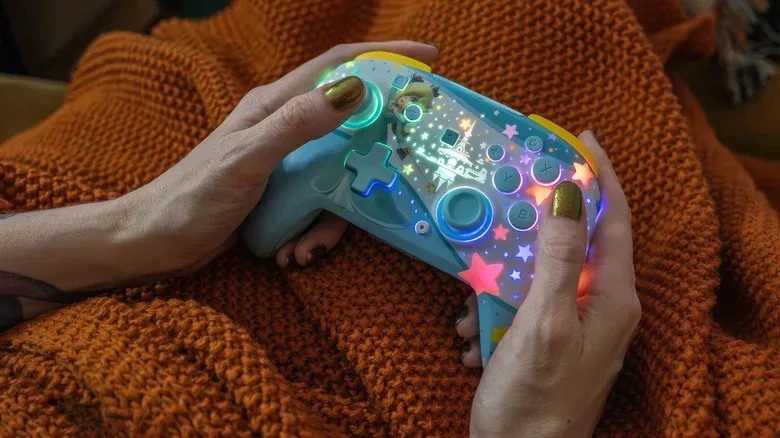
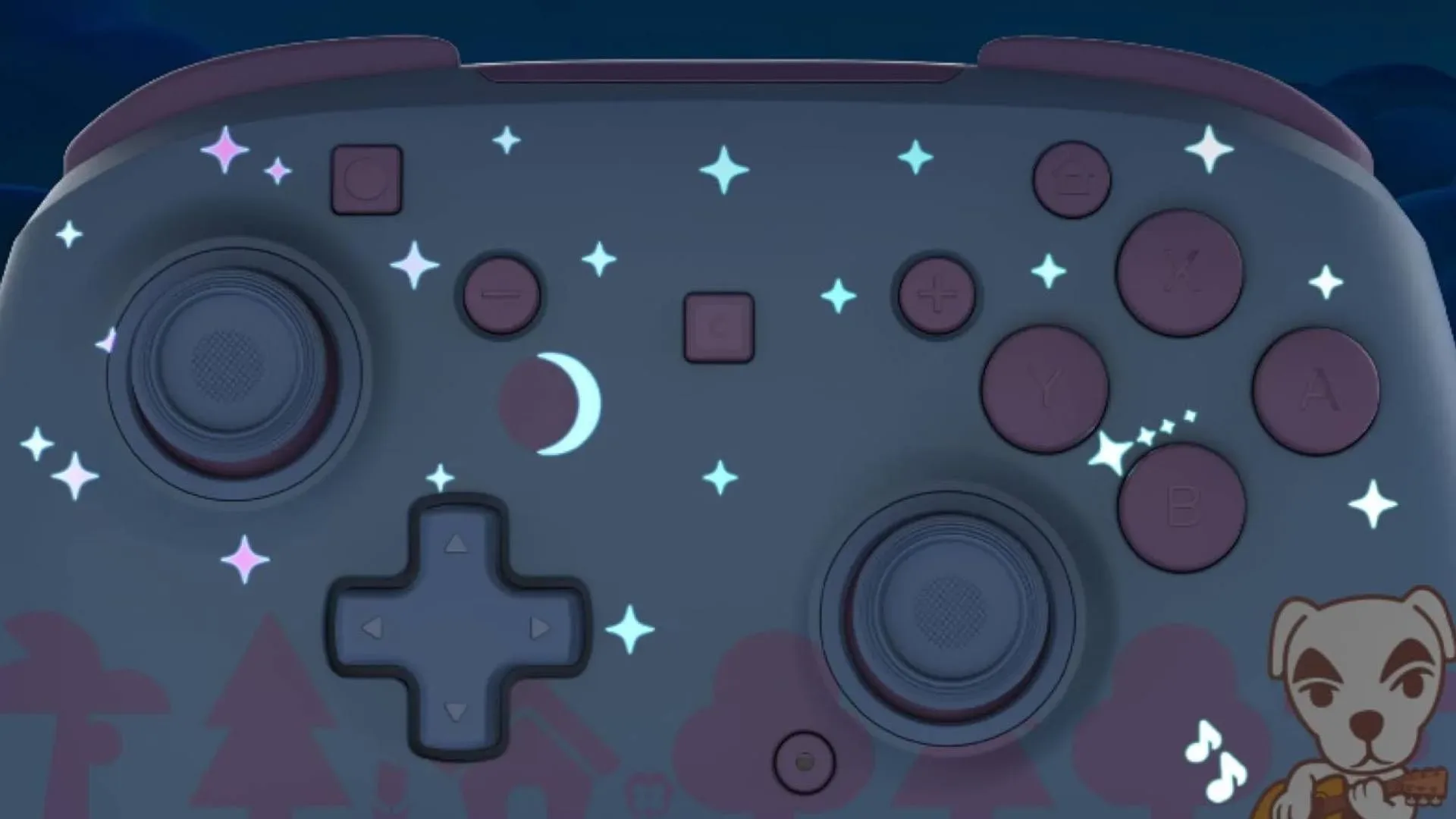
The $65 Turtle Beach Rematch makes a different aesthetic case. It comes in officially licensed Nintendo designs featuring characters including Rosalina, Mario, Luigi, Princess Peach and K.K. Slider, with customizable RGB lighting on most editions; an all-black option is available, too. It is lightweight and includes TMR sticks, motion controls and rear buttons. Like the Afterglow, it lacks haptics, NFC, wake ability and a headphone jack.
That means the Rematch is primarily a choice about design and stick technology, not feature parity with Nintendo’s pad. Players should be cautious around “never drift” language attached to magnetic-stick marketing. TMR is a notable selling point, but no controller should be treated as immune to every possible hardware failure.
EasySMX S10C Lite: a $40 middle ground
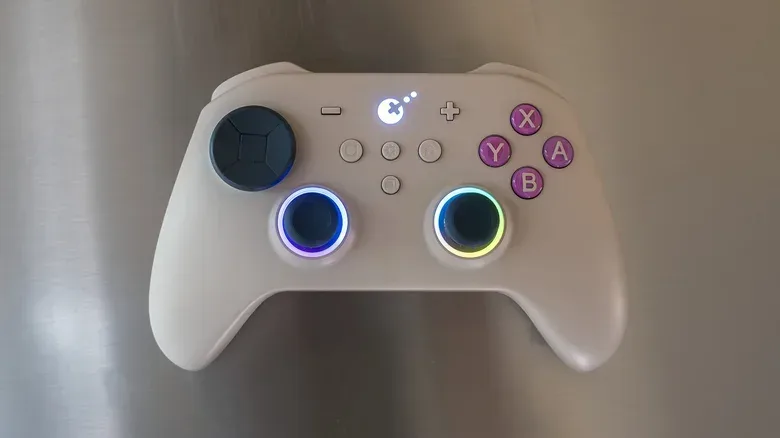
The EasySMX S10C Lite occupies an appealing middle position at $40. It has Hall effect sticks, two programmable rear buttons, nine-axis motion control, haptics and console wake support. It also supplies swappable magnetic faceplates, deep grips with diamond texturing, and notably clicky buttons, shoulder buttons and triggers.
It comes in ice blue and pastel pink, and its quick-start pairing card is a small but practical inclusion for anyone who wants less setup friction. The S10C Lite’s rumble is described as strong without becoming overly loud. It does not offer NFC or an audio jack, but at less than half the official controller’s price it supplies a substantial set of core functions.
How to choose without getting lost in the feature list
- Choose the Switch 2 Pro Controller if Amiibo scanning, a wired headset jack, quiet operation and refined haptics are essential. It remains the only all-in-one option here.
- Choose the 8BitDo Ultimate 2 if you want the richest blend of price, TMR sticks, dock, extra bumpers, rear buttons and wake support.
- Choose the 8BitDo Ultimate 2C if price is the decisive factor and you can live without rear buttons, RGB and NFC.
- Choose the GuliKit TT Pro or TT Max if extra physical customization, aligned sticks, multi-platform use and adjustable controls are more valuable than quiet rumble.
- Choose Turtle Beach Afterglow or Rematch if lighting or licensed Nintendo artwork is the main appeal and the lack of haptics and wake support will not bother you.
- Choose the EasySMX S10C Lite if you want a low-cost controller with wake support, Hall effect sticks, rear buttons and interchangeable faceplates.
Controller shopping is no longer only about whether a pad connects to the console. The Switch 2 field now offers genuinely different priorities at different price points. Nintendo’s official controller remains the one to beat for feature completeness, especially for Amiibo and wired-audio users. But the growing selection beneath $90 means buyers can make a more deliberate call: pay for the polished all-rounder, or spend less on the specific features that matter most to them.
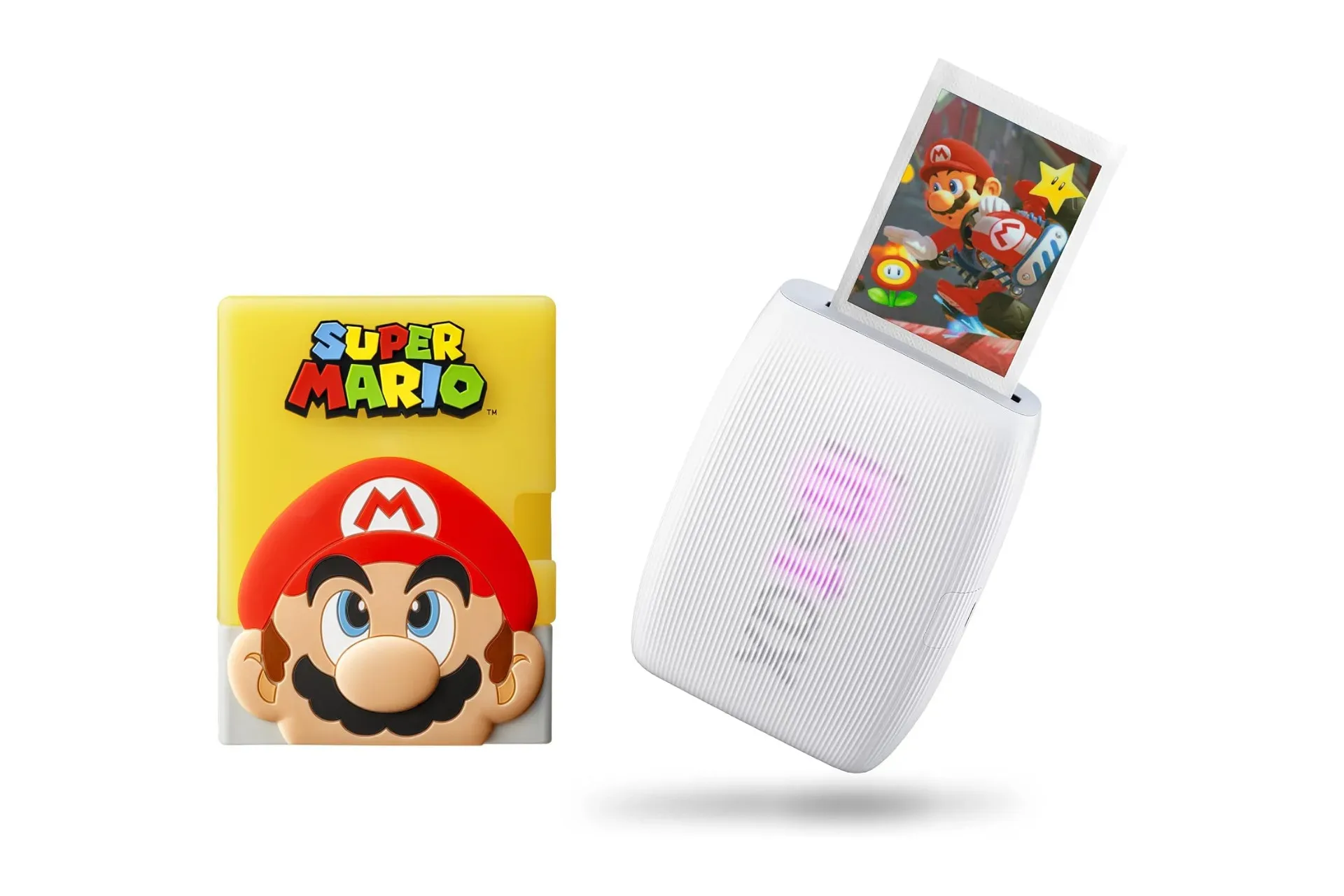
For another example of Nintendo-branded accessory pricing beyond controllers, see the Super Mario Instax Mini Link 3 bundle listing.
Shop the products
Check current price, model and availability at the retailer.