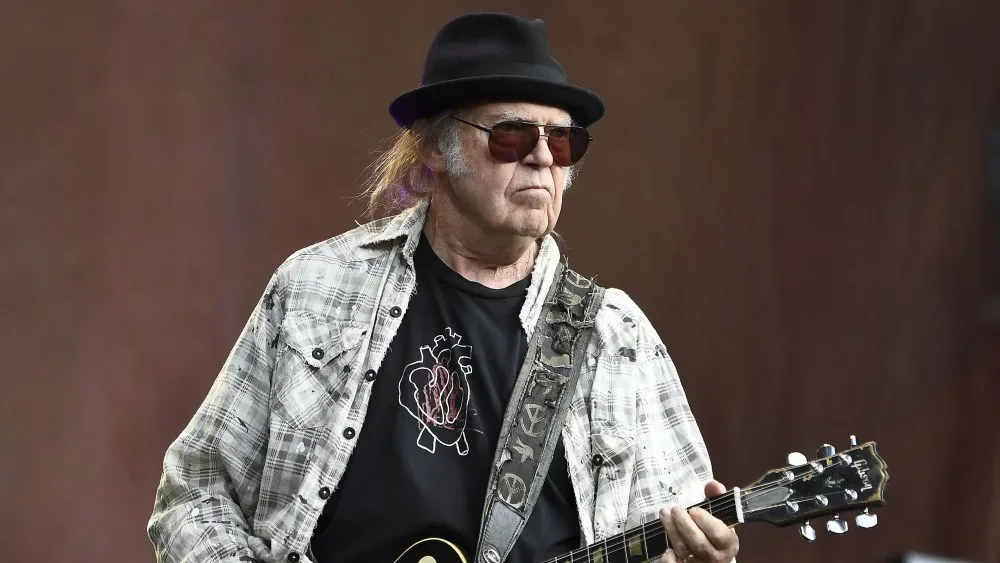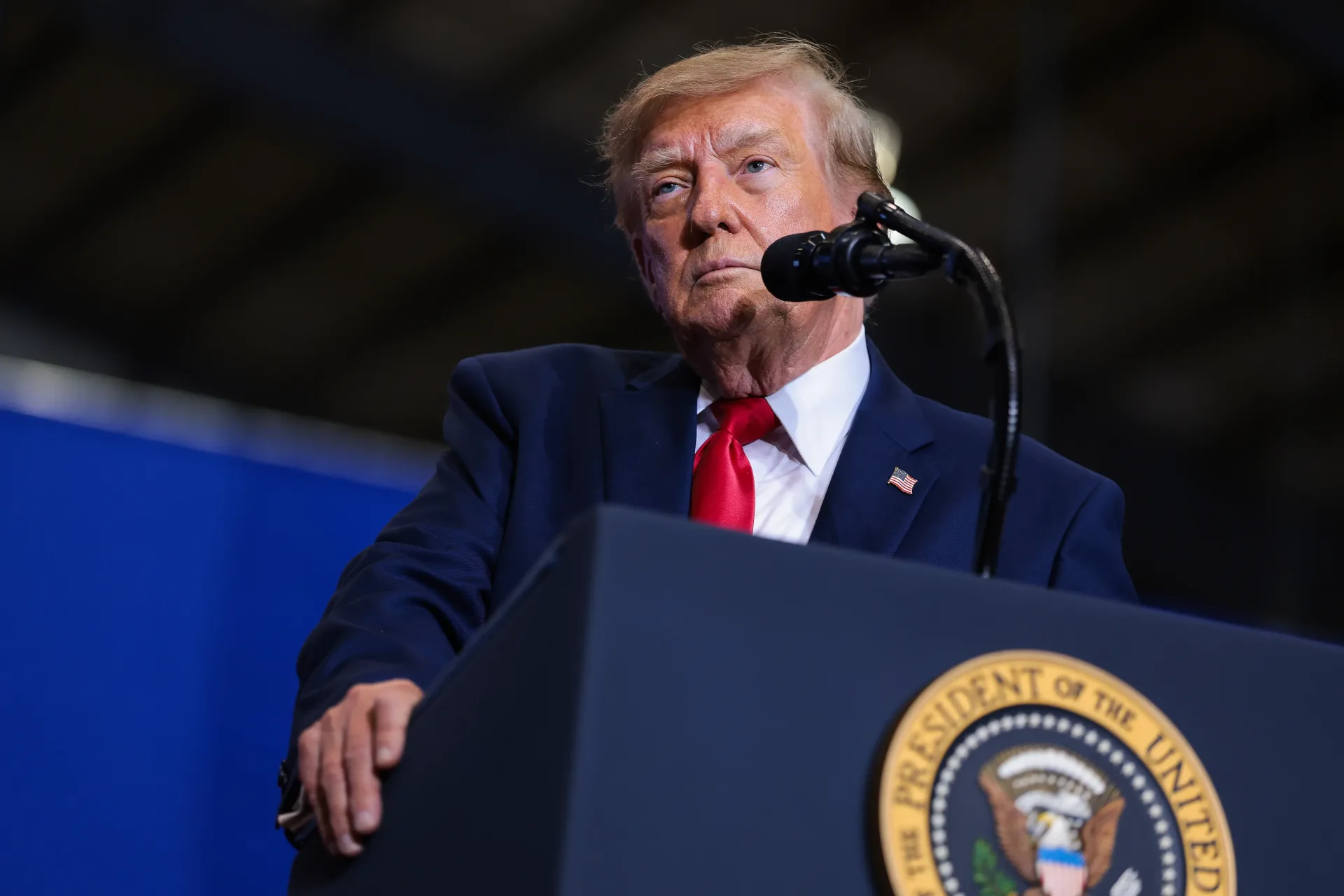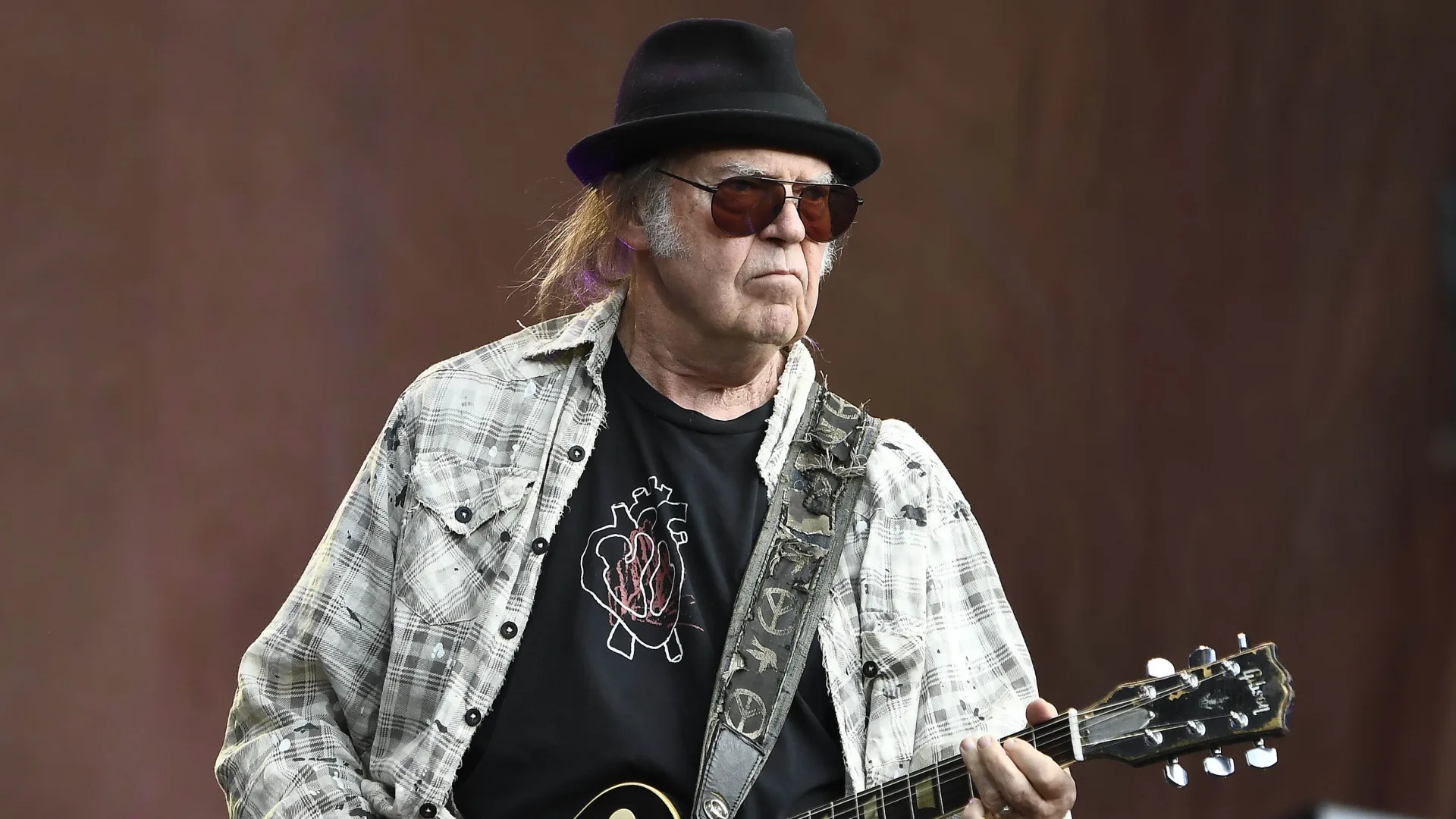
Neil Young has filed a copyright-infringement lawsuit against Trump 47 Committee Inc., the political action committee tied to President Donald J. Trump, over the alleged use of Young’s 1989 song “Rockin’ in the Free World” at midterm-election rallies.
The complaint seeks $10 million in damages and a court order stopping further public performances of the recording for political purposes. It identifies an October 12 rally in Youngstown, Ohio, as a specific instance, while alleging that the song has also been played repeatedly at other events intended to encourage Republican voting in the coming midterm elections.
The suit was filed in the U.S. District Court for the Eastern District of Virginia. As with any civil complaint, its allegations have not been established in court. The case places an unusually direct question at the center of a familiar political-music dispute: what happens when an artist says a campaign had already agreed to stop using a song, but the artist alleges the music has returned to the rally playlist anyway?
A second dispute over the same song
This is not Young’s first legal clash with Trump-related campaign entities over “Rockin’ in the Free World.” Young previously sued in 2020, naming Donald J. Trump for President Inc. and alleging infringement involving this song and another Young work. That case was settled shortly after it was served, the new filing says.
For more context, explore Topps Holiday’s Biggest Sales Since 2016: Ohtani Dominates, Mrs. Claus Makes an Entrance.
The current lawsuit says the earlier entity promised it would not use “Rockin’ in the Free World” again without a license and Young’s permission. The newer case does not lay out the financial or other terms of that settlement. It instead alleges that use of the song has resumed through a different Trump-linked organization, Trump 47 Committee Inc.
That distinction matters. A settlement can resolve a dispute involving particular parties and claims, while a later lawsuit may turn on the conduct of a separate entity, the scope of any prior commitments, and who controlled or authorized the allegedly infringing performances. Young’s complaint nonetheless frames the 2020 outcome as key background for the current allegation that Trump knew authorization was required and knew Young would not provide it.
The filing specifically alleges that Trump was personally aware, during this year’s rallies, that a license was necessary to play the song and that Young had not granted one. Those are allegations made by Young in the complaint, rather than judicial findings.
What Young is asking the court to do
Young seeks two principal forms of relief: money damages and an injunction.
- Damages are monetary compensation sought for alleged harm caused by the disputed use. Young is seeking $10 million.
- An injunction is a court order directing a party to do, or stop doing, something. Here, Young wants an order preventing further public performances of the song for political purposes.
The complaint also claims that the alleged use has harmed Young’s reputation and brand by suggesting that he supports Trump. That is a consequential issue beyond whether music was played at an event. Walkup songs and rally music can be read by attendees and viewers as signals of cultural affinity or endorsement, even where an artist has made no such endorsement.
For a musician with public political views that sharply diverge from a candidate’s or campaign’s, that perceived connection can be a central concern. Young’s own website has prominently carried political commentary hostile to Trump and the Republican Party. The lawsuit’s argument is not merely that a recording was used without permission; it is that the setting and repeated use allegedly attach Young’s work to a political cause he opposes.
The song’s meaning is part of the dispute’s context
“Rockin’ in the Free World” is an especially pointed choice for this conflict because the complaint characterizes it as a critique of political rhetoric and of economic and social conditions facing people who are poor, homeless, addicted, or otherwise neglected. Its repeated title line can sound triumphal when extracted as a chorus at a large event, but the filing emphasizes the song’s darker verses and ironic framing.
That gap between a refrain’s surface energy and a song’s broader meaning is common in public use of music. A recognizable chorus works as event soundtracking because it is immediate, communal and emotionally legible in only a few seconds. But the artist may regard the full work, including its lyrics and political perspective, as inseparable from the message. Young’s lawsuit makes the contradiction explicit, contending that the work stands against what Trump represents.
In practical terms, the dispute is not resolved simply by asking whether a song sounds celebratory in an arena or at a rally entrance. The complaint treats the music’s political content, Young’s stated opposition, and the claimed absence of a license as overlapping parts of the alleged harm.
Licensing is not the same as endorsement
The word license is central to the complaint. In music, a license is permission to use a copyrighted work in a defined way. The precise permissions required can vary with the kind of use, the rightsholders involved and the venue. This suit alleges that the necessary permission for these political rally performances was not in place.
It is also useful to keep two separate ideas clear. A license, when validly obtained, is a copyright-use arrangement. It does not automatically mean the performer supports the candidate, event, organization or message connected to the use. Conversely, an artist’s public objection does not by itself answer every licensing question; the specific rights and permissions still matter.
Young’s filing combines both issues: it alleges unlicensed use and says the use falsely implies political support, damaging his reputation. Its requested injunction would seek to stop future performances, while the $10 million claim addresses alleged past harm.
The case also illustrates why political playlists are more than a bit of pre-event production. They can create legal exposure and public-relations consequences at the same time. A campaign can be challenged over whether it had permission to use the work, while the artist can argue that the setting communicates an unwanted political association.
What the complaint does—and does not—establish
The filing identifies the Youngstown rally on October 12 and alleges numerous other uses this year. It says the song served as Trump’s walkup music. It further alleges that the 2020 settlement required no future use without permission.
But the complaint itself is the opening move in a legal process, not a final ruling. A court has not yet determined whether infringement occurred, whether the requested $10 million is warranted, whether an injunction should issue, or how the earlier settlement affects the new defendants and claims. The supplied information also does not provide the committee’s response to the lawsuit.
That uncertainty is important when tracking the case. Public disputes over political music often invite an immediate argument about symbolism, lyrics and artist intent. Those questions are relevant to public perception, and Young has made his position unmistakably clear. The legal outcome, however, will depend on the claims, defenses, evidence, rights at issue and the court’s assessment of the requested relief.
Why the case has broader cultural weight
Young’s latest lawsuit arrives in an environment where artists have increasingly objected when their songs appear in political messaging they oppose. The dispute over “Rockin’ in the Free World” is distinct because it involves a previous lawsuit concerning the same song, a reported settlement, and an allegation that the song continued to be used after that resolution.
It also shows how a song can become contested cultural shorthand. The phrase “rockin’ in the free world” can be deployed as a crowd-pleasing slogan detached from the verses around it. Young’s complaint insists on the opposite reading: that the song’s full text is a critique of hollow promises and unequal freedom, not a celebration suitable for Trump’s political events.
For audiences, the immediate takeaway is straightforward: a major artist is asking a federal court to stop a Trump-linked PAC from using one of his best-known songs and to award substantial damages for its alleged use. For campaigns and event organizers, the practical reminder is equally plain: music chosen to build a crowd’s energy can carry rights, reputational and political risks far beyond the length of a walk-on.