Call of Duty: Modern Warfare 4’s new DMZ mode opens with an unusually grim warning for dog lovers. Players entering the extraction mode’s introductory mission meet Rex, a canine companion who joins the player character immediately after a drop into the combat zone. Within minutes, Rex is wounded while defending the soldier, hidden away with the apparent promise of a later extraction, and then left behind after the protagonist is captured and killed.
That is a harsh turn for what otherwise serves as an on-ramp to an online multiplayer mode. DMZ launched early for players who digitally pre-ordered Modern Warfare 4, and its opening sequence appears designed to establish a desperate, lethal atmosphere. But the particular use of Rex has prompted a more basic question: what is the point of a tutorial beat built around a dog’s apparent abandonment when there is no confirmed way to rescue him, no evident reward for completing the sequence, and no clear sign that canine companions are part of the mode afterward?
For players who would rather not see that scene, reports from the community indicate there is a simple workaround: start the intro, wait until control of the soldier is handed over, then exit. The sequence can reportedly be skipped this way. As the opening does not provide loot, skipping it should not mean giving up an extraction haul.
What happens to Rex in the DMZ opening
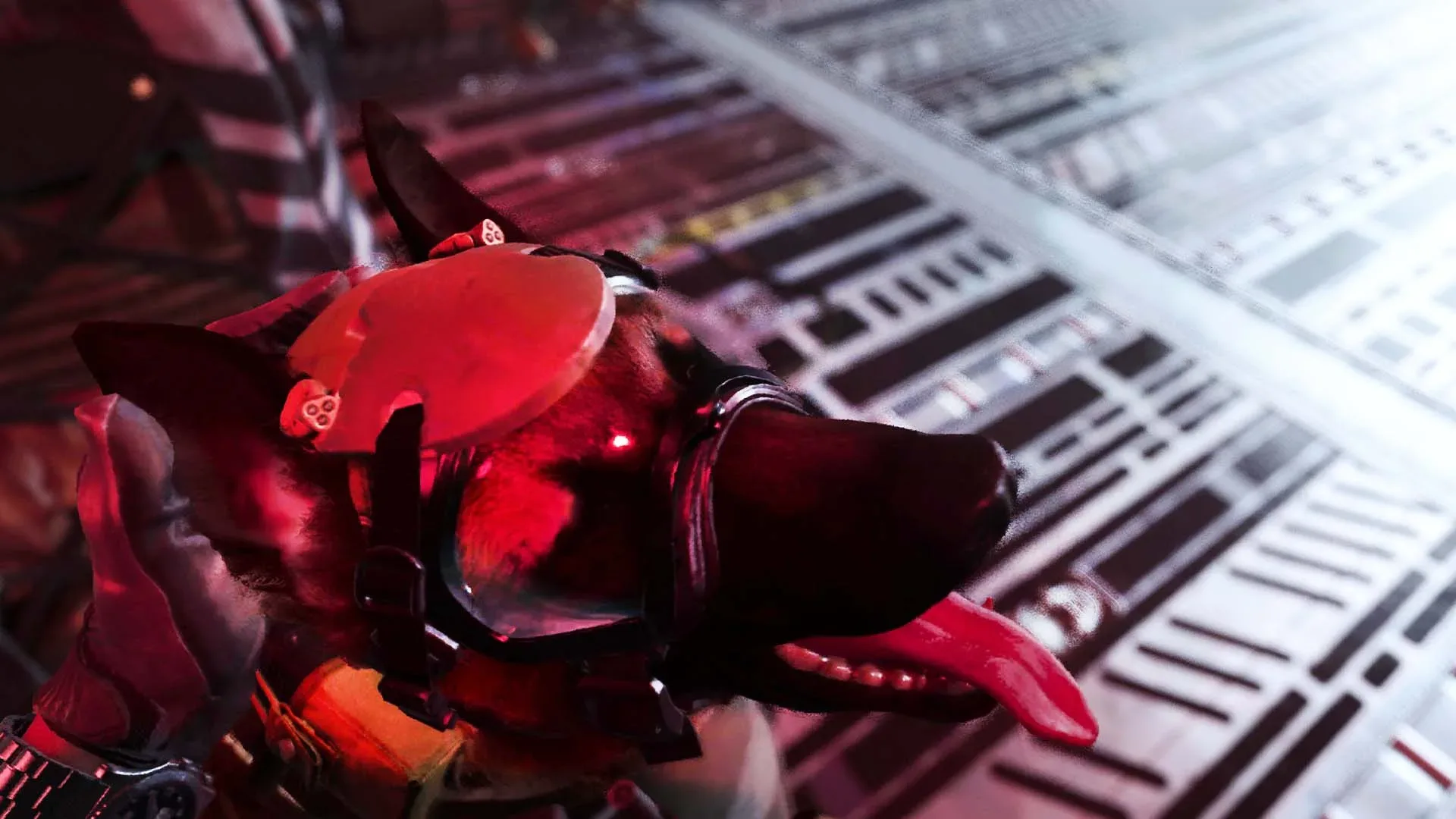
DMZ’s introductory mission is more scripted and narrative-led than the mode it introduces. The player begins as a soldier arriving in the DMZ alongside Rex. There is a brief, deliberately affectionate interaction: the soldier pets the dog after landing. The pair then head toward a crashed drone, tasked with recovering its black box and data.
Two North Korean soldiers ambush them before that objective can be safely completed. Rex attacks and kills both attackers, saving the player character. During the fight, though, he is shot. The scene makes the injury unmistakable, with Rex shown in pain and yelping.
The soldier checks on him, then drags the wounded dog to concealment, apparently intending to return and extract him later. That reunion does not occur. Soon afterward, the soldier is captured and shot in the head. The tutorial ends with Rex still hidden and injured, waiting for an owner who cannot come back.
It is not merely a downbeat scene in a war game. It establishes an unresolved situation in which a visibly wounded animal is stranded, and the player has no stated agency to change the result. The script asks players to care about Rex—first through the petting interaction, then through the dog’s act of protection—before denying the rescue it appears to set up.
Why the opening feels different from a normal extraction match
An extraction shooter is a multiplayer format built around risk, scavenging and escape. Players enter a map, encounter computer-controlled enemies and other human players, complete objectives or collect equipment, and try to leave through an extraction point. Getting out preserves the items gathered during the deployment; dying before extraction can mean losing them.
Related coverage includes Modern Warfare 4's DMZ Intro Is Raising Concerns Over Its Treatment of Rex the Dog.
DMZ follows that broad framework. Its maps are described as large, open spaces containing enemy NPCs and rival players, with missions and loot giving each deployment a purpose beyond simple elimination. The core tension is not only winning gunfights. It is deciding when to keep searching for valuable items and when to leave before another squad—or the environment—ends a run.
Rex’s introductory sequence, by contrast, is a fixed narrative event. There is no meaningful choice over whether to engage the ambush, how to protect the dog, or whether to mount a rescue afterward. The failure is pre-written. That distinction matters because extraction modes normally derive much of their drama from player decision-making. A squad may take a dangerous route, press deeper into hostile territory, or risk everything for one more valuable item. Here, the player is shown a crisis but not provided an action that can resolve it.
That is why the scene can land less like a lesson about DMZ’s unforgiving stakes and more like an emotional provocation detached from the systems players will actually use. It introduces a companion, signals the possibility of an extraction, and then turns the entire premise into a dead end.
No clear evidence that players can use dogs in DMZ
The obvious explanation would be that Rex teaches an important mechanic. Perhaps he could preview a dog companion system, with players later unlocking their own canine partner for scouting, combat support or retrieval objectives. So far, that remains unconfirmed.
Players have not identified a way to unlock a dog companion in DMZ, and there have not been visible reports of other players running around the mode with dogs. Since DMZ has only recently become available to early players, that absence does not prove companions will never appear. A system could be gated behind progression, an objective chain, a later update or another condition that has not yet been discovered.
Still, the current uncertainty is exactly what makes Rex’s role feel so strange. If dogs eventually become a usable part of DMZ, the intro could be remembered as a bleak explanation for why the player character takes the loss personally. If no such feature exists, Rex’s appearance is harder to interpret as anything beyond a one-scene device for establishing misery.
That unresolved design question is worth separating from what is known. Known: Rex is present in the introductory mission, is injured after saving the player, is hidden for a promised later pickup, and is not recovered before the player character dies. Not established: whether Rex can be saved later, whether the story returns to him, or whether dog companions can be unlocked for regular DMZ play.
How to avoid the scene
Players who want to steer clear of the dog injury and abandonment can reportedly bypass the scripted material without sacrificing meaningful progress. The key is to wait until the intro gives control of the soldier to the player, then leave the sequence rather than continuing toward the crashed drone objective.
- Launch the DMZ introductory mission.
- Wait until you have control of the soldier.
- Exit the intro rather than proceeding through its scripted objective.
- Begin DMZ without completing that opening sequence.
This is a practical option rather than a claim that the mission has no narrative relevance whatsoever. The sequence may still matter if a future objective, character thread or companion system connects back to Rex. But based on what is currently known, it offers no loot, so players are not giving up an item reward by choosing not to watch it play out.
It is also useful guidance for households where someone else may be watching. A Call of Duty player might expect military violence in a Modern Warfare mode; an abrupt animal-injury scene can be a different and more specific boundary. The skip option allows players to make that call before the tutorial reaches the ambush.
An effective tone-setter can still be an awkward tutorial
There is no ambiguity about the tone DMZ is pursuing. The opening says that the zone is hostile, missions fall apart quickly, and good intentions do not guarantee anyone gets home. The player’s own death underscores the same point: this is an environment where an extraction plan can collapse before it begins.
But effective mood-setting and effective onboarding are not automatically the same thing. A tutorial usually establishes the verbs, rules and incentives that will matter in the main mode. DMZ’s opening does communicate danger, yet its strongest emotional beat concerns a dog mechanic that players have not been able to confirm exists outside that scene. The result is an introduction that may explain the mood but not necessarily the game.
It also undercuts the most natural player motivation it creates. Once Rex has been hidden, a rescue objective feels inevitable. The soldier has a reason to return; the player has been shown exactly where the dog was left; the extraction premise provides a ready-made structure for a recovery mission. Cutting off the protagonist’s life does not remove that desire. It redirects it toward the broader question of whether another operator will ever get the chance to find Rex.
That possibility has already become the most constructive response to the sequence: a later mission that lets players locate and save him. It would turn a bleak introduction into a thread with an actual payoff, while also answering why the dog was made central to DMZ’s first minutes. Until then, the opening remains a conspicuously cruel detour for a mode centered on loot, missions and survival.
For players tracking other games whose central systems are still being defined in public, this look at a cyberpunk shop sim with unanswered questions around its premise offers a very different kind of uncertainty. DMZ’s immediate question is much simpler, and more emotional: was Rex introduced to be recovered later, or only to be left behind?
For now, players who do not want to find out through the opening itself have a reported path around it. Start the mission, exit as soon as control is available, and save yourself an unpleasant tutorial surprise. Rex, unfortunately, remains the unresolved part of the story.