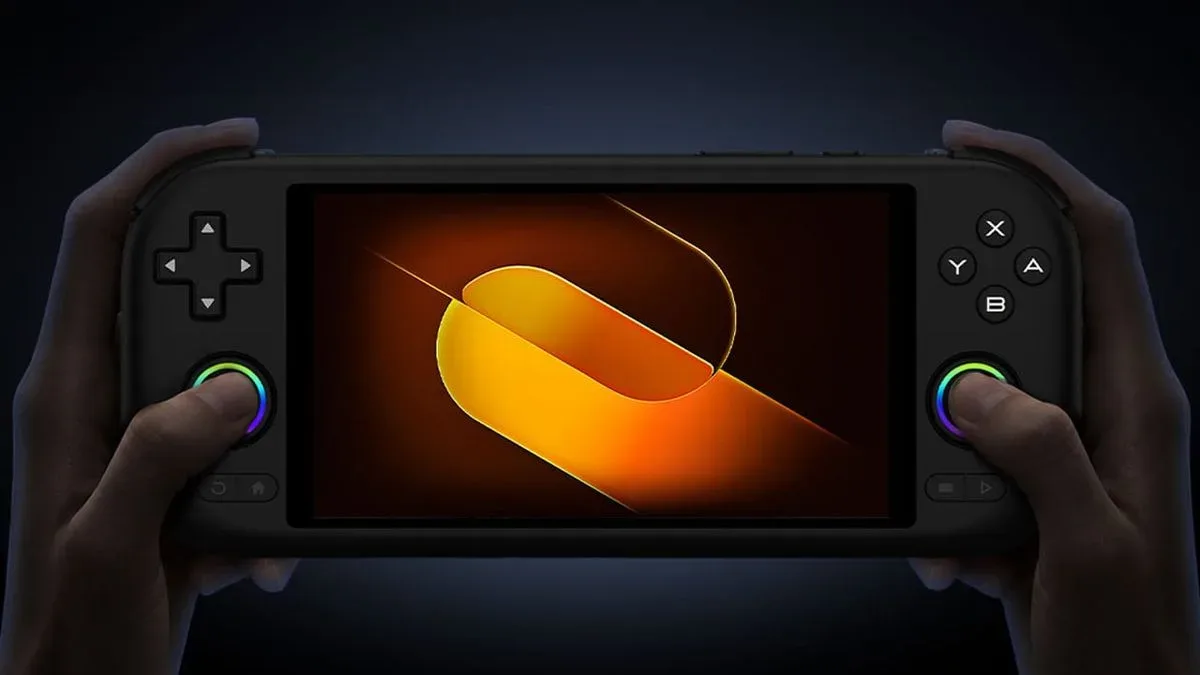
MANGMI has begun outlining the Air X Pro, starting with the screen: a 5.5-inch, 1080p IPS touchscreen rated at 401 pixels per inch, 110% sRGB colour gamut and 450 nits of peak brightness. A new teaser also gives a clearer look at the handheld’s D-pad and face buttons, though its internal hardware, software and positioning remain unspecified.
Those numbers make for a capable-looking panel on paper. They also create an immediate question for anyone familiar with the standard MANGMI Air X: how much of an upgrade is the Pro meant to be?
The existing Air X is listed with a 5.5-inch 1920x1080 IPS display, 401 PPI, 100% colour gamut and 400 nits of brightness. In other words, the announced Air X Pro screen retains the same size, resolution and pixel density, while raising the stated gamut by 10 percentage points and peak brightness by 50 nits.
The Air X Pro display specs at a glance
- Panel: 5.5-inch IPS touchscreen
- Resolution: 1080p
- Pixel density: 401 PPI
- Colour coverage: 110% sRGB
- Peak brightness: 450 nits
Based strictly on the display information currently available, the Pro’s upgrades are incremental rather than transformational. The physical viewing area is unchanged, and the claimed sharpness is unchanged because the resolution and diagonal measurement remain the same. That does not make the panel unimportant; a handheld’s screen is the part players stare at most. But it does mean the screen alone does not yet explain the “Pro” name.
What the specifications actually mean
1080p on 5.5 inches: plenty of sharpness, no added space
“1080p” here corresponds to a 1920x1080 display, matching the existing Air X. Paired with a 5.5-inch diagonal, that produces the stated 401 PPI figure. PPI, or pixels per inch, is a measure of pixel density: higher numbers generally mean individual pixels are harder to spot at a normal viewing distance.
For prospective buyers, the important practical point is that a same-size, same-resolution screen should preserve the Air X’s apparent sharpness rather than expand the visual canvas. Text, interface elements and games will have the same physical screen real estate available. Nothing in the announced information indicates a move to the larger six-inch display some observers may have expected from a higher-tier model.
That may be a deliberate choice. Keeping the panel dimensions consistent can help maintain a familiar handheld footprint, but MANGMI has not detailed the Pro’s size, weight or ergonomics. It would be premature to draw conclusions about portability or comfort from the screen measurement alone.
IPS: a panel technology, not a complete image-quality verdict
IPS stands for in-plane switching, a type of LCD panel technology. The label can suggest certain broad expectations around colour and viewing angles, but it does not settle every aspect of a display’s performance. A specification sheet does not, by itself, reveal how a panel handles motion, touch response, calibration, reflections or consistency from unit to unit.
Related coverage includes MANGMI Air X Pro Display Specs Revealed, With Familiar 5.5-Inch 1080p Screen.
That distinction matters because both the Air X and Air X Pro are described as using IPS screens. The shared panel category supports the broader impression that MANGMI is refining the existing display formula rather than unveiling an obviously different screen class. Until more detailed specifications arrive, claims beyond the published size, resolution, colour-gamut figure and brightness rating would be guesswork.
450 nits could offer a modest brightness bump
A nit is a unit used to express display luminance. MANGMI rates the Air X Pro at 450 nits of peak brightness, compared with 400 nits for the Air X. On a spec sheet, that is a 50-nit increase.
Brightness affects how forcefully the display can compete with ambient light and can influence the perceived punch of an image. Still, “peak brightness” should be read precisely: it is the maximum stated brightness measurement, not a promise about every game, every display mode or every lighting condition. The announcement does not establish whether the new panel’s brightness behaviour differs in other ways from the Air X.
The upgrade is nevertheless easy to understand. A brighter screen can be useful where surrounding light makes a display harder to see. Whether the difference feels substantial will depend on circumstances MANGMI has not yet addressed, including the environment and the handheld’s eventual brightness controls.
110% sRGB: wider stated colour coverage, with caveats
sRGB is a commonly used colour space for digital content. MANGMI’s 110% sRGB rating for the Air X Pro is higher than the Air X’s stated 100% colour gamut. Put simply, the Pro is claimed to cover a wider range of colours than the standard model.
That figure does not automatically tell buyers whether colours will look more accurate. Colour gamut describes the range a display can reproduce; colour accuracy concerns how faithfully the screen presents intended colours. A wider gamut can offer more saturated colour potential, but the published material does not provide calibration data, colour modes or accuracy measurements. It is safest to describe the 110% sRGB number as a claimed gamut expansion, not as proof of a particular real-world look.
The comparison that leaves the biggest questions unanswered
The screen comparison is unusually clean because most of the headline figures are identical. Both models have 5.5-inch IPS panels, 1920x1080 resolution and 401 PPI. The stated changes are the move from 100% to 110% sRGB coverage and from 400 to 450 nits peak brightness.
For a brand-new buyer choosing only on display specifications, the Air X Pro carries the better numbers. For an Air X owner considering an upgrade, the disclosed screen difference appears much less decisive. That is analysis based on the currently stated specifications, not a judgment on the full product: MANGMI has not yet supplied the details most likely to define the Pro’s role.
Those missing details include the internals. No processor, memory, storage, battery, operating-system or performance information is included in the display reveal. Without them, there is no supported basis to say which games or applications the Air X Pro will run, how it will compare with the Air X, or whether it will meaningfully change the user experience beyond its screen.
This is where the “Pro” question becomes more interesting than a 50-nit bump. Premium or upgraded naming normally invites buyers to look for a practical advantage, whether that comes from speed, capability, battery life, controls, software support or build changes. The screen teaser confirms only a modest panel revision. It does not yet identify the category of upgrade MANGMI has planned elsewhere in the device.
Where the Air X Pro may fit is still unclear
MANGMI’s broader handheld lineup has prompted questions about where the Air X Pro will sit between the Air X and the Pocket Max. At present, the available screen information does not resolve that issue. The Pro is not moving to a larger display, at least not according to the announced 5.5-inch specification, and it retains the same 1080p/401-PPI combination as the Air X.
That does not rule out a sensible middle position. A product can differentiate itself through components and features that are invisible in a front-facing teaser. But buyers should resist filling the gaps with assumed specifications. The current evidence supports a narrow conclusion: the Air X Pro display is closely related to the Air X display, with higher claimed brightness and broader claimed sRGB coverage.
The slow rollout also means comparison shopping is not yet possible in a meaningful way. Specifications are most useful when paired with the information that explains trade-offs. A larger display can affect portability; stronger hardware can affect performance and battery demands; software can affect how simple a handheld is to use. None of those trade-offs can be evaluated from the screen reveal alone.
What to watch for next
The next MANGMI details will matter most if they address the areas the panel announcement leaves open. A full internal specification list would establish whether the Air X Pro is designed as a performance step up. Battery details would help put the brightness claim in context. Information about the touchscreen, controls and software would clarify whether the device is refining day-to-day usability rather than chasing raw specifications.
Until then, the most grounded reading is straightforward: MANGMI has revealed a slightly enhanced display built around the same core dimensions and resolution as the Air X. That is a welcome refinement if the goal is to keep the familiar 5.5-inch format while improving the panel on paper. It is not, by itself, enough information to define the Air X Pro’s value or its place in the range.
That restraint is worth keeping in mind amid the wider churn of gaming-hardware news, where component and product-line questions can rapidly become bigger than a single headline specification. For a related look at how broader hardware uncertainty can shape gaming expectations, see our coverage of gaming GPU pipeline questions. For MANGMI, however, the immediate wait is simpler: the next reveal needs to explain what the Air X Pro changes beyond a familiar screen.