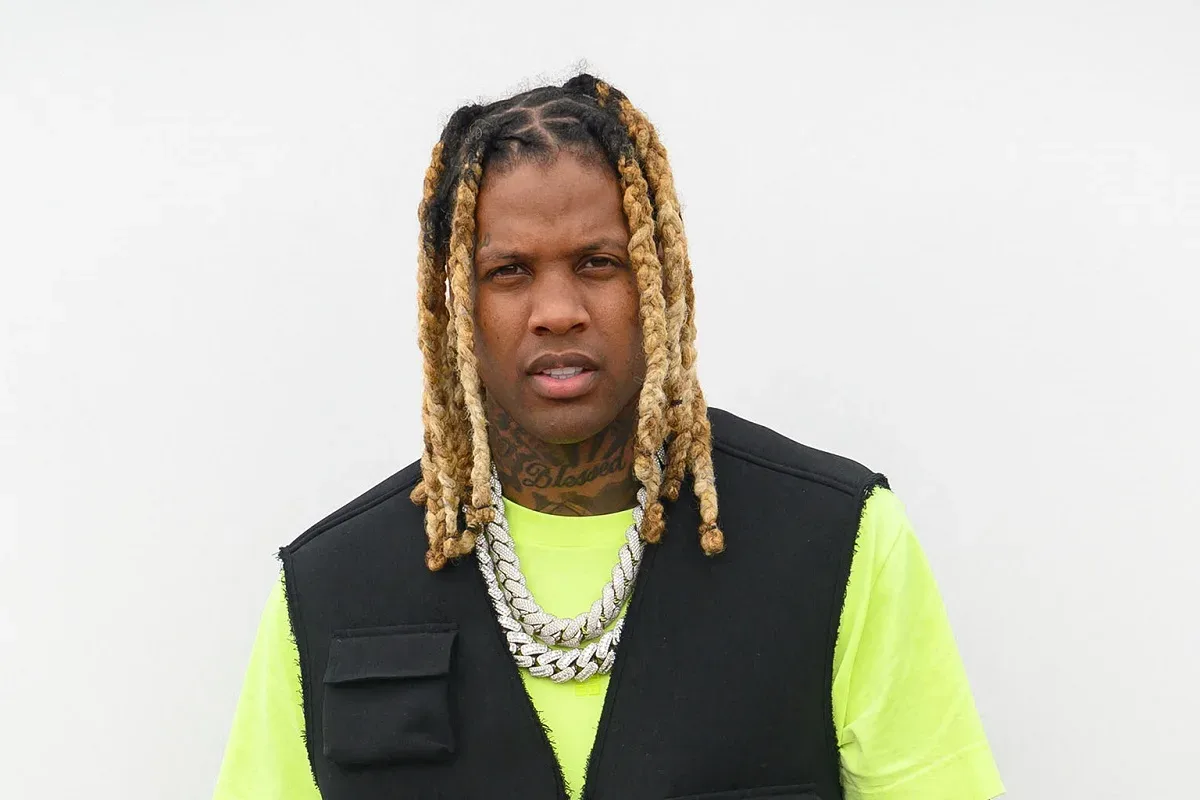
Federal prosecutors have rested their case in the murder-for-hire trial involving rapper Lil Durk, moving the proceedings into the defense phase and changing the courtroom’s immediate focus from the government’s theory of an alleged conspiracy to competing explanations for specific pieces of evidence.
Lil Durk has pleaded not guilty to the federal charges, which include conspiracy, murder-for-hire resulting in death and firearm-related offenses. The allegations stem from an August 2022 shooting targeting rapper Quando Rondo. Quando Rondo survived, while his cousin, Saviay’a “Lul Pab” Robinson, was killed. Prosecutors contend that the alleged operation was ordered and financed as retaliation for the November 2020 death of King Von. Those are accusations the government must prove; the defense is now beginning its effort to challenge their interpretation.
The prosecution’s case relied on surveillance video, financial material, phone evidence, messages and testimony from cooperating witnesses. Kavon “OTF Vonni” Grant, Kacey “OTF Jam” Hester and Keith “Flacka” Jones each gave testimony connecting Lil Durk to the alleged operation against Quando Rondo. With the government resting shortly after a morning break on Thursday, the defense began calling witnesses the same day.
The final prosecution witness addressed the 2024 arrest
Before prosecutors finished their presentation, FBI Special Agent Conor Goepel described Lil Durk’s October 24, 2024, arrest in South Florida. Goepel testified that agents initially expected to find him at Miami International Airport after learning of a flight booked to Dubai. Lil Durk did not show up there, and Goepel later encountered him at Miami Signature Airport, a private aviation facility.
According to Goepel’s account, Lil Durk, another passenger and their driver returned to an SUV after someone in the group noticed the agent. Goepel described the ensuing events as a short pursuit. Yet he also acknowledged that the SUV was not driven erratically, instead characterizing its operation as abnormal.
Agents eventually blocked the SUV in the parking lot of an airport hotel. Goepel said that, when asked for identification, Lil Durk replied, “You know my name.” The agent began to describe another alleged statement, but defense lawyers objected on Fifth Amendment grounds.
Defense attorney Christy O’Connor questioned whether the circumstances supported the government’s suggestion that Lil Durk had been fleeing. O’Connor noted that agents did not recover a fraudulent passport, that he had not altered his distinctive public appearance and that no order required him to stay in the United States. The exchange matters because the meaning assigned to behavior around an arrest can be highly consequential in a trial: prosecutors may frame conduct as consciousness of guilt, while defense lawyers can point to facts that undercut that reading.
Defense begins with alternate explanations
The defense’s initial witnesses concentrated on context. Rather than attempting to relitigate every element of the prosecution’s presentation at once, the opening strategy addressed several details the government had raised as support for its broader narrative: why a driver might have been armed, what “lay low” meant in conversation and how a wedding reference appeared in a disputed message exchange.
First, the defense called the sister of Fabian “Big Country” Ford. Earlier in the trial, Grant had testified that Big Country drove a trailer carrying a stolen vehicle during a May 2021 attempted attack on Quando Rondo’s life in Georgia.
Ford’s sister testified that she spoke to her brother every day and assisted with his business. She said he worked as a security guard and drove Lil Durk from approximately 2019 until either 2021 or 2022. Crucially, she said Big Country regularly carried a firearm while serving as the rapper’s driver because security was part of his job.
That testimony offers the jury a different possible reason for an armed driver’s presence. It does not independently settle every allegation connected to Ford or the wider case, but it asks jurors to distinguish between an item’s presence and the intent prosecutors say should be inferred from it. Prosecutors did not cross-examine her.
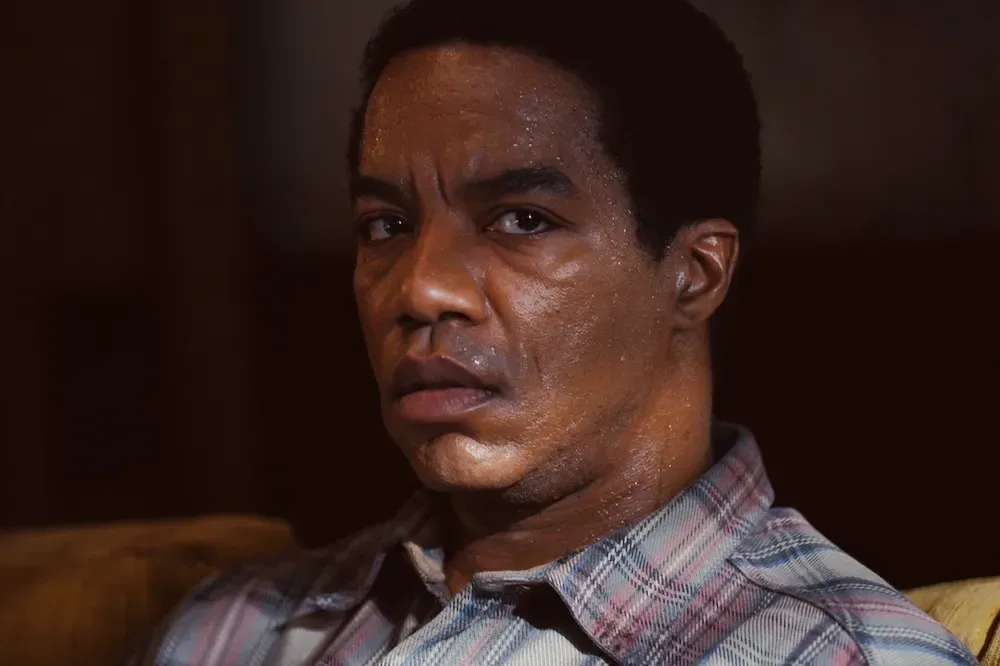
That distinction is often at the heart of cases built from interconnected facts. A gun, a trip, a call or a message may not have one automatic meaning simply because it appears in a timeline. The competing sides instead argue over how those facts fit together. In another kind of storytelling, a single prop may signal a whole character arc; as discussed in our look at a narrative centered on trauma and interpretation, context can substantially alter how an audience receives what is put before it. A criminal jury, of course, must apply a much stricter standard and weigh actual evidence rather than narrative effect.
“Lay low” becomes a contested phrase
Kevin Freeman was the defense’s next witness. Freeman works in health care and with nonprofit organizations, and he told jurors that he had worked with Lil Durk through the rapper’s Neighborhood Heroes organization. He said he traveled with Lil Durk to Miami on October 16, 2024, after the pair returned from a Neighborhood Heroes trip to London.
Freeman also testified that he and Lil Durk spoke several times on October 24, the day of the arrest. In direct terms, he told the jury that he was the person who advised Lil Durk to “lay low.”
The defense presented that clarification as significant because the phrase could be understood in sharply different ways depending on surrounding circumstances. Freeman said his concern was Lil Durk’s children, not a plan to avoid federal authorities. He testified that he feared police could arrive at a residence where the children were present and cause them distress. His advice, he said, was for Lil Durk to avoid being around them temporarily and to surrender if authorities produced a warrant.
Freeman’s testimony supplied an innocent explanation for wording that prosecutors may have treated as suspicious within their case. The government did not cross-examine Freeman. A decision not to cross-examine does not itself establish that either side’s account is correct; it simply means the witness left the stand without additional questioning from prosecutors.
Wedding message receives direct context
The defense then called Lil Durk’s talent agent, Jeremy Marcano, who described the rapper as both a client and a good friend. Marcano testified that he invited Lil Durk to his wedding, held August 20, 2022. He said he learned on August 18 or 19 that Lil Durk would not attend.
Jurors were again shown a message from Jason Smith’s phone reading, “Tell Jay Congrats On The Wedding.” The message appeared near a statement attributed to Lil Durk: “Don’t book no flights under names involved with me.” Prosecutors have used the latter message to argue that Lil Durk sought to conceal flights obtained for people allegedly involved in the shooting.
Marcano’s appearance gave the jury a direct explanation for the wedding mention in that exchange: he was the “Jay” connected to the August 20 ceremony. This does not necessarily resolve how jurors will interpret the flight-related language, but it narrows one point of uncertainty around the conversation and permits the defense to argue that a message can contain ordinary social context alongside language prosecutors view as incriminating.
At the lunch break, Marcano was expected to return for one final question from defense attorney Brian Steel.
What the next phase means
The defense case had officially begun Thursday and was set to continue with additional witnesses. The shift does not mean that the prosecution’s evidence disappears from consideration. Rather, jurors will be asked to evaluate the government’s evidence alongside the defense’s counter-explanations, witness credibility arguments and any additional material introduced during this new portion of the trial.
For now, the early defense presentation has established a clear approach: challenge the implications attached to individual facts. The armed driver may be characterized as a security worker performing a regular job. The “lay low” instruction may be framed as an attempt to protect children from a potentially disruptive law-enforcement encounter. The wedding message may be grounded in Marcano’s documented invitation and ceremony date.
The ultimate question remains whether the prosecution can prove its allegations beyond a reasonable doubt after the jury has heard both sides. Lil Durk remains presumed innocent, and the trial will continue as the defense calls further witnesses.