Editorial disclosure: This feature reflects repository descriptions and project claims reviewed in the research context dated October 23, 2026. Joking Joystick did not test Kyty, KytyPS5, or any other emulator, and the article does not treat a project README, community report, or claimed boot result as independent verification.
Kyty, KytyPS5, and PS5X on Xbox Series X: What PlayStation 5 Emulation Research Can Actually Tell UsPlayStation emulation is often discussed as though it were a single technical challenge with a single finish line. A project either “runs games” or it does not. A new name appears, a screenshot circulates, a compatibility list grows, and the conversation quickly turns toward a question that is much easier to ask than to answer: is the console now emulated?
That question compresses too much into too little language. Emulation is not one switch. It is a collection of difficult agreements between software systems that were designed at different times, for different hardware, and under different assumptions about timing, graphics, storage, input, operating-system services, and failure handling. A title can boot without being meaningfully playable. A scene can render while sound, saving, networking, streaming, or input remains incomplete. A result reported for one build can disappear after a later change or remain unavailable on another operating system. A repository can describe a promising direction without constituting proof that a stable consumer product exists.
The Kyty story is valuable precisely because it shows how those distinctions matter. The original Kyty repository describes the project as a PlayStation 4 and PlayStation 5 emulator, places it in an early stage, and says that some simple PlayStation 4 games and PlayStation 5 homebrew can run. It also names significant limitations, including audio input and output, MP4 video, networking, and multi-user support. Those statements are important, but they are bounded statements. They do not establish current commercial-game compatibility, a broad release cadence, or a mature PlayStation 5 product.
The later KytyPS5 repository presents a different and more ambitious project record. It describes KytyPS5 as a PlayStation 5 translation layer for Windows, Linux, and macOS, based on a heavily modified version of the original Kyty project. Its README says that it can boot two-dimensional and three-dimensional games across Unreal Engine 4, Unreal Engine 5, Unity, and custom engines, while also emphasizing that compatibility, stability, and performance vary by version. Windows and Linux are described as the primary targets; macOS is experimental and uses Rosetta 2 and MoltenVK on Apple Silicon. The project also documents a Vulkan 1.3-capable graphics processor and current drivers in its development and runtime context.
Those are the latest project’s own claims, not results independently reproduced by Joking Joystick. That distinction is not a footnote. It is the central discipline required to report on a young emulator project responsibly. The purpose of this feature is not to announce a breakthrough, recommend a download, or supply a route to commercial games. It is to explain what the public project descriptions mean, what current reporting says about the experimental PS5X Xbox port, and how readers can think about PlayStation 5 emulation research without turning partial evidence into a promise.
Why the state of PlayStation 5 emulation is difficult to summarize
A console is not merely a processor attached to a graphics chip. It is a controlled environment in which hardware, firmware, operating-system services, drivers, storage behavior, developer tools, security boundaries, and game code are expected to cooperate in repeatable ways. A console title is built against that environment. It does not normally need to ask whether a particular service is installed, whether a graphics API has several competing implementations, or whether a user has moved the program between different operating systems. The platform owner defines the conditions and the game is written with those conditions in mind.
An emulator, or a translation layer that performs some of the same work, has to reproduce enough of those conditions for software to behave as though it were running on the original platform. “Enough” is the key word. Perfectly reproducing every physical and software detail may be unnecessary for some programs, while a seemingly minor discrepancy can prevent another program from starting. A game can use an unusual timing assumption, an uncommon shader path, a media component, a storage behavior, or an operating-system call that an early project has not yet implemented.
That makes the phrase “PS5 emulation” broad. It might refer to research into CPU instruction behavior, a graphics translation project, an operating-system compatibility layer, a partial runtime, a homebrew environment, a compatibility experiment, or a project that combines several of those efforts. It may also be used by search pages and imitation sites as a label with little connection to a maintained source repository. The name alone cannot tell a reader what exists.
There is also a difference between capability and coverage. A project may possess a mechanism capable of translating a type of graphics command without correctly handling every game that uses it. It may load a game executable but lack the services needed beyond its opening screen. It may render a scene but produce visual corruption, incorrect effects, missing sound, broken input, or unreliable saving. It may work on a particular combination of operating system, graphics driver, hardware, and project revision while failing elsewhere.
That is why a responsible account should answer several separate questions:
- What does the project itself claim to support?
- What exactly does “boot” mean in the report being discussed?
- Which project revision produced the observation?
- Which operating system, graphics API, driver, and hardware context were involved?
- Were audio, input, saving, video, networking, and stability checked, or only rendering?
- Is the evidence from the project’s own maintainers, a community report, a screenshot, a video, or a reproducible test?
- Does the result concern homebrew, a simple title, a game built with a particular engine, or a large commercial production?
These questions may appear cautious, but they are practical. Without them, the most visually persuasive evidence tends to dominate the discussion even when it says the least about everyday compatibility. A frame of a scene can demonstrate that some graphics path produced an image. It cannot, by itself, establish that a title can be completed, that it can save progress, or that the same result is available to other users.
What an emulator or translation layer actually has to reconcile
The word “emulator” traditionally suggests that one machine is being recreated in software on another machine. The word “translation layer” emphasizes a different strategy: instead of reproducing every detail in the same form, the software translates instructions, calls, resources, or behaviors into forms understood by the host environment. In practice, projects can combine approaches. A translation layer may emulate some services, translate some graphics operations, and use host facilities for other work.
The important point is that neither label removes the need to reconcile assumptions. The program being run expects one platform. The host computer provides another. Between them sits a set of interfaces that must agree on meaning, ordering, format, and timing. A successful result is not just a translation from one instruction set to another. It is an agreement across many layers.
CPU work is more than recognizing instructions
At a high level, the central processor executes instructions, reads and writes memory, responds to events, and coordinates other components. A host program must represent the source program’s behavior in a way the host can execute. That can involve interpretation, dynamic translation, caching, or a mixture of techniques, but the broad objective is the same: preserve the observable behavior that software relies upon.
Instruction meaning is only the beginning. Programs may depend on the order in which operations become visible, the behavior of synchronization primitives, the handling of exceptions, the layout and permissions of memory, and the speed at which work is presented to other subsystems. A translation that produces the right arithmetic result but exposes memory or event behavior at the wrong moment can still break a title.
Games also contain different kinds of work. A custom engine may perform substantial simulation on the CPU, while a graphics-heavy scene may wait on rendering or resource transfers. A title built with a common engine can still exercise unusual engine paths because of its content, configuration, middleware, or platform-specific code. Engine names help categorize reports, but they do not turn every title using that engine into the same test.
For an early project, CPU support can therefore look deceptively successful. A program may reach a menu because the basic execution path works, then fail when it starts a more demanding subsystem. Another may proceed farther because its workload happens not to depend on an unimplemented behavior. The visible point of failure is not always the underlying cause; a graphics fault can expose a synchronization issue, and a missing system service can appear as a frozen screen.
GPU work is a language and resource problem
Graphics translation is often the most visible part of an emulator because its output can be shown in a screenshot or video. It is also one of the easiest areas to misunderstand. A console game does not simply ask for “a picture.” It submits commands, shaders, textures, buffers, render targets, synchronization operations, and resource transitions under a particular graphics model. The host provides its own graphics API, driver behavior, memory model, and supported formats.
A translation layer has to map the source expectations onto those host facilities. Some operations have direct equivalents. Others need to be rearranged, approximated, emulated in software, or implemented through a different sequence of commands. A shader may compile but produce different results. A resource may have the right dimensions but the wrong layout. A synchronization rule that is harmless on one system may expose a race on another. A visual defect may not appear until a particular post-processing effect, lighting pass, particle system, or streaming transition occurs.
Graphics support is therefore layered rather than binary. Basic two-dimensional output can exercise a much smaller range of behavior than a complex three-dimensional scene. A title can draw geometry while failing to handle advanced effects. It can display a menu while breaking during a cutscene. It can render a scene at an apparently acceptable speed while using incorrect colors, missing surfaces, or unstable frame pacing.
The KytyPS5 project’s reference to two-dimensional and three-dimensional games across Unreal Engine 4, Unreal Engine 5, Unity, and custom engines should be read in that context. It is a statement about the kinds of software the project says it can boot across, not a guarantee that every title using those technologies works, nor a declaration that visual correctness, input, sound, saves, and performance are solved for all of them.
Timing is the invisible contract
Timing problems are difficult because they may not produce an immediate error. A game is a coordinated system. The CPU updates simulation, the graphics subsystem consumes commands, input is sampled, audio buffers are filled, storage requests complete, and the display presents frames. These activities have relationships that the original platform makes predictable.
If a translation layer runs one subsystem too quickly, too slowly, or in a different order, the result may be a stutter, a missing input, a physics anomaly, an audio crackle, an intermittent crash, or a failure that appears only after extended play. A title may seem fine in a short demonstration and become unreliable in a longer session. This is one reason a boot report and a playability report should never be treated as synonyms.
Timing also affects performance measurement. A high average frame rate does not necessarily mean a smooth experience if frame delivery is uneven. Conversely, a lower average may be acceptable in one context if frame pacing is stable, while a brief but severe stall can undermine an otherwise smooth sequence. Early compatibility reports often lack the instrumentation needed to describe these differences precisely, so readers should resist translating a simple “runs” label into a performance judgment.
I/O, media, and operating-system services are part of compatibility
Games read data, write saves, process input, produce sound, play video, communicate with services, and sometimes support multiple user identities. Those functions are not decorative additions to a graphics demo. They are part of the program’s expected environment.
The original Kyty repository explicitly names audio input and output, MP4 video, networking, and multi-user support among its limitations. That list illustrates why a project can demonstrate meaningful progress and still be early-stage. A game may render a scene yet fail at a video sequence. It may reach a menu but have no usable sound. It may operate in a single-user assumption while a particular title expects a broader account model. It may run local content while networking remains outside the supported scope.
Storage introduces another set of assumptions. A game can request files asynchronously, expect specific completion ordering, use a particular path structure, or rely on data being available at a certain point in its loading process. A host file system can provide the bytes without reproducing all of the behavior around those bytes. The result may be a title that starts but stalls during loading, or one that works until a later area demands a resource that has not been handled correctly.
Operating-system services are similarly easy to overlook. A game may expect thread management, synchronization, window behavior, controller input, audio devices, clock functions, memory allocation, and error responses to behave in familiar ways. A translation layer does not need to copy every internal detail of the original system, but it does need to provide behavior close enough for the software to continue. Each missing or approximate service can narrow the set of programs that work reliably.
Where the original Kyty project fits in the story
The original Kyty project deserves to be described on its own terms before discussion moves to KytyPS5. Its repository describes Kyty as a PlayStation 4 and PlayStation 5 emulator. It says the project is in an early stage and that some simple PlayStation 4 games and PlayStation 5 homebrew can run. The same repository identifies missing or incomplete areas including audio input and output, MP4 video, networking, and multi-user support. It is licensed under the MIT license.
Those facts establish an early research project with a visible scope, not a finished platform. The wording matters. “Some simple” narrows the claim. “Homebrew” distinguishes software made for an open or experimental development context from the full range of commercial titles. “Early stage” tells readers that architecture, compatibility, stability, and completeness should not be presumed. The named limitations reinforce that interpretation.
It would be inaccurate to use the original repository alone as evidence of current commercial-game compatibility. It would also be inaccurate to infer an active release cadence from that repository description. A repository can remain historically important even when later work has moved elsewhere, and a project can be technically interesting without publishing a continuous sequence of user-facing releases. The responsible claim is narrower: the original Kyty project established a documented early-stage effort and reported limited operation in the categories described by its own repository.
Why “early-stage” is a technical description, not an insult
In public conversations, “early-stage” is sometimes used as shorthand for “not real.” That is a mistake. Early research can include difficult engineering accomplishments. It can reveal how a platform’s software interfaces behave, identify missing abstractions, and make later work possible. At the same time, early research should not be presented as a ready substitute for the original platform.
The term is useful because it tells readers how to interpret gaps. If audio is not available, the absence is not an incidental inconvenience. It says the project has not yet reproduced an important part of the application environment. If MP4 video is not supported, a title that depends on pre-rendered sequences may encounter a failure unrelated to its main rendering engine. If networking and multi-user support are missing, a local scene may not tell the whole story of the program’s requirements.
Early-stage status also changes what counts as a meaningful milestone. Reaching a menu can be valuable because it demonstrates a set of lower-level components working together. Booting a homebrew program can show that the project provides a usable path for a particular class of software. Neither result should be inflated into broad commercial compatibility. A milestone has meaning when its boundaries remain visible.
The importance of keeping historical and current records separate
A common reporting error is to attach the newest claims to the oldest project name without explaining the change in codebase, scope, or documentation. That produces a smooth narrative in which early-stage Kyty appears to have suddenly become a mature general-purpose emulator. The supplied project records do not support that presentation.
The original Kyty repository and the later KytyPS5 repository should be treated as distinct project records. The KytyPS5 repository says it is based on a heavily modified version of the original Kyty. That identifies a code lineage, but it does not establish that both repositories represent the same release process, the same maintainers, the same governance, or the same guarantees. Nor does it erase the limitations documented by the original project.
For readers, the practical lesson is simple: when a claim concerns KytyPS5, cite it as a KytyPS5 claim and date it. When a claim concerns original Kyty, cite the original Kyty record and keep its early-stage scope intact. Do not use one project’s description to fill gaps in the other.
KytyPS5 and the meaning of its current project claims
As of the October 23, 2026 research context, the KytyPS5 repository describes KytyPS5 as a PlayStation 5 translation layer for Windows, Linux, and macOS. It says the project is based on a heavily modified version of original Kyty. The repository’s README says that the project can boot two-dimensional and three-dimensional games across Unreal Engine 4, Unreal Engine 5, Unity, and custom engines. It also states that compatibility, stability, and performance vary by version.
That is a substantial change in how the project is framed. The emphasis is on a translation layer and on a wider range of development environments. It does not turn the project into a universal emulator by declaration. “Can boot” remains a narrower category than “can be played from beginning to end.” The list of engines describes an area of reported reach, not a compatibility guarantee for all games built with those engines.
The qualifier about version variation is especially important. An emulator project is a moving target. A change can fix one rendering path while exposing a different issue. A driver update can change behavior without any change to the project. A new implementation may improve one game’s loading sequence while altering performance elsewhere. A community report from one revision cannot be lifted out of its context and treated as a permanent property of the project.
What “boot” can and cannot tell us
When a repository says that a title or category can boot, the most defensible interpretation is that the software can reach an initial execution state under some conditions. The exact boundary may differ from title to title. It might mean a program launches, a window appears, a menu is reached, or an early scene is rendered. Without a more detailed test definition, readers should not assume that booting includes complete input, audio, video, saving, networking, stable frame pacing, or progression through an entire game.
Booting is still meaningful. It indicates that enough of the translation path exists for a program to begin. It can help developers identify the next missing service or graphics behavior. It can show that multiple subsystems are cooperating. But it is a first category in a spectrum, not the end of the spectrum.
A useful mental model is to imagine compatibility as a ladder rather than a checkbox. At the bottom, a program may be recognized or loaded. Above that, it may reach a title screen, render a simple scene, accept input, play sound, load additional content, save progress, and sustain a stable session. A report should say which rung it concerns. The fewer details supplied, the less a reader can responsibly infer.
Windows, Linux, and experimental macOS support
KytyPS5 identifies Windows and Linux as its primary target platforms. It describes macOS as experimental and says that on Apple Silicon it uses Rosetta 2 and MoltenVK. This is not merely a list of operating systems. It tells readers that the host environment is part of the project’s compatibility story.
Windows and Linux can differ in driver behavior, windowing, audio devices, file-system conventions, scheduling, and graphics implementation. Even when both provide the same broad graphics API, the driver stack may expose different limitations or performance characteristics. A result on one primary platform should not automatically be described as a result on the other.
The macOS description carries an additional caveat. “Experimental” means that the path is not presented as equally mature with the primary targets. Rosetta 2 and MoltenVK add translation layers of their own: one concerns running software associated with a different processor environment, while the other maps graphics behavior through a different API context. Those layers may be useful, but each introduces another place where assumptions must line up.
None of this means that a result on macOS is unimportant. It means the result needs to be reported with the platform and the experimental status attached. A generic headline saying “KytyPS5 works on computers” loses the information that makes the claim interpretable.
Hardware and driver requirements are part of the report
The KytyPS5 project documents a Vulkan 1.3-capable graphics processor and current drivers in its development and runtime context. This is a requirement context, not a performance promise. Having a graphics processor that exposes the named capability does not establish that every title will run, that every driver will behave identically, or that the host will deliver a particular frame rate.
Graphics API support is an interface qualification. It indicates that the host can present a set of functions and behaviors the project expects. It does not remove the work of translating source graphics operations, managing resources, synchronizing work, or handling engine-specific paths. Two systems that both satisfy a broad API requirement can still differ substantially in memory bandwidth, driver quality, CPU capacity, thermal limits, and scheduling.
Current drivers also deserve careful wording. “Current” is relative to the report and the project’s documentation. It does not mean every future driver will be suitable, nor does it identify a guaranteed driver version in the absence of a dated project instruction. Readers should treat such requirements as part of the project’s documented context rather than as a promise of uniform results.
The license change is significant, but not a compatibility claim
The original Kyty repository is licensed under the MIT license. The KytyPS5 repository identifies itself as GPL-2.0-only. These are important facts for source-code readers, contributors, and anyone studying how the projects present their work. They do not measure performance or compatibility.
Licensing defines conditions around the project’s code. It does not grant ownership of third-party games, proprietary system software, or platform services. It also does not transform a repository into an official product. A project can be openly licensed and still be technically experimental. Conversely, a technically capable project still has to respect the rights attached to the software it does not own.
The KytyPS5 project states that it is not affiliated with Sony, does not distribute games or copyrighted system software, and directs users to use only legally obtained game files. Those statements should remain attached to coverage of the project. They clarify the project’s stated boundary, but they are not a complete answer to every legal question in every jurisdiction.
Why forks, names, and project lineage cause confusion
Open-source research evolves through forks, renamed repositories, reorganized teams, abandoned branches, mirrors, and independent experiments. A fork can preserve some code while changing architecture, goals, licensing, documentation, and release practices. A renamed repository can look like a continuation even when the relationship is unclear. A mirror can preserve files without preserving active maintenance. An imitation site can borrow a familiar name while offering unrelated software.
Readers often encounter the name before they encounter the source. Search results may present a short description, a video title may omit the project revision, and a social post may combine an old screenshot with a new label. Once that information is repeated, the boundaries between projects become difficult to recover.
The relationship between original Kyty and KytyPS5 should therefore be expressed precisely. KytyPS5’s repository describes it as based on a heavily modified version of original Kyty. That is a statement about the project’s claimed technical base. It is not evidence that the two repositories are interchangeable, that the original project has the current KytyPS5 capabilities, or that every person associated with one is associated with the other.
The same discipline applies to names that sound adjacent. A name containing “PS5,” “emulator,” or a familiar project fragment is not self-authenticating. The useful evidence is a clearly maintained source repository, a consistent project identity, transparent source and license information, and documentation that makes bounded claims. When those elements are absent, the name should be treated as an unverified label rather than as a product category.
PS5X: an experimental KytyPS5 port for Xbox Series X|S
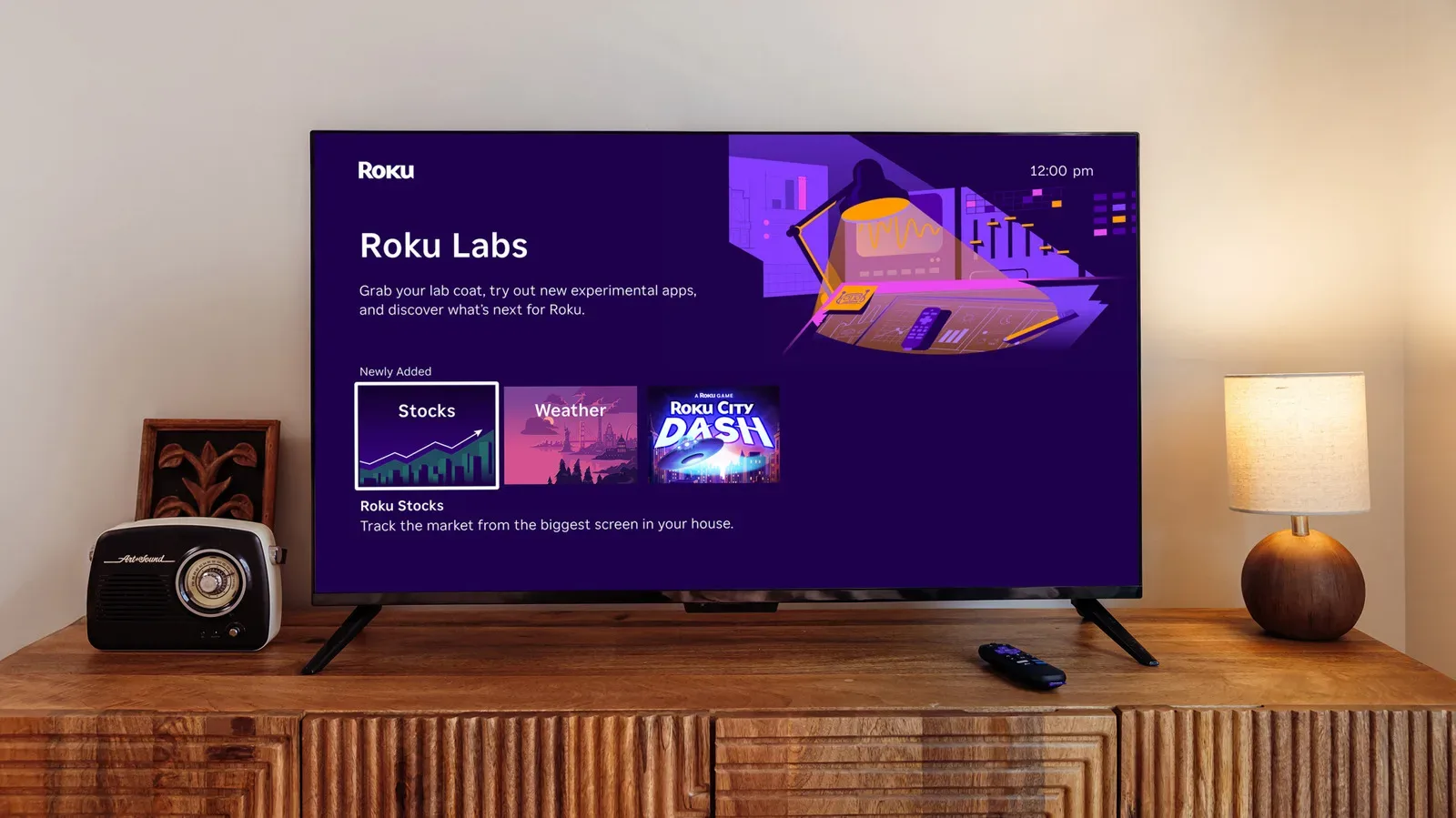
PS5X is the name used in current reporting for an experimental Xbox Series X|S port of KytyPS5. The project is described as a Universal Windows Platform build used through Xbox Developer Mode, rather than a new retail Xbox feature or an official Microsoft, Sony, or KytyPS5 release. Reporting in October 2026 identified the work as a port of KytyPS5 associated with developer Devran Cosmo Uenal, sometimes known online as maccosmo. This is important context: PS5X is not a different console emulator with an unrelated code base. It is an experimental platform port built on the KytyPS5 line of research.
The available reporting is still not a substitute for independent testing by Joking Joystick. A demonstration, a video, or an individual boot result does not establish broad compatibility, stable performance, or a release-ready product. It also does not create permission to obtain games, system software, keys, or other protected material. This feature therefore treats PS5X as a reported experimental port and keeps the same source, legal, and safety boundaries applied to KytyPS5.
The most useful public evidence is the connection between the terms, not a promise attached to the name: KytyPS5 is the translation-layer project; PS5X is the reported Xbox Series X|S port. Windows Central’s October 2026 reporting describes PS5 software booting on Xbox hardware through an Xbox Developer Mode UWP port of KytyPS5, while also stressing limited performance and experimental status. That is a third-party report, not a warranty and not a Joking Joystick test.
How a name becomes misleading without one clear lie
Confusion does not always begin with a single fabricated sentence. It can arise from several small substitutions. A mirror may preserve an old project description while presenting itself as current. A fork may retain a recognizable interface or code fragment but change its scope. A video may show a project under one name while a caption supplies another. A search page may combine a repository title with a third-party download listing. An imitation site may use a logo-like graphic and technical vocabulary to suggest official status without demonstrating any source relationship.
Over time, these fragments can be repeated as if they described one continuous project. A claim originally attached to a limited test becomes a claim about all releases. A feature mentioned by one repository becomes attributed to another. A community observation becomes a permanent compatibility promise. PS5X is particularly vulnerable to this kind of confusion because it is a reported Xbox platform port of KytyPS5, not evidence that the original Kyty repository, KytyPS5 itself, Microsoft, or Sony has made a general compatibility claim.
Readers should not turn the port relationship into a rebrand claim. PS5X is best described narrowly: a reported experimental KytyPS5 port for Xbox Series X|S in Developer Mode. That does not establish a separate official product, a universal Xbox feature, or an endorsed release channel. The proper response remains source checking and dated, bounded language.
What identity verification should look like
Verification begins with the project’s own maintained repository, not with an installer page. The repository should have a coherent history, source or license information, documentation that matches the project’s claims, and a clear connection between its published releases and its source. A maintainer’s published release channel should be consistent with the repository rather than redirecting readers through unrelated advertising pages or opaque download portals.
Readers should compare names carefully. Is the repository actually maintained under the claimed project identity? Does its documentation explain whether it is a fork? Does it identify a license? Does it make claims in measured, version-specific language? Does the release channel belong to the project, or is it merely a page using the name? These are ordinary source-checking questions, not instructions for obtaining games or system software.
When a page refuses to identify a source, offers a bundled installer instead of transparent project information, asks for credentials, or displays copyrighted material as a lure, the name should not be trusted. A lack of reliable identity is itself relevant information.
How to read a compatibility report without overreading it
Compatibility reports are useful because they turn abstract engineering into observed behavior. They are also easy to flatten into a misleading list of “working” and “not working.” A careful reader should treat each report as a dated observation with conditions, scope, and a definition of success.
Start with the verb
Different verbs describe different achievements. “Recognizes” may mean that the project identifies a program. “Loads” may mean that data reaches an execution stage. “Boots” may mean that a title reaches a menu or opening scene. “Renders” may mean that an image is produced. “Runs” may be a broad informal term whose meaning depends on the author. “Playable” should ideally include information about input, sound, loading, stability, and sustained operation. “Completable” is stronger still and requires evidence across a title’s full progression.
Project documentation may use these words in a practical rather than formal way. That does not make the report useless; it means readers should avoid adding precision that the source did not provide. If a README says a title can boot, report it as a boot claim. Do not silently rewrite it as “fully playable.” If a community list says a game reaches a menu, retain that boundary.
Identify the project revision
The KytyPS5 repository explicitly warns that compatibility, stability, and performance vary by version. This means the project name alone is insufficient. A report should identify the relevant release, build, commit, or at least the date and source of the observation when that information is available. Without a version, a reader cannot know whether a problem was later fixed, whether a reported success predates a regression, or whether two reports are describing materially different software.
Version specificity also protects against accidental time travel. A result documented in one period may be repeatedly reposted after the project has changed. The old result may remain historically accurate while being currently misleading. A dated report can be valuable without being a current recommendation.
Separate engine labels from title-level evidence
KytyPS5’s project description names Unreal Engine 4, Unreal Engine 5, Unity, and custom engines. Engine categories help explain why a project may encounter families of similar behaviors. They do not substitute for title-level testing. Two games using the same engine can use different rendering features, middleware, memory patterns, video systems, input paths, and content-streaming strategies.
An engine label is therefore a clue about the shape of the software, not a guarantee. It can help organize research questions: does a particular shader path fail across several titles, or is the issue specific to one game’s content? Does a loading behavior expose an I/O gap? Does a video sequence reveal a media limitation? Such questions are more informative than declaring an entire engine “supported” from one demonstration.
Look for the missing dimensions
A strong compatibility report describes more than a visible frame. It notes whether input was accepted, whether sound played, whether video sequences worked, whether loading continued, whether saves behaved, and whether the session remained stable. It identifies graphical defects rather than hiding them behind a simple success label. It notes the host operating system and relevant graphics context. It distinguishes a short test from a sustained session.
Not every community report can include all of this. The absence of detail does not prove failure. It does mean the report has limited evidentiary weight. Readers should avoid turning silence into success. A video without audio may demonstrate only that the author chose not to include audio; it does not establish that audio was working. A title that reaches a menu may not have been tested past its first loading transition.
Understand community lists as snapshots
The KytyPS5 project links to a community compatibility list. Community lists can be valuable research tools because they gather observations that would otherwise be scattered. They can reveal patterns, identify recurring failures, and help developers prioritize work. They are not permanent guarantees.
Every entry should be read as a version-specific observation. A report may depend on a particular host, driver, configuration, or test duration. Community contributors may use different definitions of “working.” Entries may be incomplete, outdated, or based on a short session. The list can describe what someone observed without promising that another reader will reproduce it.
The correct use of a community list is comparative and provisional. It can suggest where research has found progress and where problems recur. It should not become a retail-style compatibility badge. A list entry is evidence in a chain, not a warranty.
Performance claims need more than a number
Performance is often reported through a single frame-rate number, but that number can hide the most important information. Was it an average, a peak, a short observation, or a stable result? Was the scene unusually simple? Were shaders already prepared? Was the title waiting on storage or CPU work? Did frame delivery remain even? Was the host system thermally constrained? Without context, a number says less than it appears to say.
KytyPS5’s own wording that performance varies by version is a reminder that a project’s behavior is not a fixed property. A driver change, a translation optimization, a new synchronization strategy, or a different rendering path can shift the balance. A result that is impressive in one scene may not predict another scene in the same title.
Good reporting describes conditions and limitations rather than presenting a performance figure as a promise. It also makes clear whether the measurement came from the project’s developers, a community contributor, or an independent tester. In this feature, no such performance claim is being presented as a Joking Joystick measurement.
Graphics translation is where screenshots help least on their own
Visual evidence is emotionally persuasive because it is immediate. A moving image can make a complicated project feel complete. For technical reporting, however, a screenshot is a narrow sample of a much larger contract.
A rendered frame shows that a path through the graphics system produced an output at a particular moment. It may demonstrate useful progress in command translation, shader handling, resource management, and presentation. It does not reveal whether later scenes will use unsupported operations. It does not show whether the CPU simulation is synchronized correctly. It does not show whether input, audio, saving, or video are functioning.
Even visual correctness is broader than the presence of recognizable objects. Games use lighting, shadows, reflections, transparency, particles, post-processing, animation, texture streaming, and temporal effects. A translation layer can support a basic path and still mishandle a less common feature. A scene can look broadly correct while subtle errors accumulate in motion or in a different camera angle.
Graphics drivers add another variable. A project may rely on host behavior that differs between vendors or driver releases. A shader compiler may accept the same source but generate different machine-level work. Resource transitions may be handled with different costs. A behavior that seems stable on one host can expose a race or unsupported assumption on another.
For these reasons, screenshots and videos should be presented as illustrations of an observed state, not as compatibility proof. They are strongest when paired with a dated project revision, a description of what was tested, and an honest account of visible defects. They are weakest when stripped of context and used to imply that a project has reached a general release.
Two-dimensional output is not the same problem as a three-dimensional title
Two-dimensional software may exercise fewer graphics features, although it can still depend on timing, input, storage, sound, media, or platform services. Three-dimensional games commonly involve more complex resource lifetimes, shader combinations, render passes, synchronization, and streaming. This does not create a universal hierarchy in which every two-dimensional program is easy and every three-dimensional program is impossible. It does mean that the visible output alone cannot predict the underlying work.
The KytyPS5 README’s reference to both two-dimensional and three-dimensional games should therefore be understood as a breadth claim about booting categories. It does not collapse the technical differences between those categories. A title’s engine, content, and platform behavior determine which parts of the translation layer it exercises.
Homebrew is an important but distinct research category
Homebrew can be valuable for testing because developers may design it around known interfaces, controlled workloads, or experimental goals. A homebrew program can help researchers isolate a graphics operation, check a system service, or observe how a translation layer behaves under a particular input. It may be easier to interpret than a large commercial title whose engine and middleware introduce many interacting variables.
At the same time, homebrew results should not be presented as evidence that the entire commercial software environment has been reproduced. The original Kyty repository’s mention of PlayStation 5 homebrew is significant, but it belongs to that category. It should remain distinct from statements about commercial games.
This distinction is not a judgment about the value of the work. It is a way to preserve what the evidence actually demonstrates. A controlled homebrew test can answer a precise technical question more effectively than a complicated commercial demonstration. The result becomes misleading only when its scope is expanded without evidence.
Timing, storage, media, and operating-system assumptions
Compatibility problems often appear at boundaries rather than in the central rendering path. A title may enter a scene successfully and then fail when it requests another asset. It may display video incorrectly because a media path is incomplete. It may accept one input event but mishandle a sustained controller state. It may produce sound inconsistently because audio buffering and scheduling do not match expectations.
Timing connects these subsystems. A loading screen is not simply a pause while files are copied. The program may continue scheduling work, updating animations, processing input, and preparing resources. If the translation layer completes an operation earlier or later than expected, the title may expose a race. The failure may be intermittent, making it especially difficult to diagnose from a short demonstration.
Media support illustrates the difference between an apparently secondary feature and a practical barrier. The original Kyty repository names MP4 video among its limitations. A game that relies on pre-rendered video for storytelling, onboarding, or transitions may therefore encounter a serious obstacle even if its interactive graphics render correctly. The lack of a media path is not evidence that the graphics translator is worthless; it is evidence that graphics are only one part of the application environment.
Audio has a similar status. Sound output is part of the feedback loop through which players understand menus, actions, warnings, and events. Audio input can matter to titles that expect microphone behavior. Missing audio can also conceal timing problems, because audio buffers impose their own scheduling and synchronization demands.
Networking and multi-user support demonstrate another boundary. A title can be locally visible while still depending on services that the project does not claim to implement. The original Kyty project’s explicit mention of those limitations should prevent readers from interpreting a successful local scene as evidence of a complete platform environment.
Why performance changes from one system to another
Performance variability is not a minor inconvenience to be added after compatibility. It is a consequence of the translation problem. The host has to perform the original program’s work while also translating or emulating behavior that the host does not provide directly. The cost can shift depending on the scene, the game engine, the graphics driver, the operating system, and the host machine.
A CPU-heavy title may be limited by instruction translation, synchronization, simulation, or memory behavior. A graphics-heavy scene may be limited by shader compilation, resource transfers, render-pass translation, or driver overhead. A title that streams content may be limited by storage and scheduling. A menu can appear fast while gameplay slows sharply because the workload changes.
Host memory and graphics memory also influence behavior. A project may need to maintain representations of source resources while creating host resources. That can increase pressure on memory or require additional transfers. The exact cost depends on implementation and workload; it should not be reduced to a universal claim about every system.
Driver quality is another major variable. The project may expose a graphics API requirement, but the implementation beneath that API is supplied by the host environment. Different drivers can have different compiler behavior, synchronization costs, bug fixes, and supported paths. A current driver is sensible project context, yet it cannot make all hosts equivalent.
Operating-system scheduling matters as well. Threads may receive time differently, background activity may interfere, and audio or input devices may be presented through different interfaces. macOS’s experimental path, involving Rosetta 2 and MoltenVK on Apple Silicon, illustrates how additional translation can create another layer of variability. The project describes that path, but the description should not be turned into a promise that macOS behavior matches Windows or Linux.
Thermal and power conditions can change a long session without changing the software. A short demonstration may not reveal sustained limits. This is one reason responsible reporting avoids presenting a single number as a universal expectation. The result belongs to a particular host, revision, driver context, and test window.
Performance also changes as a project develops. An optimization may reduce overhead in one subsystem but expose a bottleneck elsewhere. A correctness fix may initially cost speed. A new cache or translation path may improve repeated work after an initial preparation period. These are normal properties of active engineering, but they mean that old demonstrations should be dated rather than treated as timeless showcases.

Testing is a method, not a visual impression
Testing an emulator or translation layer involves constructing observations that can be compared across revisions and hosts. The goal is not merely to make a title appear on screen. It is to identify which parts of the expected environment are working, which are incomplete, and under what conditions behavior changes.
At a high level, a useful test records the project identity, revision, host operating system, graphics context, and the scope of the session. It defines what success means before the result is observed. Does the test ask whether a program launches? Whether it reaches a menu? Whether it renders a specific scene? Whether it accepts input and produces sound? Whether it remains stable through a longer sequence? Different questions require different tests.
Repeatability matters. If a result appears only once, it may represent a transient condition. If several people observe the same behavior under comparable conditions, confidence grows, although it still does not become a universal guarantee. Reproduction can reveal whether a problem is tied to a project revision, a host driver, a particular scene, or an unrecognized interaction between subsystems.
Test coverage should include failure as well as success. A report that records only the first successful frame cannot reveal where the project’s boundary lies. A loading transition, a video sequence, a save operation, a change of scene, an audio event, or an input-heavy section may exercise different paths. Reporting the first failure is not an admission that the project has no value; it is information that makes the next engineering step possible.
Testing should also avoid confusing the test environment with a recommendation. A technical observation may require conditions that are not documented as supported, or it may be too unstable for ordinary use. The proper conclusion may be that a mechanism was observed, not that readers should seek the same outcome.
Why independent testing and project claims must remain separate
Project maintainers are often the people best positioned to describe their architecture and intended scope. Their claims are primary evidence about what the project says it can do. Independent testing answers a different question: whether an outside observer can reproduce the behavior under stated conditions.
Neither category should replace the other. A README can document a capability without proving that every reader will see it. A community video can demonstrate an observation without explaining how representative it is. A journalist can report both while keeping the source of each claim visible.
For KytyPS5, the relevant wording is therefore “the project’s README says” or “the project describes.” This feature does not claim that Joking Joystick tested the project. It does not convert the repository’s boot claims into independent compatibility results. That boundary is particularly important because the project itself says compatibility, stability, and performance vary by version.
Source code, licenses, and what openness does and does not mean
Source availability can make emulator research easier to inspect, learn from, and improve. It allows readers and developers to see how a project describes its components, understand the license, follow changes, and evaluate whether public claims correspond to visible work. It can also make it easier to distinguish a maintained technical project from a page that merely uses the project’s name.
Openness is not the same as completion. A source repository can contain sophisticated work and still be early-stage. It can have a permissive or copyleft license and still lack stable releases. It can document an ambitious target and still have major missing subsystems. The license tells readers how the project’s code may be used under stated conditions; it does not certify compatibility.
The original Kyty project uses the MIT license, while KytyPS5 identifies its license as GPL-2.0-only. Those licenses are not interchangeable descriptions. Readers interested in code reuse, distribution, or contribution should consult the project’s own license text and documentation. This article does not provide legal advice, and a project license does not settle rights associated with third-party content.
Source code also requires context. A fork can modify a large portion of an earlier codebase while preserving recognizable names. A repository can contain experimental branches or work in progress. A mirror can be stale. A release artifact can differ from the source state that a reader is examining. Reporting should therefore identify which repository and project record support a claim.
There is a broader public benefit to transparent engineering. Clear source, measured documentation, and reproducible observations help preserve knowledge even when a project’s user-facing results remain limited. Future researchers can understand which problems were known, which approaches were attempted, and which claims were made at a particular point in time.
Legality, ownership, and the preservation question
Emulation sits at the intersection of technical research, copyright, software licensing, platform control, and cultural preservation. The legal treatment of emulators, reverse engineering, backups, firmware, game files, and distribution can vary by jurisdiction and by circumstance. This article is not legal advice. Readers should not treat a general discussion as a determination of what is lawful for them.
At a high level, it is useful to separate the emulator code from the content that may be used with it. An emulator project can be independently written and openly licensed while the games, system software, keys, or other platform materials remain subject to separate rights and restrictions. The existence of an emulator repository does not grant permission to copy, share, modify, or obtain material that the repository does not own.
The KytyPS5 project states that it is not affiliated with Sony, does not distribute games or copyrighted system software, and directs users to use only legally obtained game files. Those statements express the project’s own boundary. They should not be read as a universal legal conclusion, but they are important evidence that the project distinguishes its code from proprietary platform materials.
Preservation adds another layer of nuance. Games are cultural artifacts, and the ability to study or preserve software can become more difficult when original hardware, services, media, or storefronts disappear. Emulation research can contribute to preservation by documenting behavior, developing open implementations, and keeping technical knowledge available. That does not automatically resolve the rights associated with the software being preserved.
A preservation argument is strongest when it acknowledges both sides. On one side, technical research can reduce dependence on aging hardware and help scholars understand how interactive works function. On the other, distribution of copyrighted games or proprietary system software can affect rights holders and may be restricted by law. The ethical and legal questions do not vanish because the stated goal is archival.
There is also a difference between preservation of knowledge and convenience for current use. A source repository, research paper, compatibility observation, or documented test can preserve information without distributing the underlying commercial content. That distinction allows technical reporting to discuss the field without becoming a channel for unauthorized material.
Why “I own the game” is not a universal answer
Ownership is relevant, but it does not settle every question across every jurisdiction. The rights attached to a physical copy, a digital license, a backup, system software, encryption keys, and distribution can differ. Terms of service may impose additional conditions. Exceptions for research, interoperability, archival copying, or personal use are not identical everywhere.
Readers should therefore treat broad online statements about legality with caution. A confident sentence from a forum is not a substitute for the law that applies to a particular person and activity. Responsible coverage can explain the categories without directing readers to perform acts that may involve circumvention, unauthorized access, or infringement.
Preservation does not require sensationalism
The preservation case is sometimes weakened by exaggerated claims. Saying that one experimental project has “saved the platform” creates expectations the engineering cannot meet. A more credible account recognizes gradual progress: documenting interfaces, testing translation behavior, recording limitations, and maintaining open research. These steps may be valuable even when a project cannot run a broad library of commercial software.
Kyty and KytyPS5 are best understood within that gradual model. The original project’s early-stage record and named limitations show how much remains outside a narrow boot demonstration. KytyPS5’s broader project claims show an active line of research, but its own warning that compatibility, stability, and performance vary by version remains essential. Preservation is served by accuracy, not by turning a partial result into a triumphant headline.
Scam safety and misinformation around emulator names
Emulator topics attract misleading pages because readers are often searching for a way to run software on a platform different from the original. A familiar project name can be used to make an unrelated installer look trustworthy. The risk is especially high with an experimental port such as PS5X, where reporting on a limited developer-mode demonstration can be misrepresented as a consumer-ready Xbox feature.
The safest reporting advice is limited and practical: verify the official repository, check the maintainer’s published release channel, review the source and license information, and avoid sites that bundle unrelated installers, request credentials, or display copyrighted material as a lure. These checks do not require downloading games or system software, and they do not guarantee that a project is technically sound. They help readers determine whether the page they are seeing is connected to a real project at all.
Verify the repository rather than the branding
Visual branding is easy to copy. A project name, icon, color scheme, or screenshot can be reproduced by a third party. A maintained repository is harder to fake convincingly because it contains a body of technical information: source organization, license text, issue discussions, documentation, and a history of changes. None of those elements alone proves safety or quality, but together they provide a stronger identity trail than a download page.
Readers should check whether the repository name matches the project being discussed, whether the documentation describes the same platforms and limitations, and whether the release channel is clearly associated with the repository. If a page uses a project name but offers no source, no license, and no explanation of its relationship to the original developers, its branding should not be treated as proof.
Be wary of pressure and unnecessary requests
Unrelated installers are a warning sign because an emulator project should be able to explain what its software is and how it is licensed without hiding its identity inside a bundle. Credential requests are another warning sign when a page demands account information that is not clearly necessary for the stated project function. Copyright material used as a lure can indicate that the page is trying to attract searches rather than document software honestly.
Pressure tactics also matter. Claims that a reader must disable security features, use an urgent mirror, or provide personal information to unlock a supposed release should be treated with suspicion. This feature does not provide a download route, and readers should not interpret the existence of a project repository as an endorsement of every page that mentions it.
Bounded evidence is preferable to a fabricated answer
When a project is reported through a limited demonstration, the right response is not to fill gaps with speculation. That principle is especially important for PS5X. Current reporting supports describing it as an experimental KytyPS5 port for Xbox Series X|S in Developer Mode; it does not support assigning universal compatibility, a consumer release, or a broad performance claim. A cautious description of what has been reported is more useful than a confident fiction because it tells readers what remains unresolved.
What responsible project reporting looks like
Good reporting on emulation begins with attribution. A sentence should make clear whether it describes a repository, a maintainer statement, a community observation, or independent testing. The language should match the evidence: “the README says,” “the project describes,” “a community report observed,” or “independent testing reproduced.” These phrases are not bureaucratic decoration. They prevent different kinds of evidence from being merged into one unsupported conclusion.
Good reporting also dates its claims. A project can change significantly between two observations. In this feature, October 23, 2026 is the research context. That date does not freeze the projects or predict their future. It tells readers when the described record was examined.
Good reporting names boundaries. For original Kyty, those boundaries include early-stage status, some simple PlayStation 4 games, PlayStation 5 homebrew, and the repository’s listed limitations around audio input and output, MP4 video, networking, and multi-user support. For KytyPS5, the boundaries include the project’s own description of a translation layer, the claimed ability to boot two-dimensional and three-dimensional games across named engine categories, variation by version, primary Windows and Linux targets, experimental macOS support, and the stated Vulkan 1.3-capable graphics context.
Good reporting does not use the strongest possible word when a weaker word is accurate. “Can boot” should not become “fully supports.” “Community compatibility list” should not become “guaranteed library.” “Based on a heavily modified version” should not become “the same project.” “Experimental” should not become “ready for everyone.” Precision often sounds less dramatic, but it gives readers more information.
Good reporting avoids a false choice between enthusiasm and skepticism. It is possible to recognize difficult engineering work while acknowledging missing functionality. It is possible to explain why a milestone matters without promising that the next milestone is inevitable. It is possible to discuss preservation value without distributing protected material. Calm language is not a lack of interest; it is a way to keep the technical record intact.
Questions that a serious reader should ask next
When a new KytyPS5 claim appears, the first question should be what changed. Is it a new project revision, a new driver, a new host platform, a new game, or simply a new description of an old result? A change in wording can be less significant than a change in implementation, while a small implementation change can have broad effects.
The second question should be what the test actually measured. Did the program start? Did it reach a menu? Did it render a scene? Were input and audio present? Did it load additional content? Was the session stable? Was the result observed by the project team or by an independent tester? Each answer narrows the claim.
The third question should be whether the result is reproducible. A single demonstration may show possibility. Repeated observations across stated conditions show reliability more effectively. The project’s own warning that compatibility, stability, and performance vary by version makes reproducibility especially important.
The fourth question should be whether the project identity is clear. Does the claim come from the KytyPS5 repository, the original Kyty repository, a fork, a mirror, or a page using a name without a source? Is the relationship documented? Does the license match the repository being cited? Is the release channel published by the maintainer?
Finally, readers should ask what the claim does not say. Silence about networking does not mean networking works. A visible frame does not mean sound works. A game-engine label does not mean every game using that engine works. A repository license does not grant rights to commercial content. A name does not prove a project exists.
The sober outlook for PlayStation 5 emulation research
The current picture is neither “nothing exists” nor “the problem is solved.” The original Kyty project provides a documented early-stage record with limited reported operation and explicit missing areas. KytyPS5 presents a more ambitious current project description as a PlayStation 5 translation layer, claims booting across two-dimensional and three-dimensional software built with several engine categories, and identifies platform and graphics requirements. Its own documentation also says that compatibility, stability, and performance vary by version. These facts can coexist without contradiction.
The most useful way to view the field is as a sequence of engineering problems rather than a race toward a single announcement. CPU behavior, graphics translation, synchronization, audio, media, input, storage, operating-system services, and platform identity all have to be addressed. Progress in one area may expose the next limitation. A project can make meaningful technical advances while remaining unsuitable for broad everyday use.
That gradual nature makes public documentation unusually important. Clear versioning preserves the difference between an old result and a current one. Compatibility notes preserve the difference between booting and playing. Source and license information preserve the difference between a project and an imitation. Measured language preserves the difference between a claim and a guarantee.
The PS5X question reinforces the same lesson. Current reporting identifies it as an experimental Xbox Series X|S port of KytyPS5, not as a general-purpose retail Xbox feature. Readers should not extend a reported boot result into a compatibility promise, attach every KytyPS5 claim to the Xbox port, or assume that a page using the name is a safe release source. Verification must precede interpretation.
There is room for optimism, but it should be technical optimism. Better translation techniques, clearer testing, improved driver support, and continued source-level research can expand what is understood and what is possible. None of those possibilities justifies inventing compatibility results or presenting commercial software as playable without dated, appropriately bounded evidence.
What this article does not provide
This article does not provide game files, system software, keys, firmware, download mirrors, or instructions to obtain or modify them. It does not provide instructions for dumping, decrypting, extracting, altering, or bypassing platform protections. It does not provide a compatibility guarantee, a performance promise, a setup guide, or a route for running commercial games.
It also does not claim that Joking Joystick tested Kyty or KytyPS5. The project descriptions discussed here are attributed to their repositories, and community compatibility observations should be understood as version-specific reports rather than permanent guarantees. The purpose of the feature is interpretation and responsible reporting, not distribution or operational guidance.
Conclusion: keep the evidence in proportion to the claim
Kyty is best described through its original repository’s own limits: an early-stage PlayStation 4 and PlayStation 5 emulator project that reported some simple PlayStation 4 games and PlayStation 5 homebrew, while naming major missing areas including audio input and output, MP4 video, networking, and multi-user support. KytyPS5 is a later, sharply distinct project record that describes a PlayStation 5 translation layer based on a heavily modified version of original Kyty, with stated Windows and Linux priorities, experimental macOS support, and project claims about booting software across several engine categories.
Those KytyPS5 statements are project claims, not independent Joking Joystick testing. Their meaning depends on version, host platform, drivers, graphics behavior, timing, I/O, and the exact definition of “boot.” A community compatibility list can add useful observations, but its entries remain snapshots rather than guarantees.
PS5X should remain distinct in the reporting. It is a reported experimental Xbox Series X|S port of KytyPS5, not the original Kyty project, a consumer Xbox feature, or a safety guarantee. The right response to a limited demonstration is source checking and careful interpretation, not speculation.
PlayStation 5 emulation research is interesting because it exposes the distance between a visible demonstration and a dependable software environment. The field deserves attention, but it also deserves careful language. A boot result can be a real milestone without being a promise. A fork can be important without being identical to its ancestor. A repository can be useful without being a finished product. Keeping those distinctions visible is how technical reporting becomes more trustworthy than the headlines surrounding it.
Primary research links
For the project records discussed in this feature, consult the repositories maintained under the following project identities: