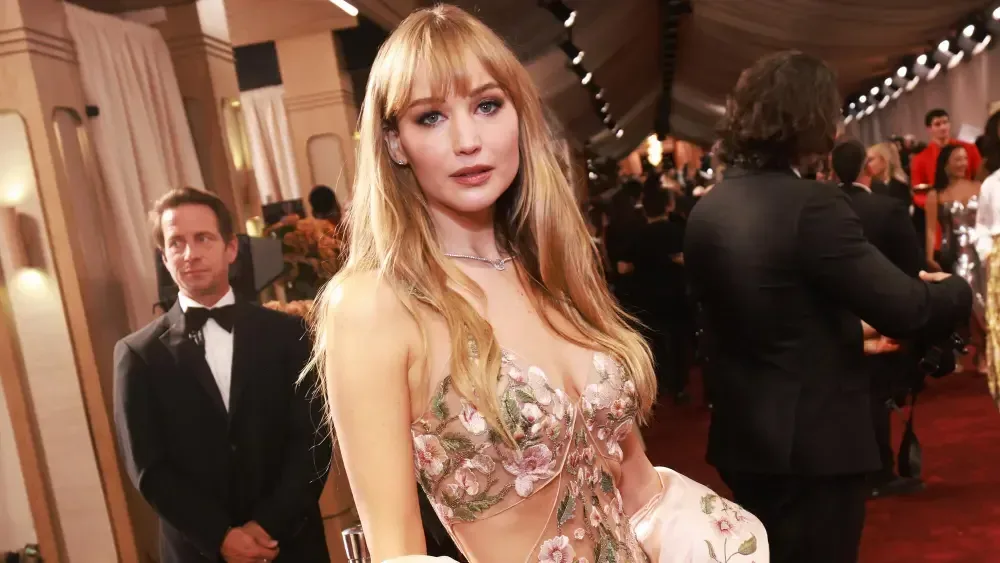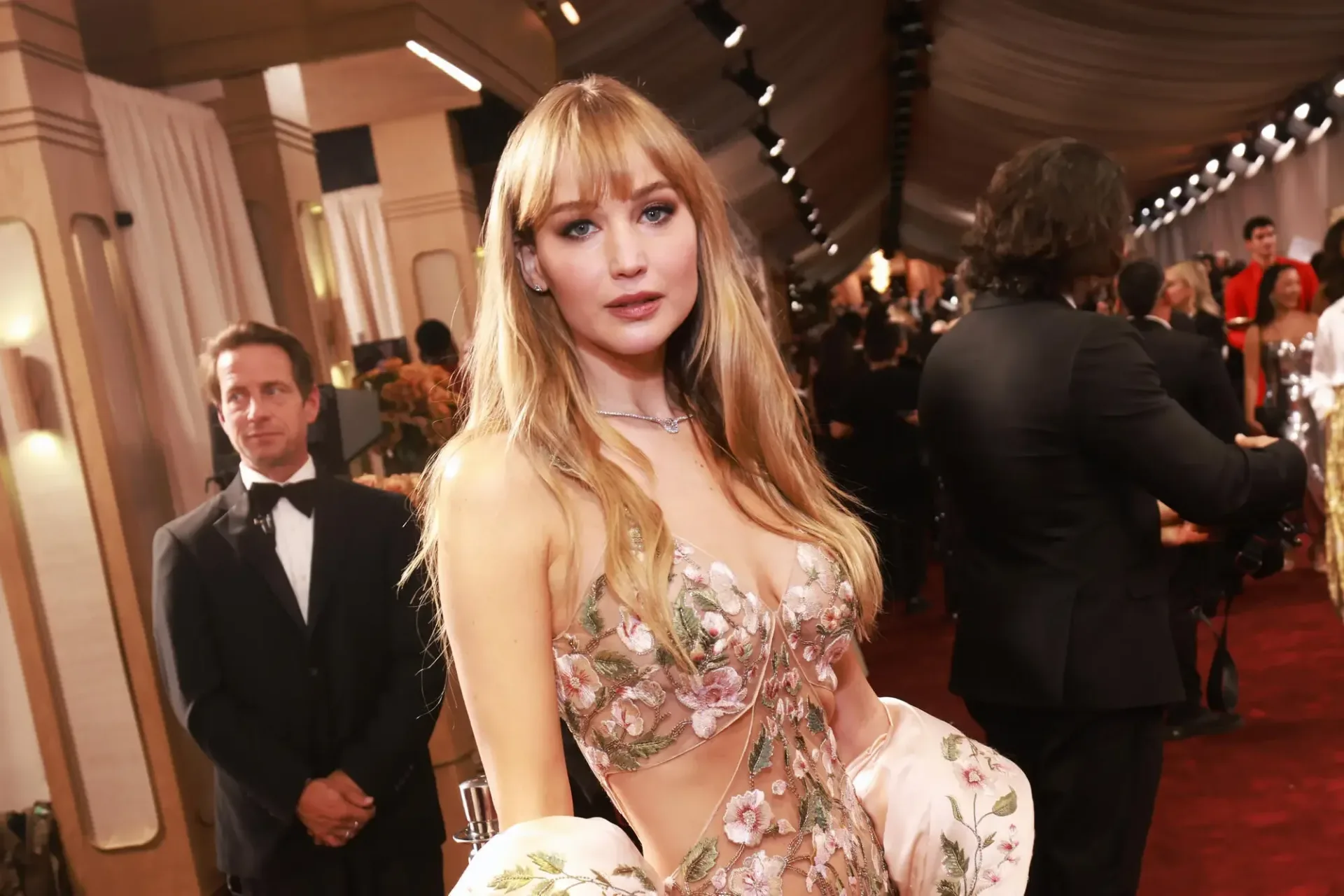
Jennifer Lawrence has drawn a practical line around cosmetic procedures: whatever she chooses to do, it cannot get in the way of acting. In a recent fashion-magazine interview, the Oscar winner said she uses “baby Botox” but keeps it restrained because she needs her face to remain expressive on camera.
It is an unusually direct way of putting a concern that can be easy to overlook when conversations about celebrity beauty routines turn into a scoreboard of treatments. Lawrence’s point was not that performers should make identical choices, or that aging needs to be “fixed.” Her focus was the working tool at the center of her profession. An actor’s face is not merely something photographed at premieres; it has to communicate a thought before dialogue arrives, alter the meaning of a line, and register reactions inside a close-up.
“I need to have movement in my face,” Lawrence said, explaining that she cannot have very much done.
Lawrence acknowledged that she would prefer certain changes in her appearance, but said she is willing to accept a little more looseness in her skin if it still looks healthy and luminous. That exchange avoids the familiar, dishonest split between celebrities who supposedly never think about appearance and celebrities who are judged for thinking about it too much. Her answer allows for vanity, uncertainty and professional necessity to coexist.
Expression is part of the performance
The stakes are particularly clear for screen actors. Film and television can magnify a tiny facial adjustment: a mouth that hesitates, eyes that tighten, a flash of contempt, a smile that collapses halfway through. Those details often do as much narrative work as an action sequence or a monologue. In that sense, Lawrence is describing a career calculation rather than issuing a universal rule about cosmetic treatment.
That distinction matters. Cosmetic procedures are personal medical and aesthetic decisions, with different goals and outcomes for different people. Lawrence did not position herself as an authority on anyone else’s choices. Instead, she explained why her own threshold is limited by the need to play characters whose emotions must read with clarity.
It also creates an interesting contrast with the polished expectations surrounding modern celebrity images. Stars are asked to appear perpetually youthful, then criticized if any effort toward that goal is visible. They are expected to be candid, but can be punished for candor. Lawrence’s remarks expose the strange middle ground: audiences may demand the illusion of effortless perfection while still wanting performers to seem alive, human and emotionally available in a close-up.
Lawrence is open about some options and wary of others
Lawrence did not present herself as completely opposed to treatments. Beyond her limited Botox use, she said she likes radiofrequency treatment, joking that it feels like a workout for her cheeks. But she voiced apprehension about fat transfers, saying she is nervous about them and would rather see how they play out for other people before deciding whether they are for her.
She also said she would like buccal fat removal, while adding that it would be too obvious for her to pursue. The comment landed with her characteristic mix of frankness and comic self-awareness. Rather than pretending she is beyond the pressures attached to appearance, she described the negotiations openly: wanting something, worrying about it, and recognizing how a visible alteration might be read.
That is a more useful frame than treating every procedure as either scandalous or automatically empowering. There is no need for a culture-war verdict on a person’s face. The real question in Lawrence’s comments is narrower and more craft-oriented: can a performer maintain the range of expression needed for the work? For her, the answer shapes where she draws the boundary.
Olivia Wilde identifies a casting-side problem
Lawrence’s comments arrived not long after Olivia Wilde raised a closely related issue from the director’s chair. During a summer promotional appearance connected to The Invite, Wilde said she finds it increasingly difficult to locate actresses who can still move their faces. She also made clear that she understands the pressures involved, describing herself as subject to the same system.
Wilde’s observation broadens the issue beyond individual preference. A director casting a film is not looking only for a marketable headshot or a red-carpet look. They are searching for performers capable of creating a character across an entire emotional range, sometimes with very little dialogue. If facial mobility is diminished, it may affect what can be conveyed through a shot, especially in the intimate visual language of drama.
At the same time, Wilde spoke about the impossible standards imposed on women in entertainment. In blunt terms, she noted how public criticism can attack someone for appearing older while also attacking them for perceived efforts to avoid aging. Her remarks capture a double bind with no clean “winning” move: age naturally and get mocked, change something and get scrutinized, or say nothing and let speculation fill the vacuum.
For an industry that thrives on faces, the tension is hardly surprising. What is notable is that Lawrence and Wilde have described it in terms of performance rather than simply fashion or beauty. The concern is not whether an actor looks flawless in a still image. It is whether the face remains a responsive, flexible storytelling instrument once cameras roll.
That concern sits alongside a larger discussion of how movies create human connection. The strongest screen performances can make viewers feel they are watching thought happen in real time. New formats can experiment with immersion and audience connection too, as seen in the evolving push for shared spaces and stronger storytelling in XR, but the expressive face remains one of cinema’s oldest and most potent tools.
A busy stretch for Lawrence’s screen career
The conversation comes during an active period for Lawrence. She was prominent on the previous awards-season circuit for Die My Love, which premiered at Cannes and earned her a Golden Globe nomination for best actress in a motion picture drama. A performance-centered project naturally reinforces why she places such value on preserving movement: awards conversations may revolve around a whole film, but they often turn on the particular moments when an actor makes interior emotion visible.
Lawrence is also expected to return as Katniss Everdeen in a small role in the November prequel Sunrise on the Reaping. The planned appearance reconnects her with the character at the center of the Hunger Games films, a franchise in which Katniss’ watchfulness, fear, defiance and grief frequently played across Lawrence’s face before the character said a word.
For fans of the adaptation series, that prospective return carries obvious nostalgia. Katniss is not a role built solely on action set pieces, even when the arena imagery dominates the marketing. The character’s reserve and rapidly changing calculations are crucial to her identity. That makes facial nuance an especially fitting subject around a performer associated so closely with the role.
Her next major starring project is expected to pair her with Leonardo DiCaprio in Martin Scorsese’s What Happens at Night, slated to arrive next year. Details may develop before release, but the announced pairing alone suggests another high-profile acting showcase. It is also a reminder that performers’ careers have long depended on the small, difficult-to-fake details that a camera catches.
The tension between polish and expressiveness has been part of screen culture for decades, though the particular procedures and pressures change over time. Even a historical film must find ways to make its subjects feel present rather than preserved behind glass; a recent look at a lively Dostoevsky biopic makes that broader point from another angle. Audiences connect when people on screen seem unpredictable, vulnerable and alive.
Lawrence’s stance is not a manifesto, medical guidance or a demand that every actor approach cosmetic work as she does. It is a personal working principle stated plainly: she can make room for a little Botox and still insist that her face needs to move. In an image-conscious business full of contradictory demands, that may be the clearest possible description of her priority.