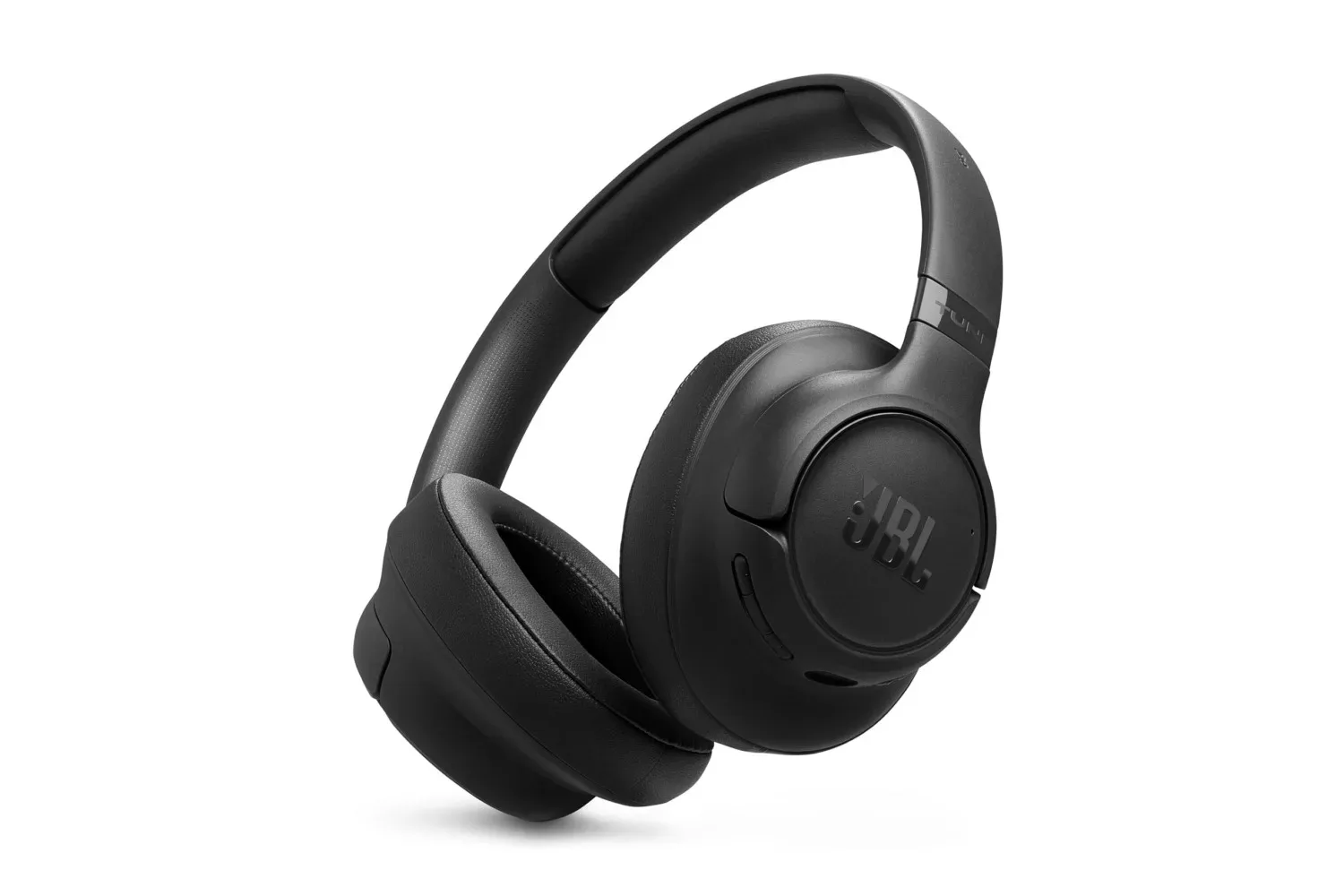
The JBL Tune 730BT wireless headphones are listed at $60, a $30 reduction from their stated $90 regular price. That is a 33% discount, and the offer covers Black, Beige, Blue, Purple, and White versions rather than limiting the lower price to one less popular colorway.
For someone who wants an uncomplicated over-ear wireless headset for music, calls, streams, and long gaming sessions away from a desk, the most consequential figure here may not be the sale price. JBL rates the Tune 730BT for up to 76 hours of battery life from a single charge. The headphones are also said to offer a five-hour playback boost from five minutes of charging, while a full recharge takes around two hours.
Those are manufacturer-stated figures, so real endurance will naturally vary with listening volume, call use, and how often the headphones are being charged and connected. Still, 76 hours is a notable claim at this price level because it potentially turns charging from a near-daily concern into an occasional maintenance task. That practical convenience can matter more than a marginal audio upgrade for people who use one pair across work calls, travel, and evening gaming.
What the $60 JBL Tune 730BT deal includes
The listed $60 price applies to the JBL Tune 730BT itself and is paired with a 90-day Amazon Music Unlimited trial. The trial is described as having a $39 value. It renews at $13 per month after the trial period if the subscriber keeps the service, making it important to review the subscription terms and cancellation settings rather than treating the trial as a permanent price reduction on the headphones.
- Sale price: $60
- Stated regular price: $90
- Discount: $30, or 33%
- Colors included: Black, Beige, Blue, Purple, and White
- Music trial: 90 days of Amazon Music Unlimited
- Renewal after trial: $13 per month if retained
- Shipping: Free for Prime and non-Prime shoppers
Like most retailer promotions, a listed price and associated bonus can change or end. Prospective buyers should verify the color selection, checkout total, and music-trial eligibility at the time they place an order. A complimentary trial can be useful for trying a streaming catalog with a new headphone pair, but it is only a benefit if the renewal condition suits the buyer.
Battery life is the headline specification
Wireless headphones live or die by whether they are ready when needed. JBL’s up-to-76-hour claim suggests the Tune 730BT is positioned around longevity rather than frequent cable time. It should not be read as a guarantee that every listener will receive precisely 76 hours: wireless battery estimates are typically measured under particular conditions, and higher volumes or heavier microphone use can affect the result.
The fast-charge claim is equally relevant in a more immediate way. A five-minute top-up for up to five hours of playtime could be helpful when the headphones are low shortly before a commute, a work call, or a longer play session. Meanwhile, the stated two-hour full charge gives buyers a clearer sense of the time commitment after the battery has been depleted.
For players who keep portable systems, phones, and laptops in rotation, long battery life can also reduce the clutter of adding another device to the nightly charging pile. That does not establish anything about latency, platform-specific compatibility, or microphone performance in games; those details are not specified here. It does establish a battery-focused feature set that is easy to understand before purchase.
40mm drivers and app EQ: what those terms mean
JBL says the Tune 730BT uses custom 40mm drivers. A driver is the component inside a headphone that converts an electrical signal into audible sound. The 40mm measurement refers to the driver’s diameter, not to a universal measure of sound quality. Its presence alone cannot prove that one headphone will sound better than another, but it is a central part of the hardware responsible for producing music, dialogue, effects, and voices.
The headphones are described as delivering deep, crisp, and bold sound, with an emphasis on fuller playback for both slower material and bass-forward tracks. Sound preference is personal, though, and this model supplies another tool: EQ presets in the JBL Headphones app.
EQ, short for equalization, adjusts portions of the audio frequency range. The supplied examples are straightforward. A Bass setting is intended to give low-end sound more impact, while a Vocal setting is meant to make voices clearer. That could be useful for listeners who move between music, podcasts, video, and dialogue-heavy games without wanting one fixed tuning for everything.
Presets are not a substitute for trying a headphone if a buyer has a very specific sound preference. They are, however, a practical flexibility feature. Rather than expecting a single default profile to suit every track or type of content, an owner can choose an available app setting that better fits the moment.
Calls, beamforming microphones, and two-device pairing
JBL lists two beamforming microphones on each earcup. Beamforming is a microphone technique designed to focus on sound coming from a desired direction—usually the person wearing the headset—while reducing unwanted surrounding noise. In this case, the intended benefit is clearer speech when making calls in a place such as a café.
That framing is worth keeping precise: the headphones are said to reduce background noise for calls and capture the user’s voice more clearly. It does not mean the available information establishes active noise cancellation for what the wearer hears, nor does it provide comparative call-quality testing. Buyers looking for a particular type of noise-control feature should distinguish microphone noise reduction from listening-side noise cancellation.
The Tune 730BT can also pair with up to two devices simultaneously and switch between them. This is a meaningful day-to-day feature for anyone using, for example, a laptop and phone. A call can arrive on one device while the headphones are already connected to the other, avoiding the need to unpair and repeat the connection process every time devices change.
That device-switching convenience fits the product’s general appeal: it is less about presenting a single specialist feature than covering ordinary wireless-headphone needs with a lengthy claimed battery life, app-based sound presets, call microphones, and portable design. Readers following broader consumer-tech news can also see details on the latest iPad mini camera and document-scanning additions.
Fold-flat design and who should consider it
JBL says the headphones are comfortable to wear and fold flat for portability. Folding flat is a simple but worthwhile design consideration for anyone placing headphones in a bag between uses. It can make the pair easier to pack than a fixed-shape over-ear model, although no dimensions, weight, protective case, or durability details are provided here.
At $60, the Tune 730BT looks most relevant to buyers prioritizing price, endurance, multipoint-style two-device use, and basic portability. The all-color availability is a small but welcome part of the deal because it means choosing a preferred finish should not require giving up the discount.
The available information does not set out every feature a shopper might care about. There is no supplied detail on wired listening, gaming latency, water resistance, active noise cancellation, codec support, or a formal comparison with other headphones. Those omissions do not make the deal poor; they simply define what cannot be concluded from the listed specifications.
What is clear is the core value proposition: a $30 reduction brings the JBL Tune 730BT to $60, with up to 76 hours of claimed battery life, a quick-charge option, 40mm drivers, adjustable EQ presets, four beamforming microphones in total, two-device connectivity, and a fold-flat form factor. The extra music-service trial may add value for eligible shoppers who want it, provided they account for the $13 monthly renewal after 90 days.
Shop the products
Check current price, model and availability at the retailer.