A huge TV can make a game world look spectacular, but its built-in speakers are still often doing the audio equivalent of trying to run a raid boss with a plastic spoon. The picture may be bright, sharp and expansive, yet dialogue, score, positional effects and the low-end thump of a big encounter can remain cramped inside a thin television chassis. For players building a more immersive console or living-room PC setup, audio is not just an accessory: it is part of the game’s sense of scale.
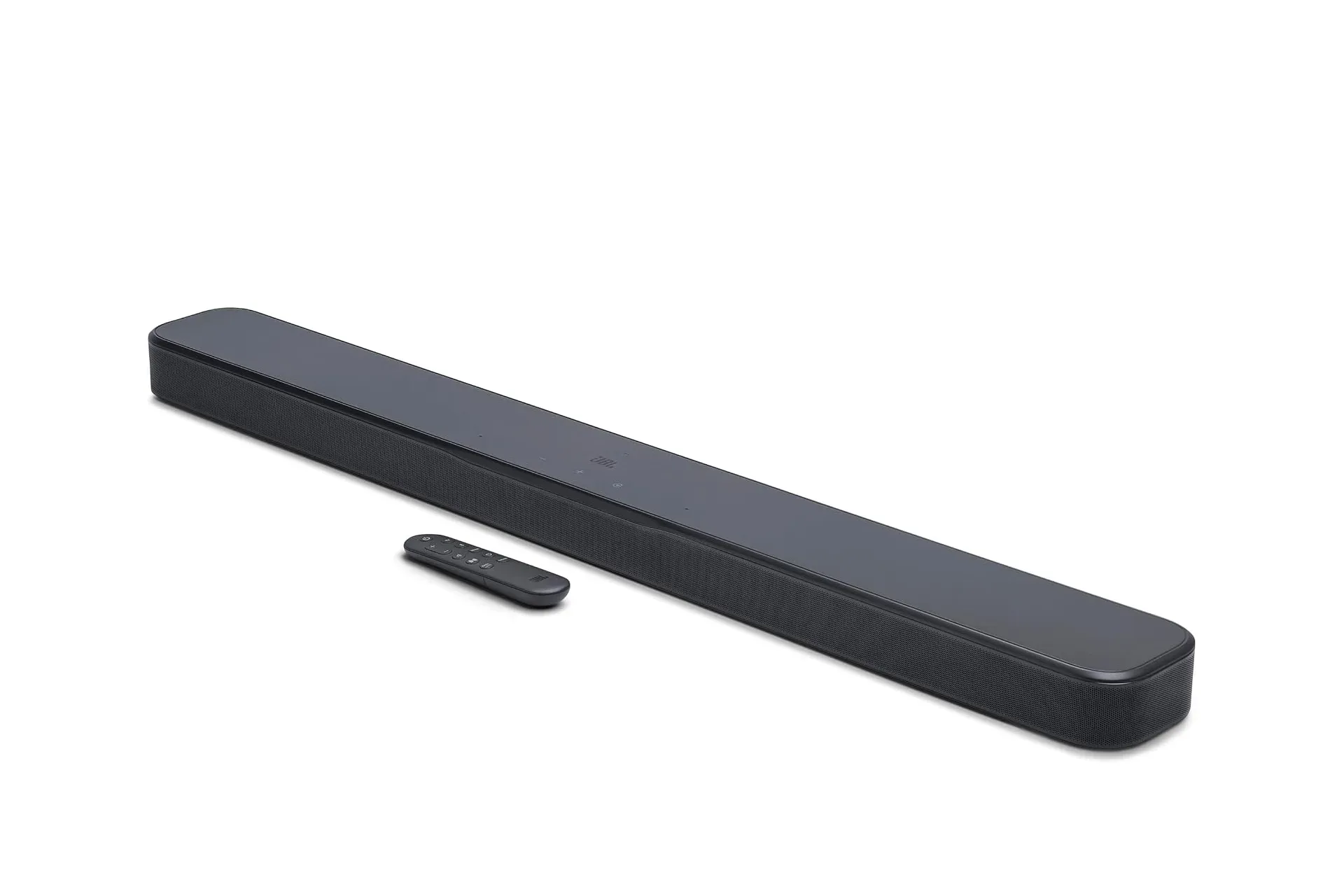
That makes the current JBL Bar 300MK2 price worth noting. The 5.0-channel, all-in-one soundbar is listed at $280, representing a reported $170 discount or 38% off. The price is described as a new low. As with any retailer promotion, a deal can change without warning, so the important number is the one displayed at checkout rather than the one a browser tab remembers from earlier in the day.
The Bar 300MK2 is positioned as a straightforward upgrade over a TV’s integrated audio rather than a commitment to a pile of separate speakers around the room. Its listed feature set includes 450W maximum output, Dolby Atmos support, enhanced dialogue through PureVoice 2.0, HDMI eARC connectivity and included wall-mounting hardware. For a gaming room where space, cable management or neighbor diplomacy rules out a larger surround setup, that collection of features is the real appeal.
Why a soundbar matters for games as much as movies
It is easy to frame a soundbar as a movie-night purchase. Dolby Atmos logos, after all, bring to mind helicopters overhead, orchestras swelling and rain bouncing through a cinematic scene. But games are built around sound cues at least as often as they are built around pretty pixels. A nearby reload, a distant vehicle, a character calling from off-screen or a shift in the game’s musical tension can all communicate information before the player has fully processed what is happening visually.
Even games that do not rely on precise competitive audio benefit from a more capable presentation. Open-world exploration feels different when weather, crowds and environmental music occupy more room than the speaker cavities hidden in a television can provide. Sports games gain a stronger stadium atmosphere. Racing games are more convincing when the engine note has body rather than merely volume. A co-op night also benefits when teammates can hear the story beats without everyone leaning forward and asking what a character just said.
The Bar 300MK2 is a 5.0-channel model, meaning it is intended to create a broader, more enveloping soundfield from one bar. Dolby Atmos support is designed to add a sense of dimensionality to compatible audio. No single soundbar should be confused with a room filled with carefully placed dedicated speakers, and the eventual effect will vary with a room’s layout and the material being played. Still, an all-in-one design can be the practical answer for people who want more presence without adding satellite speakers and additional components.
450W maximum output and an all-in-one approach
JBL lists a maximum output of 450W for the Bar 300MK2. That specification alone does not tell shoppers exactly how a particular room will sound; dimensions, listening distance, surfaces and personal volume habits all matter. It does, however, indicate that this is aimed at doing more than simply making a television louder. The stated goal is fuller, more forceful sound, including punchy bass, from a single soundbar enclosure.
That matters for setups built around a TV stand. A separate subwoofer can be useful, but it also takes floor space, introduces another power consideration and gives one more object to position in a room. The Bar 300MK2’s all-in-one format keeps the installation proposition more contained. That does not mean it is automatically the best choice for every listener. Someone specifically seeking the deepest possible bass, or intending to build a multi-speaker home-theater system piece by piece, should compare designs with separate components before making a decision.
Related coverage includes JBL Bar 300MK2 Falls to $280 With 38% Off.
For a comparatively tidy gaming setup, though, a single bar has obvious advantages. It can sit beneath the screen, leave a desk or cabinet less cluttered than a more elaborate speaker arrangement, and give a console, streaming box or PC-connected display a better chance to sound as expansive as it looks. Anyone revisiting older console favorites knows that presentation upgrades can refresh familiar games in unexpected ways; the same principle is part of why Viva Piñata still makes a compelling case for its distinctive world. Better audio cannot remake an old game, but it can make its music, effects and atmosphere easier to appreciate.
Dialogue clarity may be the more practical feature
Atmos and power figures grab attention, but PureVoice 2.0 may be the Bar 300MK2 feature that matters most on an ordinary weeknight. Modern movies, series and games can have dense mixes. Dialogue sometimes competes with music, explosions, environmental ambience and the general noise of whatever gigantic machine is currently collapsing on screen. Turning up the master volume does not always solve the problem; it can simply make the loud parts much louder while speech remains difficult to follow.
JBL says PureVoice 2.0 automatically optimizes spoken dialogue in relation to ambient sound and the soundbar’s volume. The intended result is clearer voices whether characters are speaking quietly or shouting over action. That is useful for story-heavy games, sports commentary, voice-over work in open worlds and the increasingly common evening where somebody wants to watch without permanently enabling subtitles.
There is a sensible expectation to set here. Dialogue enhancement is not a substitute for a good original mix, nor does it promise that every game, film or show will suddenly sound identical. The quality of a title’s audio, its output settings and the room all remain important. But intelligibility is a major quality-of-life factor, and a dedicated speech-focused feature is more meaningful than a vague claim that a bar simply offers “better sound.”
Setup is designed to stay simple
A soundbar should not become a side quest that consumes an afternoon of menus, cables and remote-control troubleshooting. The JBL Bar 300MK2 can be placed on a TV stand or mounted to a wall using the included mounting hardware. That gives buyers a choice between the conventional low-profile placement below a screen and a cleaner mounted arrangement.
HDMI eARC is another key detail. When connected to a compatible television through HDMI eARC, the soundbar can be controlled with the TV remote for volume. For households already juggling console controllers, a streaming remote and perhaps an arcade stick, avoiding one more controller is a genuine convenience rather than a minor footnote.
Before buying, it is worth checking the television’s ports and its audio-menu options. HDMI eARC compatibility is the relevant connection feature cited for the Bar 300MK2, and the best results depend on using the appropriate TV port and configuration. Buyers should also measure the space in front of the television. A bar that blocks the screen’s lower edge or interferes with an infrared receiver can turn a clean upgrade into an irritating daily compromise.
Who this $280 JBL deal suits
At its reported $280 sale price, the JBL Bar 300MK2 looks most appropriate for people who want a recognizable-brand, single-unit sound upgrade with modern headline features, rather than the cheapest possible way to add sound. It has a clear use case for console players, TV viewers and PC users routing their display through a living-room screen.
- It makes sense for: players wanting more cinematic sound from a TV-centered setup.
- It makes sense for: shoppers who value Dolby Atmos support but do not want to install multiple speakers.
- It makes sense for: people bothered by difficult-to-hear dialogue and interested in PureVoice 2.0.
- It makes sense for: rooms where HDMI eARC and TV-remote volume control can simplify everyday use.
- It deserves more comparison shopping from: anyone who specifically wants a separate-subwoofer system, physical rear speakers or a component-based home-theater path.
The current listing describes the $280 price as 38% off and $170 below the prior price, placing the JBL Bar 300MK2 firmly in the “check it while it lasts” category for a soundbar with this feature set. The core value is not a promise of an instant professional cinema. It is the prospect of replacing TV audio’s familiar limitations with a 5.0-channel bar that prioritizes broader sound, Dolby Atmos-compatible playback, substantial stated power and clearer voices—without asking a gaming setup to surrender its entire room to speaker hardware.
Shop the products
Check current price, model and availability at the retailer.