Yamaha has introduced the B200A, a compact soundbar aimed at people who want Dolby Atmos support without committing a great deal of money or furniture to their audio setup. Scheduled for release in November at $250, the bar measures 23.5 inches wide and 2.5 inches high, putting its design emphasis squarely on spaces where a conventional, larger soundbar can be awkward.
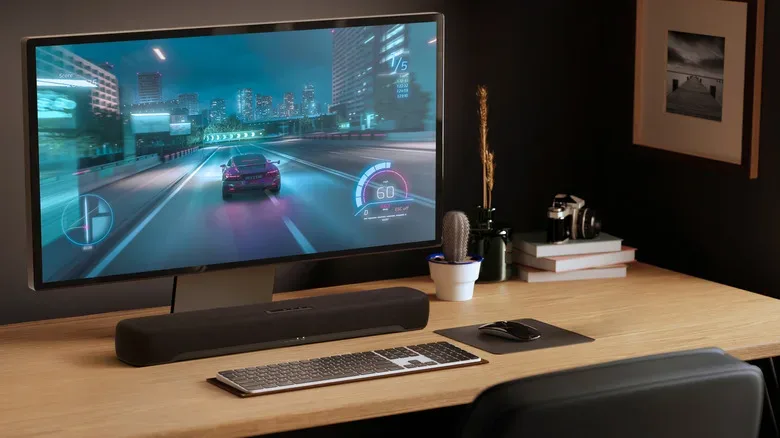
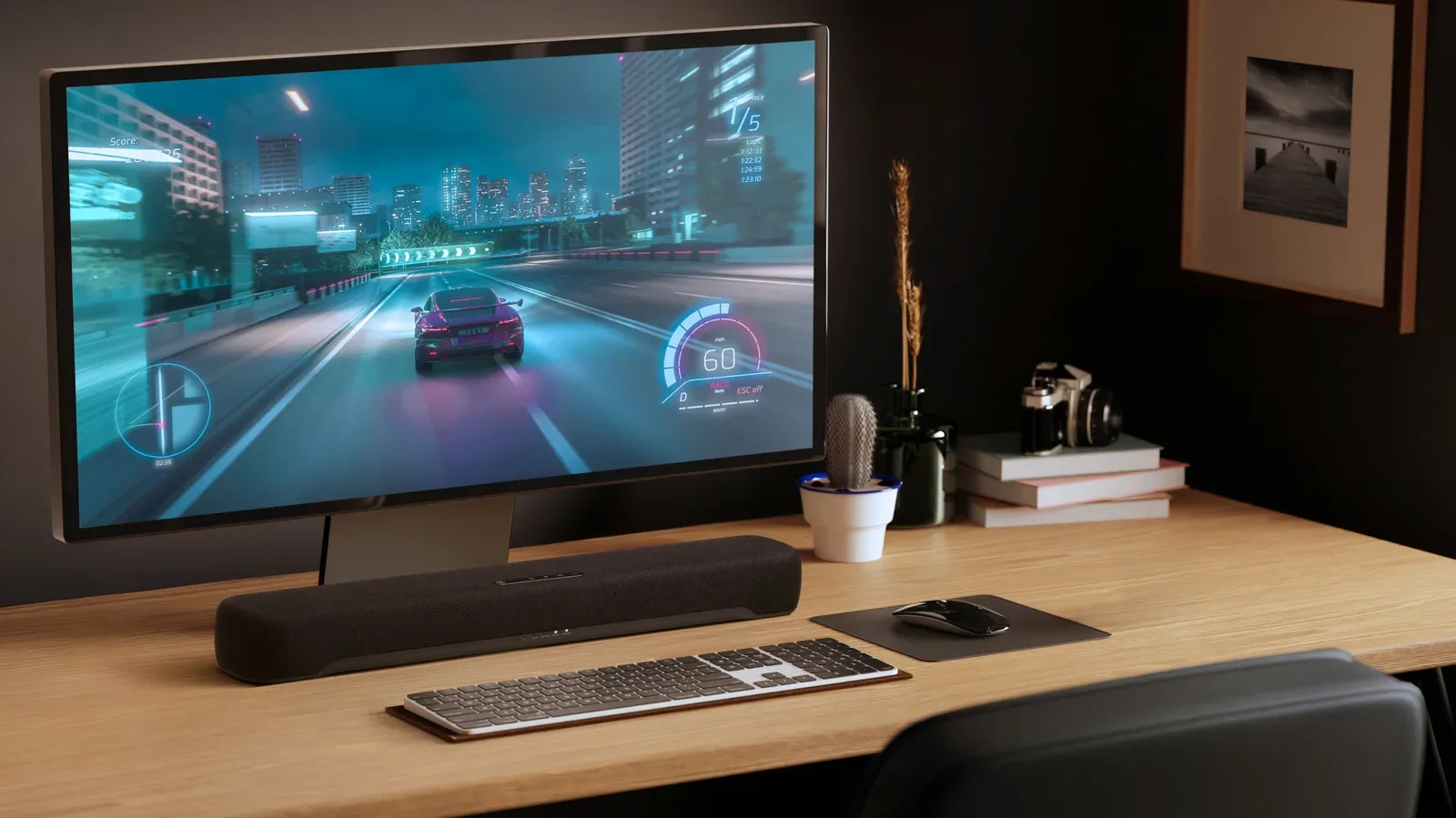
That can mean a living-room television, of course, but the B200A’s footprint also makes it a potentially neat match for a desktop gaming display. It can be wall-mounted for people trying to keep their desk or TV unit clear. Yamaha is pairing that physical restraint with a short feature list: Dolby Atmos, an integrated subwoofer, four listening presets, Clear Voice processing, one HDMI port, a 3.5mm input and Bluetooth.
In other words, this is not being presented as a do-everything home-theater hub. The appeal is more focused: one small unit that could make game audio, TV dialogue, films and phone streaming more substantial than a display’s built-in speakers, while avoiding the space demands and cabling of a multi-speaker arrangement.
Small dimensions are the point, not a footnote
The B200A is 23.5 inches wide and 2.5 inches high. Those measurements matter more than they might on a traditional TV-focused soundbar. A bar that is much wider than a monitor can dominate a desk visually and physically; one that is tall can obstruct the lower portion of a screen, depending on the stand. Yamaha’s dimensions make the B200A a more plausible under-monitor candidate, at least in terms of the space it occupies.
Wall mounting supplies the other practical option. Moving a speaker off a media unit or desk can free useful surface area, particularly where a console, controller charger, keyboard, dock and monitor stand are all competing for it. The trade-off is that a wall-mounted installation requires planning for cable routing and a suitable mounting location. The supplied information confirms that the B200A can be mounted to a wall, but prospective buyers should not assume additional mounting details that have not been specified.
Compactness does not automatically make a product the right fit. Measure the open space beneath a monitor, check where a TV stand leaves room, and consider where a single HDMI cable and power connection would run. Readers weighing a new display at the same time may also find our look at whether curved gaming monitors are ready for a desk and the games played on them useful context: desk geometry has a habit of deciding what works before specifications do.
What Dolby Atmos means here
Dolby Atmos is an audio format associated with a more dimensional presentation of sound. In straightforward terms, it is intended to add a sense of placement and movement beyond a basic left-and-right mix. In games and film, that ambition can make effects such as a passing vehicle, environmental ambience or action above the viewer feel more spatially involving when the material and playback chain support it.
It is important to separate the format from a guarantee about a particular room. Yamaha says the B200A can produce “3D immersive sound,” despite the bar’s compact size and its two drivers plus built-in subwoofer. That is the product’s stated goal, rather than a promise that a small single-bar system will reproduce the same result as every larger or more elaborate speaker configuration in every room.
Room layout, listener position, the sound mix in a game or movie, and connection choices all affect what a listener perceives. The meaningful news is that Yamaha is putting an Atmos-capable option into a smaller $250 bar, not that physical limits have ceased to apply. For a player using a monitor on a compact desk, the question may be less about replicating a full dedicated theater and more about gaining a cleaner, broader audio experience than the monitor itself delivers.
A built-in subwoofer targets the part small speakers often miss
The B200A uses two drivers and a built-in subwoofer. A subwoofer handles low-frequency sound—the region that gives weight to explosions, engines, bass lines and the deep rumble present in many games and movies. Including one inside the soundbar is a deliberate convenience choice. It avoids requiring a separate box on the floor or another piece of furniture to hide, an especially relevant consideration for apartments, bedrooms and desk setups.
Yamaha also includes a Bass Extender setting for added low-end emphasis. That could be useful for people who want more punch from action-heavy material, though it is best understood as an optional tuning control, not an indication that every listener should use it at maximum. In a smaller room, or when playing near a desktop monitor, extra bass can be more immediately noticeable. A setting such as this lets the listener choose a balance that suits their material and surroundings.
The company has not supplied broader technical specifications such as output figures, supported connection variants or performance measurements. That leaves sensible reasons to wait for fuller details if those factors will decide a purchase. Still, the core design is clear: reduce the number of separate components while retaining a dedicated route for lower frequencies.
Dialogue features may be as valuable as cinematic effects
Gaming audio is not only footsteps and thunderous set pieces. Story games, streamed shows, sports broadcasts and voice-heavy multiplayer sessions all live or die on intelligibility. Yamaha’s Clear Voice technology is intended to keep dialogue distinct from background sound and music.
That is a practical feature to look for in a simpler soundbar. A complicated mix can have busy music, environmental effects and spoken lines competing for attention at once. Dialogue enhancement generally means processing designed to give speech more presence in that mix. It is not a replacement for a well-made game or film mix, and individual preferences will vary, but the objective is plain: reduce the occasions where a player reaches for subtitles because speech has been buried.
Four preset modes are also included for different listening situations. Yamaha has not detailed the individual modes in the available information, so their exact tuning and names remain unconfirmed. Their inclusion nevertheless reinforces the B200A’s accessible approach. Rather than demanding that every owner become an audio-menu specialist, the bar is designed to offer a few broad adjustment paths.
Connections favor a straightforward setup
The B200A has one HDMI port, a 3.5mm audio input and Bluetooth. HDMI is the primary wired option described for integrating the bar with a TV or gaming-monitor setup. The solitary port should also keep the initial wiring proposition relatively simple, though buyers with several devices should verify how their own display or audio chain will be arranged before assuming the soundbar can replace a broader switching setup.
The 3.5mm jack is the older analogue option. It may be useful for equipment that still provides a conventional headphone or line-level-style audio connection, but the presence of the port should not be read as confirmation of compatibility with every older device or cable arrangement. It is simply an additional physical input alongside HDMI.
Bluetooth gives the B200A a separate use away from the screen: streaming music or other audio from a phone. That flexibility helps a soundbar earn its place in a smaller room. It can be the audio device for a late-evening playlist, then return to game or TV duties without adding a second speaker to the room.
Who the B200A appears to suit
At $250, the B200A is positioned between the least expensive soundbar options and premium home-theater hardware. It looks most compelling for a buyer with a clear constraint: limited room, a desire to keep setup uncomplicated, or an existing TV or monitor whose sound is serviceable but underwhelming.
- Desktop players may value the 23.5-inch width, 2.5-inch height and integrated bass design, provided the bar fits beneath their display and their connection plan works.
- TV users in tight spaces may prefer wall mounting and a single compact enclosure over extra speakers and a separate subwoofer.
- Dialogue-first viewers have Clear Voice processing and four presets as potentially useful conveniences.
- Phone-streaming listeners gain Bluetooth without needing to keep a distinct wireless speaker nearby.
Conversely, anyone shopping specifically for numerous inputs, a more involved component system, or a fully specified high-end audio configuration should recognize the B200A’s deliberately pared-back nature. Yamaha’s announcement describes one HDMI port, not a dense connectivity panel, and emphasizes space savings as strongly as it does Dolby Atmos.
The B200A’s proposition is refreshingly easy to state: a $250, 23.5-inch soundbar that brings Dolby Atmos support, a built-in subwoofer and familiar wired and wireless connections to setups where larger gear does not make much sense. Its arrival is planned for November. More detailed specifications will determine exactly how it compares across individual TV and monitor arrangements, but the intended audience is already apparent—players and viewers looking for a meaningful audio upgrade that does not turn a compact room into an equipment rack.