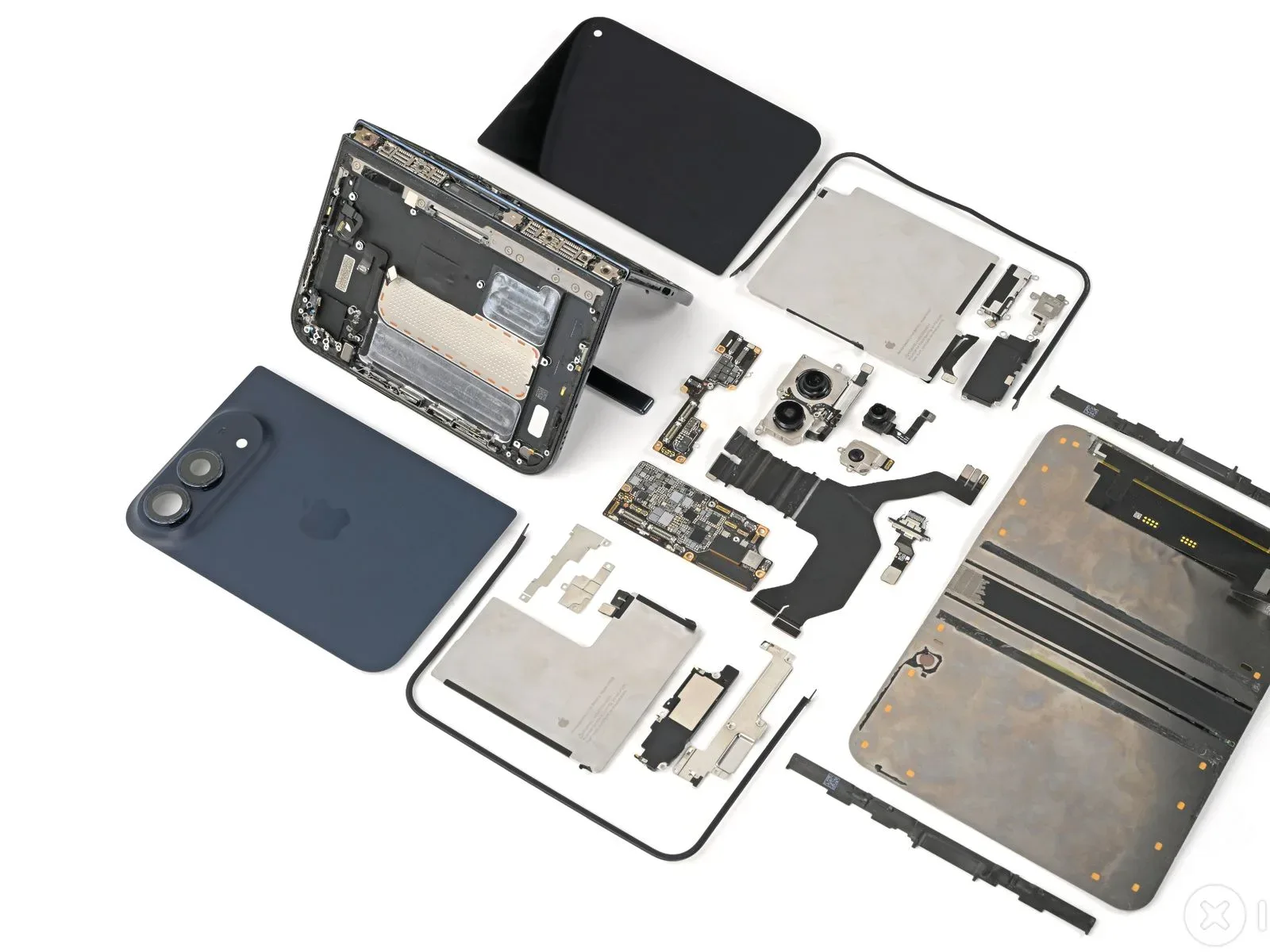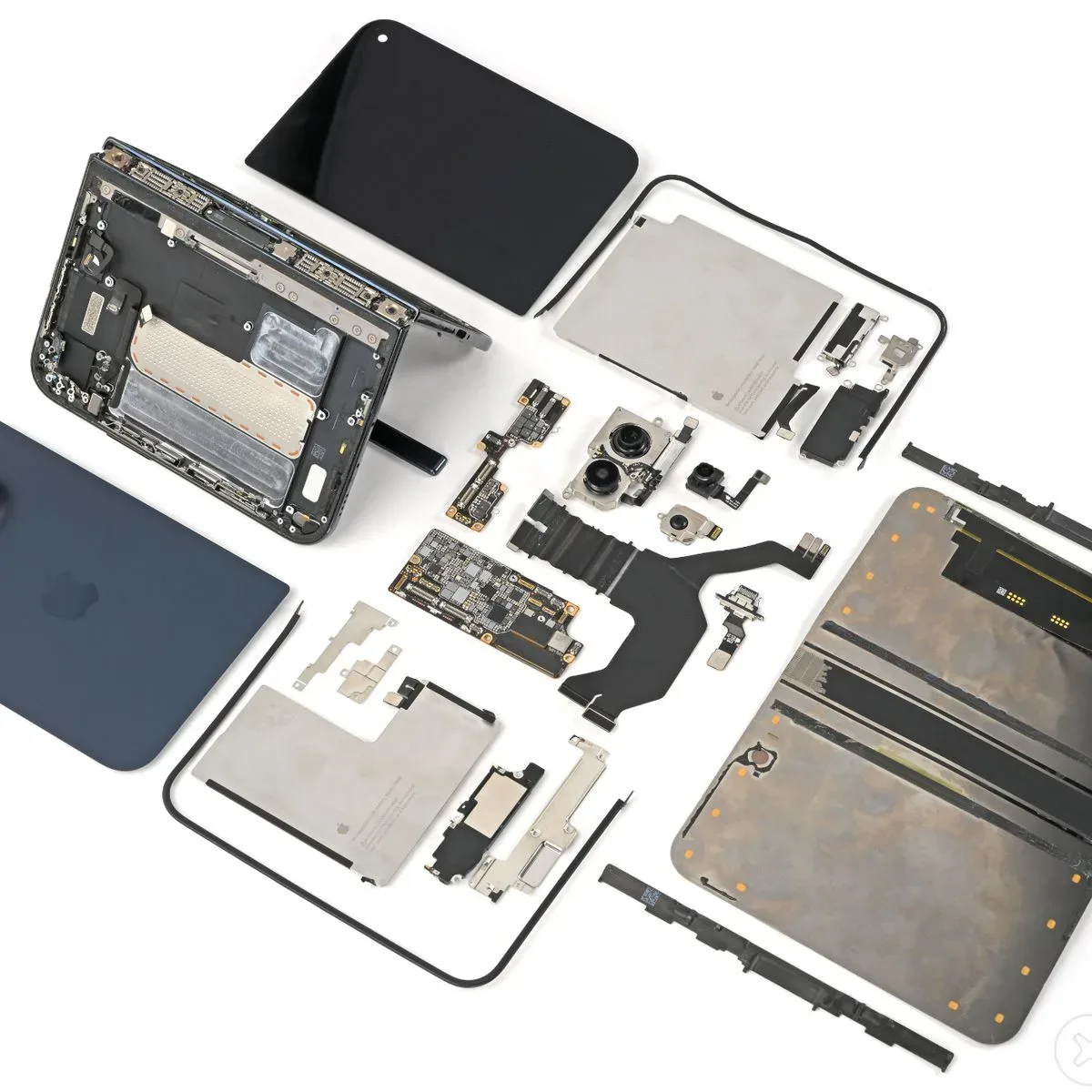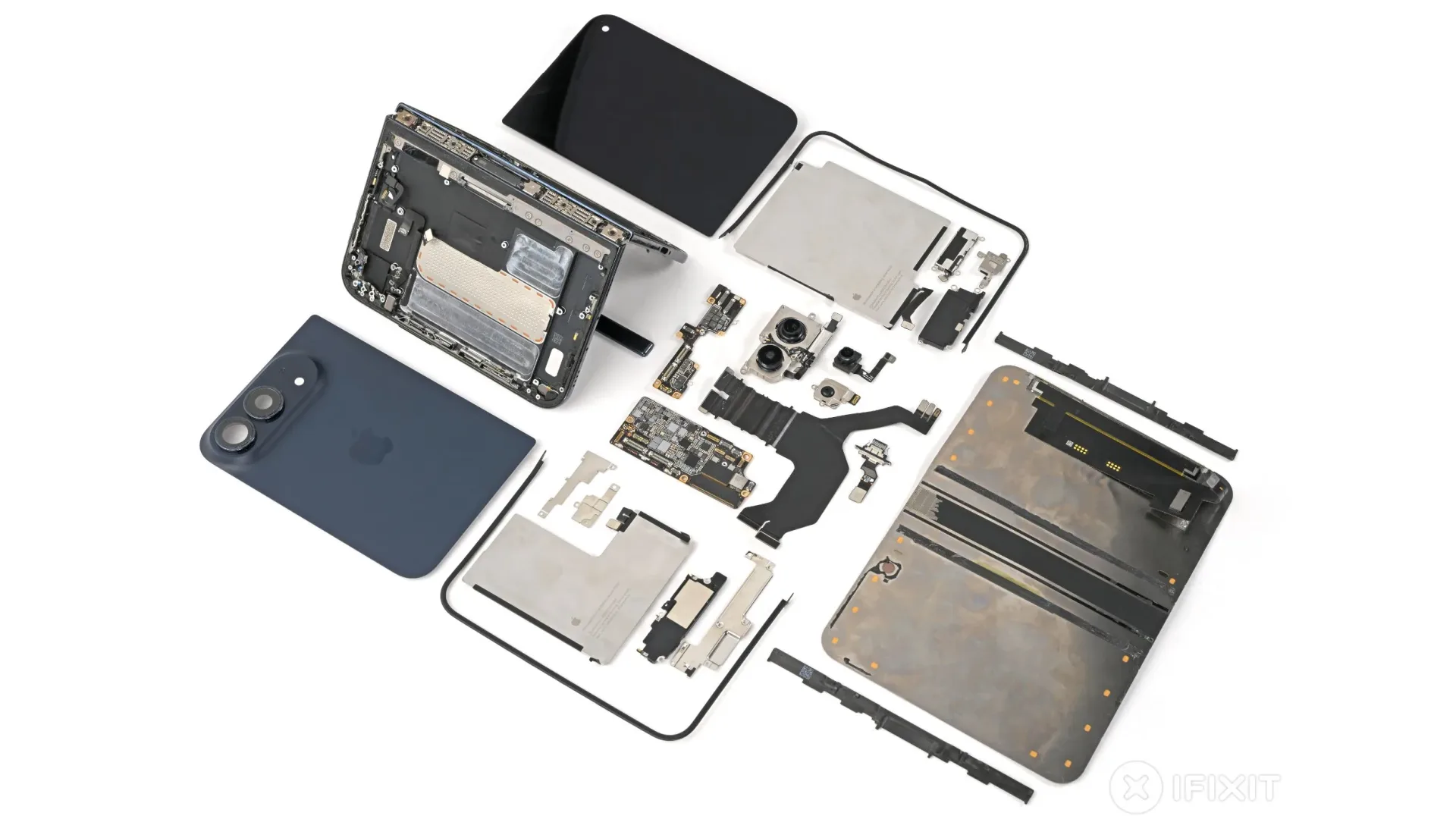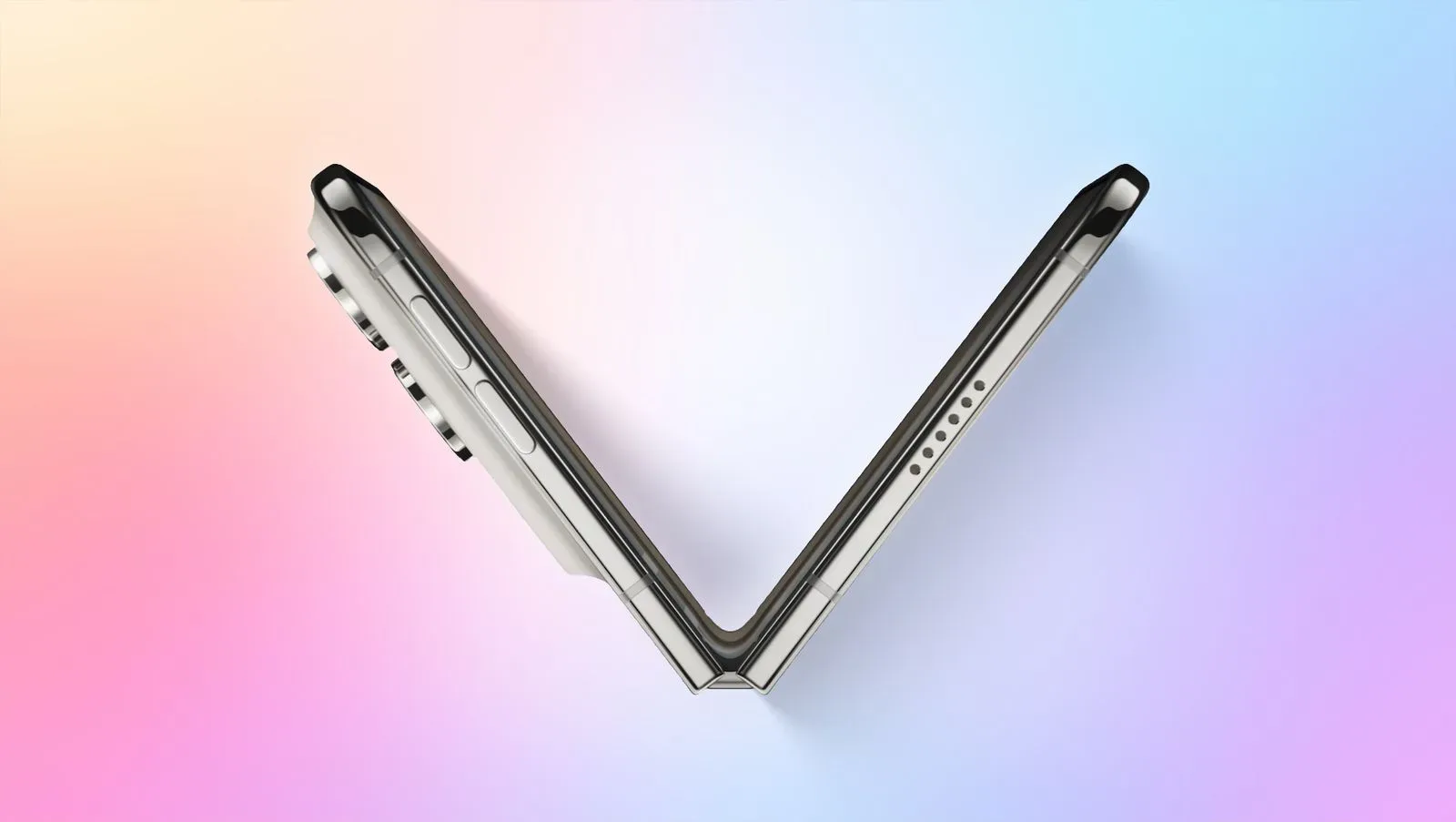
The iPhone Duo’s folding hinge is under close scrutiny after a detailed teardown found two important, if separate, realities: dust can make its way into moving hardware, and the area tied to reported display failures sits beside a complicated transition in the hinge structure. Neither finding establishes a single confirmed cause for damaged displays. Together, however, they illustrate why a foldable phone’s thin inner screen, flexible cable routing and hinge supports have to work as one system.
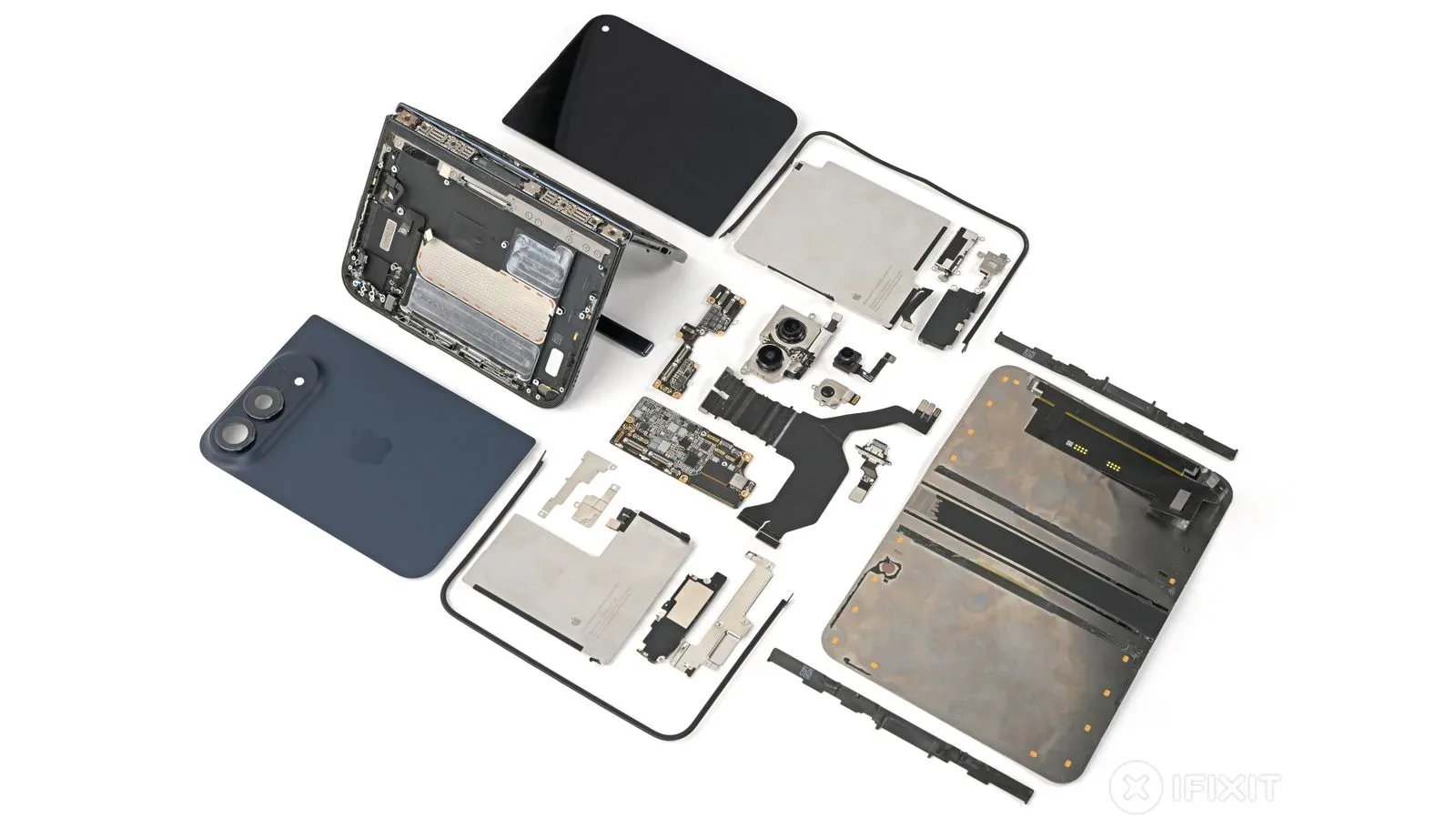
The teardown also delivers a more encouraging repairability result than foldables usually manage. Apple’s removable display cover layer, electrically releasable battery adhesive, a day-one repair manual and the ability to remove the outer display intact helped the iPhone Duo earn a provisional 5/10 repair score. That is one point above the Galaxy Z Fold8 and Pixel 11 Pro Fold, which each received 4/10. The qualification matters: the iPhone Duo’s inner display and hinge remain highly difficult, vulnerable assemblies to repair.
Dust reached the hinge, even if the comparison was relatively favorable
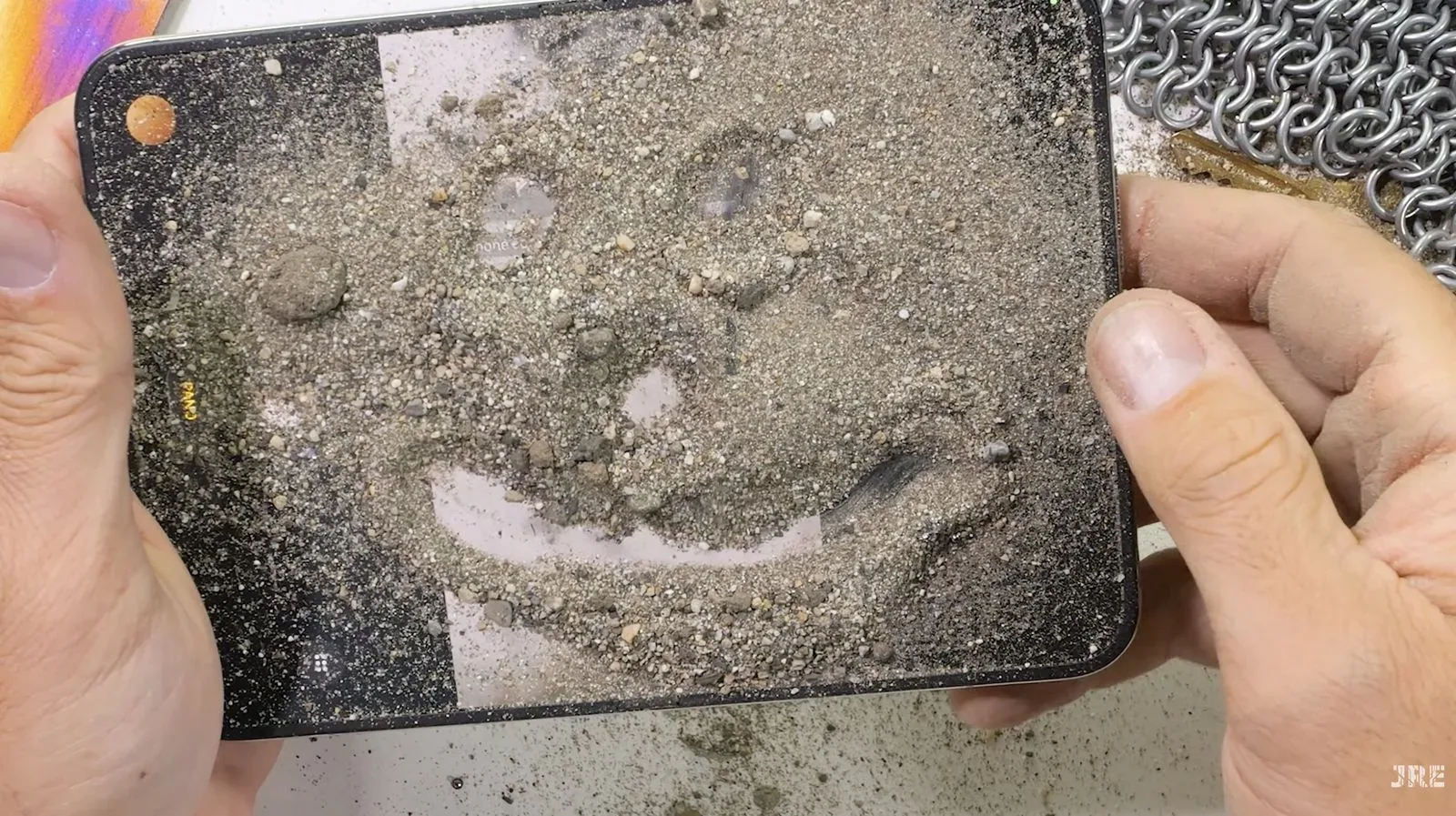
In dust testing, particles entered the iPhone Duo’s hinge and created a crunching sensation. That is significant because a grain or other debris inside a moving mechanism can create localized pressure or interfere with parts designed to move and retract. The hinge accumulated less dust than the Galaxy Z Fold8 and Pixel 11 Pro Fold in comparable tests, an encouraging relative result rather than a declaration that the device is dust-proof.
Some material still reached the phone’s moving parts. That makes sandy or dusty environments an obvious practical concern for a folding device, particularly when the handset is opened or closed. A separate dust test also found particles entering the hinge and interfering with magnets used to keep the phone shut. The available evidence does not say this will happen to every unit, nor does it establish that dust is behind every display failure. It does show that debris intrusion is not merely theoretical.
For owners, the sensible takeaway is not to treat the hinge as an exposed cleaning project. The teardown notes that Apple designed a display cover layer to be removable in service, but it is not intended for users to peel away themselves. If the hinge begins to feel gritty, crunching or unusually resistant, repeatedly cycling it may be a poor gamble: any obstruction is being carried through the same closing motion again and again. Seeking authorized service is the more cautious route, especially if the unusual hinge feel appears alongside display behavior such as a line, blank area or intermittent image.
A possible weak point is not necessarily a snapped screen
The most consequential part of the teardown is its attempt to map reported damage locations against the mechanism beneath the inner display. The investigators built a 3D hinge model using teardown footage, patents and CT scans, then compared that model with photographs of reported failures. The apparent cluster falls near the changeover between the space used by the crossing flex cable and the hinge’s central support.
That is an important distinction from simply saying “the cable breaks.” The reported damage is described as slightly below the point where the display cable passes through the hinge, in an area where several edges meet and the way the thin display is supported changes as it bends. In mechanical terms, this is a potential stress concentration: a location where force may be focused because shapes, supports or stiffness change abruptly. It is not a diagnosis of any individual phone.
Foldables face a design problem conventional slab phones largely avoid. Their inner display must flex repeatedly, while its layers need support through the fold. The iPhone Duo’s inner screen is described as a 10-layer stack. A stack in this context means multiple functional layers built into the display assembly, rather than one simple panel: each layer may have its own job, but the complete structure must bend together in the hinge area.
A display can also appear to have “snapped” without the visible panel literally breaking at the apparent line. A fault in display wiring can produce a similar result. That keeps several explanations in play for the failures that have been seen: pressure, a trapped particle, repeated bending, a manufacturing defect, or an electrical problem. The teardown does not resolve which explanation applies generally, and that uncertainty should not be flattened into a definitive hinge flaw.
The teardown analysis placed the reported breaks near a transition between the flex-cable gap and central hinge support, rather than precisely at the cable crossing itself.
Curved rails are another plausible part of the puzzle
The hinge’s curved rails are another area of interest. These rails follow the screen’s pivot points as the phone closes. One rail aligns with the reported damage area, raising the possibility that it may lift above adjacent flat hinge plates during closing. Another possibility is that a part intended to retract does not fully do so. At present, these are hypotheses, not confirmed failures.
The distinction is useful because it describes the challenge of investigating a foldable. A visible screen symptom may originate in a display layer, a flex cable, an alignment issue, foreign material, a support component or a manufacturing variation. These components are packed beneath a flexible surface and change position as the device opens and closes. A CT scan can reveal where supports and cables sit, but it does not automatically reveal exactly what happened inside a particular device over time.
The iPhone Duo’s hinge is notable for reasons beyond durability. Apple has also tied opening or closing the device to a shortcut-trigger concept, an idea explored in our look at the iPhone Duo’s hinge-based automation shortcut. That makes the mechanism both a structural component and a potential input method. The teardown is a reminder that any extra role assigned to a hinge still depends on reliable, repeatable physical movement.
Why the repair score is better, but not easy
The iPhone Duo received credit for repair-friendly choices that are particularly meaningful in a foldable. Apple made the nano-texture cover layer easy to peel away for replacement. This is meant to support a lower-cost service procedure, not encourage do-it-yourself removal. Apple lists a $19 cover-layer replacement with AppleCare+ and $49 without it.
The batteries are also a relative bright spot. The Duo uses the electrically releasable adhesive system introduced with the iPhone 16. A small electrical charge loosens the adhesive, allowing batteries to be removed without relying solely on forceful prying. Battery adhesive normally holds a cell firmly in place; when removal requires excessive force, there is a greater risk of bending or damaging the battery. The teardown characterized this as the best battery-removal experience yet found in a foldable.
There is also an unstacked logic board, the first single-layer iPhone logic-board design since the iPhone 8. A logic board is the primary board carrying the phone’s core electronics. “Unstacked” here means the design uses a single layer rather than boards layered together. That choice contributes to the Duo’s thinness, though thinness does not make the folding display system less intricate.
Repairability is not the same thing as easy repair. A day-one manual helps technicians identify procedures and parts. Removing the outer display intact can reduce collateral damage during a repair. Electrically released battery adhesive makes a common service task more manageable. Yet none of those advantages eliminates the difficulty of accessing or replacing an inner display and hinge assembly that are built around the phone’s central fold.
What the provisional 5/10 really means
A 5/10 is a middle-of-the-road result, but in the context of foldables it is notable. The iPhone Duo outscored the Galaxy Z Fold8 and Pixel 11 Pro Fold by one point in this comparison. That does not mean every likely repair will be inexpensive, quick or practical outside a professional setting. It means the design includes several concessions to service that competing foldables scored lower on.
The word provisional matters as well. It signals an initial score based on what was available at teardown time, including the early repair documentation and observable construction. It should be read as a current assessment of access and repair design, rather than a lifetime durability prediction or a guarantee that replacement parts will solve every problem.
There is an underlying trade-off in almost every finding here. The removable cover layer offers a clearer service path, but users should not remove it themselves. The batteries are unusually accessible for the category, but the device still contains a complex folding screen. The single-layer board supports a thinner body, while the central hinge remains a dense corridor for rails, supports and flexible cables. Better repair access cannot entirely simplify a product whose defining feature is a display that bends.
What owners should watch for
- Hinge feel: Grit, crunching, resistance or a change in how the phone closes may be more meaningful than an ordinary cosmetic scuff, because debris was shown to reach moving hinge parts.
- Display symptoms: A visible failure does not prove that the panel itself fractured. Wiring and other internal issues can produce similar results, so symptoms deserve a proper service assessment.
- Environmental exposure: The comparative dust result was positive, but particles still entered the hinge. Avoiding sand and heavy dust around the open device remains prudent.
- Cover layer handling: The layer is intentionally serviceable, but it is not a user-removal feature. Its lower replacement price is a reason to use the intended repair channel, not a reason to pull it off at home.
- Repair expectations: Battery work may be comparatively well designed, while hinge and inner-display repairs remain the difficult, high-risk part of the device.
The teardown does not provide a final verdict on the display complaints, and it should not be treated as one. What it does provide is a technically credible map of where forces and components converge beneath the fold, plus evidence that dust can enter the mechanism. For a first-generation-style foldable design balancing thinness, a multilayer screen and moving hardware, that map may prove valuable as more long-term reliability information emerges.