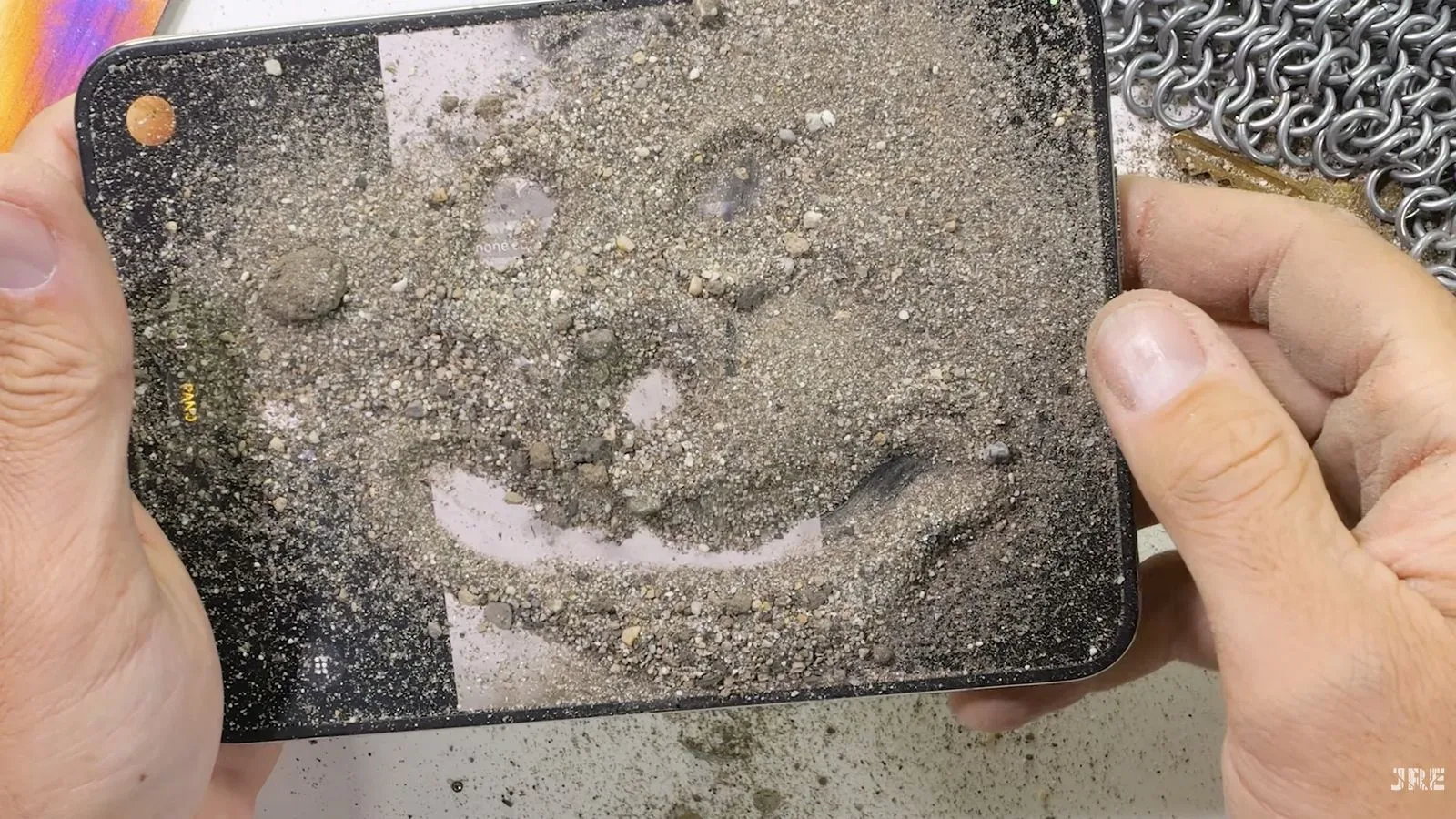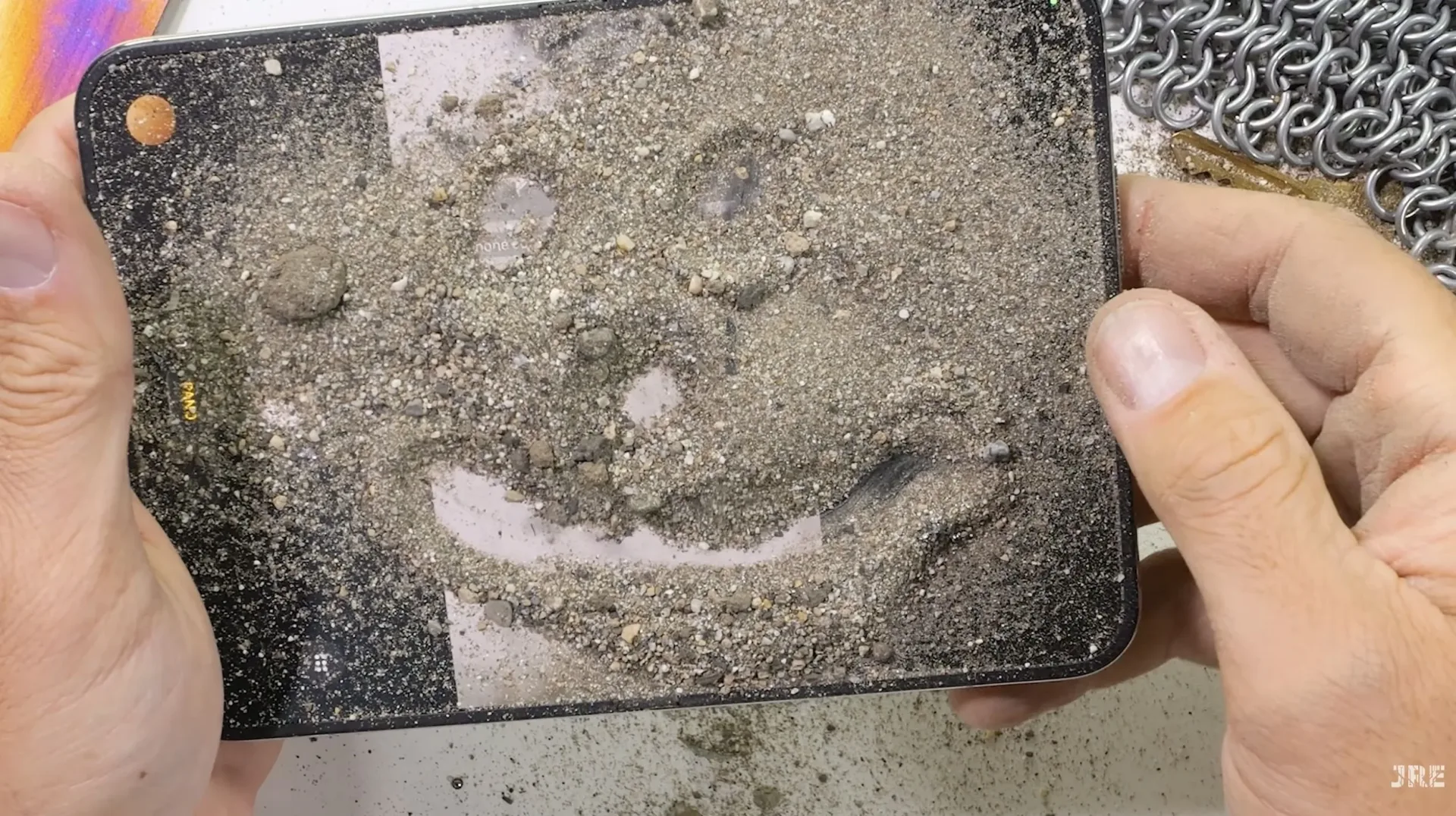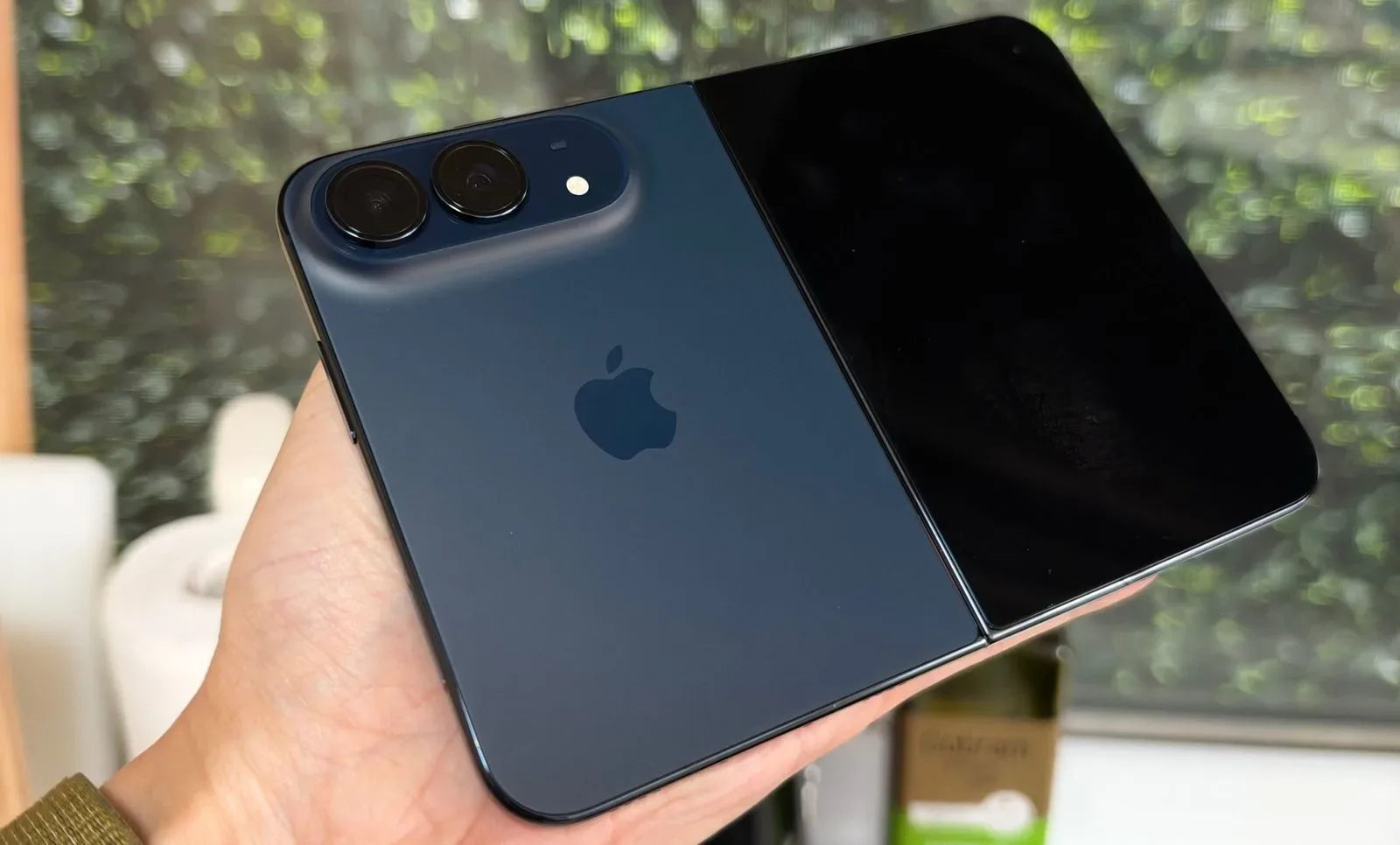
Apple’s iPhone Duo has failed a durability assessment that focused on the two pressure points most likely to concern anyone considering a folding phone: the hinge and the flexible inner display.
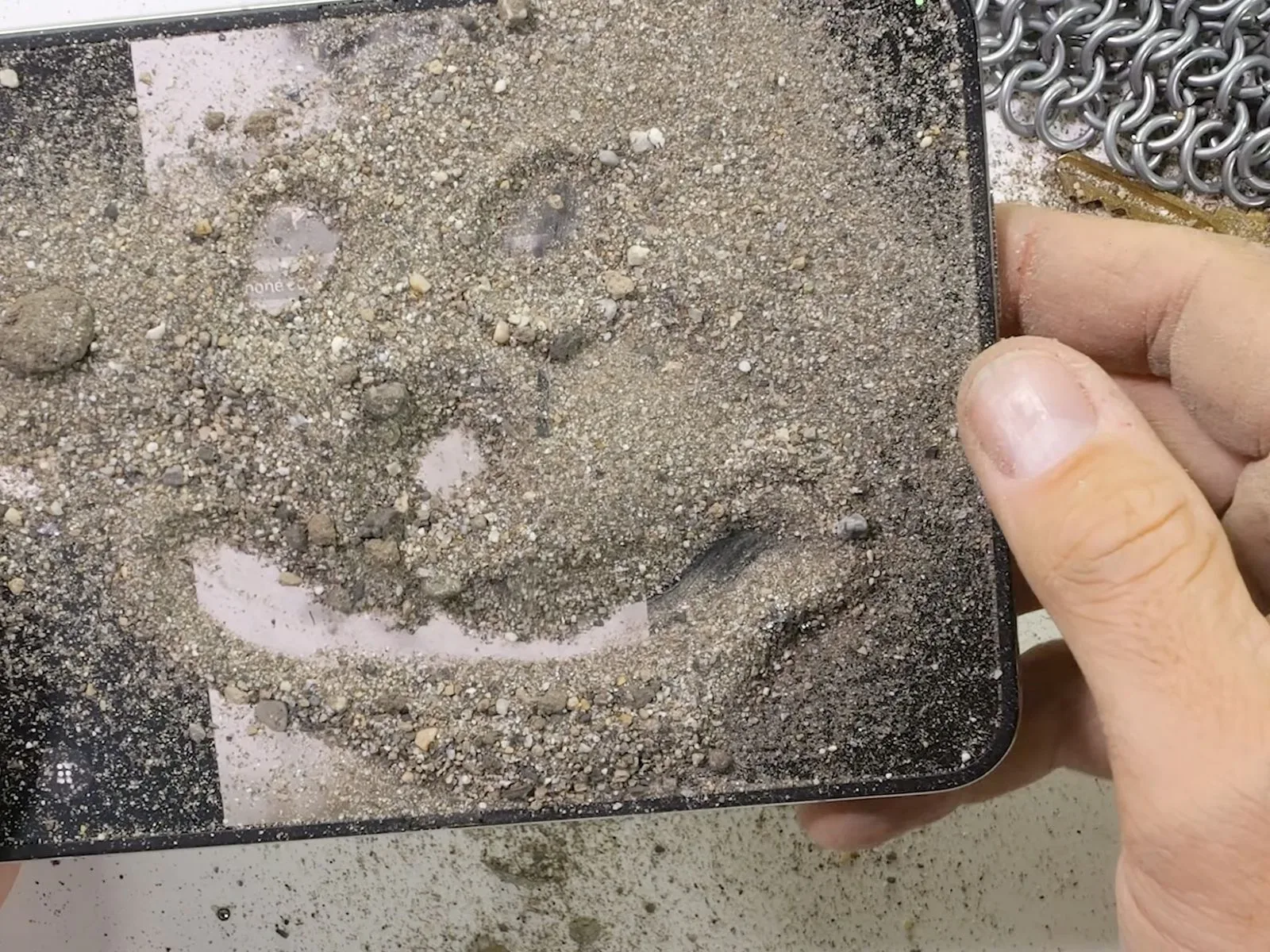
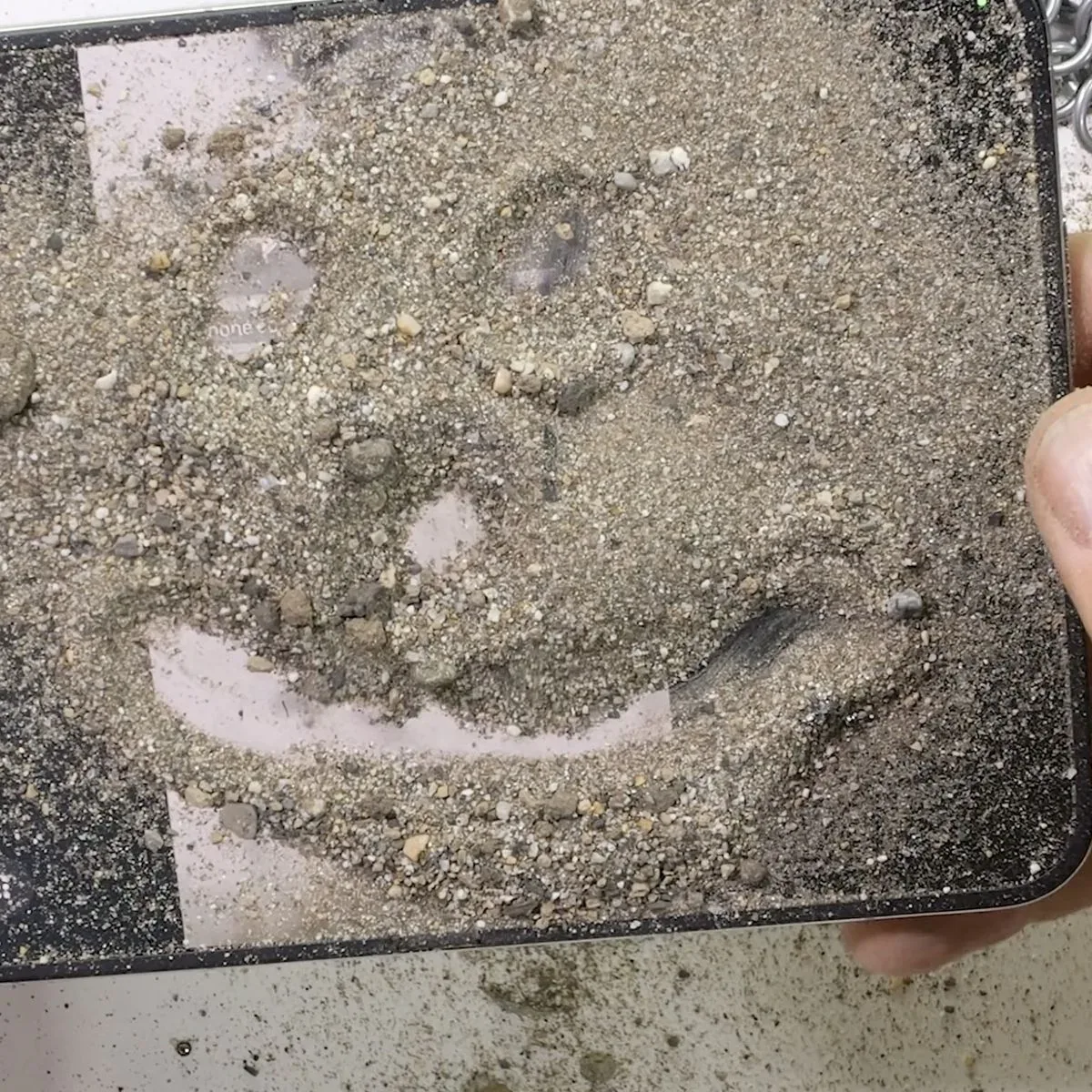
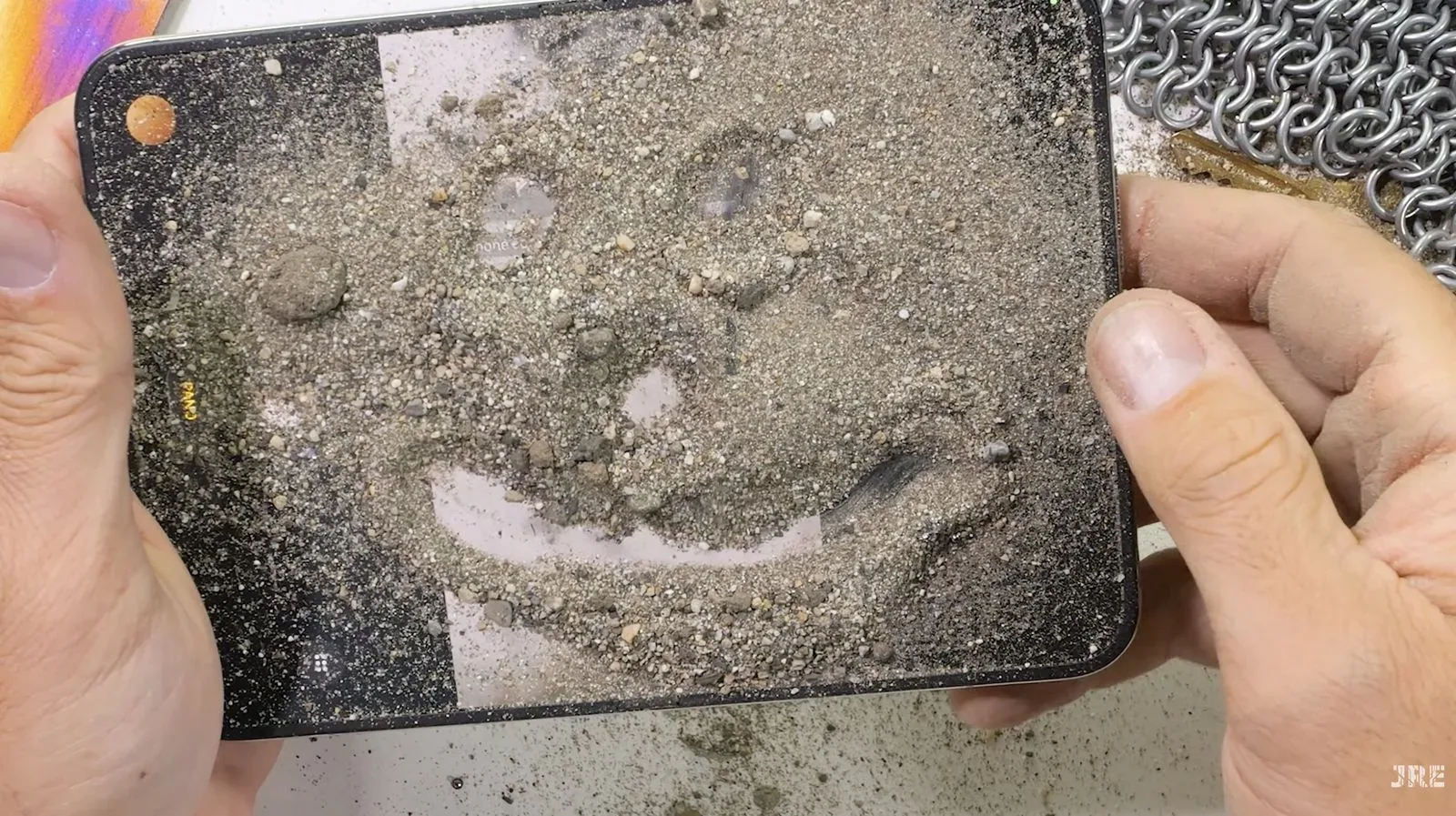
During the test, dust entered the iPhone Duo’s hinge through several ingress points despite the handset’s IP68 dust-resistance rating. The contamination reportedly overwhelmed the magnets responsible for holding the device shut. A subsequent bend test produced a permanent green line across the inner screen, which later stopped responding.
The result is especially awkward for a device built around a folding mechanism. On a conventional slab phone, dust and flex still matter, but there is no moving spine that has to repeatedly open, close, align two halves, and keep a large display protected. A foldable’s hinge is therefore not a side feature: it is central to the entire product experience.
What failed in the iPhone Duo test
The test’s core finding was not simply that the phone became dusty. Dust made its way into the hinge via multiple entry points and interfered with the magnetic closure system. Once those magnets were overwhelmed, the device could no longer perform one of its fundamental physical jobs: staying closed as intended.
That outcome matters because a phone’s resistance rating is easy to read as a blanket promise of toughness. It is not. In practical terms, a rating can describe resistance under defined conditions, while a stress test can expose weaknesses involving moving parts, accumulated debris, or forces beyond ordinary use. The iPhone Duo’s result illustrates why shoppers should separate a listed protection rating from the broader question of how a complex folding assembly behaves when challenged.
The bend portion of the assessment was more severe. It left a green line permanently visible on the inner panel before that screen became unresponsive. A green line is a display fault, not merely a cosmetic scuff: it means the image-producing portion of the screen has been visibly compromised. When touch or screen responsiveness then fails, the functional consequence is far larger than an unsightly mark.
There is an important limit to what this result can establish. A durability test documents what happened to the tested unit under its particular conditions; it does not, by itself, prove that every iPhone Duo will suffer the same failure in normal ownership. Still, it identifies the hinge and flexible display as areas that deserve close attention, particularly for people whose phones regularly encounter grit, dust, bags, pockets, work environments, or accidental pressure.
Outer glass and inner display tell very different stories
The iPhone Duo’s two screens produced sharply different scratch results. Its outer display, protected by Ceramic Shield 2, scratched at level 7 on the Mohs scale. The inside display reached level 2.
The Mohs scale is a comparative hardness scale used here to describe when visible scratching began under the test. Higher levels indicate that a surface resisted the scratching tool longer in that sequence. It is useful as a clear side-by-side benchmark, but it should not be treated as a complete prediction of every kind of everyday damage. Scratches, impacts, bending, debris intrusion, and long-term wear are related durability issues, not interchangeable ones.
In plain language, the test points to a durable outer surface relative to the much softer folding panel inside. That contrast is not a minor specification footnote. The phone’s large inner display is the feature that gives a foldable much of its appeal, and it is also the surface most exposed when the device is open for browsing, games, video, reading, and multitasking.
There was one favorable observation about the inner panel. Its matte nano-texture coating was credited with making marks appear to disappear. That is a meaningful aesthetic benefit: surface marks that are less visible can make a display look cleaner in daily use. But visual concealment is not the same thing as physical hardness. The level 2 result still indicates the interior surface was significantly easier to scratch than the outer Ceramic Shield 2 screen.
For prospective owners, that distinction is practical. A coating may help preserve the appearance of the display, while careful handling remains necessary to reduce the chance of actual surface damage. The test offers no basis for a precise rule about what objects are safe near the inner panel, but it does make the general priority clear: treat the flexible screen as the more vulnerable side of the device.
Why the hinge result carries extra weight
Hinges are difficult components because they must satisfy conflicting demands. They need to move smoothly, keep the phone aligned, support repeated opening and closing, protect the folding display, and avoid becoming a pathway for debris. The iPhone Duo test raises concern because dust did not merely leave an external residue; it reached the mechanism and affected the magnets used for closure.
Magnets are well suited to helping two halves of a foldable settle and remain together. But if debris collects where those components need close contact, the intended closing behavior can be disrupted. The reported result is a reminder that a successful foldable design depends on the whole assembly working together: the exterior seal, the hinge’s internal routing, the display support, and the closure hardware.
That complexity is why dust is more than an aesthetic nuisance for this category. A speck on an outer glass screen may be wiped off. Particles that find their way into a moving hinge create a different kind of concern, because they can alter the behavior of parts that users cannot readily clean or inspect.
How to interpret the test without overreading it
The iPhone Duo did not pass this particular durability challenge. The tester, Zack Nelson, said he has tested folding phones since the first generation seven years ago and that most have survived, while this model did not. That framing makes the failed result notable within his stated experience with the category.
At the same time, responsible interpretation requires distinguishing a stress-test outcome from a universal ownership forecast. The supplied results do not establish failure rates, repair policies, warranty coverage, or how the iPhone Duo performs over a particular number of folds. They also do not state whether Apple has responded to the test. Those unanswered questions should remain unanswered rather than being filled with assumptions.
What the assessment does provide is a focused set of observations:
- Dust entered the hinge through several points.
- The debris overwhelmed the magnets that hold the phone shut.
- The outer Ceramic Shield 2 screen scratched at Mohs level 7.
- The inner screen scratched at level 2, although its matte nano-texture reduced the visibility of marks.
- A bend test caused a permanent green line on the inner display, followed by an unresponsive screen.
Together, those results paint a clear picture: the outer display performed much better against scratching than the inner one, while the folding hardware and inner panel were unable to withstand the test’s dust and bending stages.
Practical implications for foldable-phone shoppers
Anyone evaluating the iPhone Duo should view its IP68 dust-resistance rating as one relevant data point, not the only durability answer. This test specifically challenges confidence that the rating settles questions about hinge contamination. A person who spends time around fine debris or expects a phone to endure substantial mechanical stress may want to weigh the report heavily.
The inner display also deserves a different handling mindset from the outer screen. The outer surface’s level 7 score is a strong contrast to the inner panel’s level 2 result. Matte nano-texture may reduce the visual annoyance of marks, but the test does not show that it makes the panel equally scratch-resistant.
For readers looking at Apple hardware more broadly, the company’s device settings can sometimes matter as much as the physical design in everyday use. Our guide to Apple Watch Theater Mode explains one example of a feature aimed at reducing day-to-day interruption rather than changing a device’s physical resilience.
The iPhone Duo assessment ultimately highlights a simple reality of folding phones: their promise is inseparable from their mechanical compromise. A large screen that closes into a smaller shape is compelling, but it introduces a hinge, a flexible panel, and a seam where ordinary dust and unusual force can matter far more than they would on a traditional phone. In this test, those compromises came to the foreground quickly.