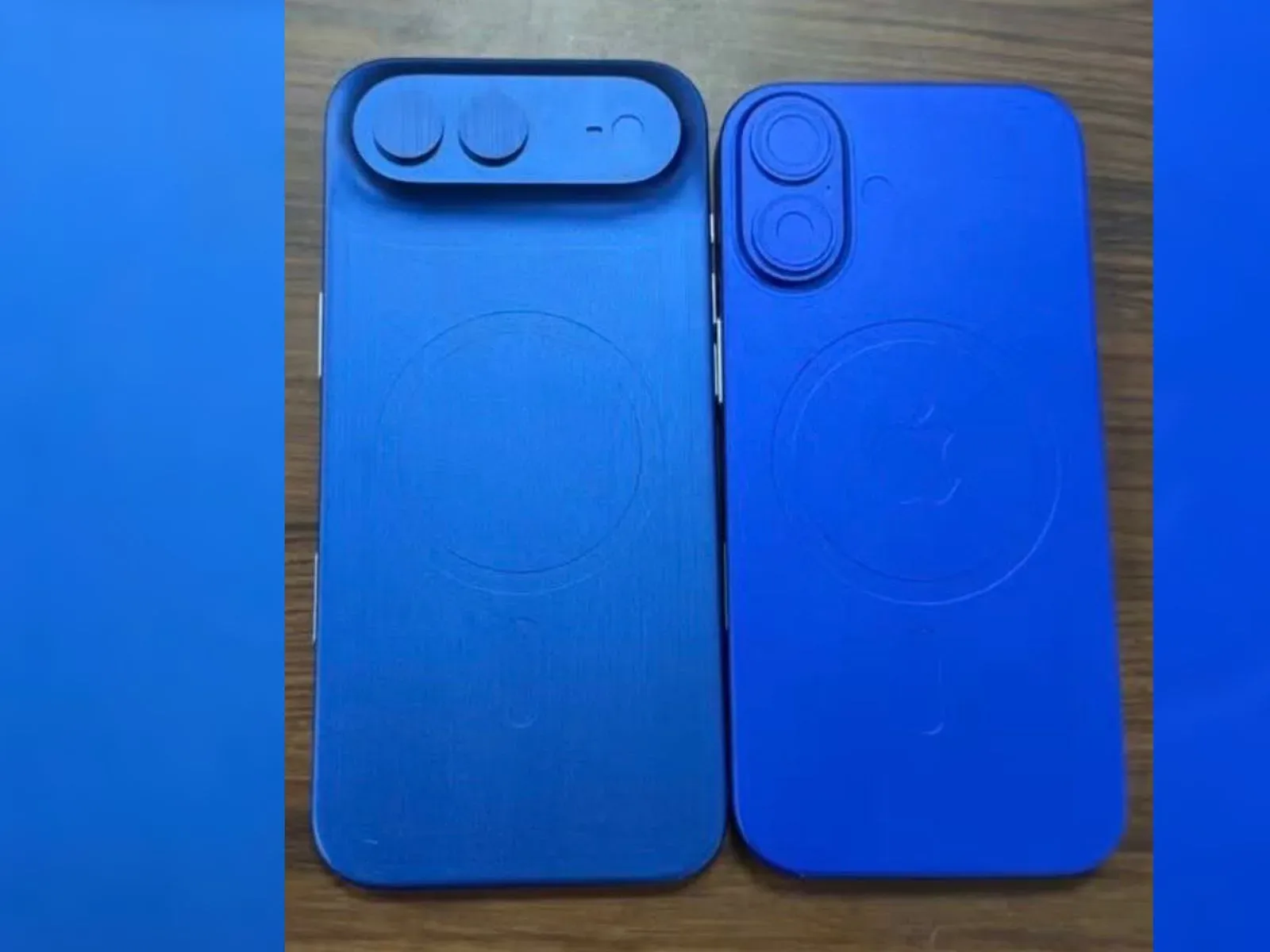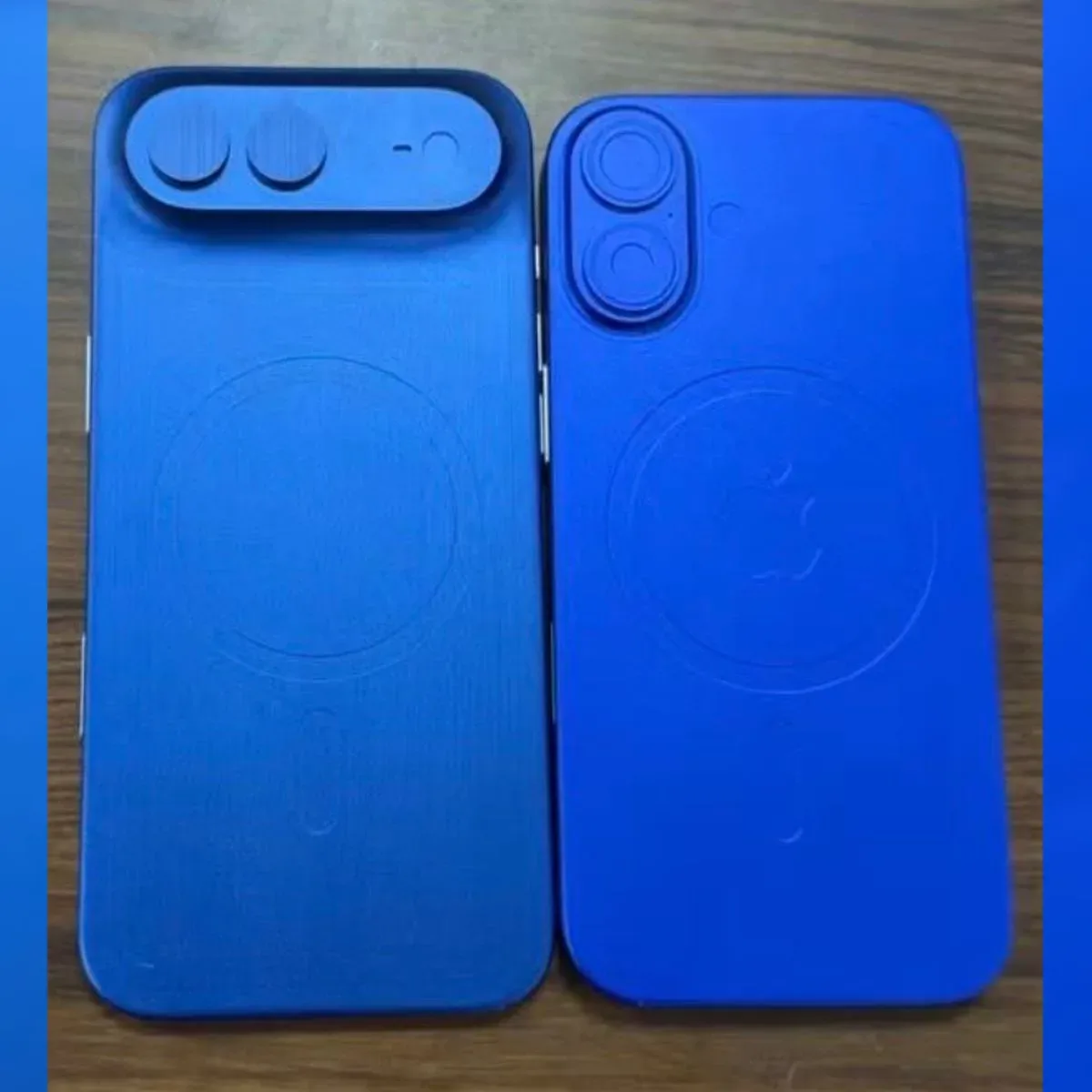
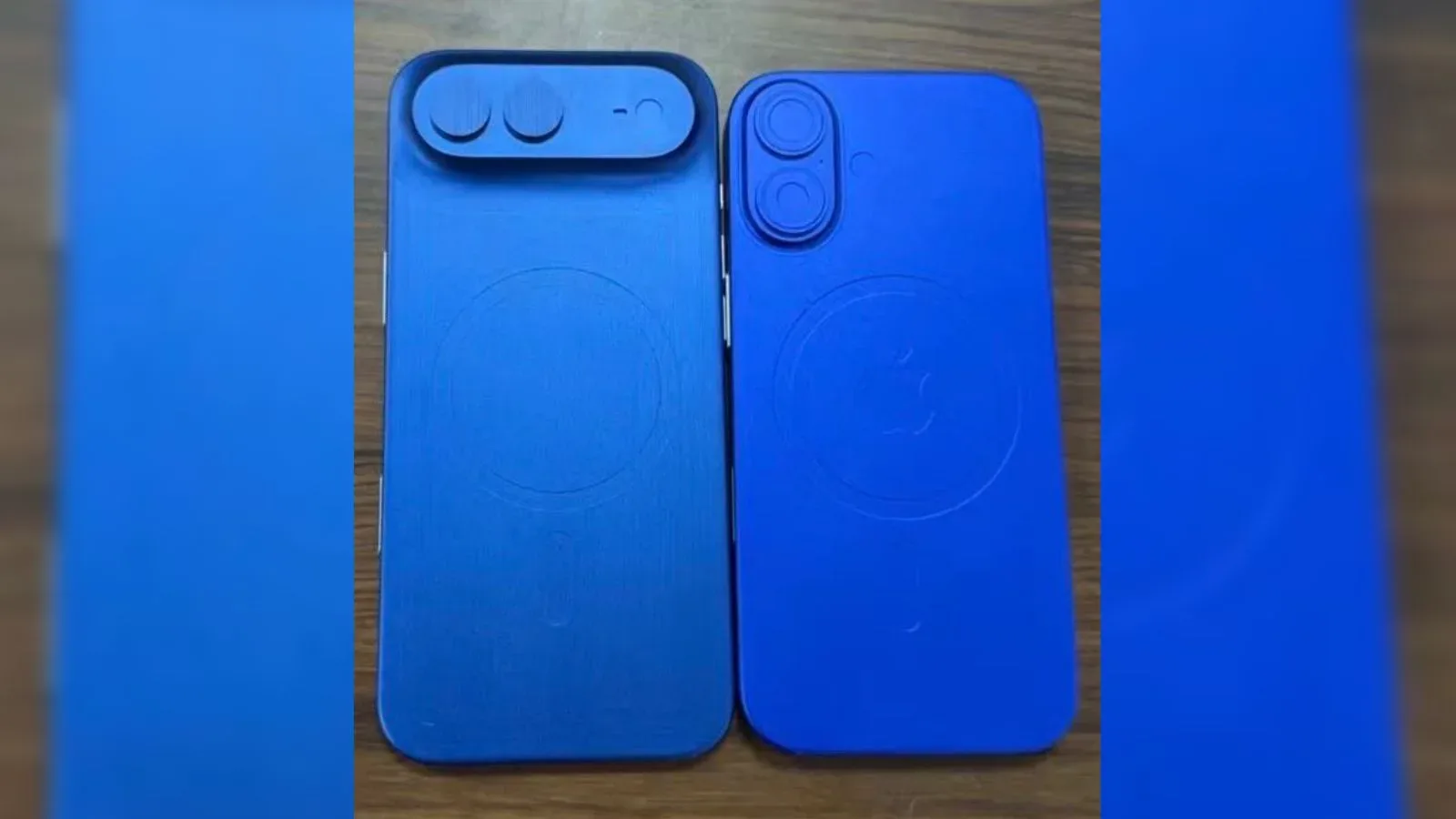
Purported dummy models of Apple’s next iPhone Air and standard iPhone have surfaced, offering an early but emphatically unverified suggestion of how the two devices could look. The most notable detail is not a dramatic new silhouette or a surprise button: it is an apparent second rear camera on the iPhone Air 2.
The models show the rumored iPhone Air 2 with two rear lenses arranged horizontally on the left of a wide raised camera plateau. Its microphone and flash sit to the right of those lenses, while the plateau itself stretches across most of the phone’s width. The standard iPhone 18 mockup, by contrast, appears substantially more conservative, retaining two vertically stacked rear cameras in a narrower, pill-shaped bump.
That difference aligns with the broader rumor picture. The current first-generation iPhone Air has one 48-megapixel Fusion camera, and reporting stretching back more than a year has pointed to a two-camera successor. One analyst expectation specifically calls for a 48-megapixel Ultra Wide camera to accompany the main camera. If accurate, that addition would give the Air a wider field of view for photography, addressing the clearest capability gap implied by a single-camera setup.
What a dummy model can, and cannot, tell us
Dummy models are non-working physical replicas, generally made from leaked measurements and design details that circulate through a device maker’s supply chain. They matter most to accessory companies: a case cannot be properly designed until a manufacturer has a credible understanding of a phone’s exterior dimensions, camera cutouts, button locations, and protrusions.
For everyone else, the value is narrower. A mockup can be useful evidence of a possible physical layout, but it cannot establish the final hardware specification, display performance, camera quality, software behavior, colors, materials, pricing, or launch plans. It also is not the final retail device. Changes can happen, and even a replica made from credible information may reflect an earlier design stage rather than the configuration that ships.
That distinction is particularly important here. The images support a simple claim: the iPhone Air 2 is being depicted with a second camera, and the standard iPhone 18 is being depicted with an iPhone 17-like approach. They do not independently confirm what those cameras are, how Apple would use them, or whether every other reported specification will make it into the finished phones.
The apparent iPhone Air 2 change is more functional than cosmetic
A horizontal pair of lenses is the visible headline, but the meaningful possibility is what a second camera could enable. A rumored 48-megapixel Ultra Wide camera would be designed for a broader scene than the primary camera can capture. In practical terms, that may be useful when a subject is close, when photographing architecture or landscapes, or when a creator wants more of a scene in frame without taking several steps backward.
The claim should remain framed as a rumor, not a promised feature. Still, the dual-camera reports are not an isolated interpretation of one dummy model. Apple was reportedly considering a second rear camera as part of an iPhone Air redesign in November 2025, and later reports have continued to indicate a dual-camera system. The physical mockup is consistent with that recurring expectation.
The long camera plateau in the model may be just as relevant to case buyers as the lens count. A wide raised section requires a different opening and affects how a device sits against a flat surface. Should this design prove correct, buyers should expect iPhone Air 2 cases to have a broad upper cutout rather than a compact camera window. That is exactly the kind of detail for which replicas are routinely used ahead of a phone’s arrival.
For mobile players, the camera layout itself is unlikely to change day-to-day controls. But the other rumored Air 2 specifications could. Analyst Jeff Pu expects an A20 Pro chip, 12GB of memory, Apple’s C2 modem, an N2 wireless networking chip, and a 6.5-inch display. Separate reporting has indicated work on a larger battery, lower weight, and vapor-chamber cooling.
None of those details are confirmed, and their real-world impact would depend on implementation. Even so, they point to several familiar pressure points for a thin phone used heavily for games, media and camera work: sustained performance, battery endurance, heat management, and wireless stability.
Why vapor-chamber cooling matters
A vapor chamber is a cooling component designed to spread heat across a larger area. In broad terms, it moves heat away from concentrated hot spots so that it can be dissipated more evenly through the device. It does not mean a phone will never become warm, and it is not by itself a guarantee of faster gaming. Its potential value is in helping a handset maintain performance under extended demanding workloads rather than reducing speed to manage heat.
Likewise, more memory—often called RAM—does not automatically transform every app or game. RAM is working memory that lets a device keep active data readily available. A move to 12GB, if it happens, could provide more headroom for multitasking and more demanding software, but users should avoid treating the number as a complete performance verdict. The chip, software, cooling, storage behavior and the specific app all matter.
The standard iPhone 18 looks like the steadier update
The dummy model for the standard iPhone 18 suggests a phone that stays visually close to the iPhone 17. Its rear cameras are shown vertically, one above the other, in a relatively small pill-shaped housing. That does not rule out internal upgrades; it simply indicates that Apple may be reserving its more obvious exterior shift for the Air model, if the mockups are accurate.
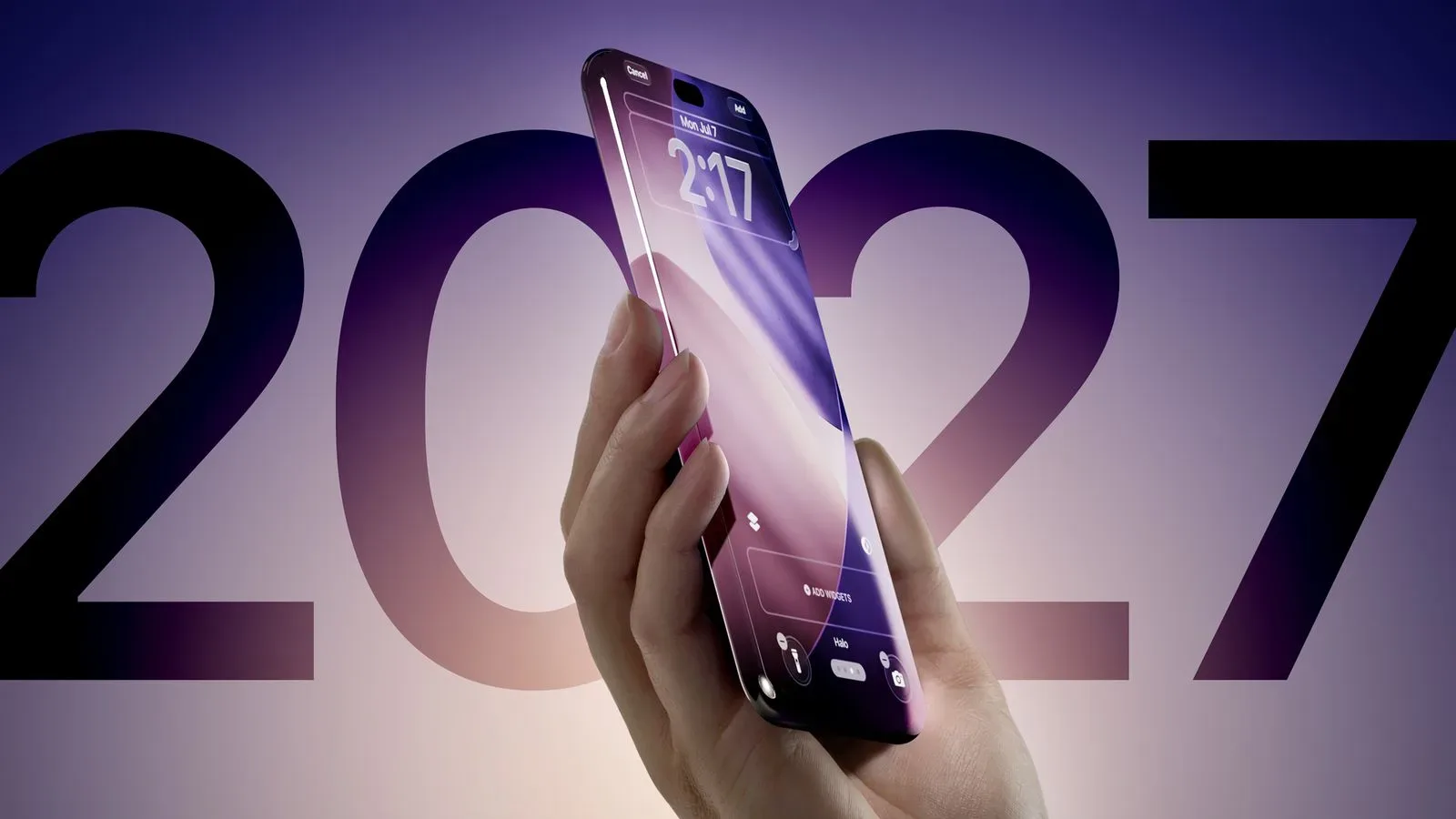
Reported internal expectations for the iPhone 18 include an A20 chip and a C2 modem. It could also receive a smaller Dynamic Island, in line with expectations for the iPhone 18 Pro. The Dynamic Island is the display area around the front camera and sensor system that can present alerts, status information and live activity controls. A smaller version would change the visible shape at the top of the screen, though the dummy models alone do not establish its exact dimensions or behavior.
Memory is one point where the rumor record is less settled. Ming-Chi Kuo expects 9GB, up from the iPhone 17’s 8GB, while Pu predicts 12GB. That disagreement is worth preserving rather than papering over. It means there is no single reliable memory figure to attach to the standard iPhone 18 at this stage. The mockup can suggest an exterior; it cannot resolve competing reports about its internals.
How to read the timing and connectivity claims
Both the iPhone Air 2 and standard iPhone 18 are expected around March 2027, alongside an iPhone 18e. That remains an expectation rather than a confirmed launch schedule. Apple has not established these products through the information presented here, so prospective upgraders should not make a purchase decision on timing alone.
The C2 modem is the reported cellular modem—the component responsible for connecting the phone to mobile networks. The N2 is described as a wireless networking chip, a category associated with local wireless connections. Those component names are useful signals of Apple’s reported direction, but they are not enough to predict signal strength, network compatibility, battery life, Wi-Fi performance or game-streaming quality in a specific place. Those outcomes depend on the finished hardware, software and network conditions.
For now, the reasonable takeaway is modest. The iPhone Air 2 dummy model reinforces an established rumor that Apple is considering a more capable rear-camera arrangement for the Air line. The standard iPhone 18 model, meanwhile, points toward continuity in exterior design rather than a wholesale visual reset. Anyone tracking portable-tech changes that matter to gaming should also keep an eye on storage needs; large downloads have become a growing concern, as seen in reports around GTA 6’s reported 200GB-plus download surge.
Until Apple reveals actual hardware, the safest reading is to separate the design evidence from the broader specification rumors. The models may offer a meaningful preview of camera placement and proportions. They are not a substitute for official confirmation, final technical details, or evidence of how either device will perform.