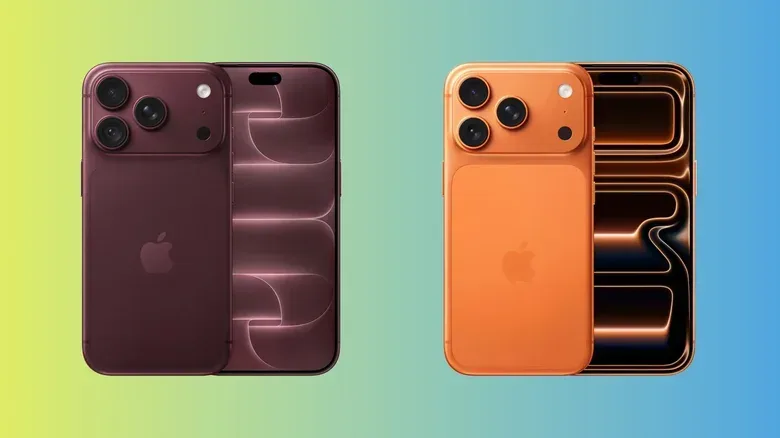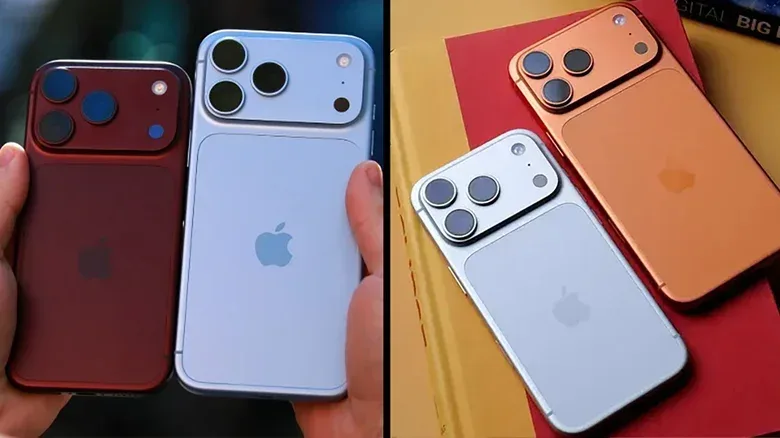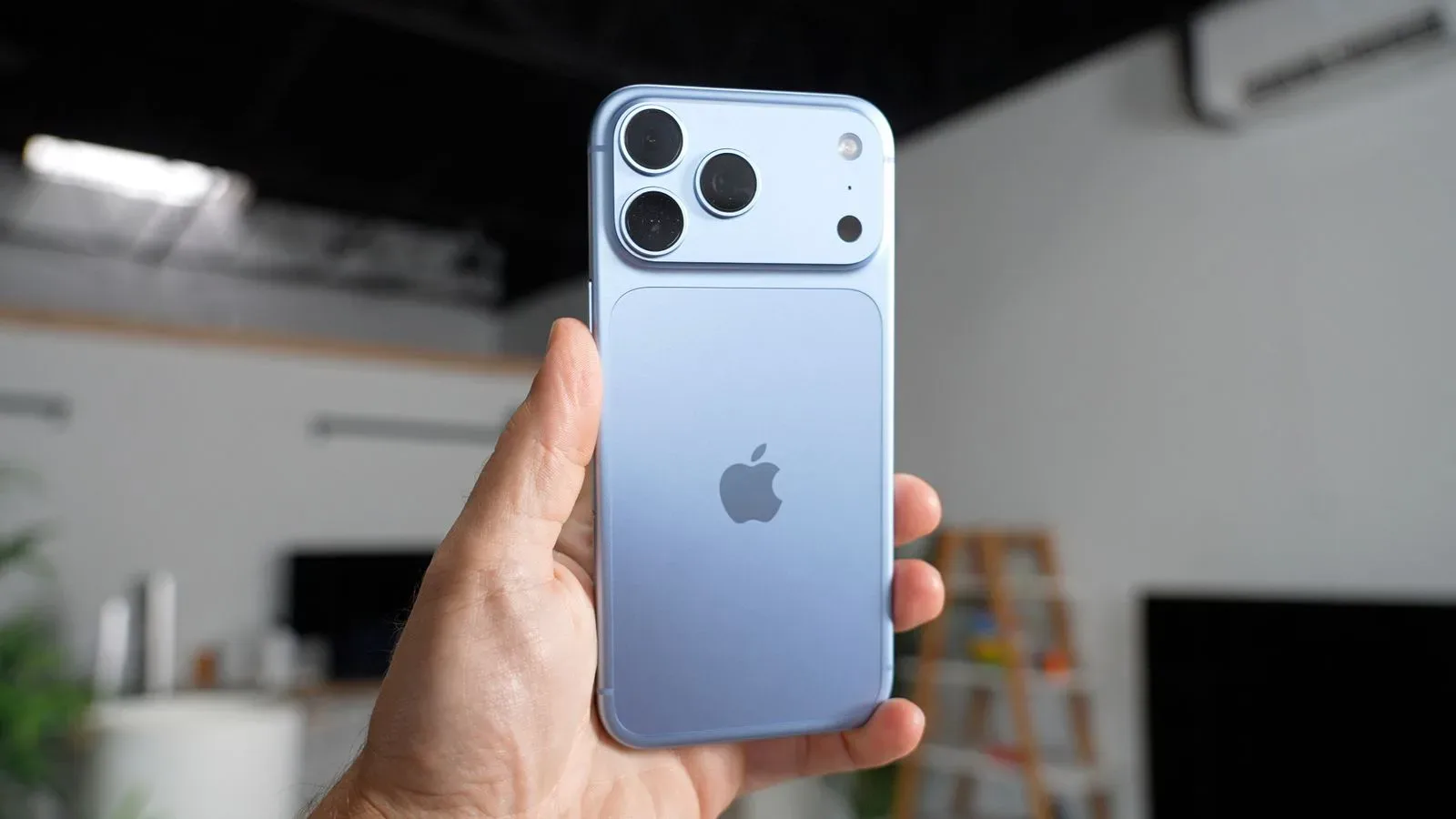
The iPhone 18 Pro and iPhone 18 Pro Max are not the kind of upgrades that make last year’s hardware look like it belongs behind museum glass. Their dimensions, displays, rear-camera count and fundamental aluminum-unibody design closely follow the iPhone 17 Pro generation. For people already using an iPhone 17 Pro, that continuity matters: there is no single, universal reason to rush into a replacement.
But this is not merely a new color and a fresh chip name, either. Apple has concentrated its changes in areas that can be meaningful for people who shoot photos and video seriously, run demanding games or apps for extended periods, or simply want a phone that spends less time attached to a cable. The iPhone 18 Pro pair gets a new variable-aperture 48-megapixel main camera, more manual camera controls, better rear Cinematic mode recording, a smaller Dynamic Island, the A20 Pro processor and upgraded cooling. Battery estimates rise on both sizes, particularly the Pro Max.
The important qualification is that many performance figures are Apple claims and battery ratings are estimates under the company’s testing conditions. They are useful for comparing the two generations on paper, but an individual’s battery life will still hinge on screen time, signal conditions, apps, camera use and gaming habits.
The quick decision: who should upgrade?
iPhone 17 Pro and 17 Pro Max owners: The strongest case to keep the current device is that the screen sizes, physical dimensions, main rear-camera resolution, Ultra Wide camera, 4x Telephoto camera and wireless charging ceiling remain familiar. The iPhone 18 Pro is a refinement with several worthwhile tools, not a wholesale change in daily phone use.
Owners of older iPhones: The combined gains may add up more persuasively. The iPhone 18 Pro line brings current Pro-level display specifications, a three-camera setup, deeper photography controls, quicker wired charging with compatible equipment and a chip designed for heavier graphics, imaging and on-device AI work.
People choosing between the two new sizes: Camera hardware is no longer a reason to buy the larger phone; the Pro and Pro Max have the same photographic equipment and capabilities. The Pro Max instead makes its argument with screen area and markedly higher battery estimates. The price is literal extra mass: it is also the model whose year-over-year weight increase is most noticeable on paper.
A familiar shell, with a weighty caveat
Apple continues with the aluminum unibody design used for the iPhone 17 Pro series. The standard iPhone 18 Pro measures 5.91 by 2.83 by 0.34 inches, unchanged from its predecessor, while the Pro Max remains 6.43 by 3.07 by 0.34 inches. Both retain Ceramic Shield 2 on the front, Ceramic Shield on the back and IP68 water resistance.
The scales tell the more consequential design story. The iPhone 18 Pro weighs 7.44 ounces, up from 7.27 ounces for the iPhone 17 Pro, an increase of roughly 2.4 percent. The Pro Max moves from 8.22 ounces to 8.78 ounces, about 6.9 percent heavier. That may be a reasonable exchange for a buyer whose priority is runtime, especially on the larger model, but it is not an invisible trade-off. Anyone sensitive to one-handed comfort, pocket weight or extended handheld use should account for it rather than treating the battery boost as a free upgrade.
Related coverage includes iPhone 18 Pro vs. iPhone 17 Pro: The Upgrades That Matter.
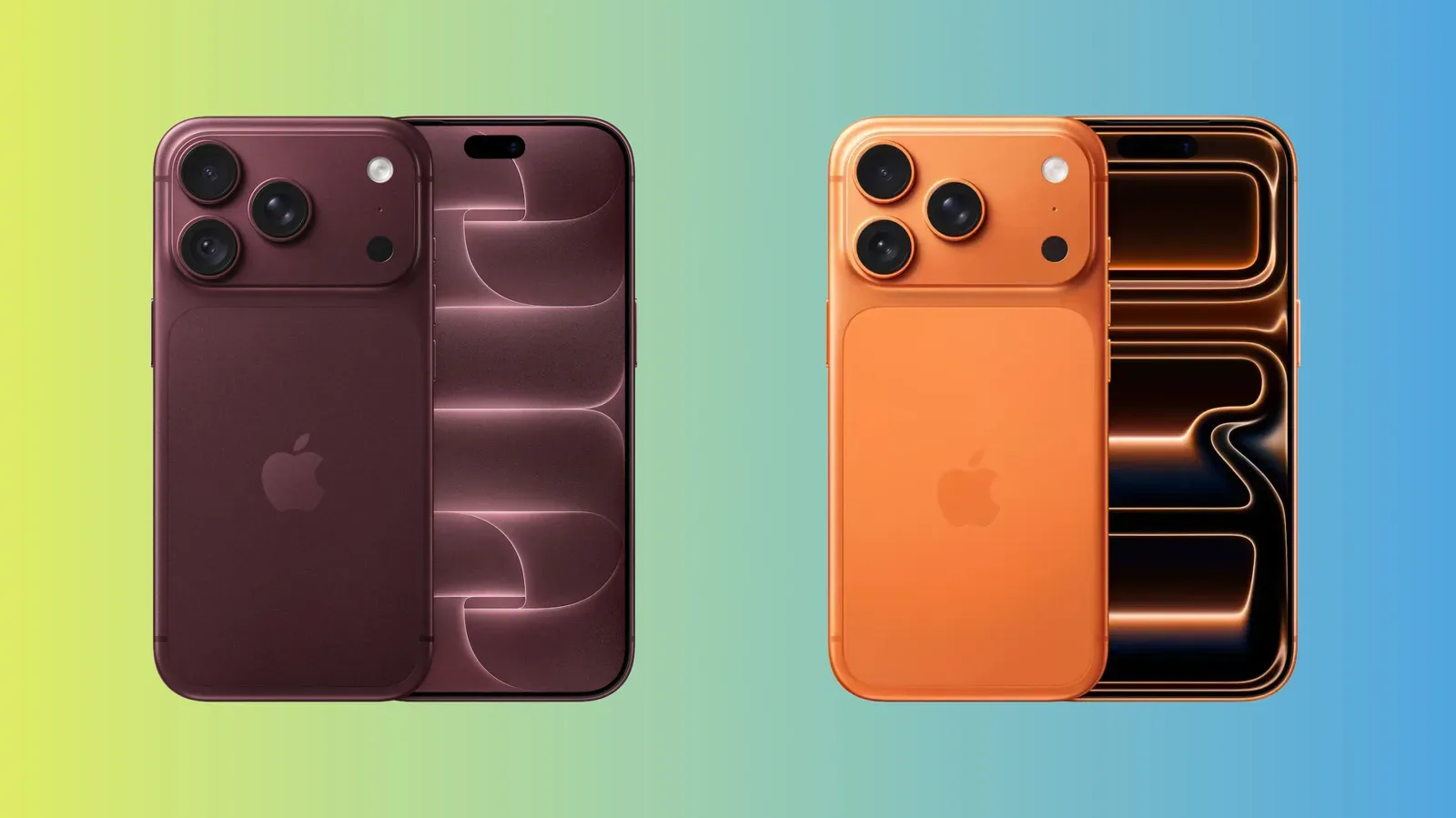
New finishes are Black, Silver, Glacier and Burgundy, replacing Cosmic Orange, Deep Blue and Silver from the prior Pro range. Color is naturally the least technical purchase criterion, but it is the most immediately visible clue that a handset is new when most of the exterior shape has stayed put.
The displays are steady; the Dynamic Island gets smaller
The iPhone 18 Pro retains a 6.3-inch OLED display, while the Pro Max has a 6.9-inch OLED panel. Both are listed at 460 pixels per inch, support variable refresh rates up to 120Hz, include always-on functionality and offer up to 3,000 nits of outdoor brightness. In plain terms, buyers still face the conventional small-Pro-versus-big-Pro choice: the smaller device is friendlier to carry and manage with one hand, while the Max delivers substantially more room for video, editing, games and multitasking.
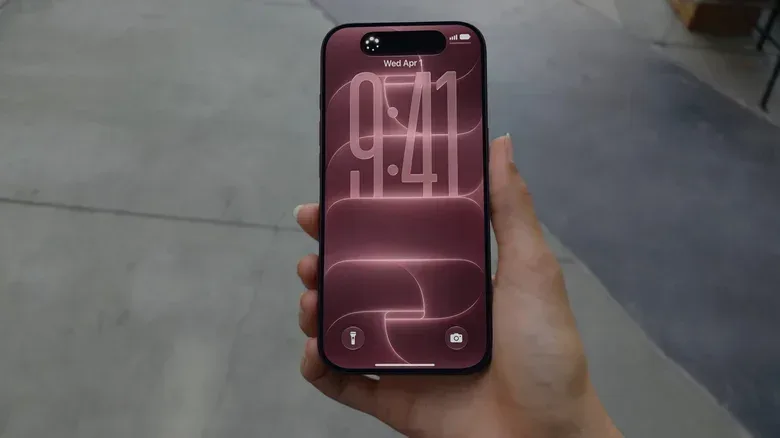
The headline display adjustment is a smaller Dynamic Island. Apple uses a brighter-pixel region that permits enough infrared light to reach Face ID hardware beneath the display, reducing the size of the visible black cutout. The Dynamic Island can also handle up to three simultaneous Live Activities, rather than two on the iPhone 17 Pro series.
Live Activities are persistent, glanceable status updates rather than conventional notifications: think an active timer, delivery or other ongoing task shown in the interface. A third slot may be useful to people who routinely juggle several active services, although it is a quality-of-life gain rather than a reason by itself to replace a functioning recent phone.
The main camera changes how much control creators can have
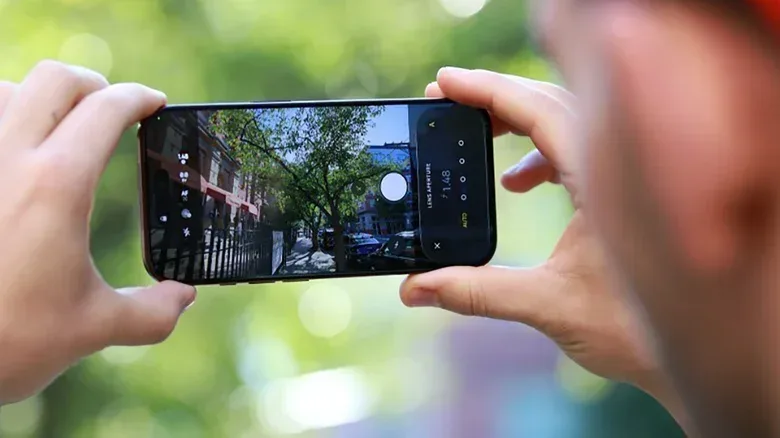
The most substantial iPhone 18 Pro upgrade is not a megapixel bump. The main camera remains 48 megapixels, as do the Ultra Wide and 4x Telephoto cameras. Instead, Apple has changed the main camera from the iPhone 17 Pro’s fixed f/1.78 aperture to a system that can select f/1.48, f/1.8, f/2.8 or f/4.0.
Aperture is the opening through which light reaches a camera’s sensor. The f-number can sound backward at first: a smaller f-number represents a wider opening. A wider aperture can admit more light and can produce greater separation between a subject and the background. A narrower aperture can keep more of the scene in focus. Having several aperture choices gives the camera more flexibility in deciding whether a scene benefits most from light gathering, depth effects or a wider zone of focus.
Most users can let the phone decide automatically. The additional appeal is for people who want to intervene. iPhone 18 Pro models add manual aperture adjustment along with controls for shutter speed and white balance, plus an on-screen histogram. Shutter speed is how long the sensor gathers light; it can influence motion rendering and exposure. White balance adjusts color interpretation under different lighting. A histogram is a graph of tonal distribution that can help photographers judge whether an image is losing detail in shadows or highlights.
Those are practical tools rather than decorative “Pro” badges. They do not guarantee a better photo, and they ask the user to understand a little more about exposure and color. But they create a clearer distinction between quick automatic shooting and intentional capture. For photography-minded buyers, the variable aperture and control set are arguably the most distinctive reasons to consider this generation.
Video, styles and a tool aimed at image integrity
Rear-camera Cinematic mode now reaches 4K at 60 frames per second, doubling the 4K/30 ceiling of the iPhone 17 Pro series. The front camera remains capped at 4K/30 in Cinematic mode. The phones can also add cinematic-style background effects after recording. That flexibility has limits: results can be inconsistent, with more reliable outcomes expected when a subject is fairly still and clearly separated from its background.
Apple Reference Image is a more specialized addition. In its dedicated mode, it can save sensor-signed RAW information alongside the normal processed photo. RAW means image data preserved with less of the usual baked-in processing, offering a more direct record for later comparison and editing. The sensor-signed component is intended to assist verification that an image has not been altered by AI or normal editing.
Its limitation is equally important: it is not enabled automatically for standard shots. That narrows its practical audience to photographers, journalists and others with a professional need to demonstrate image integrity. It is a purposeful feature, but not a blanket solution for validating every photo already in a library.
Photographic Styles 3 adds texture controls including Glow, Soft Skin and Film, the latter with an extra Grain slider. These effects are presented as restrained rather than aggressively artificial. They expand creative options, though they are unlikely to outweigh the larger camera, performance or battery differences in an upgrade decision.
A20 Pro: the gaming improvement is about heavier work that lasts
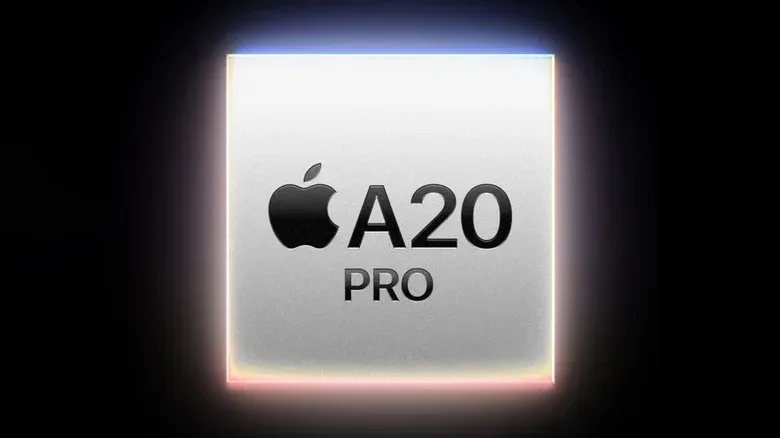
The iPhone 18 Pro line moves to Apple’s A20 Pro, replacing the A19 Pro. The new chip is built on a 2-nanometer process versus 3 nanometers for its predecessor and is claimed to provide 50 percent more memory bandwidth. Memory bandwidth describes how quickly a processor can move data to and from memory. Higher bandwidth can be useful when a device has to continually feed image-processing pipelines, AI operations or complex graphics workloads.
The CPU remains six-core, but now includes integrated Neural Accelerators. Graphics hardware goes from six GPU cores to seven, and Apple says graphics performance can be up to 40 percent faster than A19 Pro. Its Dual 16-core Neural Engine totals 32 cores, with Apple claiming twice the AI processing power.
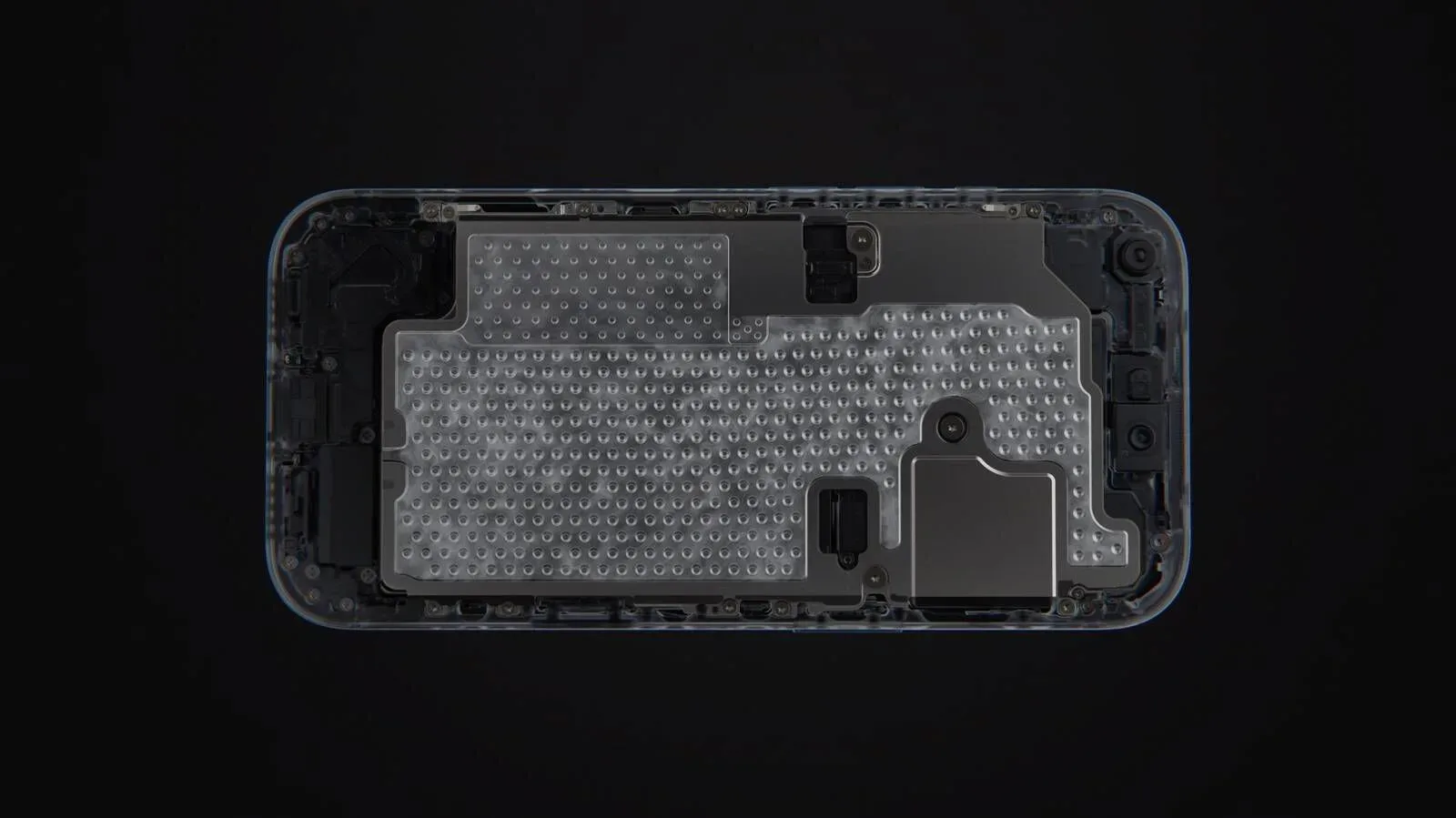
For games, the word to watch is sustained. A short burst of speed is only part of the story when a title pushes graphics for a long session. Apple has changed the internal thermal layout by attaching the A20 Pro directly to a next-generation vapor chamber and placing the silicon die beside the memory. A vapor chamber is a cooling component designed to distribute heat over a larger area, helping a device manage heat produced by demanding work.
The practical promise is not that every game magically becomes a new game. It is that data-heavy gameplay, camera processing and on-device AI should have more headroom, especially over longer workloads. That is the sort of capability that may make more sense to someone stepping up from an older handset than to a player already satisfied with an iPhone 17 Pro. It also sits within a wider push to make portable hardware do more serious gaming work; see how a different approach is taking shape in a wireless gaming concept for slim laptops.
Battery is where the Pro Max separates itself
For eSIM-only models sold in the United States and certain other countries, Apple rates the iPhone 18 Pro at up to 36 hours of video playback, compared with 33 hours for the iPhone 17 Pro. Its streamed-video estimate rises from 30 to 33 hours. The iPhone 18 Pro Max is rated for up to 45 hours of video playback, versus 39 hours for the prior Max, while streamed video rises from 35 to 40 hours.
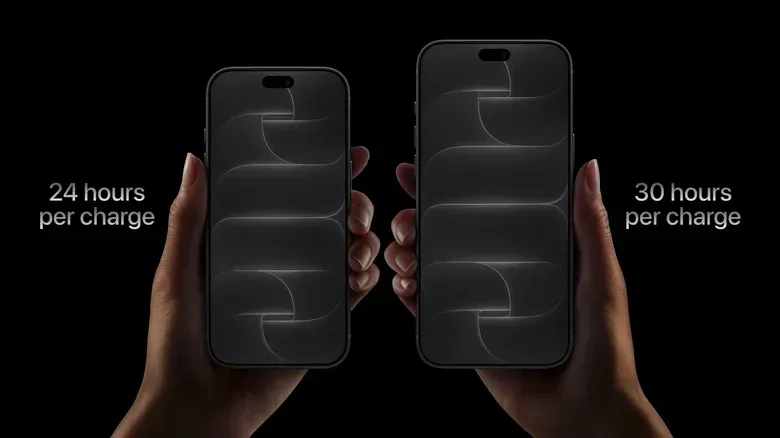
Apple also now provides a “typical use” estimate for the new devices: up to 24 hours for iPhone 18 Pro and up to 30 hours for iPhone 18 Pro Max. Comparable typical-use figures were not supplied for the iPhone 17 Pro line, so those numbers should not be treated as a direct generation-to-generation calculation.
Within the iPhone 18 Pro family, however, the Max advantage is clear. Its video-playback rating is 25 percent higher than the regular Pro, its streamed-video rating is roughly 21 percent higher, and its typical-use estimate is 25 percent higher. Buyers who value endurance and a large display will find the Pro Max’s case much stronger here than it is in camera capability. Buyers who value physical comfort have an equally legitimate reason to choose the smaller Pro.
Wired charging is also faster under the right conditions. Apple says either iPhone 18 Pro model can reach 50 percent in around 15 minutes with a 60W-or-higher wall adapter that supports Adjustable Voltage Supply. The previous generation was rated for 50 percent in about 20 minutes with a compatible 40W-or-higher adapter. MagSafe and Qi2 remain at 25W on both generations.
The accessory requirement matters. The faster 15-minute estimate is not a universal result from any cable and charger pulled from a drawer; it depends on a sufficiently powerful compatible adapter with the specified Adjustable Voltage Supply support.
Incremental, but pointed in useful directions
The iPhone 18 Pro generation focuses on improvements that are easier to appreciate in demanding use than in a five-second glance across a store counter. It gives photographers more direct control over optics and exposure, increases rear Cinematic recording to 4K/60, offers a workflow for preserving reference image data, targets stronger longer-running graphics and AI performance, and improves battery ratings. The smaller Dynamic Island is a tidy interface refinement rather than a reinvention.
For a 17 Pro owner, the sensible default is patience unless a particular need—manual photography control, longer Pro Max battery life, or the A20 Pro’s sustained performance—solves a real frustration. For an owner of an older iPhone, the total package is more compelling. The decision between Pro and Pro Max is also refreshingly straightforward: choose the Pro for the same cameras in a more manageable size, or choose the Max for a bigger screen and the largest battery gains, accepting that it is substantially heavier.