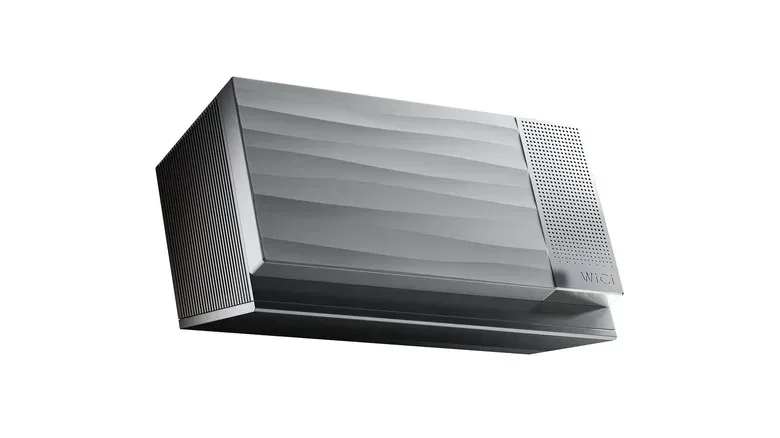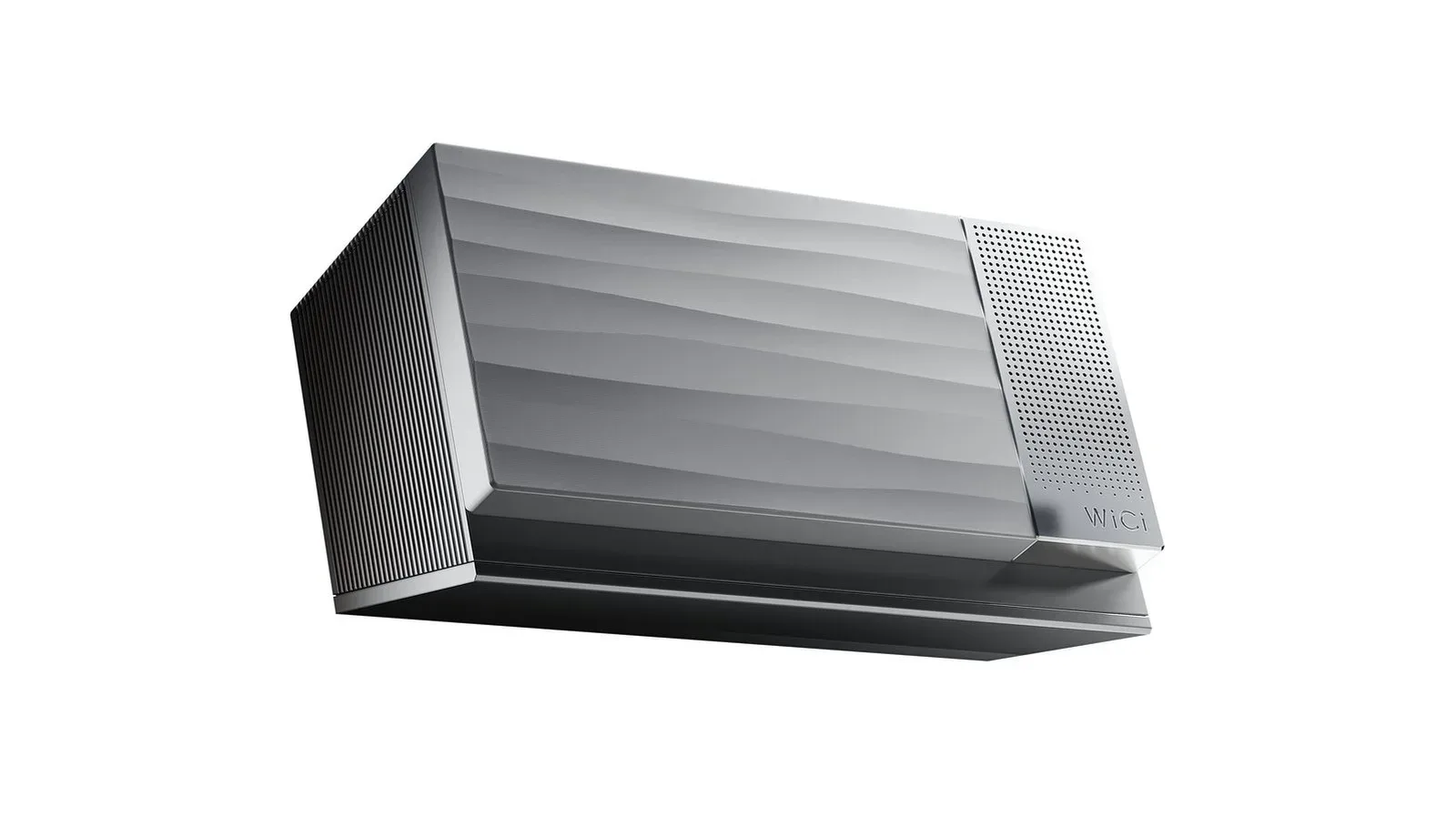
The usual external-GPU compromise is simple enough: keep the portable laptop, then plug it into a box when it is time for more graphics power. WiCi is proposing a more unusual variation with the WiCi One, a self-contained external GPU designed to send that power to compatible devices over Wi‑Fi 7 rather than a Thunderbolt or OCuLink cable.
That makes the WiCi One an intriguing idea for people who want a thin laptop for everyday use but would rather not make a physical graphics cable part of the desk setup. It is also an ambitious proposition. Gaming performance is not just a matter of owning a powerful graphics card; the route between the game, the graphics hardware, and the display matters too. WiCi has presented performance targets for its entry model, but prospective buyers should treat those figures as company claims until broader independent testing can establish how the wireless arrangement behaves across different setups.
A graphics box with its own hardware inside
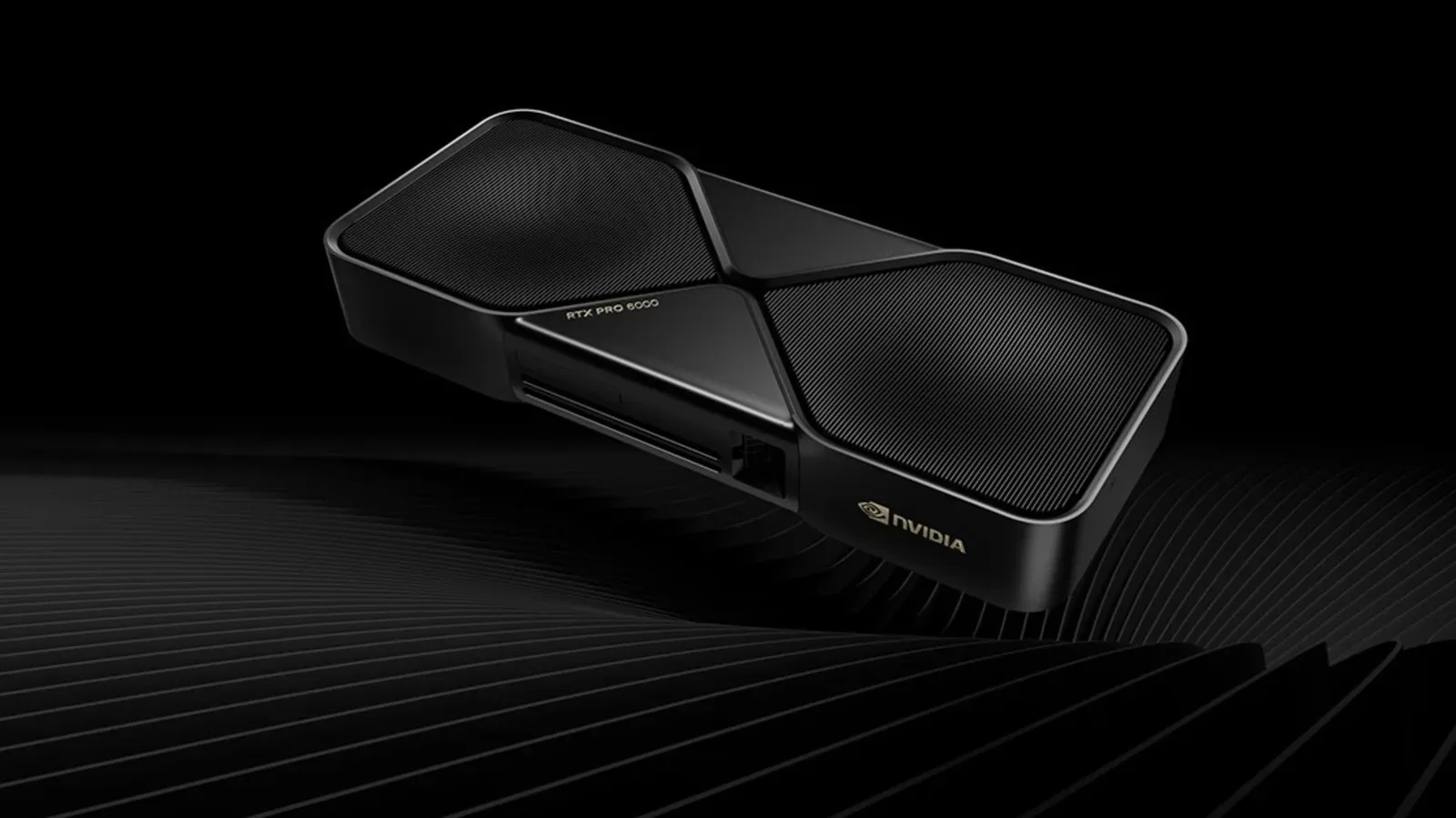
WiCi One is not described as a bare enclosure that requires the buyer to install a separate card. Its housing contains a dedicated GPU, a Wi‑Fi 7 wireless module, and its own cooling system. The base configuration includes an Nvidia RTX 5060 Ti with 16GB of memory, an Intel Core 3 100U processor, and 1TB of NVMe storage.
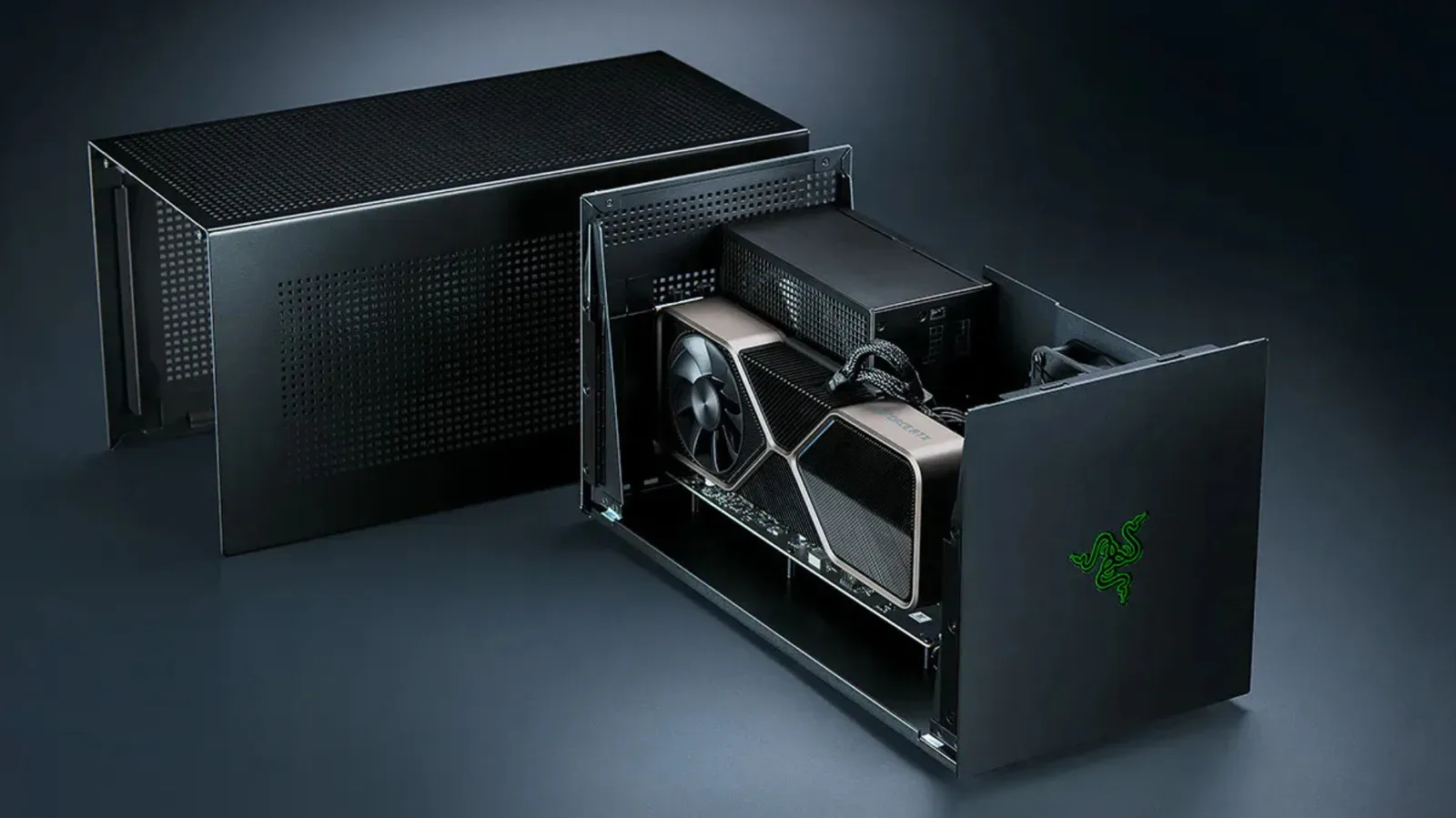
In plain terms, an external GPU, often shortened to eGPU, is graphics hardware that lives outside the computer using it. Conventional eGPU options commonly rely on a physical high-bandwidth connection, such as Thunderbolt or OCuLink. The WiCi One’s defining claim is that it removes that cable from the graphics connection and instead uses Wi‑Fi 7 to work with compatible devices.
The inclusion of a CPU and internal storage is notable because it means WiCi is positioning the unit as more than a graphics card placed in a box. The supplied details do not explain precisely how each component is divided between the host device and the WiCi One in every workload, nor do they spell out compatibility requirements beyond compatible devices. Those details will be particularly important for anyone considering a preorder.
Performance claims center on 4K games with DLSS 4
For the RTX 5060 Ti version, WiCi says the system can run Cyberpunk 2077 at 4K Ultra using DLSS 4 at 80 frames per second. It also says Black Myth: Wukong can run at 4K Cinematic with DLSS 4 at 60 fps.
Those are substantial target settings, and the wording around them deserves careful reading. 4K refers to a high-resolution image output. Frames per second, or fps, measures how many complete images are displayed each second; higher numbers can make motion appear smoother. DLSS 4 is part of the stated configuration for both examples, so the cited results should not be read as simple, universal raw-GPU figures detached from the game settings and rendering technology used.
Equally, these two game examples do not establish a complete picture of performance for every title, every compatible host device, or every wireless environment. They are specific claims for named games at named presets. The supplied information does not provide latency measurements, a list of tested devices, network conditions, display details, or comparative results against wired eGPU connections. Those omissions are not proof of a problem, but they are the practical questions a wireless graphics product must ultimately answer.
Why the cable-free pitch matters
For a buyer with a slim laptop, the appeal is easy to understand. A portable system can remain portable when away from a desk, while the separate unit is intended to supply much stronger graphics capability when heavier games or workloads call for it. A wireless approach could make that transition less physically restrictive than plugging in a conventional eGPU cable.
The flip side is that “wireless” should not be mistaken for “frictionless” before the product’s full requirements are clear. WiCi’s description refers to compatible devices, and compatibility is therefore a central part of the purchase decision. Interested users will need to look for the company’s eventual supported-device guidance, setup instructions, and fuller information on the conditions behind its gaming claims.
AI work is part of the pitch, too
WiCi is not limiting the WiCi One’s intended role to games. The company is also marketing it for demanding AI tasks and for running local AI assistants. “Local” in this context means the work is intended to run using hardware available to the user rather than being framed solely as a remote service.
That distinction is worth separating from the wider debate over how AI is used in games and game culture. Hardware that is marketed for local AI workloads is a computing product claim; it does not by itself say anything about the creation of games or the content generated by AI. That broader industry conversation has its own boundaries, as seen in the UK Games Expo’s policy on AI-made games.
The base model’s RTX 5060 Ti has 16GB of GPU memory, while the planned higher-end model is listed with 32GB. GPU memory is important context in the company’s AI positioning because it is memory attached to the graphics processor itself. Still, the available details do not name particular AI tools, models, task sizes, or performance measurements. Buyers interested chiefly in local assistants should wait for those workload-specific details instead of assuming gaming figures translate directly to AI use.
A more powerful RTX 5090 model is planned
WiCi also plans a more capable WiCi One configuration. That version is set to include an Nvidia RTX 5090 with 32GB of memory, an Intel Core Ultra 7 225H processor, and a 4TB NVMe 5 SSD.
On paper, that planned specification substantially raises the hardware tier, including both GPU memory and internal storage capacity. However, WiCi has not yet announced its price, and the information available does not provide separate game-performance claims for that configuration. It would be premature to turn the listed parts into a promised performance ranking or to assume it will behave identically to the base system over a wireless connection.
There is also a useful purchasing distinction here: the RTX 5090 version is planned, while the currently described preorder offer applies to the base WiCi One. Anyone weighing the two should recognize that the higher-spec unit has less complete commercial information available at present.
Price, preorder status, and what remains unknown
The base WiCi One is available for preorder starting at $1,999. WiCi says that model will eventually carry a $2,599 price tag. The company expects initial units to begin shipping in the fourth quarter of this year. Pricing for the RTX 5090 configuration is expected closer to its launch.
At $1,999, this is not being positioned as a casual accessory. The price frames it as a specialist solution for someone who values a slimmer host device and wants additional graphics power without following the normal cable-based eGPU route. Whether that proposition makes sense for an individual buyer will hinge on details not yet included in the current information: the exact compatibility list, wireless behavior in real operating conditions, setup process, and how the system performs beyond the two named game scenarios.
For now, the clearest takeaway is the design premise. WiCi One is trying to make external graphics less tethered by putting its own GPU, processor, storage, cooling, and Wi‑Fi 7 module into one unit. It has attractive claimed targets for two technically demanding games and a stated use case for local AI work. But it is a preorder product with key operational questions still unanswered, so the sensible approach is to distinguish the announced specifications and company performance claims from results that remain to be independently verified.