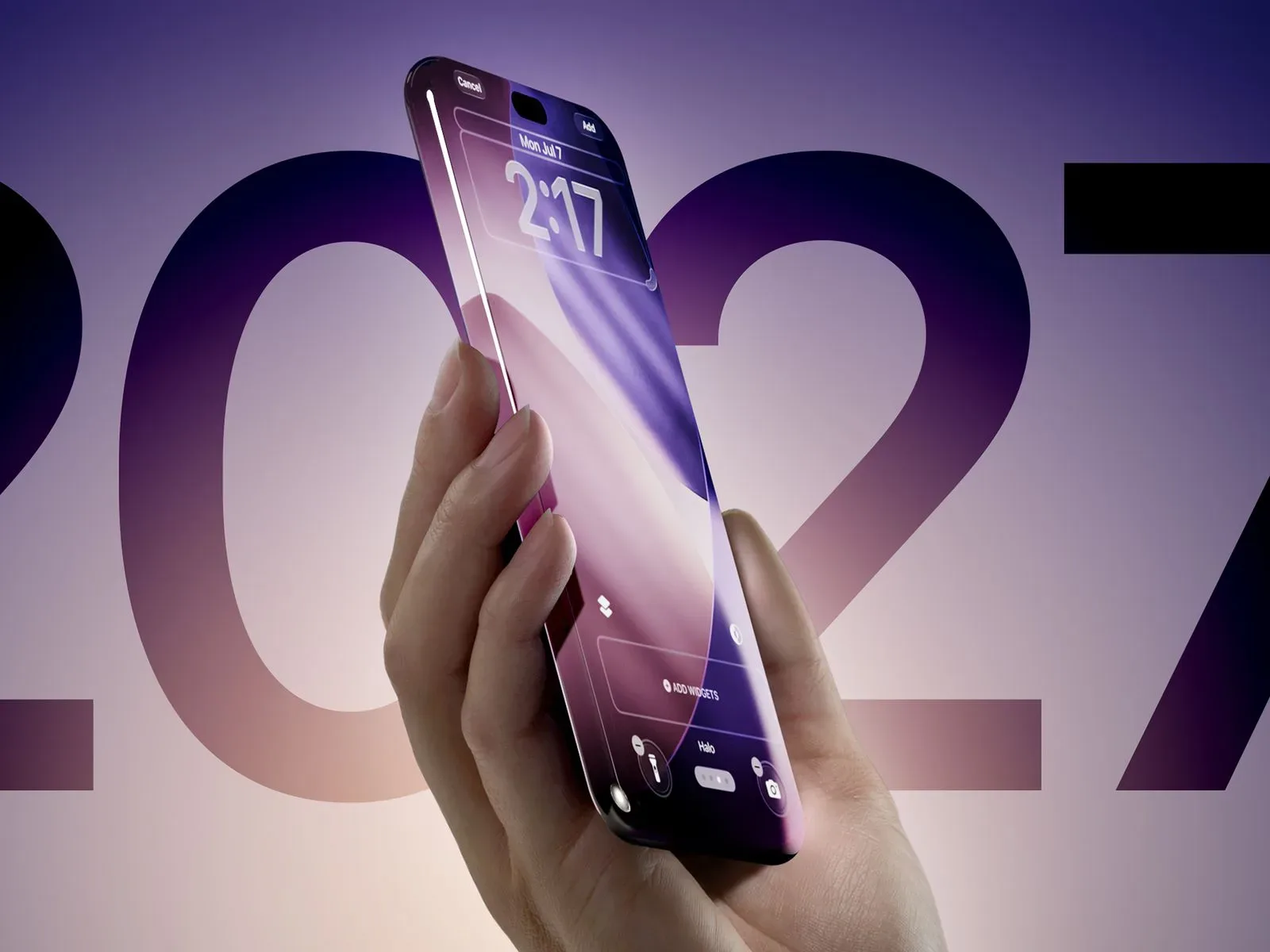
Apple’s next major iPhone design reset may be aimed at the product’s 20th anniversary. Rumors surrounding a possible iPhone 20, expected no earlier than fall 2027, paint a picture of a handset that tries to remove nearly every visual interruption: no obvious frame, no moving buttons, and potentially no visible front camera or Face ID cutout.
That is an enormous ambition, and it is important to separate a striking concept from a finished product. The currently rumored device is still well ahead of launch, several of its supposed technologies are developmental, and some have conflicting timelines. But the collection of claims does suggest that Apple is investigating changes across the entire phone rather than simply refining a camera bump or processor generation.
For players, creators, and anyone who uses a phone as a second screen for games, maps, voice chat, capture, and media, that matters beyond aesthetics. Display shape, touch ergonomics, battery capacity, memory bandwidth, wireless performance, and camera dynamic range can each influence the daily experience. Here is what the iPhone 20 rumors actually indicate—and which details need the biggest dose of skepticism.
The central idea: a phone that reads as one sheet of glass
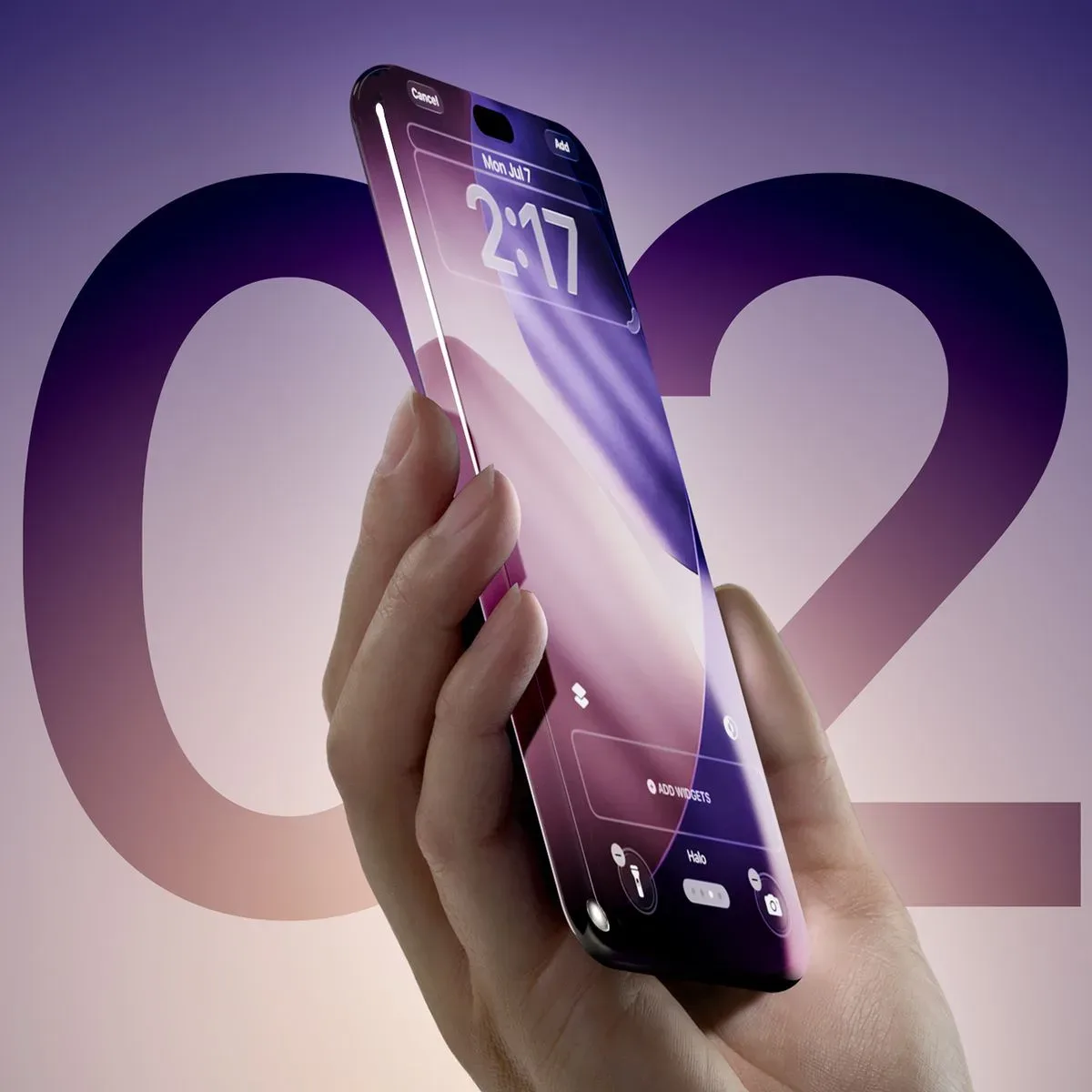
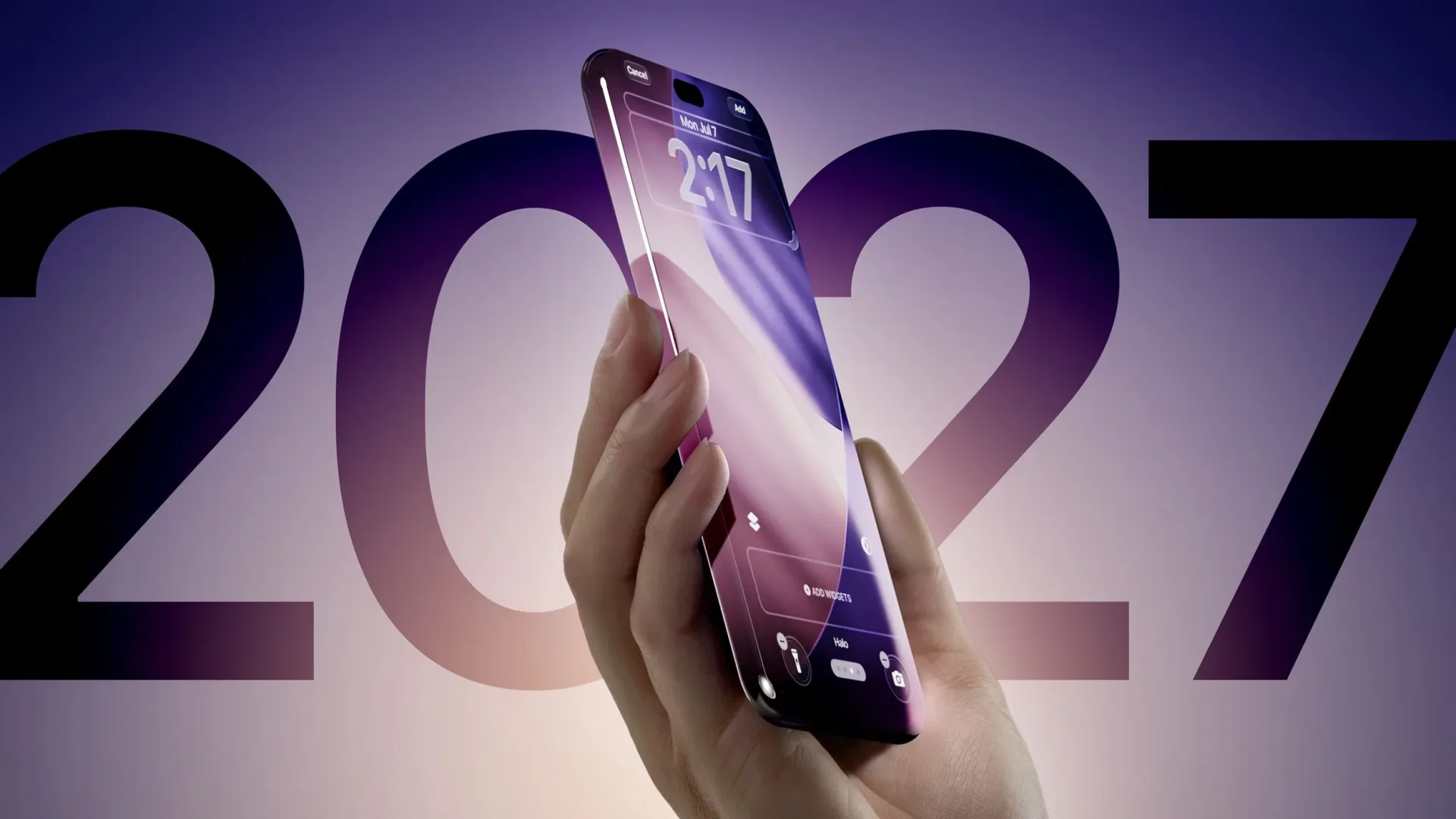
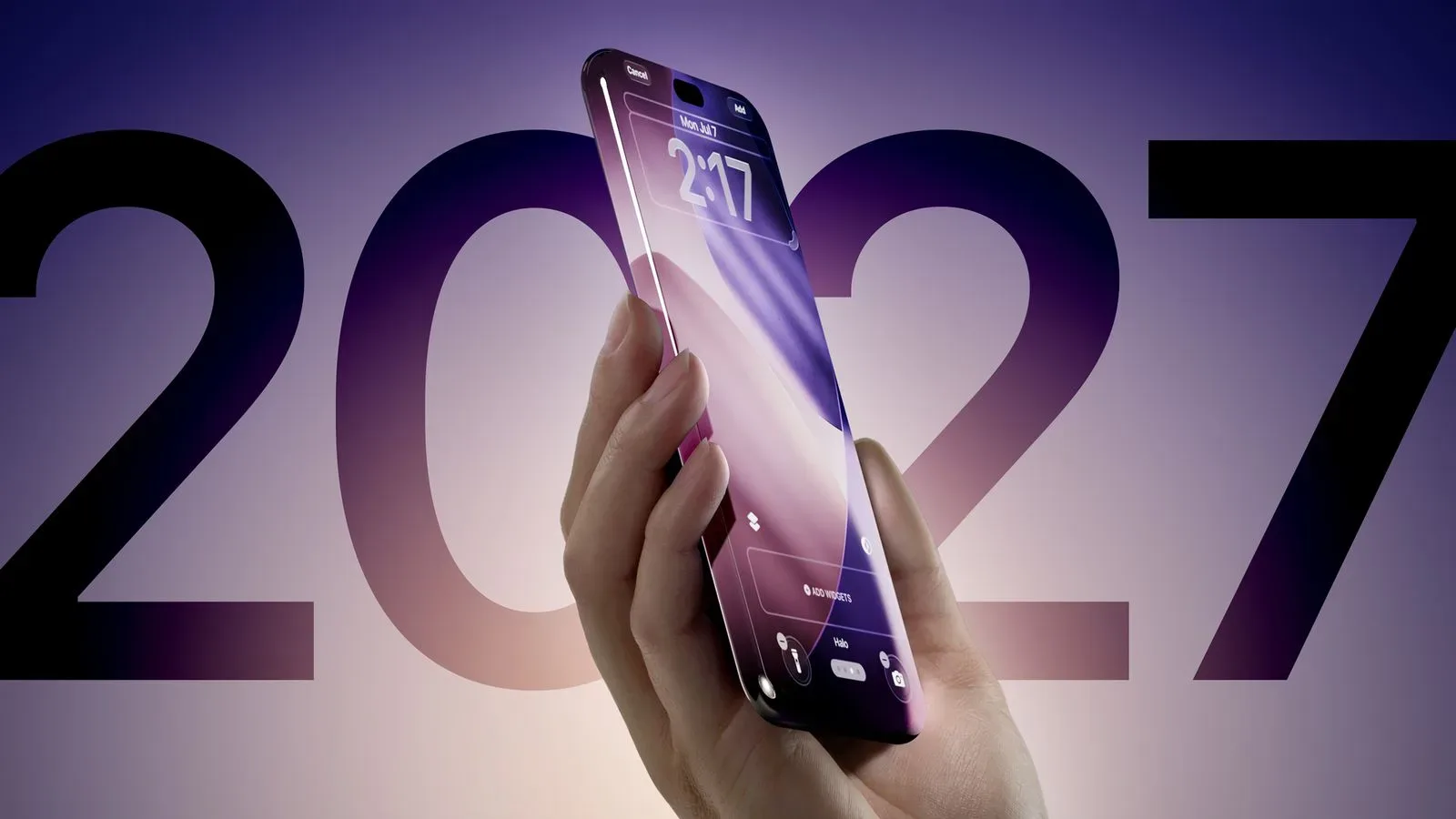
The defining design rumor is an equal-depth quad-curved display. In plain terms, the cover glass would curve away on all four sides. The goal would be to make the surrounding metal frame largely disappear from normal viewing angles, leaving what looks like a continuous glass slab rather than a display set inside a clearly visible chassis.
Apple is reportedly working with Samsung on the display approach. If realized, the outcome could be far more visually distinct than a typical yearly phone refresh. It would also make design trade-offs impossible to ignore. A curved edge can make a phone appear thinner and narrower, but it changes where fingers rest, where accidental touches can happen, and how easily a case can protect the glass. Those are practical questions, not mere nitpicks, when modern phones are often used horizontally for streaming or mobile gaming.
The report also points to two larger models, with rumored display sizes of 6.41 inches and 6.96 inches. The latter could be marketed as a 7-inch panel. Both are said to be slightly larger than the iPhone 18 Pro and iPhone 18 Pro Max. Screen diagonal alone does not establish usable display area, especially on an aggressively curved design, but a larger canvas would be welcome for remote-play interfaces, strategy games, emulation front ends, and video timelines.
Will the screen finally lose every visible cutout?
The most attention-grabbing possibility is a fully uninterrupted front panel. Apple is reportedly continuing work on under-display Face ID and camera hardware, which would move the components now associated with a front cutout beneath the OLED panel.
That phrasing deserves caution. An under-display camera has already appeared on the iPhone Duo’s internal screen, but its image quality drew criticism. Hiding an imaging sensor behind a display is difficult because the panel sits in the path of the light the camera needs. The challenge is not simply making the camera disappear; it is getting acceptable photos and video while doing so.
Face ID poses its own engineering problem. The rumored objective is not only to hide a selfie camera but to conceal the necessary authentication hardware without sacrificing reliability. The story’s timeline explicitly remains uncertain. Under-display Face ID has been repeatedly rumored for years, and it has not yet become a settled, shipped expectation. It is sensible to view a totally clean iPhone 20 front as a target Apple is testing, not a confirmed specification.
If it does happen, the benefit for gaming and video is obvious: fewer visual distractions at the top of the screen. Yet the more meaningful benchmark would be whether face authentication, front-facing image quality, display uniformity, and repairability remain strong. A clean slab is only an upgrade if it does not create weaker compromises elsewhere.
OLED improvements are rumored—but one key technology may miss 2027
The anniversary iPhone has been linked to a brighter and thinner Samsung OLED panel using Color Filter on Encapsulation, or COE. OLED screens produce light at the pixel level, and this proposed approach concerns layers used in the display stack. The expected advantages in the rumor are greater brightness and a thinner panel.
However, another report puts a substantial qualification on that prediction: COE is not expected on Apple Pro iPhones until 2029. That would place the technology beyond the rumored iPhone 20 window. It is a useful reminder that individual leak claims can point in different directions even when they concern the same product.
For prospective buyers, the safe takeaway is not that the iPhone 20 will definitely ship with COE. It is that display technology is apparently part of the wider redesign conversation. The all-glass shape, a hidden front sensor array, and a thinner panel are interrelated ambitions. Any one of them slipping could affect the others.
Haptic buttons could replace every moving control
Another recurring claim is that the Side, Volume, Action, and Camera Control buttons could become solid-state controls. These would not physically depress. Instead, they would be integrated into the frame and use haptic feedback—localized vibration or force-like feedback—to provide the sensation of a press.
The appeal is straightforward. Fewer moving parts could support the seamless exterior suggested by the curved-glass rumor. Controls could also be made to feel responsive without requiring a conventional mechanical switch. But “feel” is the operative word. Physical buttons offer immediate confirmation, work well through a case, and can be located by touch when attention is on a game, road, or camera subject rather than the phone’s edge.
A haptic replacement would need to be convincing in all of those situations. Camera Control in particular is relevant because it is meant to be used during shooting, when tactile precision matters. Volume adjustment is similarly simple today because users know exactly how a real button behaves. Replacing that certainty with a simulated press is not inherently better; it has to be just as dependable.
Apple’s silicon push may reach the modem and camera sensor
Much of the iPhone 20 speculation involves components that users never see. Apple is reportedly developing a third-generation modem for 2027 that it hopes will outperform Qualcomm in speed and AI-related functionality. A modem is the cellular communications component responsible for connecting a phone to mobile networks.
The report describes a gradual transition already underway: C1 and C1X modems are used in the iPhone 16e and iPhone Air, while C2 is said to power the iPhone 18 Pro and iPhone Duo. It also says that only the U.S. iPhone 18 Pro Max continues to use a Qualcomm modem. The anticipated third-generation Apple modem is the one rumored to exceed Qualcomm’s performance.
For game streaming, downloads, cloud saves, multiplayer voice chat, and remote play, wireless quality can be more consequential than a headline benchmark. Still, a 2027 target is not proof of finished performance. The claim is an indicator of Apple’s direction: tighter control over the chips inside its flagship hardware.
The same direction appears in camera rumors. Apple is said to have a working prototype of a custom stacked image sensor intended to replace sensors it has traditionally sourced from Sony. It may use LOFIC, short for lateral overflow integration capacitor. The key claimed function is that each pixel could store differing amounts of light, potentially allowing up to 20 stops of dynamic range.
Dynamic range describes how much variation between dark and bright areas a camera can retain in one image. A wider range can help prevent bright skies from washing out while preserving shadow detail. The “up to 20 stops” figure is ambitious, and it should be treated as part of an unconfirmed technical proposal rather than a guarantee. Yet a custom sensor would be a significant shift if it reaches production, particularly for creators who capture gameplay-adjacent footage, events, or outdoor clips on a phone.
A21 Pro, silicon-anode batteries, and stacked memory: the performance story
The rumored processing platform is a second-generation 2-nanometer chip, likely called A21 Pro, following the A20 Pro in the iPhone 18 Pro models. “2-nanometer” refers to a chip-manufacturing generation, not a simple measurement of every feature on the processor. The practical promise generally associated with a newer process is improved efficiency, performance, or both, but the final result depends on Apple’s architecture, cooling, software, and power limits.
Battery technology may be equally important. Apple is reportedly exploring a silicon anode battery. An anode is one of a battery’s electrodes. The proposed advantage here is that silicon can store more lithium ions per gram, potentially increasing battery life without making the battery physically larger.
That potential is especially relevant to the all-glass redesign. More display, faster processing, brighter OLED output, camera work, and on-device AI tasks all compete for limited energy. A higher-density battery could give Apple more room to improve runtime while maintaining a slender device, though this remains a rumored research direction rather than a confirmed iPhone 20 feature.
Apple is also rumored to be evaluating mobile high-bandwidth memory: vertically stacked DRAM designed to improve memory bandwidth. DRAM is working memory, used to hold data that apps and the operating system need quickly. Memory bandwidth is the rate at which the processor can move data to and from that memory.
Why does that matter? Demanding local AI features can process large quantities of data repeatedly, and more bandwidth may reduce a bottleneck. The same general principle can matter for complex games and intensive media tasks, although the rumor specifically frames the change around on-device AI performance. It does not establish what Apple’s software features would be or how much memory the phone would contain.
What is plausible to watch, and what should remain firmly unconfirmed
The rumors are most compelling as a design brief: eliminate interruptions, bring more components under Apple’s direct control, and use an anniversary model to make several changes at once. The iPhone X was Apple’s major 10th-anniversary redesign in 2017, which makes a 20th-anniversary device an understandable moment for another visual break from the recent formula.
But prospective buyers should not plan a 2027 upgrade around any individual feature yet. The alleged launch is still in the future; internal plans can change; and the report itself flags the possibility that ambitious items could slip by a year or more. COE has a reported timeline conflict, while under-display Face ID and camera quality are unresolved questions.
It is also worth remembering that a flagship is more than its silhouette. A curved all-glass handset must still be comfortable to hold. Haptic controls must remain legible and reliable. Hidden cameras must deliver acceptable results. A new modem must work consistently. A silicon-anode battery must move beyond potential to real-world durability and capacity.
For now, the most grounded reading is that Apple may be exploring one of its boldest iPhone overhauls since 2017, not that a specific 2027 feature list is locked. Anyone tracking Apple’s broader hardware roadmap can also keep an eye on related platform changes, including reports that Apple Maps may eventually account for parking and the walk to a destination. The iPhone 20 rumors are similarly about a future experience, but the hardware claims will need much firmer evidence before they become buying advice.