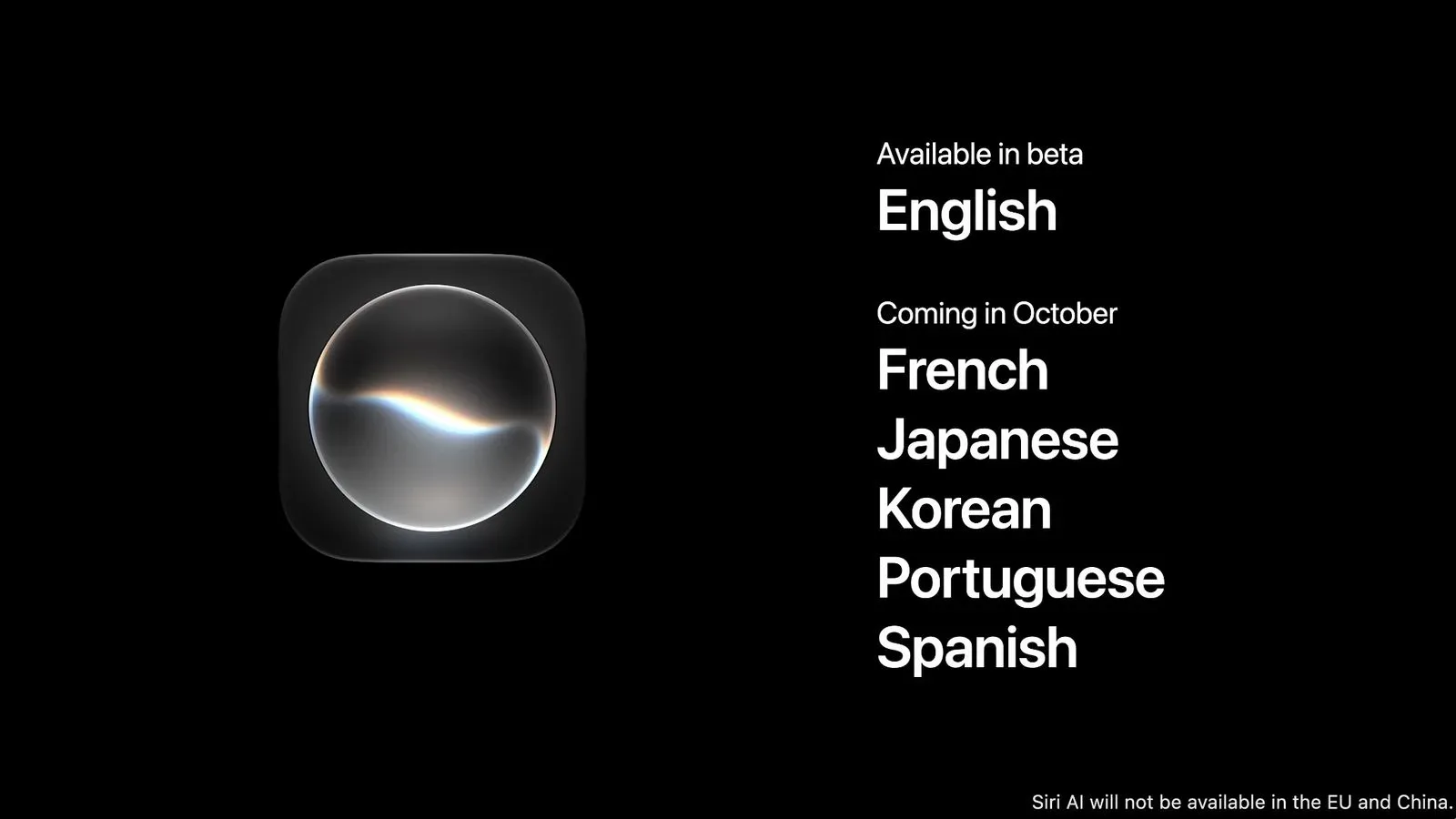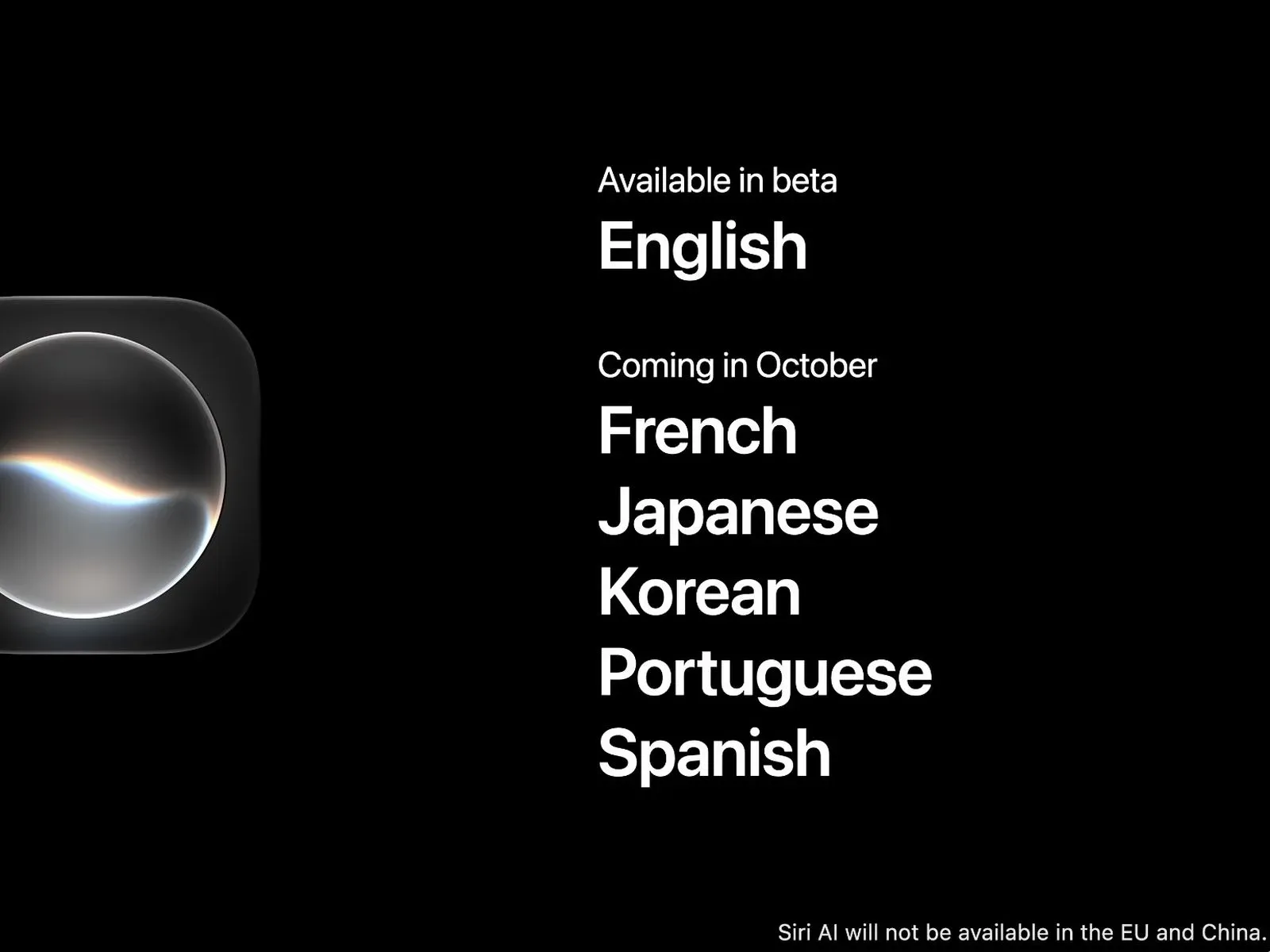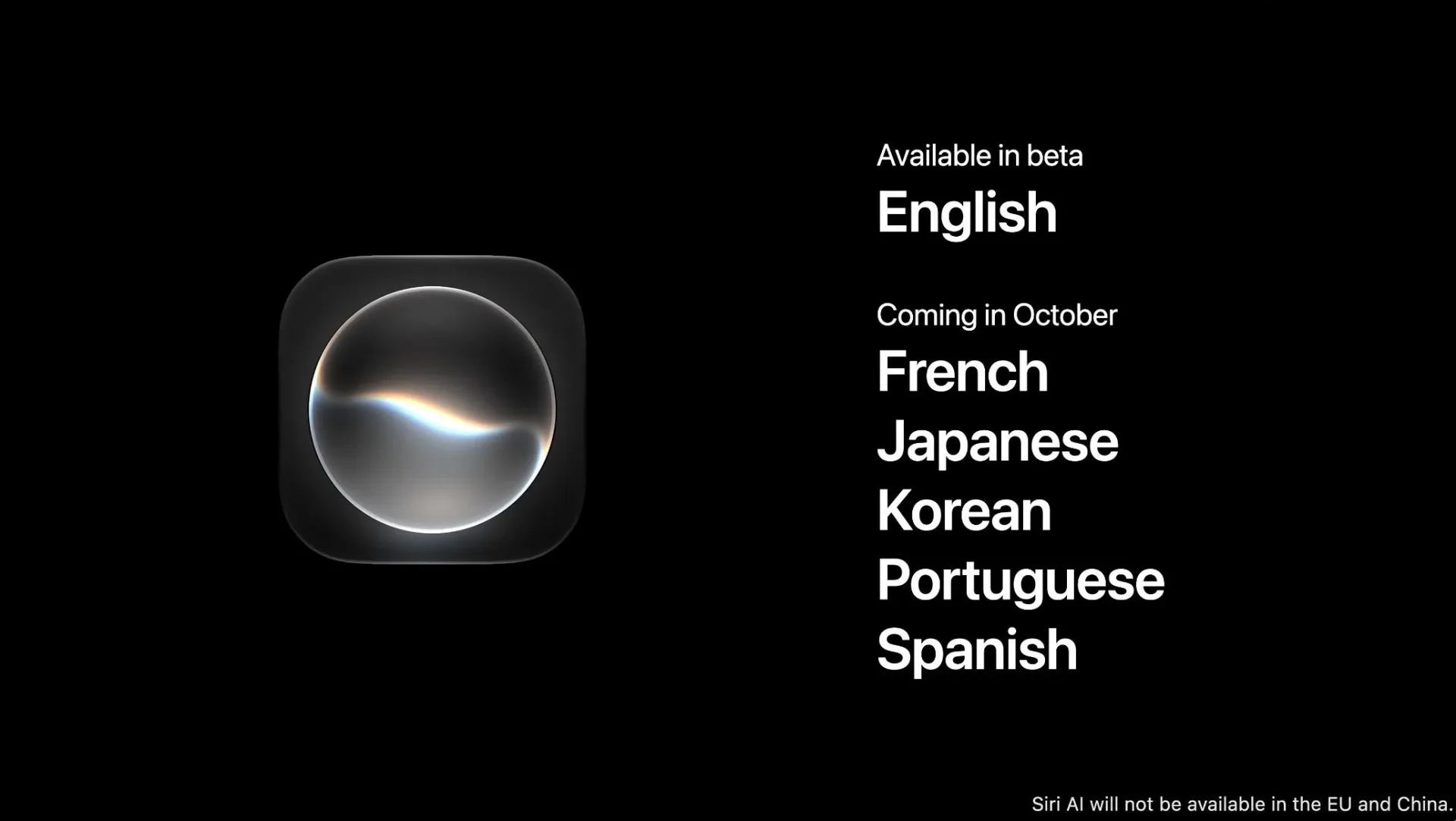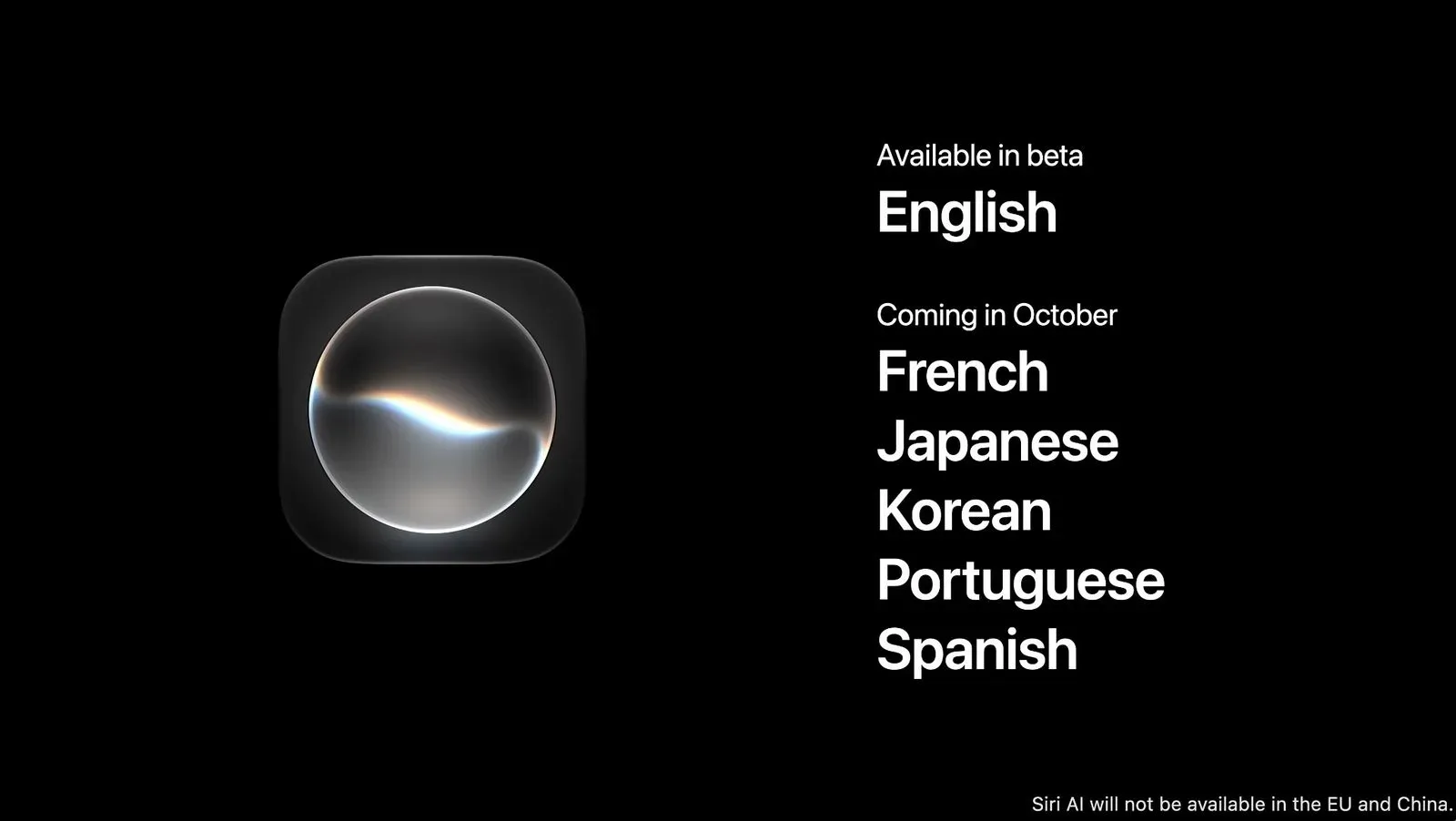
Apple’s Siri AI is beginning to move beyond its English-only launch configuration. The iOS 27.2 beta adds support for French, Japanese, Korean, Portuguese and Spanish, giving the company’s AI-powered Siri experience its first listed language expansion after iOS 27 arrived with English as the sole supported option.
That matters because language availability is not a minor menu translation. For a voice-driven AI feature, a supported language is fundamental to whether someone can use it naturally in the first place. Siri must be able to understand a person’s spoken request, interpret its meaning in the appropriate language, and provide a response that makes sense in that same linguistic context. Adding five languages broadens the potential audience considerably, even though the beta status means the experience is still not a final public release.
Apple had previously indicated that additional Siri AI languages would arrive in October. With those languages now appearing in the iOS 27.2 beta, an October rollout for iOS 27.2 looks likely. It remains a likely schedule rather than a confirmed public release date, however, and beta availability should not be treated as a guarantee of exactly when every user will receive the update.
What the iOS 27.2 beta changes
The concrete change is straightforward: Siri AI in the iOS 27.2 beta is available in French, Japanese, Korean, Portuguese and Spanish alongside English. At iOS 27’s launch, Siri AI was limited to English. The new beta therefore represents an expansion of language coverage, not merely an incremental tweak to an already multilingual Siri AI launch.
It is worth being precise about the terminology. “Siri AI” here refers to Apple’s AI-focused Siri capability as presented in iOS 27. The supplied information establishes which languages are now included in the beta, but it does not spell out individual commands, regional variants, device requirements, or whether every Siri AI function behaves identically in each language. Those details should not be assumed simply because a language appears on the support list.
Likewise, language names do not by themselves define the full scope of regional support. Portuguese, for example, can refer to more than one regional form; Spanish and French are also spoken across numerous countries and regions. The beta’s listed languages establish that those languages have been added, but they do not establish which local variants, countries, or feature subsets are covered. People considering the update should look to Apple’s final iOS 27.2 release notes and compatibility information for that level of detail.
Why language support is especially important for voice AI
A conventional app can sometimes remain useful when only its interface text is translated. A voice assistant has a tougher job. It needs to cope with speech patterns, pronunciation, vocabulary, sentence structure and the fact that people often ask for help in incomplete, conversational phrases rather than carefully worded commands.
That is why a language rollout is meaningful even without a long list of newly announced functions. If Siri AI is designed to be used through natural spoken interaction, users need support in the language they actually speak day to day. French, Japanese, Korean, Portuguese and Spanish coverage means the feature is no longer framed entirely around English use in the beta.
There is also a practical distinction between a language being offered in a beta and a language being broadly ready for every kind of real-world situation. Beta software is pre-release software. Its purpose is to make features available for testing before the public version arrives. Users should reasonably expect changes between the beta and a finished iOS release, including refinements to language behavior, supported workflows or availability details. The presence of these languages is a significant signal of Apple’s intended next step, but it is not the same thing as a complete final-support matrix.
What an October release would mean
Apple previously pointed to October for new Siri AI languages. The iOS 27.2 beta now lines up with that stated window, making an October launch the logical expectation. If that timing holds, users who rely on French, Japanese, Korean, Portuguese or Spanish would have a near-term update to watch for rather than an unspecified future expansion.
Still, it is important to separate evidence from inference. The evidence is that the languages are in the iOS 27.2 beta and that Apple had indicated an October arrival for additional Siri AI languages. The inference is that iOS 27.2 will launch in October. That is a sensible reading of the available information, but no exact day is provided and the public rollout is not formally pinned down here.
For users who do not install beta releases, the simplest takeaway is to wait for the public iOS 27.2 update and verify its release notes once it lands. For beta participants, the update offers an early look at the broadened language selection, with all the normal caution that comes with pre-release system software.
Questions the beta does not answer yet
The expansion is clear, but several details remain outside the confirmed information. There is no stated breakdown of which Siri AI abilities are supported in each added language. There is no supplied confirmation of region-by-region availability, no device list, and no indication that a user can freely mix languages in a single interaction. It also does not establish whether existing English users will see any separate changes in iOS 27.2.
Those distinctions matter because AI features are often discussed as though availability were binary: either a feature exists or it does not. In reality, rollout can be layered. A feature may arrive first in one language, then expand to others; it may be visible in a beta before reaching the public; and its final behavior may depend on details that are only clarified at release. The current update answers the core language question for the beta, while leaving those broader implementation questions open.
The timing also puts this news in a wider AI conversation that reaches into games and software communities, where people are debating what reliable, responsible AI use should look like. That debate is different from a language-support rollout, but it is part of the same larger environment; see the report on a PS5 Linux developer’s concerns over AI-generated homebrew code for one gaming-adjacent example. Siri AI’s update, by contrast, is specifically about making a consumer voice feature accessible in more languages.
Practical takeaways for iPhone users
- English-only is no longer the beta’s full picture: iOS 27.2 beta includes French, Japanese, Korean, Portuguese and Spanish for Siri AI.
- The update is not yet a confirmed public release: beta access does not establish a final release date or final feature behavior.
- October is the expected window: Apple had said new languages were coming in October, and the beta makes iOS 27.2 the apparent vehicle, but an exact launch date is not confirmed.
- Do not assume unsupported specifics: the available details do not define regional variants, device eligibility, every function available in each language, or language-mixing behavior.
- Check final documentation when iOS 27.2 ships: public release notes should be the best place to confirm the finished scope on an eligible device.
For now, the central development is a notable one: Siri AI is taking its first documented step beyond English in iOS 27.2’s beta cycle. French, Japanese, Korean, Portuguese and Spanish users are now part of that test phase, while the expected October timeframe provides a plausible—though still unconfirmed—path toward public availability.