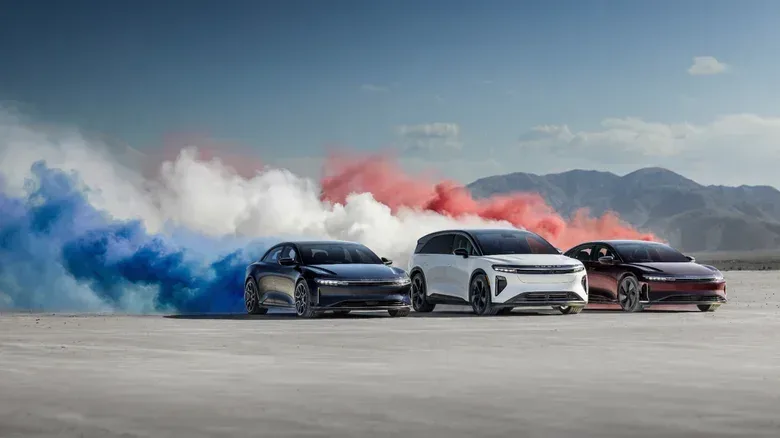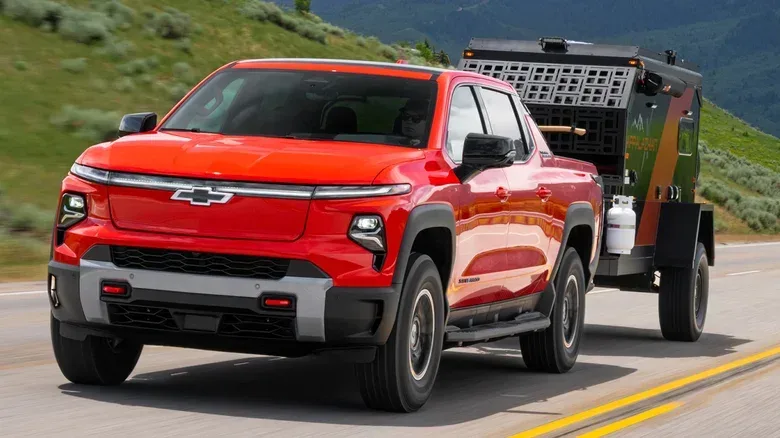
Electric-vehicle range has improved enough that a long drive no longer automatically feels like an endurance run between chargers. The average real-world range for 2026 EVs is reported at 325 miles, while models including the Lucid Air, Chevrolet Silverado EV and BMW i3 can exceed 400 miles between charges. Faster charging is also becoming more common: some drivers can add 100 miles in under 10 minutes, helped by 800-volt electrical architectures, improved battery temperature control and charging curves that hold higher power for longer.
That progress does not mean every mile costs the same amount of energy. An EV can look impressively efficient on an urban commute, then seem far thirstier on a fast motorway or highway run. It can lose a notable portion of its expected range during a freeze or heatwave. A loaded cabin, a packed cargo area and a heavy right foot can all add to the bill.
The useful distinction is between range variation and battery degradation. Range variation is the normal change in how far a vehicle can travel under different conditions. Battery degradation is a longer-term loss of the battery’s ability to store energy. A disappointing trip estimate, especially one tied to speed, weather or cabin heating, is not by itself proof that an EV needs a replacement battery.
For drivers trying to make a charging stop rather than turn it into an unplanned side quest, the main culprits are remarkably consistent: high speed, hard acceleration, extreme temperatures, heating or air-conditioning, and extra mass.
For more context, explore Sacha Baron Cohen’s 300-Strong Ali G London Parade Sets Up ‘Ali G: Who Iz I?’.
Highway speed is usually the big range boss
With a combustion car, stop-start traffic is commonly treated as the efficiency villain. EVs change that familiar logic. They often use more energy at sustained highway speeds than they do in slower, interrupted driving.
Part of the reason is straightforward: maintaining a higher speed takes more energy. Rapid acceleration makes the demand steeper, because the battery must supply a larger burst of electricity at once. The other part is resistance. At higher speeds, a vehicle must work harder against aerodynamic drag and tyre friction. The faster it goes, the less forgiving that energy equation becomes.
There is also less opportunity for regenerative braking, the system that turns some of the kinetic energy normally lost during braking back into stored battery energy. In city traffic, deceleration can provide frequent chances for the vehicle to recover energy. Regenerative braking can extend battery life by as much as 20%. On an open road at a steady high speed, there is simply less braking—and therefore less energy to recapture.
That does not mean the practical answer is to crawl along and become an unexpected traffic puzzle. It means that a modest speed reduction can matter. Driving 60 mph rather than 70 mph may save roughly six miles of battery range per hour. On a short journey, that may not alter a charging plan. Over several hours, particularly when chargers are sparse or conditions are poor, it can be the difference between arriving with a comfortable buffer and watching the estimated range tick down with the drama of a health bar.
What to do on a range-sensitive trip
- Choose a speed that balances arrival time with energy use rather than treating every journey as a top-speed run.
- Build speed progressively instead of using repeated hard launches.
- Avoid boost modes when maximum range matters more than maximum acceleration.
- Use deceleration in a way that lets regenerative braking do useful work where traffic and road conditions allow.
These changes are less about perfect efficiency than predictability. A driver who knows that fast sustained travel costs range can set more realistic charging stops from the outset.
Cold and hot weather change the calculation
Temperature can have an outsized impact on real-world EV range. A 2025 study found that range could fall by nearly one-third below freezing, although the scale of the reduction varied substantially by manufacturer. At 100 degrees, range was found to dip by around 18%.
Those numbers matter because they put a supposedly strange range loss in context. A cold morning, a hot afternoon and a mild day are not equivalent driving conditions for an EV, even if the route is identical. The displayed estimate should be read as an estimate shaped by current conditions, not a permanent statement about the vehicle’s health.
Temperature management is one reason newer EVs can charge more quickly. Thermal management refers to the systems used to control battery temperature so it can operate and charge effectively. It is a major piece of modern EV design, alongside higher-voltage systems such as 800-volt architectures. But thermal management does not repeal weather. It helps the vehicle manage difficult conditions; it does not make cold and heat free from an energy perspective.
Cold weather can be especially awkward because it pairs lower available range with a higher likelihood that drivers will use cabin heat. Hot weather has its own double hit: the outside temperature affects range, then air-conditioning adds an additional electrical load to keep the cabin comfortable.
Precondition while plugged in when possible
One of the most practical range-saving habits is to run the heater or air-conditioning while the EV is still connected to a charger. This is often called preconditioning in everyday use: preparing the cabin before departure so the car does not need to spend as much stored driving energy immediately after setting off.
The goal is not to demand that everyone endure an uncomfortable cabin in the name of an extra mile. It is to avoid paying for peak cooling or heating entirely from the traction battery when grid power is available. In severe conditions, moderating climate-control use after departure can also prevent cabin comfort from compounding weather-related range loss.
Heating and air-conditioning are meaningful loads; USB ports are not
It is easy to blame every illuminated screen, phone cable and navigation prompt for range anxiety. The evidence points elsewhere. Navigation, infotainment and USB devices have a minimal effect on EV range. The climate system is the bigger concern.
Air-conditioning can consume several miles of range per hour. Cabin heating can likewise make a meaningful dent in range. That does not make climate control frivolous; safe, alert and comfortable driving has obvious value. But it does explain why a range estimate may look less generous when the cabin is being actively cooled or heated.
The sensible priority is therefore not to switch off every small electronic feature. It is to focus on the loads that can actually alter a trip plan. If a route is comfortably within the vehicle’s usable range, use the cabin systems as needed. If the destination or next charging stop is close to the projected limit, preconditioning, milder settings and a slightly lower cruising speed are more consequential than worrying about a phone charging cable.
Weight makes every mile more expensive
Passengers and cargo also reduce operating range. More mass means the vehicle needs more energy to move, particularly during acceleration. That is relevant not only for a holiday journey with a full car, but for equipment that lives permanently in the trunk or cargo area simply because nobody has had a reason to remove it.
This is one of the easiest factors to check. Clearing out unnecessary heavy gear will not transform an EV into a different vehicle, but it removes an avoidable drain. It is particularly worthwhile before a long trip, in extreme weather, or whenever a planned charge stop already looks tight.
The same principle helps explain why the wider shift toward less-efficient trucks and SUVs tempers the strong average-range gains seen across newer EVs. A vehicle’s technology matters, but so does the job it is built to do and the mass it carries.
Use the car’s own energy data before assuming the battery is failing
Modern EVs increasingly provide energy-use information in the infotainment system or companion phone app. Chevrolet, Hyundai and Mercedes-Benz are among the manufacturers that offer tools for monitoring consumption. Those screens can be more useful than a single headline range number because they can help identify what the car is spending energy on.
Drivers concerned about a recurring drop in range should check the vehicle manual, app and onboard information first. Look for a pattern: Does the loss coincide with below-freezing weather, high-speed travel, a long spell of air-conditioning, heavy cargo or repeated hard acceleration? If it does, the range change has a clear operational explanation.
That is also a better starting point for planning. A route that includes long fast stretches, harsh temperatures and a full load deserves a larger charging margin than a mild-weather city journey. Likewise, a vehicle that appears short of its expected range on one such trip should not be judged by that trip alone.
Practical range checklist
- Account for conditions before leaving. Treat high speed, heat, cold and a full vehicle as range factors, not surprises.
- Remove unnecessary cargo. Extra weight is a constant penalty, so there is no reason to carry heavy equipment that the trip does not require.
- Condition the cabin while connected. Use charger power for heating or cooling ahead of departure when practical.
- Make smooth inputs. Gradual acceleration reduces the large energy bursts associated with hard launches.
- Drive for the charging plan. If the next stop is tight, lower cruising speed is one of the clearest available levers.
- Trust the useful data. Prioritize the vehicle’s energy-monitoring tools over guesses about tiny electronics loads.
The larger EV lesson is that headline range is a capability, not a promise that every route will produce the same result. Faster charging and longer-range models make travel easier, but physics still gets a seat in the car. Drivers who understand speed, temperature, climate load, cargo and regenerative braking can make better decisions without mistaking a difficult drive for a failing battery. For a companion overview of the same range-preservation basics, see this EV range guide.