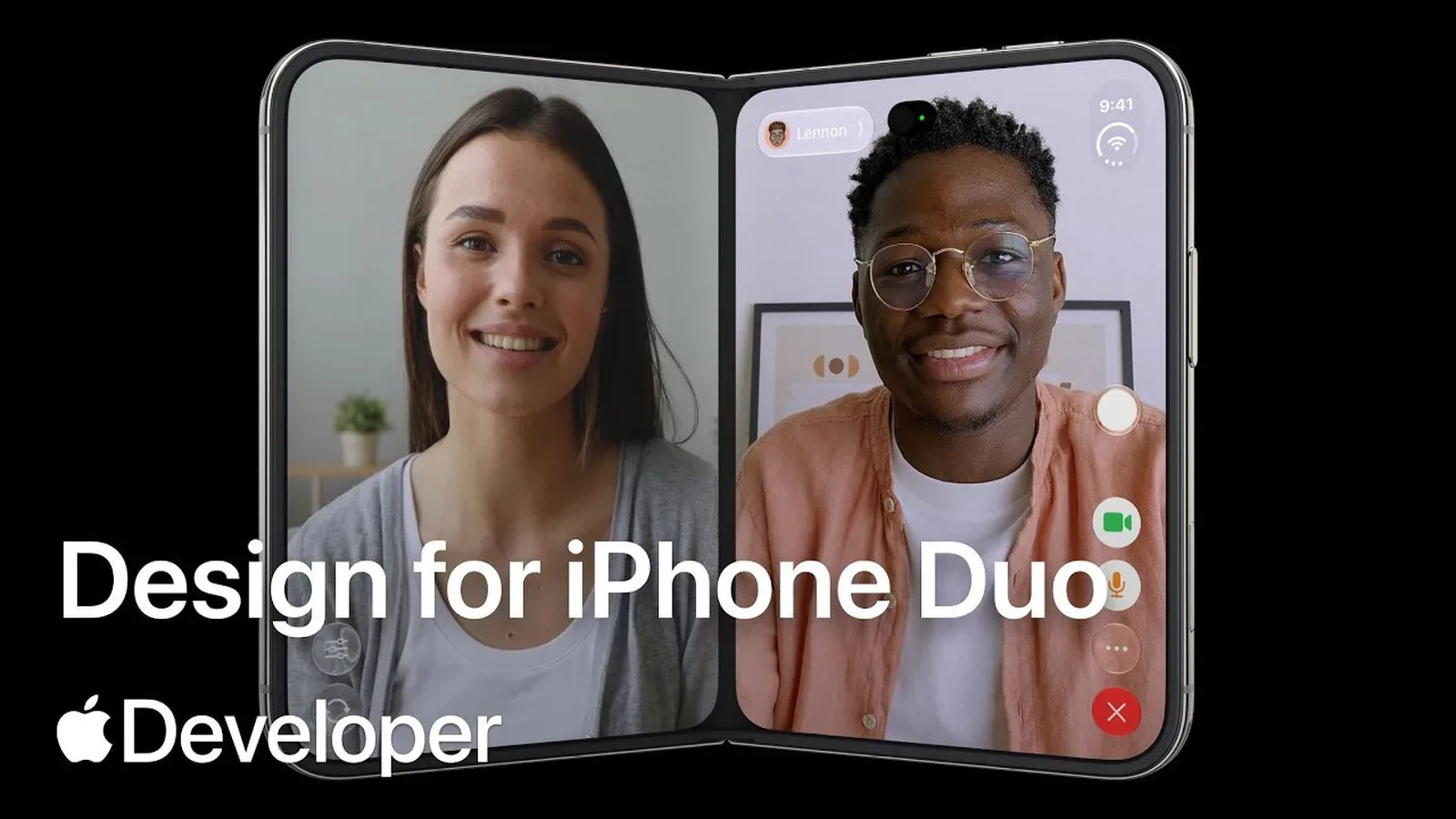
Apple has released the first beta of Xcode 27.1, adding development support for the iPhone Duo. The update is available for Apple silicon Macs running macOS 26.6 or later, and it arrives with two important ingredients for developers targeting the new device: updated iPhone Duo SDKs and simulator support for its new poses and orientations.
This is a developer-tools update rather than a consumer software release, but it is a meaningful early signal for anyone building apps, games, utilities, or media experiences intended to run correctly on the iPhone Duo. A new device category can create more work than simply choosing a new screen size. Apps need to account for how an interface responds when the device changes physical configuration, and developers need a reliable way to inspect those changes before they can test on hardware.
What Xcode 27.1 beta adds
Xcode is Apple’s development environment: the Mac software used to create, build, debug, and package apps for Apple platforms. Xcode 27.1 beta updates that environment for iPhone Duo work.
The release includes updated software development kits, commonly shortened to SDKs. An SDK is the collection of platform tools, frameworks, interfaces, and related resources developers use to make software communicate with a particular operating system and device. In practical terms, an updated iPhone Duo SDK gives developers the platform-level foundation needed to compile and adapt an app for the new hardware target.
It also includes an iPhone Duo simulator capable of supporting the device’s new poses and orientations. A simulator is a software-based stand-in for a device that lets developers run and inspect an app on a Mac. The stated support for both poses and orientations is particularly important because it means the development environment recognizes more than one way the iPhone Duo may be held or positioned.
Why poses and orientations matter
Orientation usually refers to the direction in which a device is used, such as portrait or landscape. A pose is a broader concept describing the device’s physical state or arrangement. Apple’s wording confirms that the iPhone Duo introduces new states that developers will need to accommodate, while stopping short of detailing what those states are or how the hardware is constructed.
That distinction matters for interface design. An app can look correct in one orientation and become awkward in another if controls, text, media, navigation, or game UI do not adapt. A simulator that understands the relevant device states gives teams a way to check those transitions during development instead of treating the target as a conventional phone with a different display profile.
For games, responsive layouts can be especially consequential. Heads-up displays, touch controls, map panels, dialogue boxes, inventory screens, and accessibility options all compete for space. Developers planning an iPhone Duo version will need to decide how those elements should react when the device enters each supported pose or orientation. The Xcode update does not prescribe any one design solution, but it provides the development support needed to begin making and evaluating those decisions.
What the beta does not establish
The release confirms toolchain support, not the full consumer picture around the iPhone Duo. There are no device specifications, release timing, pricing details, app requirements, or game compatibility claims in the available information. Nor does the beta itself guarantee that every existing iPhone app will make good use of the device’s distinct configurations.
That is an important boundary. Updated SDKs can enable development, while simulator capabilities can expose layout and behavior issues, but shipping a polished app still depends on each development team’s implementation. Support in Xcode should therefore be read as a route for developers to prepare software, not as evidence that a specific app has already been optimized.
The software is also explicitly a beta. Beta releases are pre-release versions intended for testing and development work. Developers should expect that tools, behavior, and documentation may continue to change before a final Xcode 27.1 release. Teams whose workflows depend on stable production tools will want to weigh that status carefully, particularly when adopting new SDKs or updating build systems.
Mac and operating-system requirements
Access to Xcode 27.1 beta is limited to Apple silicon Macs running macOS 26.6 or later. Apple silicon refers to Macs using Apple-designed processors rather than earlier Intel-based Mac hardware. The macOS requirement means developers must be on the stated OS version before they can use this beta for iPhone Duo development.
Those requirements have a practical effect on project planning. A team may have an app codebase ready to explore iPhone Duo support, yet still need compatible Mac hardware and the required macOS version before it can install the new toolset. In that sense, platform support is not just about an SDK download; it also depends on the development machines used to build and test the software.
Early implications for app and game makers
The arrival of iPhone Duo support in Xcode gives developers a starting point for compatibility work. The most immediate use is likely to be exploratory: opening existing apps in the simulator, checking layouts across the newly supported states, and identifying views that need revised adaptive behavior.
For teams that maintain apps across several Apple devices, the update may also shape how they organize interface logic. Rather than assuming one fixed phone presentation, developers can plan around changing space, orientation, and device state. The available details do not specify the exact technical methods required, so it would be premature to claim a particular implementation path. Still, the inclusion of pose and orientation support makes clear that software behavior across configurations is a central consideration.
For players and users, the eventual benefit of this kind of groundwork is straightforward: apps that retain usable navigation, readable content, and sensible controls as the device changes state. Whether that happens consistently will depend on the individual apps developers choose to update.
The update also lands amid a broader push for technical leadership across media and entertainment companies. Disney’s appointment of its first chief technology officer is a separate development, but it underscores how closely software platforms and entertainment products now intersect.
The key takeaway
Xcode 27.1 beta is the first available development-tool release identified as supporting the iPhone Duo. Its updated SDKs establish the software foundation for targeting the device, while simulator support for new poses and orientations gives developers a way to evaluate how an app behaves across those configurations. For now, the clearest action item is for eligible developers on Apple silicon Macs with macOS 26.6 or later to begin assessing what those new device states mean for their own interfaces and experiences.