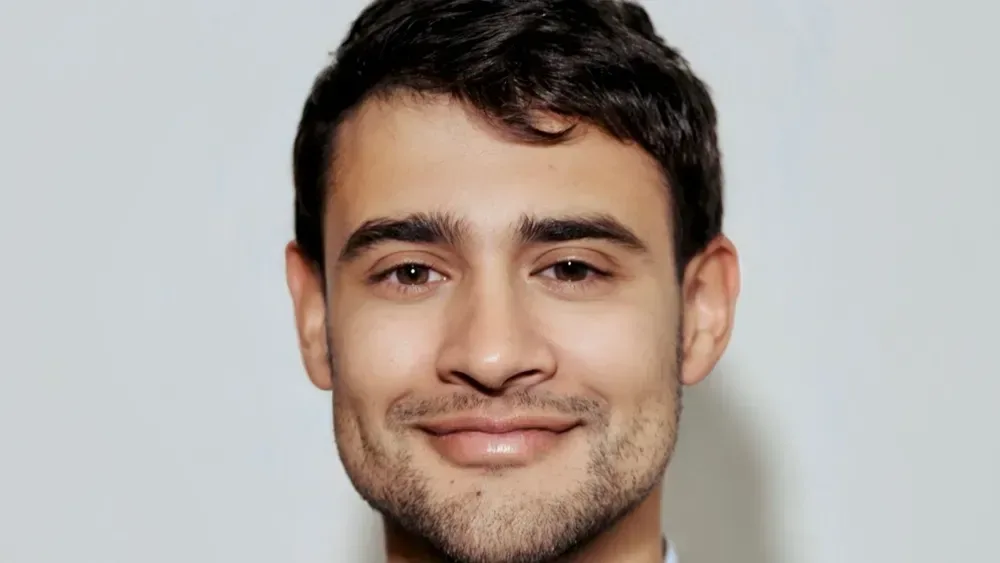
Warner Music Group has made a broad set of senior leadership changes, with Val Blavatnik named Managing Director of North America, U.K. & Corporate Development. The newly outlined remit brings strategy across two of the company’s major markets together with responsibility for guiding investment strategy intended to support growth.
Blavatnik, 28, is the son of Warner Music Group’s primary owner, Len Blavatnik. He joined the company’s board in 2023 and most recently worked as a special adviser to Warner Music Group CEO Robert Kyncl as well as Access Technology Ventures while completing his MBA at Harvard Business School.
The appointment is part of a wider executive realignment spanning the company’s recorded-music labels, international operations and ADA, the company’s independent distribution business. In practical terms, the changes place several established executives in enlarged roles rather than describing a wholesale replacement of leadership teams.
What Val Blavatnik’s new role covers
Warner Music Group says Blavatnik will unify and drive business and operational strategy across North America and the United Kingdom while also guiding investment strategy. That combination is significant because it places market operations and corporate development within the same portfolio.
Corporate development generally refers to the work a company does to identify, assess and execute growth opportunities beyond its routine day-to-day business. Depending on the opportunity, that can involve investments, partnerships or other strategic initiatives. The information disclosed here does not specify particular deals or targets, so it would be premature to infer any imminent acquisition or investment.
Likewise, operational strategy is distinct from simply setting a creative or commercial direction. It concerns how an organization coordinates its people, processes and resources to carry out its goals. In this case, the stated task is to align business and operational plans across North America and the U.K., two regions specifically identified in the new title.
Blavatnik’s previous work spans music, media, technology and production. Before his advisory role, he was Senior Director of Business Development at Warner Chappell Music, Warner Music Group’s global publishing division. From 2021 through 2023, he worked on LionTree’s investment team with a focus on media and technology. Earlier, he served as a production executive at Eden Productions, a film and television company founded by Richard Plepler.
That background helps explain why the new position joins operational planning with investment strategy. His Warner Chappell experience was within the music company itself, while his LionTree work concerned media and technology investing. Still, the company has only defined the broad responsibilities of the new post, not a list of planned initiatives.
International leadership expands under Alejandro Duque
Alejandro Duque has been elevated to President of Warner Music International. His responsibilities now add APAC and EMEA to his remit.
Those abbreviations describe broad regional groupings: APAC means Asia-Pacific, while EMEA means Europe, the Middle East and Africa. The expanded mandate gives Duque responsibility across a large international footprint, although no further market-by-market organizational details were provided.
The company also promoted Guillermo Gonzalez to President of Warner Music EMEA after six years at Warner Music Iberia. Andrés Rothschild will become President of Warner Music Iberia.
These moves establish a visible succession chain within the international organization: Gonzalez moves from the Iberian business into the EMEA leadership role, and Rothschild takes on the Iberian presidency. For artists, label staff and partners, the immediate takeaway is continuity alongside broader regional authority: executives already working within the Warner Music system are being assigned larger territories.
ADA and Atlantic Music Group get more connected leadership
Elliot Grainge has been named Chairman of ADA in the United States, in addition to remaining Chairman and CEO of Atlantic Music Group. Zach Friedman, described as a longtime Grainge associate, will become Vice Chairman of ADA while continuing as COO of Atlantic Music Group.
Distribution is a core part of the contemporary music business. At a basic level, it is the infrastructure that helps music reach audiences and commercial platforms. ADA is identified as Warner Music Group’s independent distribution company, which makes the additional leadership connection to Atlantic Music Group especially notable.
The announcement does not say that ADA and Atlantic Music Group are being merged, nor does it describe changes to the service offered to independent artists or labels. What it does show is greater overlap in the executives guiding the two businesses. Grainge’s continued role at Atlantic Music Group and added ADA chairmanship create a leadership bridge between a major label group and the company’s independent distribution operation.
That sort of arrangement can matter strategically even when operational specifics are not public. It can help leadership coordinate priorities across related parts of a larger company. But the practical effects for clients, artists and releases will depend on decisions not detailed in the announcement.
Warner Records Group names a sole chairman and CEO
Aaron Bay-Schuck is now the sole Chairman and CEO of Warner Records Group. The change follows Tom Corson’s elevation from co-chairman to COO of Warner Music Group.
The terminology matters. A sole chairman and CEO means Bay-Schuck holds both the board-style leadership designation and the chief executive role for Warner Records Group rather than sharing the chairmanship structure referenced in the announcement. Corson, meanwhile, shifts into a corporate operational position as chief operating officer of Warner Music Group.
Again, there is no indication here of altered artist rosters, release schedules or label branding. The disclosed development is a reporting and leadership adjustment: Bay-Schuck becomes the single top executive named for Warner Records Group, while Corson assumes a larger company-wide operations role.
Simon Robson will depart in December
Simon Robson will step down in December after nearly 30 years with Warner Music Group, with plans to pursue new opportunities. The company credits him with helping shape operations across a wide range of markets, supporting emerging leaders, championing domestic repertoire and encouraging greater international collaboration.
Domestic repertoire refers to music developed for and rooted in a local market, rather than being treated only as an import from another territory. Supporting that repertoire can be important to an international music business because local artists and local audiences do not necessarily follow the same patterns as globally marketed releases.
Robson’s departure is therefore the clearest element of transition in the announcement. The promotions of Duque, Gonzalez and Rothschild indicate how leadership responsibilities are being distributed in international markets, but the company did not offer a detailed breakdown of which functions Robson’s successor or successors will inherit.
The stated strategy: market share, music value and efficiency
Kyncl framed the changes around three priorities the company says it delivered on during its successful year: growing market share, increasing the value of music and improving efficiency. He described the executive moves as frontline changes designed to strengthen the leadership team for the next stage of growth.
Those phrases are strategic objectives rather than standalone measurements in the information released. No market-share figures, financial results or performance targets accompanied the leadership news. Readers should therefore treat them as the company’s description of its priorities, not as a newly published scorecard.
Even so, the roles align clearly with those themes. Blavatnik’s portfolio combines strategy, operations and investments in North America and the U.K. Duque’s remit broadens across international regions. Grainge and Friedman add ADA responsibilities while retaining Atlantic Music Group duties. Bay-Schuck becomes the sole executive holding the chairman and CEO titles at Warner Records Group. Gonzalez and Rothschild take on successive regional posts.
For the wider entertainment business, executive appointments can appear distant from the art itself, but they establish who sets organizational priorities behind labels, publishing, distribution and regional operations. The announcement does not offer immediate consumer-facing changes, new releases or product plans. Its importance is structural: Warner Music Group is concentrating authority in several key areas while promoting leaders who already have experience inside its music ecosystem.
Leadership shifts across entertainment companies can also provide useful context for adjacent creative industries. For another look at how organizational decisions shape creative-business news, see this report on Dawngazer and the new Ignisphere fantasy world.
The next developments to watch are the concrete actions that follow these titles: how the new regional mandates are implemented, what investment priorities emerge under Blavatnik’s corporate development responsibilities, and how ADA’s additional leadership connection with Atlantic Music Group functions in practice. None of those outcomes has been specified yet, but the structure of Warner Music Group’s executive bench is now notably different.