There are few topics capable of emptying a room faster than the phrase “we should charge more,” unless that room is full of people making games. Then it tends to start an argument about whether the room itself is affordable.
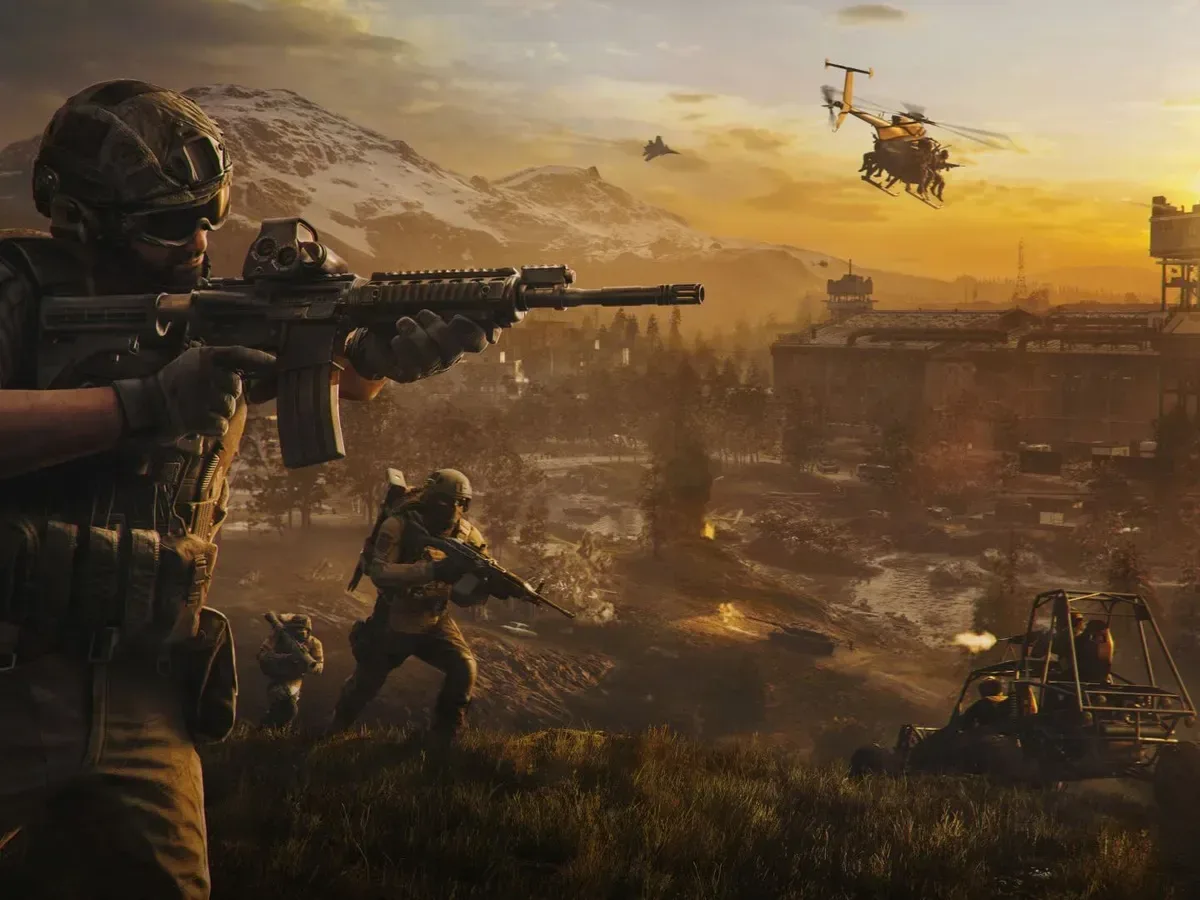
Joe Brammer, the lead behind Wardogs, has made the blunt version of that case: games need to cost more. His logic is straightforward. Development costs are high, while the sticker price of games has not risen at the same pace. In Brammer’s view, the business-side arithmetic is not mysterious; it is a mismatch between what games cost to make and what customers are accustomed to paying.
That argument lands amid a wider industry conversation about layoffs, restructuring and the difficulty of making the economics work. Double Fine founder Tim Schafer recently said he does not understand the economics of making games, adding that he assumes somebody is being greedy somewhere and hopes the current turmoil is cyclical rather than permanent.
Brammer sees a much more direct explanation. But a direct explanation does not automatically produce a painless solution, particularly when the proposed solution is asking customers to open their wallets another inch—or, depending on the game, several inches.
The price argument, without the smoke machine
The familiar modern benchmark has been $60 to $70 for major releases, with the move to $70 occurring early in the current hardware generation. Nintendo and Rockstar have reached the $80 mark with Mario Kart World and GTA 6, respectively. Brammer argues that Rockstar had an opportunity to make a stronger change to expectations with GTA 6 and did not go far enough.
His point is not that players should be delighted to pay more. It is that the present setup cannot be discussed honestly without acknowledging the price side of the equation. Brammer compared Wardogs’ current cost to roughly a one-way train journey in the UK, a comparison designed to frame games as unusually cheap relative to other everyday spending.
“Games too cheap, cost of development too high,” Brammer said, reducing an enormous business question to a sentence with all the charm of a tax form and considerably more heat.
There is a useful distinction inside that shorthand. A game’s retail price is the amount a customer pays at purchase. A game’s development cost is the money required to build it. Brammer’s claim is that the former has remained constrained while the latter has climbed. Whether raising the retail price fixes that mismatch is a different question, because the result depends not only on revenue per copy but also on whether enough people decide to buy a copy at all.
Related coverage includes Wardogs Lead Argues Higher Game Prices Are Needed as Development Costs Climb.
That is the awkward little goblin living underneath every price-rise debate: a higher price can increase revenue from each sale, but it can also reduce the number of sales. The available information does not establish where that balance sits for a typical release, and it is unlikely to be identical for every game. A blockbuster with enormous name recognition is not in the same position as a new project asking players to take a first-time chance.
Why GTA 6 is central to the argument
GTA 6 matters to Brammer’s case because a massive franchise is better placed than most to normalize a new price ceiling. When a recognizable series moves first, it can function as a market test with a much larger audience than an unknown or smaller release could command. If players accept the price, other publishers may see room to follow. If they balk, the example becomes a warning rather than a path.
Rockstar did charge $80 for GTA 6, but Brammer believes the company could have gone further and forced a clearer reset. His concern is that stopping short merely leaves the industry circling the same argument: development gets more expensive, prices remain politically and commercially fraught, and each company waits for another to make the unpopular move first.
There is an obvious counterweight. A major franchise may have more power to test a price increase precisely because its audience sees it as exceptional. That does not mean players will treat an $80 GTA purchase as permission for every other game to cost $80, let alone $100. A customer can decide that one annual event is worth the premium while still declining to gamble that amount on a less familiar title.
That is not hypocrisy; it is consumer choice. A player’s willingness to pay often depends on personal interest, confidence in the developer, alternatives available at the time, and the simple fact that budgets are finite. The same person who happily buys one premium game can be much stricter about the next five.
The $80 warning light
The push toward $80 is not an abstract possibility. Nintendo and Rockstar have already reached that threshold with the games named above. Xbox also announced an $80 price for upcoming titles after the Mario Kart World pricing was revealed, then reversed course months later.
The reason for Xbox’s reversal is not established here, and it would be reckless to pretend a single explanation has been confirmed. The decision came with an important complication: Xbox was also offering those games through a monthly subscription. That makes a direct read on customer resistance harder. When a title is available through a subscription, the purchase-price question and the subscription-value question overlap.
Still, the reversal illustrates the risk in assuming a new number will become normal merely because a few enormous releases can carry it. A price is not just a financial calculation on a publisher spreadsheet; it is also a signal to players. It tells them what level of confidence and perceived value a company expects them to have before they press the purchase button.
For a useful adjacent example of how buying decisions are shaped by timing and perceived value, Nintendo players are also weighing promotions such as the Customer Appreciation Sale and the timing of a Zelda purchase before Black Friday. A full-price game does not compete only with other full-price games. It competes with sales, backlogs, subscriptions and the possibility that patience will make the same purchase cheaper later.
Early access makes the Wardogs case more immediate
Wardogs is not merely being used as an example in a broad industry argument. Its own price is expected to increase throughout its Steam early-access period. Brammer’s position is unusually explicit: if people do not agree with that plan, they should not buy it.
Early access means a game is sold before its development is complete, with players able to purchase and play the work in progress. A price that rises during early access can therefore create a clear trade-off. Buy earlier at the current price, accepting the unfinished state of the game, or wait and potentially pay more once the project advances. It is a transparent model in one important respect: the developer is saying that the price is not intended to stay fixed.
But transparency cannot remove the underlying decision for players. Higher pricing asks them to judge not only whether a game is appealing today, but whether its future state will justify the eventual cost. That is a particularly demanding request in a market full of other choices. Brammer’s comparison to a train ticket may make the present price look modest, but consumers do not necessarily assess entertainment purchases against transport. They assess them against the other games, subscriptions and expenses competing for the same money.
Analysis: a price rise is a strategy, not a cure
Brammer is right to identify a tension between expensive production and durable price expectations. The argument that game prices should never change simply because players dislike higher prices is not an economic model. It is a preference, and an understandable one.
At the same time, “games need to cost more” is not a complete answer to the pressures described by Schafer. It identifies one lever: the amount charged upfront. It does not, by itself, answer who receives additional revenue, whether it protects jobs, how much demand falls when prices rise, or why companies can pursue restructuring and layoffs even around successful releases.
The contrast in this debate is the key story. Schafer’s remarks express uncertainty about where the money is going and who benefits. Brammer’s remarks express confidence that the answer begins with the purchase price. Those positions can coexist without resolving each other. Games may be expensive to make; they may also be difficult to sell at higher prices; and the distribution of any success may still be contested.
For players, the practical outcome is likely to remain selective rather than universal. Some games will be able to command a premium because their names, audiences or perceived importance support it. Others may find that a higher sticker price creates more hesitation than revenue. The $80 question is therefore less likely to be settled by one grand declaration than by many individual purchasing decisions.
For developers, especially teams outside the industry’s very largest franchises, the challenge is sharper. Raising prices may be necessary for a particular project, but it also asks a customer to take a larger risk on an unfamiliar game. That does not make Brammer’s stance unreasonable. It makes it a tougher sell than the slogan suggests.
The debate is unlikely to cool down soon. Players have been trained to recognize $60 and $70 as meaningful reference points, while developers are confronting the strain of building games under conditions they describe as increasingly hard to sustain. Wardogs will test Brammer’s belief in a concrete way as its early-access price rises. And the rest of the industry will continue looking at the biggest games on the calendar, hoping someone else volunteers to be the first villain in the receipt email.