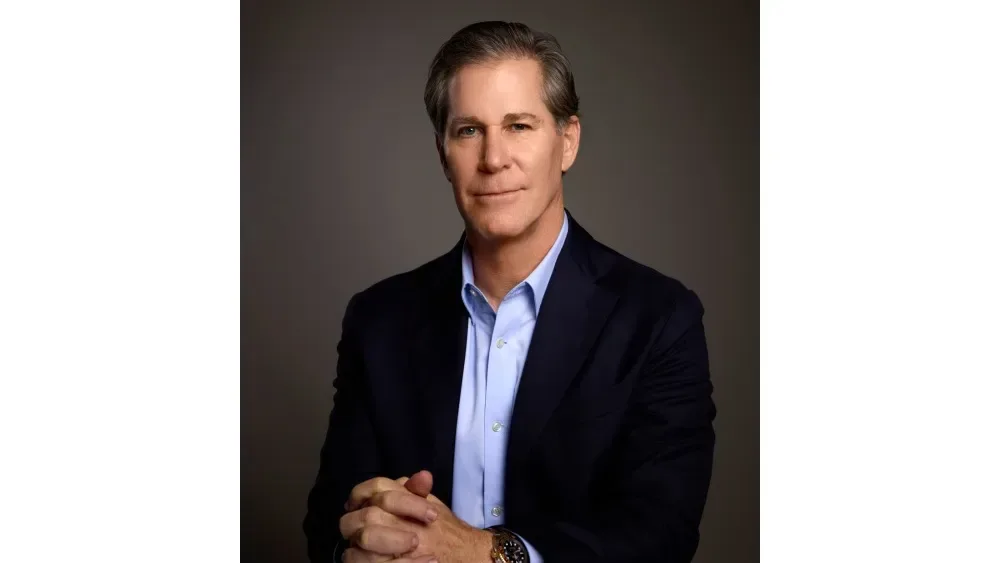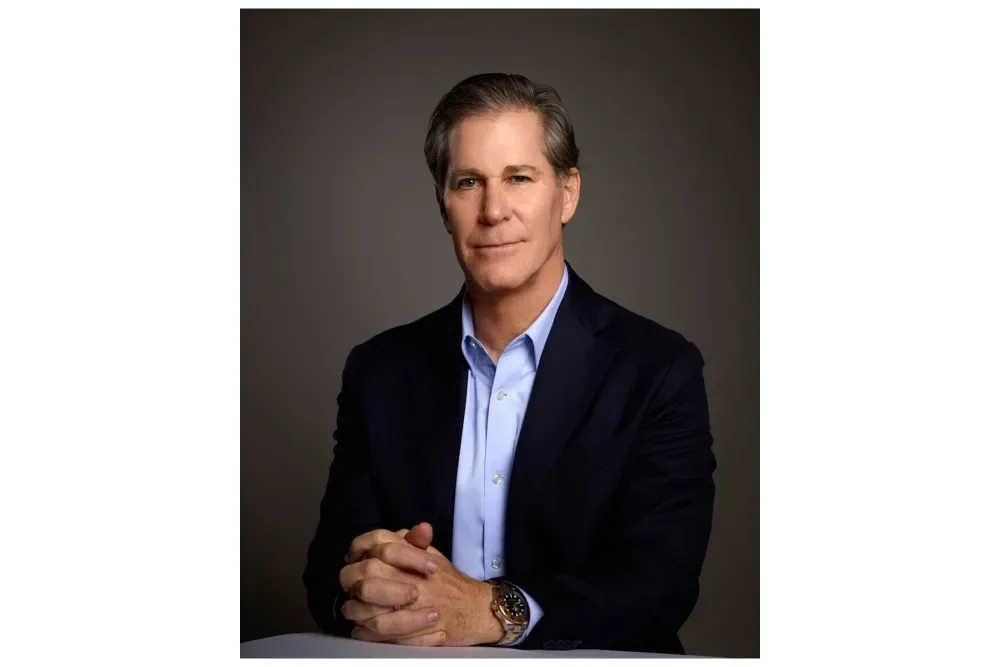
UTA has reorganized the leadership of its film, television literary and talent businesses into a new Filmed Entertainment structure, naming longtime agent Matt Rice as president. The change brings areas that historically operated as distinct departments into a more closely connected leadership group, reflecting an agency view that the business of film and television is increasingly intertwined.
Rice, who joined UTA in 2002 after beginning at the Broder Kurland literary agency, will lead strategy and execution across Filmed Entertainment. His promotion places a major representative of writers, directors and showrunners at the center of the combined unit. His clients include Phil Lord and Chris Miller, Michael Schur, Alec Berg, Bill Hader, Seth Rogen and Evan Goldberg, Will Forte, James Gunn, Adam Reed, Sebastian Maniscalco and Matt Rife, among others.
The move is a business-side development, but it matters to audiences because agencies sit near the beginning of the process that connects artists, scripts, producers, studios, networks and streaming services. How an agency organizes its expertise can affect how readily it identifies projects, packages creative teams and pursues opportunities for clients working across screens and formats.
What is changing at UTA
Rice’s new position comes with a new layer of leadership beneath him. Allan Haldeman, Blair Kohan, Jay Gassner and Julien Thuan have been elevated to managing partners of Filmed Entertainment. UTA has also established a Filmed Entertainment board made up of senior partners:
- Mickey Berman
- Jason Burns
- Marissa Devins
- Dan Erlij
- Chris Hart
- Jason Heyman
- Mike Jelline
- Keya Khayatian
- Rich Klubeck
- Billy Lazarus
- Gregory McKnight
- Lucinda Moorhead
- David Park
- Theresa Peters
- Shani Rosenzweig
- Larry Salz
The department leadership is being set out by specialty, even as the overall structure becomes more unified. Amanda Hymson and Jordan Lonner will head Motion Picture Literary. Lucinda Moorhead and Mickey Berman will head TV Literary. Hanley Baxter and John Sacks will lead talent alongside incumbent talent department head Mike Jelline.
That split is important: consolidation does not mean every job in representation has become identical. Rather, UTA is putting leadership from related disciplines inside one broader group. The agency’s stated aim is to increase efficiency, collaboration and opportunities for clients as film and television converge.
What “literary” and “talent” representation mean
The terminology can sound opaque outside Hollywood, so the practical distinction is worth making.
Literary representation generally concerns writers, directors, creators and the underlying projects they develop. In motion pictures, that may mean helping a filmmaker or writer take a screenplay to buyers, producers or a studio. In television, it can involve connecting a creator or showrunner with potential homes for a series and navigating the development path of a project.
Talent representation concerns performers and other on-camera talent. The work can include seeking and negotiating roles, aligning an actor with a project, and building a career across film, television and other opportunities.
Those specialties have their own expertise, relationships and daily workflows. Yet a film or series can depend on all of them: a project needs creative material, people to make it and performers to bring it to an audience. A unified Filmed Entertainment leadership structure is designed to make the handoffs and coordination between those areas more deliberate.
Why the agency says the timing matters
UTA chief executive David Kramer framed the restructure as a response to changes in the content market. His central argument is that film and television are moving closer together as businesses, and that joining leaders across Motion Picture Literary, Television Literary and Talent will allow the agency to provide more seamless representation.
“As the business evolves and film and television increasingly converge, this team positions us to lead that evolution, unlock new possibilities for our clients and bring the full power of UTA to everyone we represent,” Kramer said.
The agency’s language emphasizes a few concrete goals: connecting opportunities across its business, growing client businesses, pursuing new initiatives, and making decisions with input from a broad bench of senior partners. The new board is intended to use its experience and industry relationships for client development and initiatives, while department heads continue to steer the particular needs of their units.
Rice described the reorganization as an extension of a collaborative and forward-looking approach, saying he intends to build on the work of the expanded leadership group and continue delivering strong representation for clients.
Analysis: a structure built around overlap, not a disappearance of specialties
The most notable element is not simply Rice’s promotion. It is the attempt to treat the overlap between film, television literary and talent as an organizational priority.
For an agency, a client relationship is rarely confined forever to a single lane. A writer can work in television and film. A director may be attached to a script while building a separate television project. A performer can be central to the commercial case for a project that is still taking shape creatively. Bringing leaders from those fields together does not guarantee a deal or a hit, but it can reduce the distance between teams that need to compare possibilities quickly.
The structure also preserves departmental accountability. There are named leaders for motion-picture literary, TV literary and talent rather than one undifferentiated department. That suggests a balancing act: specialist knowledge remains valuable, while senior management wants a shared view of where clients and projects could move next.
For creators, the promise is straightforward: less friction between the people handling different parts of a career. For buyers and producing partners, it could mean dealing with an agency that has a more coordinated internal picture of the writers, directors and performers connected to a prospective project. Those are goals rather than measurable outcomes at this point, but they explain why the titles and governance details matter.
The broader pressure on representation businesses
UTA’s changes arrive amid a wider shift in what counts as valuable entertainment talent. Large social platforms have expanded the creator economy and produced a new kind of digital-media star with an audience built outside the older film-and-television system. That growth has challenged traditional operating models at major talent and management companies.
The supplied details do not describe specific digital initiatives within this reorganization, and it would be premature to treat this move as a formal creator-economy division. But the pressure is part of the context: agencies are navigating clients whose work, fame and commercial possibilities do not always fit neatly inside the traditional boundaries of movie, TV and talent departments.
There is a parallel in the broader entertainment conversation around preserving the value of shared screen experiences while adapting to a rapidly changing business. Moviegoing’s role as a shared experience remains an important cultural argument, even as companies restructure behind the scenes to respond to new ways audiences find and follow entertainment.
Rice’s role and client-facing implications
Rice brings a long agency tenure and a client roster closely associated with writing, directing, producing and showrunning. That background fits the new unit’s emphasis on connecting creative representation with talent representation, particularly when an agency sees television and film opportunities as part of a continuous strategic picture rather than isolated tracks.
As president, Rice is set to oversee overall strategy and execution across all areas of Filmed Entertainment. The managing partners—Haldeman, Kohan, Gassner and Thuan—form the new leadership group supporting that task. Separately, the board gives a larger set of veteran partners a formal role in pursuing client development and new initiatives.
For observers, the key test will not be whether the organization uses fewer departmental boundaries on paper. It will be whether its specialists can retain their focus while working together earlier and more effectively when an opportunity crosses film, television literary and talent. UTA is explicitly betting that this is where the market is headed.
The agency says it enters the restructure after a strong year for clients across box office and acclaimed television, with recognition at the Academy Awards, Emmys, Golden Globes and Tonys. The new Filmed Entertainment unit is meant to carry that momentum into the next phase of a content business where creative careers, project development and audience attention are less easily separated into old departmental categories.