The Red Sea International Film Festival’s planned early-December edition in Jeddah has been canceled, with organizers saying the event will return in the fourth quarter of 2027 under a “renewed vision.” On its face, the decision arrives amid a genuinely alarming regional security environment. But the longer-term significance may lie in the pressure now being applied to a lavish model of film-festival building: one based on attracting global celebrity, underwriting major hospitality and projecting cultural influence at enormous cost.
Red Sea has said its film fund will continue supporting Arab movies during the festival’s hiatus. That distinction is important. A festival is a public-facing event with premieres, juries, press attention and red carpets; a fund is a financing mechanism that can help films get made. The first is highly visible and dependent on guests’ willingness to travel. The second has the potential to keep benefiting filmmakers even when a physical event cannot proceed. Whether the balance between those two functions changes by 2027 could be the real story.
A cancellation with more than one cause
Regional instability is plainly part of the immediate picture. Saudi cities including Jeddah and Riyadh have been targeted by Yemen’s Iran-backed Houthi rebels, and concern about travel has intensified. A U.S. State Department advisory against travel to Saudi Arabia was also cited as a major deterrent for American talent. In that environment, persuading actors, filmmakers, publicists and production teams to make the trip becomes far harder, regardless of hotel quality or appearance fees.
Yet the pause has prompted a broader discussion about priorities inside Saudi Arabia’s large slate of cultural and international-facing initiatives. Media consultant Mazen Hayek pointed to the prioritization of projects tied to image and reputation, particularly the Riyadh Expo 2030 and the 2034 FIFA World Cup. In practical budget terms, a film festival that historically spent heavily on international star power can become easier to trim when still-larger global events demand attention and money.
That does not establish that Red Sea is ending. The festival has explicitly committed to returning, and Egyptian producer Mohamed Hefzy has said he does not expect it to be discontinued. His expectation instead is that it may become more economical and more self-sufficient. That is an expectation, not a confirmed blueprint, but it identifies the challenge the event faces: how to remain consequential without treating the festival as an annual celebrity-import operation.
What the star strategy accomplished — and where it ran into limits
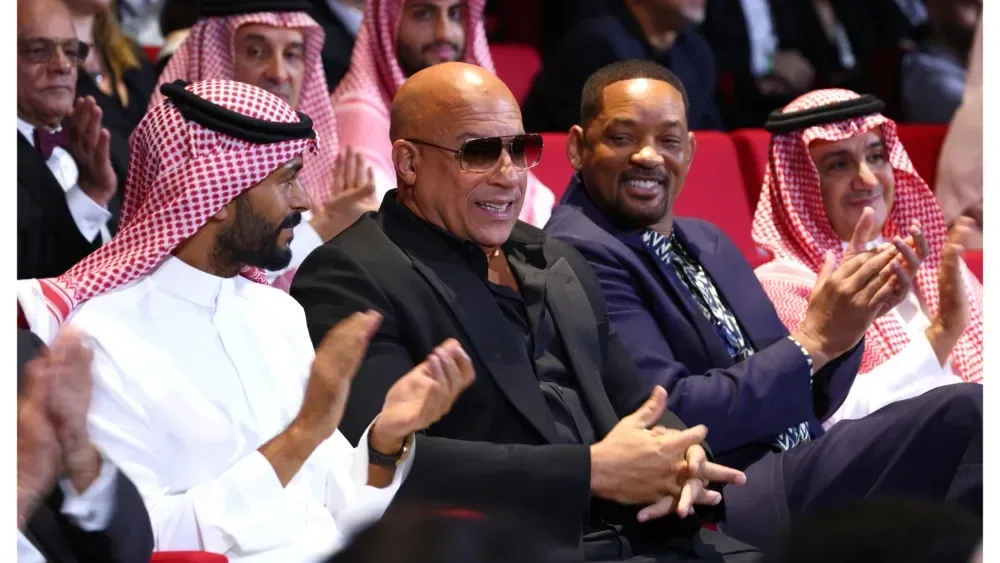
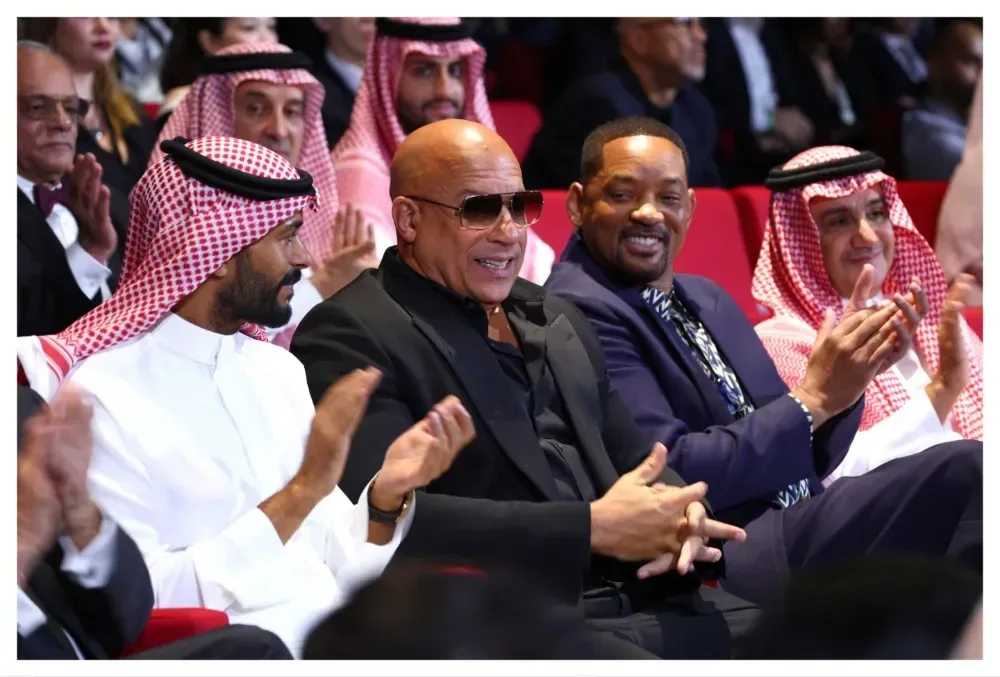
Red Sea successfully made itself conspicuous in a crowded international film calendar. Will Smith, Gwyneth Paltrow, Michelle Williams and Halle Berry were among the major names associated with past editions. The previous festival opened with Dakota Johnson, Uma Thurman, Ana de Armas, Vin Diesel and Michael Caine in attendance, while Sean Baker, director of Anora, served as jury president. Notably, none of those cited stars had a film to promote there.
That last detail gets to the economics of prestige events. A traditional film festival ideally creates a meeting point between movies and audiences: a new work premieres, its creative team discusses it, buyers and distributors may take interest, and local filmmakers can meet the people who make financing and distribution decisions. Inviting famous guests who are not attached to a featured film can still create headlines and draw attention. But it can be difficult to justify indefinitely if the guests’ presence is not connected to the programme or to an enduring local industry benefit.
Distributor Alaa Karkouti put the issue bluntly: Hollywood stars cannot be invited forever unless they are there to promote a film. The comment is not an argument against international guests; it is an argument for a clearer purpose. A filmmaker with a premiere, a cast supporting a funded Arab production, or an artist leading a meaningful industry conversation can contribute something more durable than a single photo call.
The festival’s hospitality was part of its appeal. Visitors were accommodated at high-end Jeddah properties and offered trips to AlUla’s sandstone landscape. Johnny Depp’s 2023 film Jeanne du Barry received financing from the Red Sea Fund, and he reportedly spent extensive time traveling in Saudi Arabia as a royal-family guest. Those details illustrate how aggressively the event and its surrounding ecosystem competed for Hollywood attention. They also show why a more restrained version of the festival would represent a substantial strategic shift rather than a mere scheduling adjustment.
Culture-building and reputation-building can coexist
Red Sea was founded as Saudi Arabia sought to reshape its international image after the 2018 murder of journalist Jamal Khashoggi. Critics characterized the use of film, sport and celebrity events as reputation rehabilitation. Festival leaders, meanwhile, argued that Red Sea was helping develop a real domestic film sector in a country where cinemas had only recently reopened.
Those descriptions do not have to be mutually exclusive. Major cultural events can serve national-image objectives while also paying filmmakers, exposing audiences to regional work and offering networking routes for emerging talent. The useful question is not whether either motive exists. It is whether the investment continues producing measurable cultural infrastructure once the international visitors, luxury itineraries and camera flashes have gone away.
For filmmakers across the Arab world, the continued operation of the Red Sea Fund is therefore more consequential than the absence of a red carpet in one year. Financing can affect the basic ability to develop, shoot and finish a film. Festivals can then provide the showcase, audience access and professional connections that help those movies travel. Both elements matter; the coming test is whether the foundation can keep the funding side active while redesigning the public event around a more sustainable relationship with the work itself.
The 2027 calendar is already getting complicated
Red Sea’s intended return overlaps with the announced revival of the Dubai Film Festival, which is also set for 2027. Dubai’s event had been dormant, so its return places two high-profile Gulf film festivals in an overlapping window. The result may be competition for premieres, sponsors, industry delegates and attention — all resources that are finite even before travel concerns enter the equation.
Competition can have constructive effects if it gives regional filmmakers more places to screen and more routes to financing or distribution. It can also encourage festivals to define what makes them distinct. But the less useful version is a contest to book the biggest uninvolved celebrity. Red Sea’s interruption creates an opening to answer that question with more precision: Is its core identity a showcase for Arab and international cinema, a market and professional hub, a film-financing engine, or a global spectacle? It can contain pieces of each, but its spending choices will reveal the hierarchy.
Studio ownership could complicate the guest-list equation
An additional variable is the proposed Paramount Skydance and Warner Bros. Discovery transaction associated with David Ellison. Saudi Arabia, Qatar and Abu Dhabi sovereign wealth funds are described as holding an indirect stake of nearly 50% in the $111 billion WBD bid. The deal remains a prospective development, not an established new studio structure, but it has fueled speculation about how Gulf investment might affect relationships with Hollywood talent.
Even substantial investor involvement would not remove the immediate safety concerns surrounding travel, nor does it guarantee that performers would attend events. It does, however, underline how intertwined global entertainment finance and Gulf cultural ambitions have become. Festival invitations, studio financing, film funds and international-event sponsorships no longer sit in entirely separate boxes.
For now, the concrete facts are narrower: Red Sea has canceled its upcoming edition, says it plans to return in late 2027, and intends to continue its Arab-film funding. The interval will show whether its renewed vision means lower-cost glamour, a sharper emphasis on films and industry development, or some different model altogether. A festival can borrow celebrity visibility. A film ecosystem has to earn longevity through the projects, people and opportunities it leaves behind.
For a separate look at the business mechanics that can shape screen production beyond a headline-grabbing investment figure, see why production incentives need more than a big number.