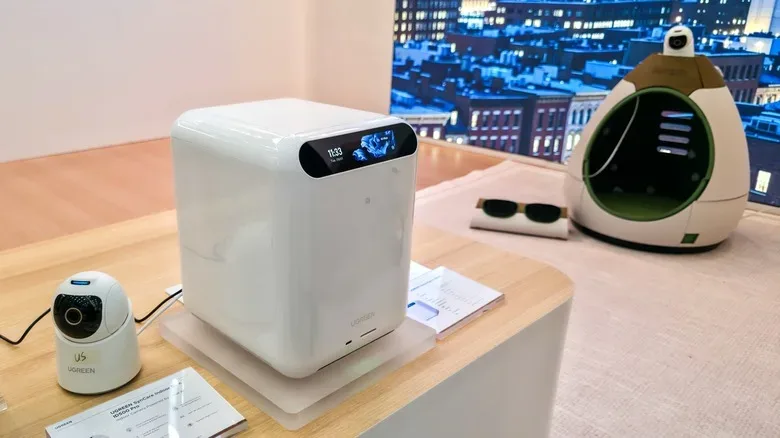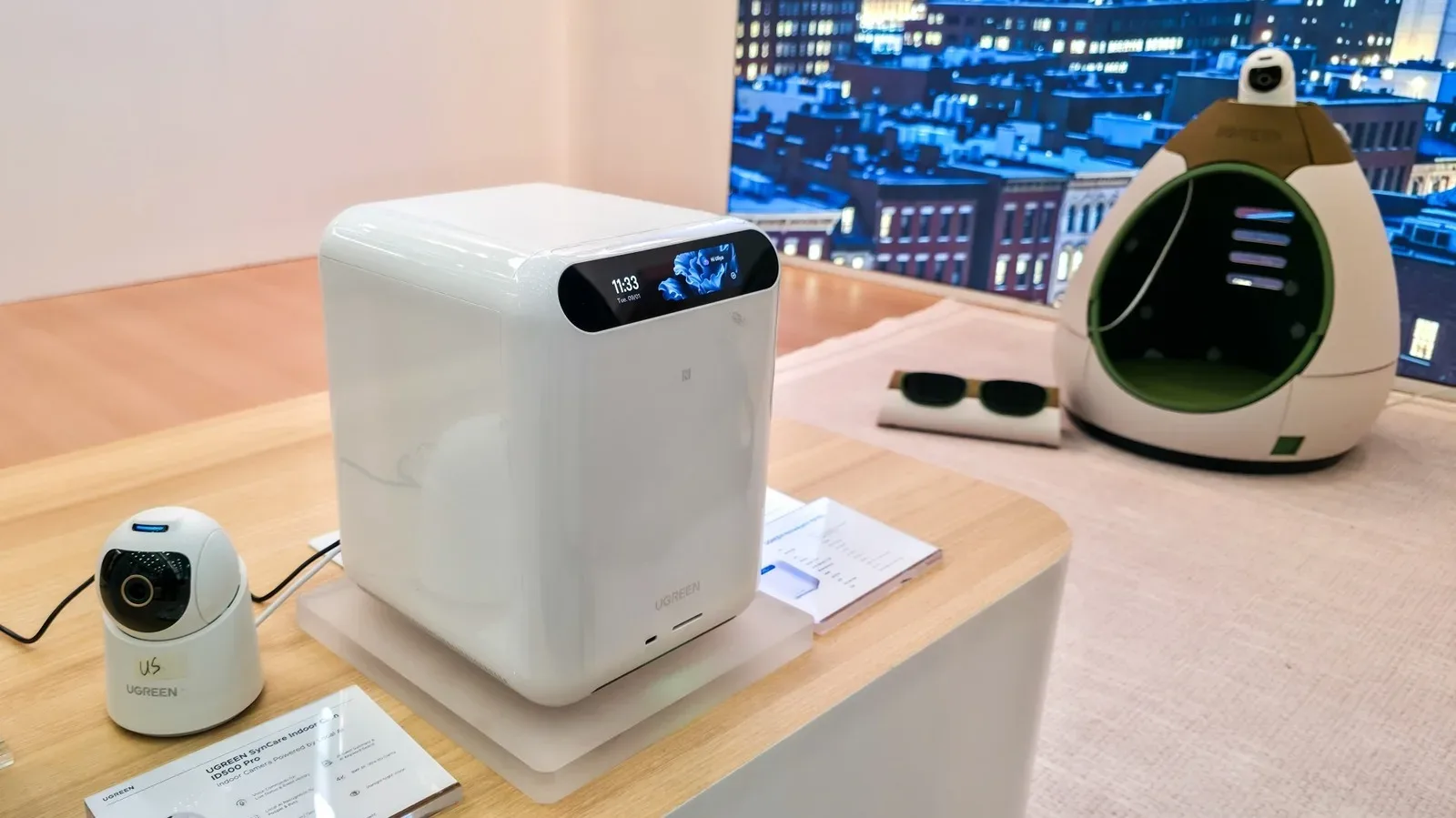
Ugreen is moving far beyond chargers, cables and NAS enclosures with an ambitious smart-home lineup built around the idea that an AI assistant does not necessarily need to ship a household’s most sensitive data to a distant cloud server. Its new AIoT range introduces three local AI hubs, a set of SynCare security cameras, the Uliya voice-assistant speaker and a 13.3-inch color E-Ink photo frame called Ugreen Gallery.
The pitch is clear: put the compute in the home, connect compatible devices, and let AI-powered automations, recognition features and storage stay under the owner’s control. The reality is also clear: this is not a casual smart-plug purchase. Even the entry HomeAgent arrives with a four-figure list price, while the flagship MasterAgent MA100 is essentially asking enthusiasts to consider an AI server as living-room furniture.
That makes Ugreen’s move interesting less as a universal replacement for mainstream smart speakers and more as a look at what privacy-focused home AI could cost during its first extravagant wave. The company’s stated plans and specifications sound substantial, but prospective buyers should remember that complex capabilities have not yet been broadly proven in everyday homes.
Three hubs, from ambitious to wildly excessive
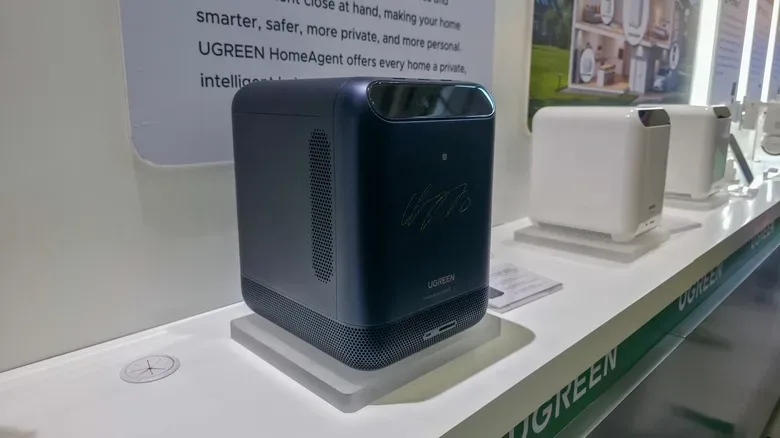
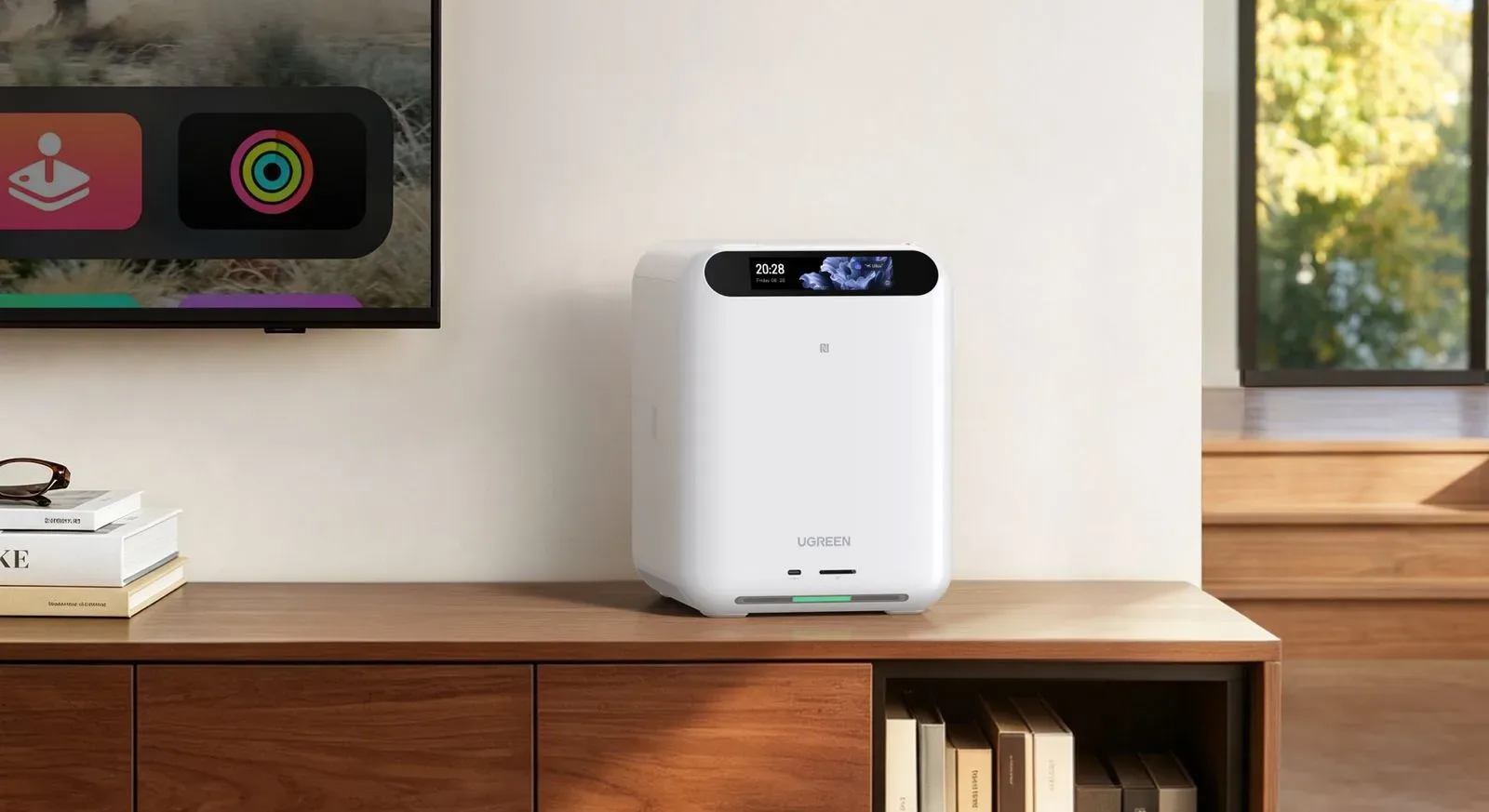
The ecosystem begins with the HomeAgent HA100, then rises sharply through the HomeAgent HA100 Pro and MasterAgent MA100. All three are ARM-based local AI hubs designed to coordinate compatible smart-home hardware and run AI functions at home rather than leaning entirely on remote inference.
The base HA100 uses an RK3588 platform, includes 16GB of LPDDR5 memory and is rated for 26 TOPS of AI performance. Ugreen says it can handle rule-driven routines, categorical object recognition and device commands. In practical terms, that is the familiar smart-home foundation: establish conditions, have the house respond, and identify broad categories of things seen by connected devices.
The HA100 Pro is the step-up model. It runs on a CIX-CP8180(P1) system-on-chip, carries 32GB of RAM and is rated at 205 TOPS. Along with the baseline model’s functions, Ugreen says the Pro can interpret motion and behavioral intent. It is also intended to accept natural-language voice requests for building automation rules, potentially replacing some of the tedious menu-diving traditionally required to make a home routine.
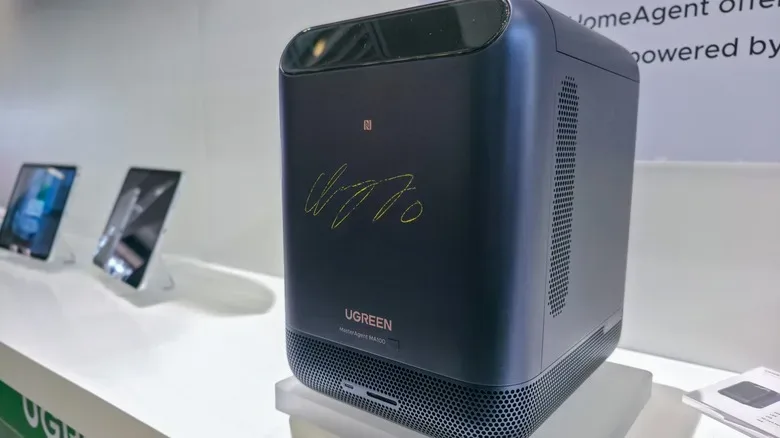
Then comes the MasterAgent MA100, which has chosen not to recognize the concept of restraint. It uses Nvidia’s Jetson Thor platform, a Blackwell system-on-module with 128GB of unified memory, and claims up to 2,070 TOPS. That is an extraordinary figure for a household hub, placing the MA100 closer to a compact AI compute appliance than a conventional smart-home bridge.
- HomeAgent HA100: RK3588, 16GB LPDDR5, 26 TOPS; $1,799 list price or $899 early-bird price.
- HomeAgent HA100 Pro: CIX-CP8180(P1), 32GB RAM, 205 TOPS; $5,999 list price or $2,999 early-bird price.
- MasterAgent MA100: Nvidia Jetson Thor, 128GB unified memory, up to 2,070 TOPS; $20,000 list price or 50 percent off during the early-bird offer.
The MA100’s $20,000 MSRP is the headline-grabbing number, and reasonably so. It is a lot of money to spend so that a home can contemplate packages, lights and household patterns locally. Still, Ugreen’s underlying argument is that local inference may reduce ongoing cloud-AI token costs and cloud-storage expenses. That calculation will vary enormously based on how much a household actually uses the AI capabilities—and it does not make the upfront cost any less formidable.
Compatibility matters, and Home Assistant is missing
The hubs support ONVIF and Matter devices out of the box, which gives the lineup a path toward working with hardware from other brands rather than forcing buyers into a fully sealed Ugreen habitat. Zigbee and Thread support are also planned. This matters because a local AI hub makes more sense when it can interact with the lights, locks, sensors and cameras people already own.
However, there is no official Home Assistant support. For smart-home hobbyists, that omission may be more important than even the intimidating pricing. Home Assistant is a major part of the do-it-yourself automation world, and a platform aimed at tinkerers has an awkward gap when it does not officially plug into one of the most popular tinkering ecosystems.
Ugreen is also carrying over some NAS-style expectations. Owners will need to supply their own SATA drives for the included storage bays. The units also offer M.2 and SD card slots, along with HDMI, Ethernet and multiple networking connections. That gives the hubs a distinctly more technical flavor than the usual puck-like home controller: storage selection, network planning and model experimentation may all be part of the ownership experience.
At the launch event, a working HomeAgent was shown controlling smart curtains and lights. Those basic demonstrations reportedly worked as expected. The more ambitious promised feature—creating rules through voice—was not demonstrated, which is worth keeping in mind. Smart-home automation has a long history of looking wonderfully simple in a staged scenario and becoming stubbornly particular once real devices, rooms, routines and family members enter the picture.
AI’s spread into domestic hardware also arrives while it keeps reshaping software and games, as seen in this roundup of indie games grappling with office AI. Ugreen’s hardware approach is a different proposition, but it shares the same larger question: where does automated assistance become genuinely useful, and where does it merely add another system demanding supervision?
SynCare cameras put the privacy promise under pressure
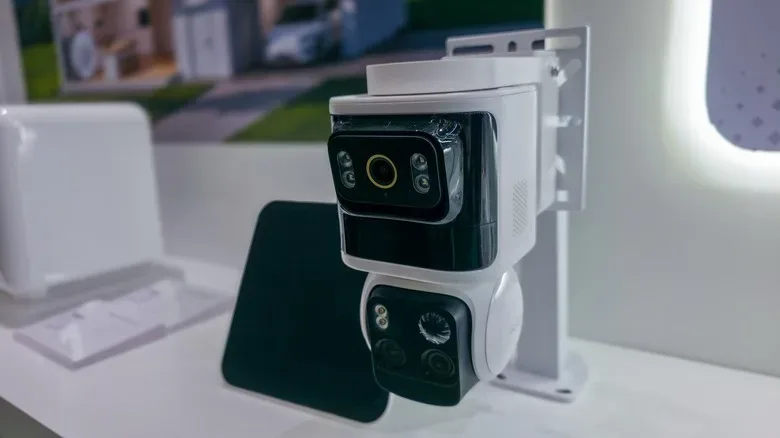
The SynCare camera line may be the most immediately understandable portion of the launch. It includes the Indoor Cam ID500 Pro, PoE Cam OD600 Pro and Battery Cam OD800 Pro. The models appear to be finalized versions of cameras previously shown earlier in 2026.
Security cameras are exactly where local processing has the strongest emotional appeal. Features such as facial recognition and package detection can be useful, but many existing services process footage through cloud infrastructure owned by major technology companies. Ugreen is emphasizing that its system keeps data local, while remote access is intended to use end-to-end encryption and locally stored data is protected with AES-256 encryption.
There is still a philosophical wrinkle. A camera that recognizes faces, watches movement and extracts moments from daily life can feel intrusive even when its footage stays inside the home network. Local-first design changes who controls the data and where it is processed; it does not erase the fact that the system is observing people. Buyers will need to decide whether the reassurance of local storage outweighs the weirdness of building a private surveillance apparatus with a highlight-reel feature.
The available pricing is much closer to familiar premium-camera territory than the hubs:
- SynCare Indoor Cam ID500 Pro: $149, with an $89 early-bird offer.
- SynCare PoE Cam OD600 Pro: $269, with a $159 early-bird offer.
- SynCare Battery Cam OD800 Pro: $399, with a $199 early-bird offer.
A facial-recognition demonstration at the launch used escalating trespass warnings and an alarm as someone approached a monitored door. It is a useful illustration of the intended security role, though the performance of such features across varied lighting, homes and real-world situations remains an open question.
Uliya speaks, while Gallery mostly just hangs there
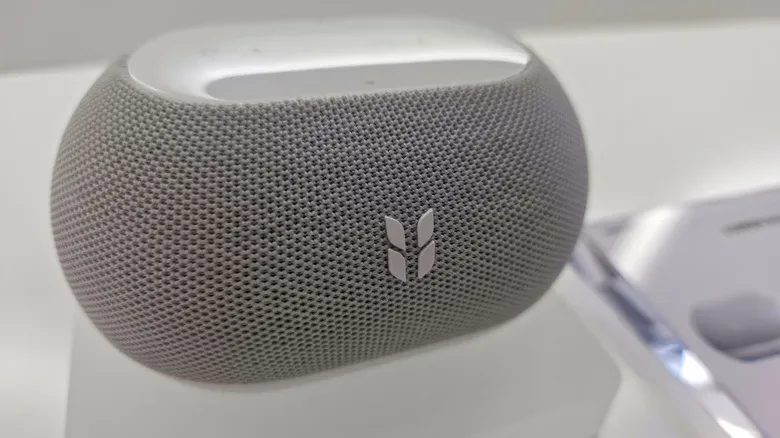
Ugreen’s assistant is named Uliya, and its dedicated Smart Speaker is meant to be the voice-forward interface for HomeAgent. The fabric-covered, oblong speaker has an LED ring around its base, plays audio and listens for the wake word “Uliya.” Its list price is $99, falling to $69 under the early-bird promotion.
The Ugreen Gallery is the lineup’s more peculiar member. It is a 13.3-inch color E-Ink display operating as a 4:3 digital picture frame, intended to make family images resemble printed photographs more closely than a bright tablet screen might. E-Ink seems naturally suited to quiet ambient household information, but Ugreen says the Gallery currently functions as a photo frame rather than a broad smart-home control display. It is priced at $439, or $299 early bird.
Pre-orders now, crowdfunding next, shipments planned for January
Direct-to-consumer pre-orders for HomeAgent and MasterAgent run from September 3 through October 27. The project then shifts to Kickstarter crowdfunding for the rest of the year, when the rest of the lineup is also expected to become available. Ugreen plans to begin shipping in January.
That schedule and the limited exposure to working units mean caution is warranted. The lineup has a compelling premise for privacy-conscious users with Matter-compatible gear, sizeable budgets and an interest in configuring their own local AI environment. Yet its marquee features, especially natural-language automations and more sophisticated behavioral interpretation, need to prove that they work reliably beyond a controlled launch setting.
For now, Ugreen has created a striking alternative to cloud-centric smart-home ecosystems: a collection of devices that can keep more intelligence in the house, provided the house is willing to make room in both its network cabinet and its budget.