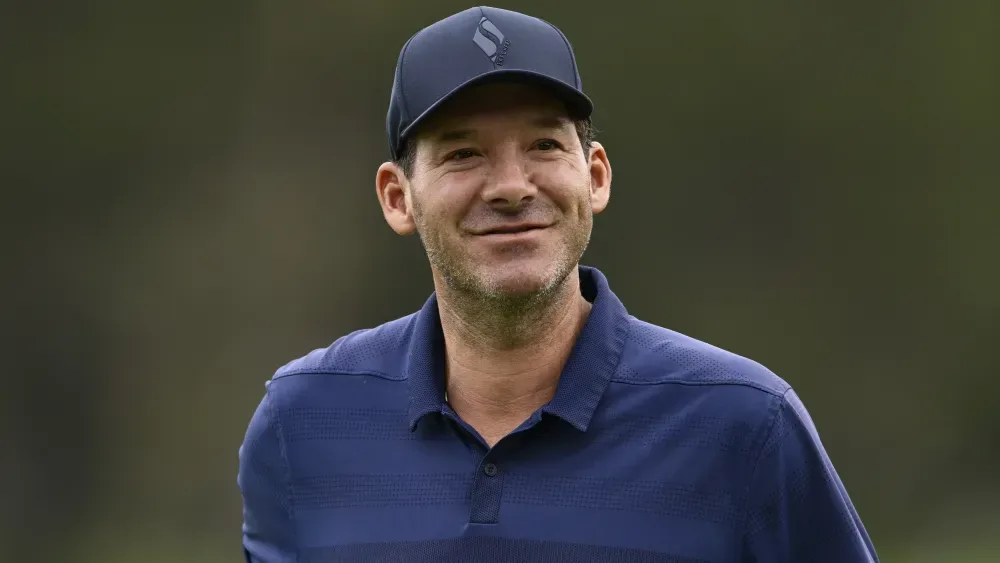
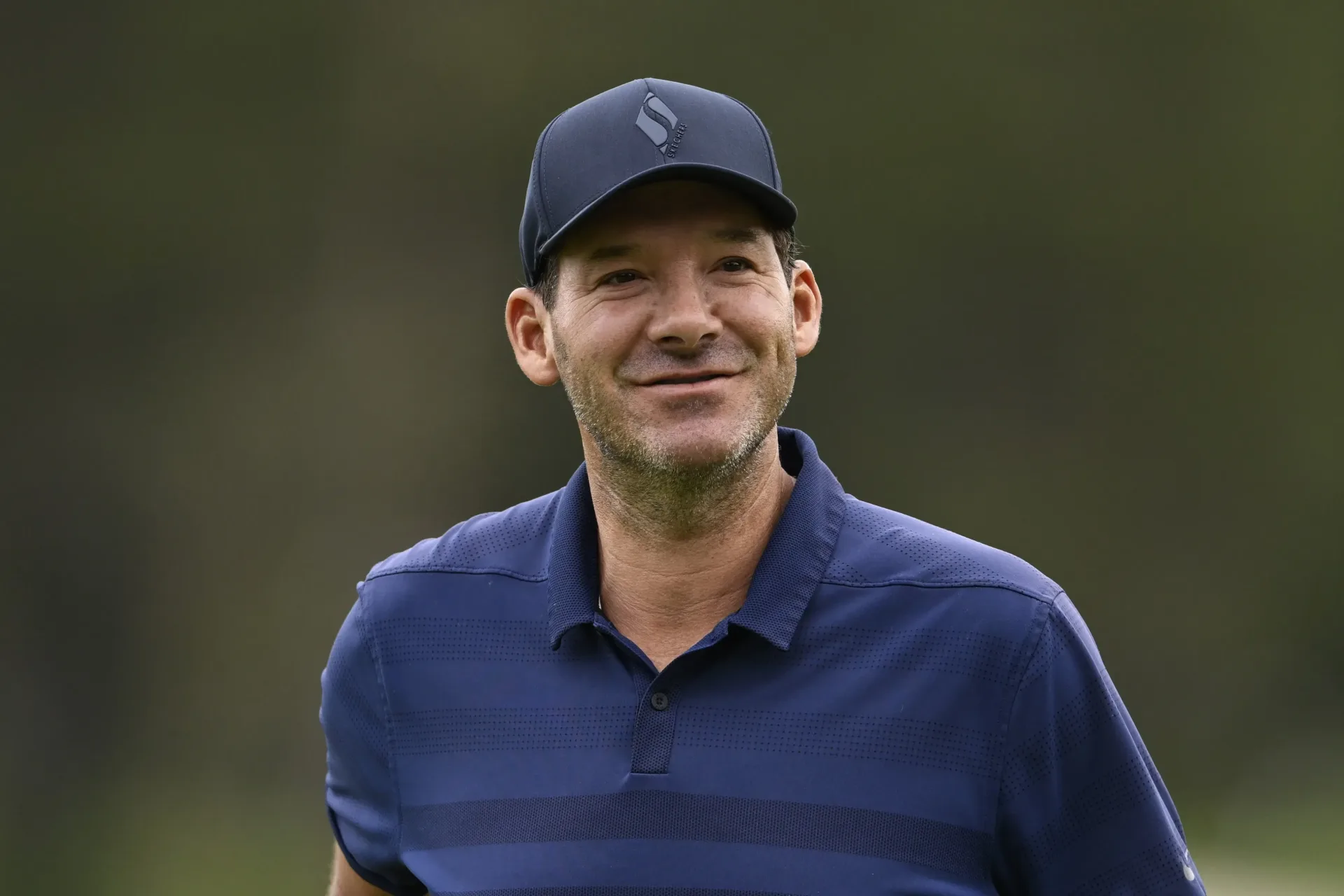
Tony Romo’s next professional stop is not a broadcast booth. The former Dallas Cowboys quarterback and longtime football analyst has joined Betr, the gaming app co-founded by Jake Paul, as the company’s first chief predictions officer.
The title is intentionally built around the skill that became central to Romo’s on-air identity: anticipating what will happen before a play unfolds. At Betr, that reputation will be used across a broader digital entertainment operation. Romo is set to appear in original content, offer sports predictions and interact with users across the company’s products, which include Picks, Predictions, Social Sportsbook, Social Casino, Arcade and Rips. He will also become an equity stakeholder in the business.
That makes this more than a conventional spokesperson arrangement. A celebrity can simply appear in advertisements; an equity stakeholder has a financial interest in the company’s performance. The supplied details do not define the size or terms of Romo’s stake, but the structure signals a longer-term relationship than a one-off campaign.
What the role actually says about Betr’s strategy
“Chief predictions officer” is a brand-facing title rather than a traditional executive function such as chief financial officer or chief technology officer. The practical responsibilities described are content, sports forecasts and fan engagement—not the management of odds, trading, compliance or product development.
In other words, Romo’s job appears to be translating a familiar sports-media talent into a personality that can serve several parts of one platform. Betr has listed gaming products with different labels, and the announcement does not give rules, geographic availability or operating details for each one. It would be a mistake to treat all of those names as interchangeable. Still, their inclusion illustrates the company’s stated goal: make one recognizable sports figure visible across a wider ecosystem rather than attach him to a single feature.
The phrase prediction also deserves some separation from a promise of expertise. A prediction is an opinion about a future event. It can be entertaining, informed by experience or persuasive because of who delivers it, but it cannot make an uncertain result certain. A former quarterback’s ability to recognize football tendencies does not remove the unpredictability of games or establish that any particular outcome will happen.
That distinction matters especially when sports commentary is placed near gaming products. Fans may know Romo from explaining what he sees on the field and from anticipating offensive decisions during broadcasts. Betr is seeking to carry that recognizable skill into a product environment where predictions can be a core piece of engagement. The announcement describes the fit in terms of personality and anticipation, not a guarantee of results.
Romo’s shift from television analysis to platform personality
Romo played quarterback for the Cowboys before becoming an on-air analyst with CBS Sports in 2017. The network announced last month that it was parting ways with him. His move to Betr follows that departure and places him in a role designed around his sports persona rather than a conventional television analyst assignment.
In comments about the new position, Romo framed the move as an extension of trying to foresee what comes next, whether he was playing or working in broadcasting. That continuity is the key to the partnership. Betr is not presenting him primarily as a retired athlete lending his name to an app; it is foregrounding the particular on-air trait audiences associate with him.
Romo’s television work and a branded predictions role do not carry the same expectations, however. In a game broadcast, analysis is part of coverage intended to explain the action. In a platform role spanning original content and gaming products, the same analysis becomes part of a company’s entertainment and engagement strategy. The difference is not necessarily in the football knowledge itself. It is in the context in which audiences encounter it and the commercial purpose it serves.
This is also a notable example of sports talent becoming a cross-product media asset. The supplied description names original content alongside several products, suggesting that Romo’s appearances may be meant to connect editorial-style sports conversation, audience interaction and app activity. Exactly what those appearances will look like, how frequently he will participate and which products will receive his content have not been detailed.
A brand partnership with real reputational context
The appointment arrives after a difficult recent chapter for Romo. He pleaded no contest to a charge of operating while intoxicated connected to an incident in Milwaukee in July. That came before CBS Sports announced it was parting ways with him last month.
The available information does not state that the network’s decision and the charge were connected, so they should not be presented as cause and effect. They are separate facts in the timeline. Likewise, no further details about the legal matter or its relevance to Betr’s decision have been supplied. What is clear is that the new role gives Romo a high-profile commercial platform shortly after his broadcasting exit.
For audiences, the useful takeaway is to avoid collapsing a headline-friendly job title into a complete picture of the arrangement. Romo brings football experience, broadcasting recognition and a prediction-focused public identity. Betr brings a set of gaming and entertainment products plus an existing roster of talent partners. The equity component aligns their interests, but it does not tell users what experience they will receive inside any individual product.
Who else is attached to Betr?
Romo joins a talent group that includes former NBA player Patrick Beverley, former Heisman Trophy winner Johnny Manziel, and actors Jeremy Piven and Adrian Grenier. The mix is revealing. It is not confined to one sport or even solely to athletes. Betr is positioning recognizable sports and entertainment figures as part of its wider public identity.
That approach can make a platform feel more like a stream of personalities and content than a purely functional app. It can also give each partner a distinct role: an athlete may speak to a sport-specific audience, while actors can expand the company’s entertainment reach. The announcement does not assign particular duties to the other partners, so their roles should not be assumed to mirror Romo’s.
Romo’s title stands apart because it names a specific function that directly matches his public reputation. It is a memorable label, but the substantive test will be whether the company gives it a consistent format: recurring videos, game-day discussion, audience interaction or another defined kind of programming. Those details have not yet been announced.
What users should keep in mind around sports predictions
For sports fans, expert-style forecasts can be fun because they create a framework for watching a game. They can highlight matchups, tendencies and possible game scripts. But they remain forecasts. Football in particular is shaped by injuries, weather, coaching changes, penalties, turnovers and individual plays that can overturn even a well-reasoned expectation.
That is why personality should not be confused with certainty. A prominent former quarterback can offer an interesting perspective, and a gaming company can use that perspective to make its content more engaging. Neither changes the fact that outcomes are uncertain. Users should understand the rules and status of a specific product before participating, especially where gaming mechanics or spending are involved, and should keep participation within personal limits.
The appointment also speaks to a continuing blur between sports analysis and sports-centered digital entertainment. Romo’s appeal has long rested on making anticipation itself part of the show: identifying a possibility before the snap and letting viewers see whether it arrives. Betr’s new role takes that same hook and puts it at the center of a branded product ecosystem.
There is a wider entertainment lesson in that move. The most valuable talent partnership is not always about attaching a famous name to a logo. It can be about identifying the one thing audiences already expect from a personality and creating a repeatable format around it. In Romo’s case, the company is betting that “what happens next?” can be both a sports conversation and a durable piece of its brand.
Sports and entertainment continue to overlap in many directions, from athletes’ media ventures to sport-centered comedy such as a recently canceled golf series starring Will Ferrell. Romo’s Betr deal belongs to a different category—gaming-platform branding rather than scripted comedy—but it similarly depends on sports familiarity being meaningful beyond the field of play.
For now, the confirmed points are straightforward: Romo is Betr’s first chief predictions officer, he will contribute content and predictions across the company’s named products, he will engage with fans, and he has an equity stake. The format of the content, the scope of his involvement and the details of that ownership remain unspecified. The title is flashy; the long-term significance will depend on what the company and Romo actually build around it.